
Pellet Heat Isn't Common in Gary—But It's Still Possible.
Gary's older Calumet-region housing stock and entrenched gas infrastructure mean most homes here heat with gas, not pellets. For the right situation—a workshop, a basement, a supplemental zone—a pellet appliance can still make sense, and we'll connect you with a dealer who can tell you honestly if it does.
Every Project Starts From One of These Five Situations
Gas Dominates Gary's Heating—Pellet Stoves Fill a Narrow Niche.
Gary sits at 597 feet along the southern shore of Lake Michigan, in a climate zone 5A pocket that racks up roughly 6,171 heating degree days a year with winter lows averaging around 18°F—cold enough that reliable heat matters. But Gary's housing stock is largely older, dense, and urban: rowhouses, bungalows, and lots too tight for cordwood storage or exterior chimney runs. That's part of why wood heat barely registers here, and pellet heat isn't far behind it. Decades of built-out natural gas infrastructure across Lake County means most homes already have a gas line at the meter, and it's simply the path of least resistance for a furnace or fireplace replacement.
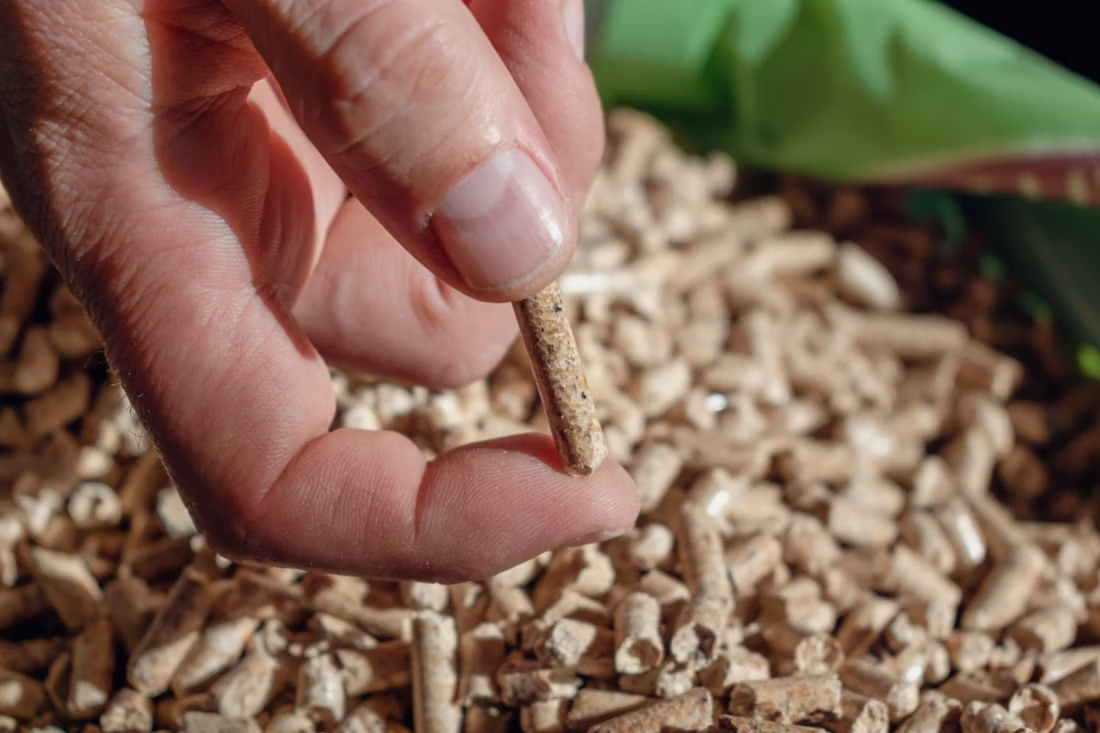
That doesn't mean pellet appliances are off the table—it means they're a specialty choice rather than a default one. Homeowners who want supplemental zone heat in a finished basement, a detached garage, or a workshop sometimes still choose a pellet stove for its steady, thermostat-like output and cleaner burn than cordwood. If you're one of them, regional pellet fuel is genuinely available—suppliers including Indeck Energy Services, Lignetics, and Somerset Pellet Fuel serve the broader Great Lakes region—you just won't find the dense network of pellet-stove dealers you'd see in a wooded, rural part of the Midwest. That's exactly the kind of situation where matching with the right local dealer, rather than guessing off a big-box shelf, actually matters.
Three steps. No salesperson until you're ready.
Tell us about your project
Your zip code, your situation, and the fuel you're leaning toward—or let the answers point you to one.
See what's actually available
The brands dealers within 100 miles genuinely carry—real options, never a catalog mirage.
Get your dealer & Project Guide
A trusted local dealer, plus the free Project Guide & Parts List that names every component of the job.
Frequently Asked Questions
How much does a pellet stove installation cost in Gary?
There isn't a well-established local price benchmark for pellet installs in Gary the way there is for gas fireplace conversions, simply because far fewer of them happen here. As a general reference point, pellet stove installations in areas where they're common often run in the $3,000 to $6,000 range depending on the unit, hearth pad requirements, and vent kit—but your actual cost depends heavily on your specific home. Because pellet dealers are thinner on the ground in Northwest Indiana, getting a firm number means talking to an actual installer rather than relying on a national average. That's what the free Project Guide & Parts List is for.
Why isn't pellet heat more common in Gary?
Two things work against it. First, natural gas service is widely available throughout the city, and most of Gary's housing—older bungalows and rowhouses from the steel-boom era—was built or retrofitted around gas heat, so a gas fireplace or furnace upgrade is usually the simpler, cheaper path. Second, tight urban lots and shared walls make the venting and pellet storage that a stove needs harder to fit than in a rural or wooded setting where pellet heat is more of a default choice. None of that makes pellet heat impossible in Gary—it just means it's chosen deliberately rather than by default.
What's a pellet stove actually good for in a city like Gary?
The homeowners in Gary who do install pellet stoves are usually solving a specific problem: heating a finished basement that the main furnace doesn't reach well, warming a detached garage or workshop, or adding supplemental zone heat to cut down on natural gas or electric use during the coldest stretches of a Lake Michigan winter. A pellet stove's thermostat-controlled, auger-fed burn makes it well suited to that kind of targeted, set-it-and-forget-it heating—it's just not typically anyone's whole-house primary heat source here.
Will a pellet stove work during a power outage in Gary?
Not without a backup power source. Pellet stoves rely on an electric auger to feed fuel and a blower to distribute heat, so when the power goes out, the stove goes out too—unlike a wood stove, which keeps burning with nothing but a match. Some homeowners pair a pellet stove with a small battery backup or generator specifically to keep it running through outages, which are a real consideration on the Lake Michigan lakefront when winter storms roll through. If outage-proof heat is your priority, that's worth discussing with a local dealer before you commit to pellet.
Where can I get pellet fuel near Gary?
Regional pellet suppliers serving the broader Great Lakes and Midwest market—including Indeck Energy Services, Lignetics, and Somerset Pellet Fuel—distribute bagged pellets through hardware stores, farm supply retailers, and hearth dealers across the region. Because pellet stoves are less common in Gary itself, it's worth confirming with whichever dealer installs your unit that they can point you to a consistent, nearby pellet source—running out mid-winter isn't a problem you want to solve at the last minute.
Do I need a permit to install a pellet stove in Gary?
Most Indiana municipalities require a building permit for new solid-fuel or pellet-burning appliances, and Gary is no exception—check with the City of Gary building department or Lake County's permitting office before installation. Because pellet stove installs are less frequent locally, it's worth confirming that whoever pulls your permit and does the install is genuinely experienced with pellet venting specifics, not just general contracting.
Pellet vs. gas—which makes more sense for a Gary home?
For most Gary homes, gas wins on convenience and infrastructure: natural gas service is widely available, gas fireplaces and inserts run on demand with no fuel storage or hopper refilling, and dealers with real gas-install experience are much easier to find locally. Pellet makes more sense in a specific situation—a room or structure without existing gas service, or a homeowner who specifically wants a biomass-fueled zone heater. With 6,171 heating degree days a year, Gary winters are genuinely cold enough to justify either option; it's really about which fits your home's existing infrastructure and your tolerance for hopper-loading versus flipping a switch.
What does it cost to run a pellet stove compared to electric heat in Gary?
Electric heat in Gary runs on Northern Indiana Public Service Company's residential rate of about $0.1909 per kWh, which is on the higher side nationally, making electric resistance heat one of the more expensive ways to warm a room here. Pellet fuel generally delivers more heat per dollar than straight electric resistance heat, though it won't undercut the natural gas rates most Gary homes already have access to. If you're comparing a pellet stove against a plug-in electric heater for a specific room, pellet usually comes out ahead on operating cost—just factor in the appliance cost and the need to keep pellets on hand.
Where can I actually find someone to install a pellet stove in Gary?
Because pellet stoves are a niche request in Gary and greater Lake County, the dealer who's right for your project may be based in a neighboring Northwest Indiana community rather than in Gary proper. Find My Fireplace exists for exactly this situation—we're not a manufacturer or retailer, we're a neutral matchmaker. Tell us about your home and we'll connect you with a trusted local dealer who genuinely stocks and installs pellet equipment, along with a free Project Guide & Parts List so you know what to expect before you talk price.
What's the difference between an insert and a zero-clearance fireplace?
An insert is a fireplace that slides into a pre-existing wood-burning fireplace—if you don't have one, there's nothing to insert it into. A zero-clearance fireplace is built into a framed wall, which makes it the answer for remodels and new construction. Simple test: existing masonry fireplace means insert; blank or framed wall means zero-clearance.
Why is my open fireplace making my house colder?
Open fireplaces suck—literally. As the fire burns, it consumes air your furnace already paid to heat and pulls it out through the chimney, so the house is actually colder after the fire goes out than before you lit it. An insert fixes this: it seals the chimney, puts fixed glass across the front, and turns that hole in your house into a real heat source.
Can I install a fireplace myself?
If you're putting a fire in your house on purpose, it's best to work with an expert. Unless you're genuinely experienced in framing, gas line, vent pipe, and the national code on clearances to combustibles, have a professional do it—and ideally the same company that sells you the fireplace, so warranty, service, and liability all live under one roof.
What is an in-home preview and do I need one?
It's a visit where a hearth professional measures your space, confirms the model you picked actually works in your home, and walks the specs—framing, gas line, venting, finish work—before anything is ordered. Some details you just can't know until you see the house. Never make a down payment without one; it's the single most-skipped step that burns buyers.
Nearby Dealers
Hearth shops serving Gary and the surrounding area.
Pellet Brands Stocked Around Gary
Manufacturers will point you to the nearest stocking dealer.
Find your pellet stove in Gary.
Tell us about your home and your goals, and we'll match you with a trusted local dealer who actually installs pellet appliances in the Gary area—plus a free Project Guide & Parts List with the exact vent kit and equipment your project needs.
Find Your Fireplace →