
Find the right pellet stove for Fountain County.
Steady, low-maintenance heat for Wabash River winters—from Covington to Attica and the farmland in between. Get matched with a local dealer who can actually install it.
Every Project Starts From One of These Five Situations
Consistent heat, less hauling, no smoke to manage.
Fountain County sits along the Wabash River in west-central Indiana, a climate zone 5A county with a solid winter heating season and winter lows averaging 16°F—comparable to a mild stretch of a Madison, WI winter. That's a real heating season, but it's not the deep-cold, multi-week Arctic air that pushes households toward wood as a necessity. For a lot of Fountain County homes, especially in Covington, Attica, and the smaller unincorporated communities, a pellet stove hits the sweet spot: real heat output, no need to fell and split oak or hickory from your own woodlot, and none of the smoke-management concerns that come with an open wood fire.
There's no formal air quality non-attainment designation here, so pellet stoves aren't competing against curtailment rules the way they might in a western basin town—but the appeal still holds locally: a 40-lb bag hopper feeds itself for hours, ash output is minimal compared to cordwood, and you're not managing a chimney fire risk the way you would with an unmaintained wood flue. Regional supply is solid too—Lignetics and Somerset Pellet Fuel both distribute into this part of Indiana, with Indeck Energy Services also serving the wider region, so you're not relying on a single supplier running low mid-January.
Three steps. No salesperson until you're ready.
Tell us about your project
Your zip code, your situation, and the fuel you're leaning toward—or let the answers point you to one.
See what's actually available
The brands dealers within 100 miles genuinely carry—real options, never a catalog mirage.
Get your dealer & Project Guide
A trusted local dealer, plus the free Project Guide & Parts List that names every component of the job.
Frequently Asked Questions
How much does a pellet stove installation cost in Fountain County?
A pellet stove installation in Fountain County typically runs in the range that's standard for a freestanding unit with straightforward wall venting—expect the low end if you're placing the stove near an exterior wall with a short vent run, and the higher end if you need a longer horizontal run, electrical work for the hopper motor and blower, or a hearth pad to meet clearance codes. Because pellet stoves need a standard household outlet nearby (unlike a wood stove), homes without existing outlet access near the install site should budget a bit more for an electrician. A local dealer will give you a firm number after seeing the room.
What size pellet stove do I need for my Fountain County home?
Sizing depends on square footage, ceiling height, and how drafty the house is—older farmhouses around Covington and Attica with original windows lose heat faster than newer builds and often need to size up. As a general guide: smaller units suit a single room or a 1,000 sq ft addition, mid-size units handle most main living areas in the 1,000–2,000 sq ft range, and larger units can carry a well-insulated whole home through a Fountain County winter without running the hopper dry every few hours. A local dealer will walk your space and size it properly—oversizing wastes pellets, undersizing means you're refilling the hopper at 2am on the coldest night of the year.
Where can I find pellet stove installers near me in Fountain County?
Look for installers with NFI (National Fireplace Institute) certification, which covers proper venting, electrical hookup, and clearance-to-combustibles work specific to pellet appliances. Because Fountain County is a smaller, mostly rural county, dealer coverage often comes from installers based in nearby Lafayette or Terre Haute who service the whole area—expect a modest travel charge factored into quotes for installs out toward the county's edges. Buying and installing through the same dealer simplifies warranty claims if the auger motor or igniter needs service down the road.
What's the difference between a pellet stove and a pellet insert?
A pellet stove is a freestanding unit that sits on a hearth pad and vents through a wall or existing chimney—it can go almost anywhere with a nearby outlet and a clear vent path. A pellet insert is built to slide into an existing masonry fireplace opening, which is common in Fountain County's older housing stock along the river towns, converting a drafty open hearth into a sealed, thermostat-controlled heat source. If you've already got a masonry fireplace you rarely use, an insert usually makes more sense than tearing it out for a freestanding stove.
Do I need a permit to install a pellet stove in Fountain County?
Most jurisdictions in Indiana require a building permit for a new pellet stove installation, covering the appliance clearance, venting termination, and any electrical work for the hopper and blower. Fountain County doesn't have the kind of air-quality burn restrictions you'd see in a western non-attainment basin, so there's no curtailment-period paperwork to worry about—but the structural permit still matters for insurance and resale. Most local dealers handle the permit application as part of the install, so it's rarely something you have to chase down yourself.
What's the best pellet stove for Fountain County's climate?
With winter lows averaging 16°F and a solid winter heating season, Fountain County doesn't need the extreme continuous-burn capacity that a much colder climate zone would demand, but a reliable auto-ignition model still pays off—you'll be running the stove through long stretches of the season, not just the occasional cold snap. Look for a unit with a decent hopper capacity (40+ lbs) so you're not refilling constantly during a multi-day cold stretch, and ask your dealer about models compatible with the pellet brands actually stocked locally, including Lignetics and Somerset Pellet Fuel, so you're not stuck special-ordering fuel.
How often does a pellet stove need to be cleaned and serviced?
Pellet stoves need more frequent light cleaning than wood stoves but far less than a full chimney sweep—plan on emptying the ash pan every few days during regular use and a deeper clean of the burn pot, exhaust fan, and venting once a season, ideally before the season starts in early fall. Annual professional service is worth it to check the auger motor, igniter, and venting for blockage, especially since the electrical components are the parts most likely to need attention over time. A dealer who sold you the stove is usually your best bet for this service.
Where can I buy wood pellets in Fountain County?
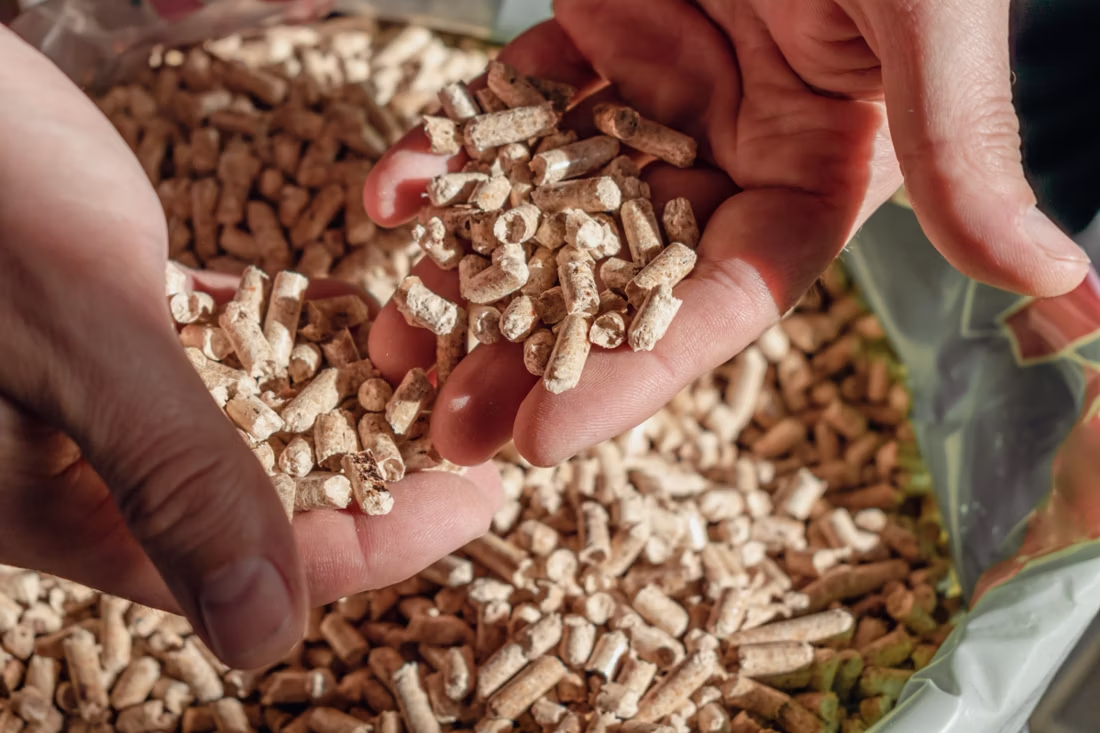
Regional supply into this part of west-central Indiana comes from brands like Lignetics and Somerset Pellet Fuel, both distributed through farm supply and hardware retailers in the Covington-Attica corridor and nearby Lafayette and Terre Haute. Indeck Energy Services also supplies the broader region. Stocking up early in fall before the first cold snap is smart—local supply can get tight during extended cold stretches when everyone's buying at once, and pellet quality (low ash, consistent moisture content) varies more between brands than most first-time buyers expect.
Pellet stove vs. wood stove—which is right for my Fountain County home?
Wood stoves work without electricity, which matters for backup heat during an ice storm outage, and pair well with self-cut firewood if you've got access to oak, hickory, or maple from your own property or a neighbor's woodlot—common species in this part of Indiana. Pellet stoves need power to run the auger and blower, so they're not a standalone backup during an outage, but they're far more convenient day-to-day: load the hopper, set the thermostat, and walk away, with less ash and no chimney creosote buildup to manage. For most Fountain County homes without a dedicated wood supply, pellet is the lower-hassle choice; for rural properties with wood already on hand and a real need for storm-proof heat, wood still has the edge.
Why is a fireplace insert so efficient?
An insert does two things: it seals the chimney completely, so you stop losing air you already paid to heat, and it radiates warmth into the room through the firebox and glass. Most add a heat-exchange fan that pulls cool room air underneath, wraps it around the hot firebox, and pushes it back out warm. Your home is more efficient before you've even lit the first fire.
What do I measure to size a fireplace insert?
Four numbers tell you what fits: the front width, the front height, the back width, and the overall depth of your existing fireplace opening. Grab a tape measure, jot those down, and snap a photo of the wall—those two things do more to move your project forward than anything else you can do today.
Does a fireplace add value to my home?
On average, a fireplace adds back to the home about the same amount you spent installing it. Add the monthly savings from heating the rooms you actually use instead of the whole house—often hundreds of dollars a year—and the value case is strong before you even count what a fire does for how your family uses the room.
How much should I budget for a fireplace?
For an average home—covering the fireplace, the vent pipe, and basic installation—a budget between $3,900 and $5,500 gives you a lot of options across wood, gas, and pellet. By the time you add finish work, gas line, and electrical, the average complete installation lands between $5,000 and $12,000 all-in. In a remodel or new build, a good rule is to put about 2.5% of the total project cost toward the fireplace.
Pellet Brands Stocked Around Fountain County
Manufacturers will point you to the nearest stocking dealer.
Get your Fountain County pellet stove Project Guide.
Tell us about your home and heating goals, and we'll match you with a trusted local dealer and send over a free Project Guide & Parts List—the right pellet stove or insert, sized correctly, with the vent kit and parts you'll actually need.
Find Your Fireplace →