
Bring instant electric heat to any room in Fountain County.
No chimney, no gas line, no venting—just plug it in or have an electrician run a circuit. A good fit for farmhouse additions, bonus rooms, and manufactured homes from Covington to Attica.
Every Project Starts From One of These Five Situations
Instant warmth, zero venting required.
Fountain County sits along the Wabash River in west-central Indiana, home to about 10,500 people spread across Covington, Attica, Veedersburg, Kingman, and a lot of farmland in between. Winters here run cold—a 6,020 heating degree day count and average winter lows around 16°F put the county in the same climate zone (5A) as places like Madison, Wisconsin. Plenty of local homes still lean on wood heat from the oak, hickory, maple, and beech that grow throughout the county, or on propane where natural gas lines don't reach. Electric fireplaces have carved out a real niche here for a simpler reason: they solve the room the furnace doesn't reach.
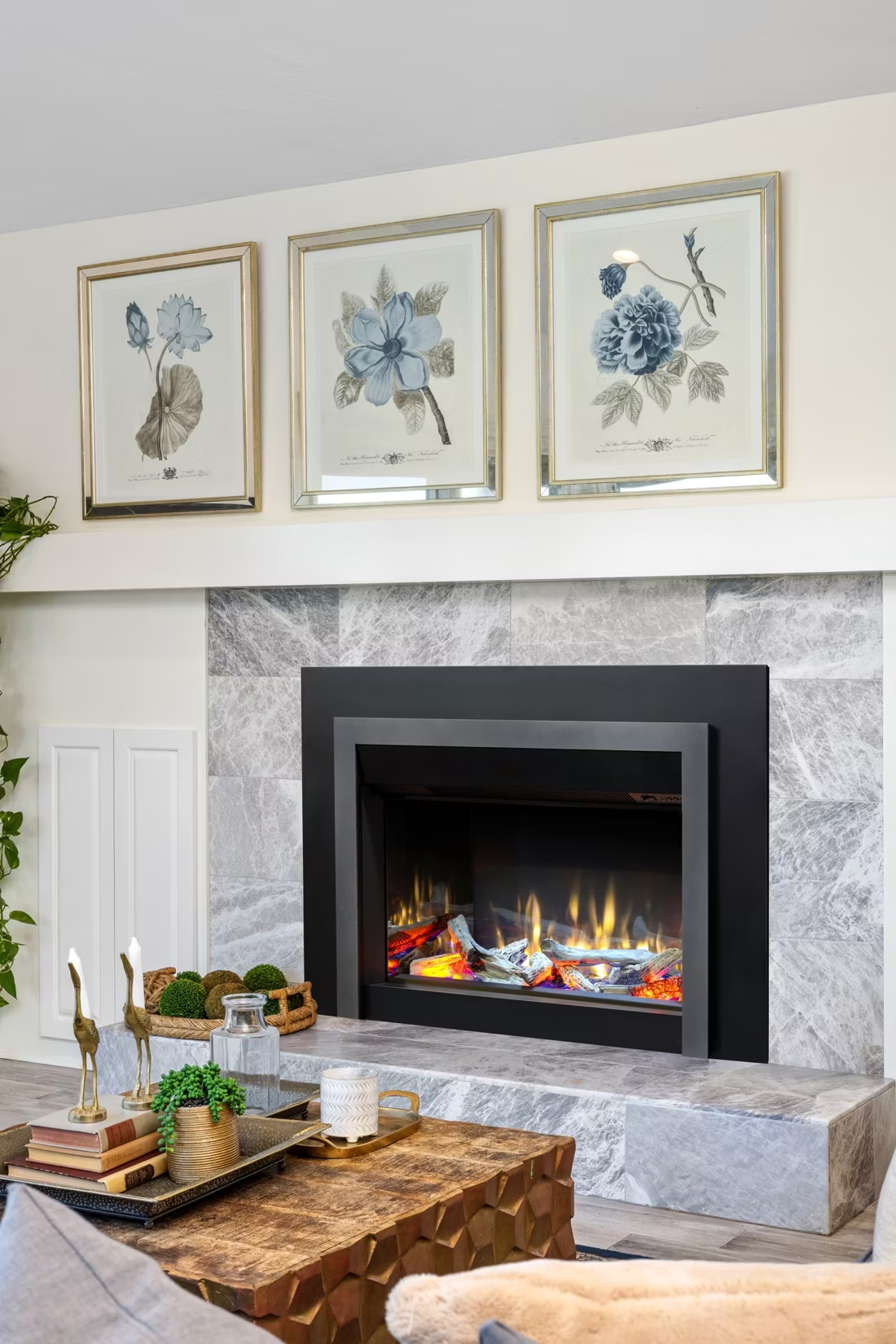
Older farmhouses around Covington and Attica often have additions, enclosed porches, or upstairs bedrooms with no ductwork and no existing flue. An electric insert can drop into an unused masonry firebox in minutes; a wall-mounted linear unit can go into a remodeled bonus room with a single dedicated circuit. For the manufactured and modular homes common throughout rural Fountain County, a freestanding electric stove gives you real supplemental heat and the look of a fire without cutting into a wall or running gas. None of this replaces a whole-home heat source in a county this cold—but for the room that's always ten degrees colder than the rest of the house, it's often the right tool.
Three steps. No salesperson until you're ready.
Tell us about your project
Your zip code, your situation, and the fuel you're leaning toward—or let the answers point you to one.
See what's actually available
The brands dealers within 100 miles genuinely carry—real options, never a catalog mirage.
Get your dealer & Project Guide
A trusted local dealer, plus the free Project Guide & Parts List that names every component of the job.
Frequently Asked Questions
How much does it cost to install an electric fireplace in Fountain County?
Most electric fireplace projects in Fountain County run somewhere between $400 and $2,500. A basic plug-in insert or a freestanding stove model that runs on a standard 120-volt outlet sits at the low end—no electrician needed, no permit, just placement and plug-in. A built-in wall unit or a linear model set into a remodeled wall typically needs a dedicated 240-volt circuit run by a licensed electrician, which pushes cost toward the higher end once wiring, a junction box, and finish carpentry are included. Units going into an existing masonry firebox as an insert usually fall in the middle, since there's no chimney work—just trim and a surround.
Do I need a permit to install an electric fireplace in Fountain County?
A plug-in electric fireplace or freestanding stove that runs on an existing outlet typically doesn't require a permit anywhere in the county—there's no combustion, no venting, and no gas line involved. Where it changes is hardwired built-in units: if a licensed electrician is running a new dedicated circuit, that electrical work generally needs a permit through the Fountain County Building Department for unincorporated areas, or through the applicable town office if you're inside Covington or Attica city limits. Most electricians who do this work regularly will pull the permit as part of the job.
Will an electric fireplace actually heat a room, or is it just for looks?
A quality electric fireplace puts out real heat—most models are rated around 1,500 watts, roughly 5,000 BTU, which is enough to noticeably warm a single room like a converted porch, a bedroom addition, or a den. That's genuinely useful supplemental heat given how cold Fountain County winters run, with lows averaging 16°F and 6,020 heating degree days on the books. What it won't do is heat an entire farmhouse or replace a furnace during a January cold snap—think of it as zone heat for the room you're actually sitting in, not a whole-home solution.
What happens to my electric fireplace during a power outage?
It goes off, the same as your furnace fan and most other electric appliances. That matters more in rural Fountain County than it would in town—ice storms and downed lines along the county's rural stretches can knock out power for a day or more, and an electric fireplace offers zero backup heat in that scenario. If you're relying on supplemental heat for a room during winter storms, a wood stove or a propane unit with battery-backup ignition is the more resilient choice. Plenty of homeowners here run electric for daily convenience and keep a wood stove or fireplace as their outage backup—the two aren't mutually exclusive.
Can an electric insert go into my existing wood fireplace?
Yes, and it's one of the more common projects for the older homes around Covington and Attica that still have a masonry firebox from the original build. An electric insert slides into the existing opening, plugs into a nearby outlet or a new dedicated circuit, and gives you flame-effect ambiance and real heat output without cutting a new vent or maintaining a chimney. The old chimney can stay capped and untouched, or you can leave it usable if you ever want a wood-burning option again down the line. It's typically the fastest and least invasive electric fireplace project available.
Electric stove, wall unit, or insert—which type fits my home?
For manufactured and modular homes, common throughout rural Fountain County, a freestanding electric stove is usually the simplest option—it sits on the floor like a wood stove, plugs into a standard outlet, and can be moved if needed. For a remodel or new addition where you want a built-in look, a wall-mounted linear unit set into framing on a dedicated circuit gives you a cleaner, modern appearance. For an existing masonry fireplace, an insert is the natural fit. Brands like Dimplex and Napoleon show up regularly through local hearth dealers and cover all three formats—a local dealer can walk you through which fits your room and your wiring situation.
How much does it cost to run an electric fireplace day to day?
Most electric fireplaces draw around 1,500 watts on the heat setting. At a typical Indiana residential electric rate near $0.13 per kWh, that works out to roughly 20 cents an hour of heater use—a few dollars a week if you're running it most evenings in a bonus room or bedroom. That's considerably cheaper than heating the same square footage with a whole-home furnace running longer cycles, which is part of why electric fireplaces have caught on for zone heating in specific rooms rather than as a primary heat source for a full Fountain County farmhouse.
Is an electric fireplace enough heat for Fountain County's winters?
On its own, no—not for a whole home. Fountain County sits in climate zone 5A with 6,020 heating degree days and average winter lows around 16°F, similar to what you'd see in Madison, Wisconsin. An electric fireplace is genuinely good supplemental heat for the specific room it's in, especially additions and bedrooms that run colder than the rest of the house, but it shouldn't be your only heat source through a stretch of single-digit nights. Most homeowners here pair electric units with a propane furnace or a wood stove for primary heat and use the electric fireplace where it does its best work—a specific room, on demand, no fuel or fire tending required.
Electric fireplace vs. pellet stove—which makes more sense for my home?
Pellet stoves, sourced locally from brands like Indeck Energy Services, Lignetics, and Somerset Pellet Fuel, put out significantly more heat and can serve as genuine supplemental or even primary heat for a larger area of a Fountain County home—but they need venting, a hopper you refill regularly, and electricity to run the auger and blower, so they go down in an outage just like an electric fireplace does. An electric fireplace skips the venting and fuel storage entirely and installs in a fraction of the time, but tops out at a lower BTU output suited to one room. If you're heating a single bonus room or bedroom, electric is simpler. If you want real supplemental heat across a larger living area and don't mind loading pellets, that's where a pellet stove takes over.
Can I put a TV above my fireplace?
Yes—with an asterisk. Fireplaces are hot and TVs don't like heat. Either put a mantel between them to deflect rising warmth, or choose a fireplace with heat-management technology that creates a cool zone on the wall above—the wall stays around 125 degrees, barely warm, while the room still gets full heat. If you like clean lines and don't want a mantel, heat management is the answer.
Do electric fireplaces actually produce heat?
Yes—most put out around 4,800–5,000 BTUs from a standard outlet, which comfortably warms a bedroom, office, or den as a comfort-zone heater. What they won't do is carry a whole house the way wood, gas, or pellet can. Think of electric as ambiance-first with honest supplemental heat: flames on with no heat in July, flames plus warmth in January.
Does a fireplace add value to my home?
On average, a fireplace adds back to the home about the same amount you spent installing it. Add the monthly savings from heating the rooms you actually use instead of the whole house—often hundreds of dollars a year—and the value case is strong before you even count what a fire does for how your family uses the room.
What is an in-home preview and do I need one?
It's a visit where a hearth professional measures your space, confirms the model you picked actually works in your home, and walks the specs—framing, gas line, venting, finish work—before anything is ordered. Some details you just can't know until you see the house. Never make a down payment without one; it's the single most-skipped step that burns buyers.
Find your electric fireplace in Fountain County.
Tell us about the room you're trying to heat and we'll match you with the right electric fireplace, insert, or stove—plus a free Project Guide & Parts List and a trusted local dealer to install it.
Find Your Fireplace →