
Clean, steady heat for Daviess County's cold snaps.
From Washington to Odon, Elnora, and the farm country in between, pellet stoves offer a low-maintenance alternative to cordwood for Daviess County's mixed-humid winters. Find the right unit and connect with a trusted local dealer.
Every Project Starts From One of These Five Situations
A modern alternative to the county's wood-heat roots.
Daviess County sits in southwestern Indiana's climate zone 4A, with roughly 4,494 heating degree days a year and winter lows that average around 24°F—a real but moderate heating season, far milder than what homes in Madison, WI or Minneapolis, MN deal with each winter. The county's oak, hickory, maple, and beech woodlots have long fueled a strong wood-burning culture, reinforced by one of Indiana's largest Amish settlements centered around Washington, Odon, Montgomery, and Elnora, where cordwood heat is a way of life for many households.
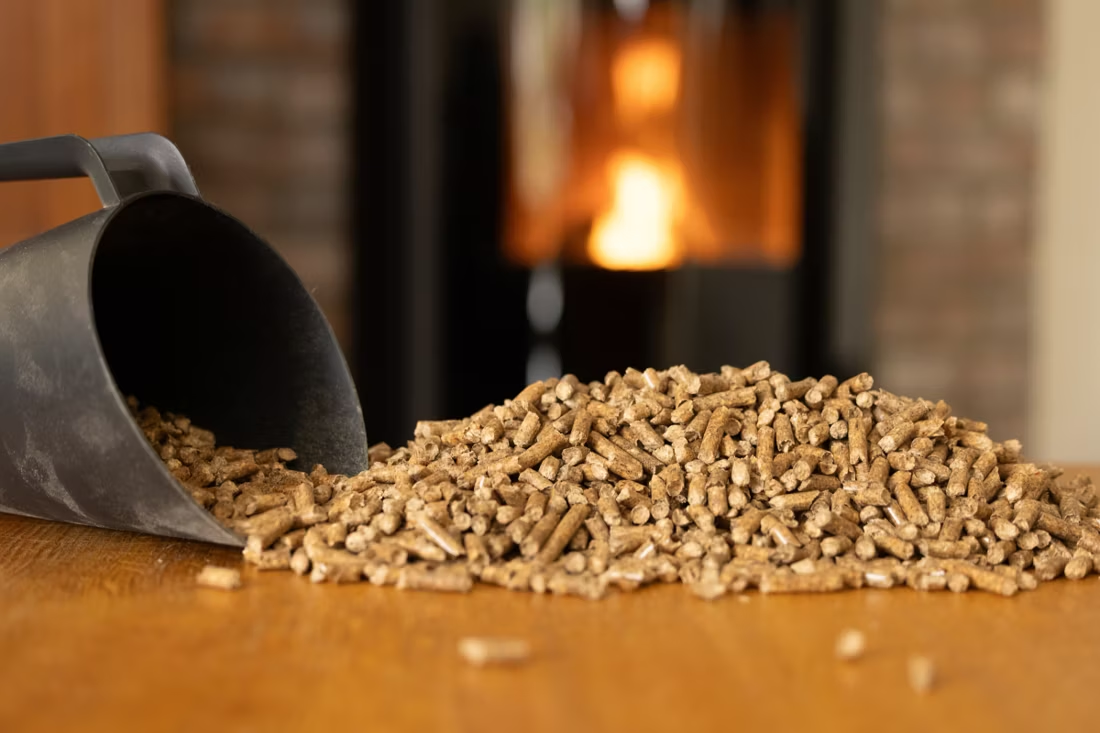
Pellet stoves give the rest of Daviess County's homeowners a cleaner, more automated way to get that same radiant heat without splitting and stacking cordwood. Regional pellet supply comes through brands like Indeck Energy Services, Lignetics, and Somerset Pellet Fuel, sold through farm supply stores and hearth dealers across this part of Indiana. The one honest caveat: pellet stoves need household electricity to run the auger and combustion blower, which is part of why they're less common in the county's off-grid Amish farmhouses. For everyone else—town homes in Washington, rural properties near Cannelburg or Plainville, workshops and additions that need supplemental zone heat—pellet is a genuinely good fit, and Daviess County's air quality record (no non-attainment designations or winter inversion advisories) means there's nothing stopping you from running one daily.
Three steps. No salesperson until you're ready.
Tell us about your project
Your zip code, your situation, and the fuel you're leaning toward—or let the answers point you to one.
See what's actually available
The brands dealers within 100 miles genuinely carry—real options, never a catalog mirage.
Get your dealer & Project Guide
A trusted local dealer, plus the free Project Guide & Parts List that names every component of the job.
Frequently Asked Questions
How much does a pellet stove installation cost in Daviess County?
Pellet stove installations in this part of Indiana typically run in the $3,000 to $7,000 range, depending on whether you're installing a freestanding stove or a fireplace insert, whether a hearth pad is needed for code clearance, and how much wall or roof venting work is involved. Homes near Washington with easy dealer access tend to land on the lower end; rural properties out toward Cannelburg, Plainville, or Montgomery may see a modest travel charge added for the installer's drive time. Ask your local dealer for a firm quote after an in-home look at your space.
What size pellet stove do I need for my Daviess County home?
Because Daviess County's roughly 4,494 heating degree days put it in a moderate cold-climate zone—noticeably milder than northern Indiana or the Great Lakes—most homes here don't need the largest, high-BTU units built for places with harsher winters. A small to medium pellet stove (rated for 1,000 to 1,800 square feet) is usually enough for a single-story farmhouse or ranch, while larger or two-story homes with open floor plans may want a bigger hopper and higher max BTU output. A local dealer can size the unit correctly based on your square footage, insulation, and ceiling height.
Where can I find certified pellet stove installers near me?
Look for installers with NFI (National Fireplace Institute) certification, which covers proper venting, clearance-to-combustible rules, and pellet-specific appliance training. Hearth dealers serving Daviess County typically cover Washington, Odon, Elnora, and the surrounding townships, with a small travel fee for more remote addresses. Because pellet stoves involve both wall or roof venting and an electrical hookup for the auger and blower, it's worth avoiding general handyman installs—a properly vented and wired unit matters both for safety and for keeping your manufacturer's warranty valid.
What's the difference between a pellet stove and a pellet insert?
A pellet stove is a freestanding unit that sits on a hearth pad and vents through an exterior wall or existing chimney—it can go almost anywhere in a home with the right clearances. A pellet insert is built to slide into an existing masonry fireplace opening, turning an old wood-burning fireplace into a sealed, high-efficiency pellet appliance using the existing chimney chase for venting. For Daviess County homes with an older masonry fireplace that's rarely used, an insert is often the simpler upgrade; for homes without an existing fireplace, a freestanding stove is the more flexible option.
Do I need a permit to install a pellet stove in Daviess County?
Most new pellet stove or insert installations require a building permit through your local building department—the Daviess County Building Department for unincorporated areas, or the applicable city office if you're within Washington's city limits. The permit process typically checks hearth clearances, venting termination points, and the electrical circuit for the unit's auger and blower. Most hearth dealers handle the permit paperwork as part of the installation, so it's rarely something homeowners have to manage themselves. Unlike some western states, Daviess County has no winter air quality curtailment periods to work around, so there's no burn-ban restriction to plan installation timing around.
What's the best pellet stove for Daviess County's climate?
Given the county's moderate heating load—winter lows averaging around 24°F and roughly 4,494 heating degree days—most Daviess County homes do fine with a standard high-efficiency pellet stove rather than the largest max-output models built for harsher northern climates. Look for a unit with a reasonably sized hopper (40+ lbs) so you're not refilling constantly during a cold stretch, and confirm it's rated to burn the pellet brands actually stocked locally, such as Indeck Energy Services, Lignetics, or Somerset Pellet Fuel. A local dealer can match a specific model to your square footage and how you plan to use it—primary heat versus supplemental zone heat.
How often does a pellet stove need cleaning and servicing?
Pellet stoves need more frequent light maintenance than wood stoves but far less heavy chimney work. Plan on emptying the ash pan every few days during regular winter use, cleaning the burn pot and glass weekly, and scheduling a full professional service—checking the auger, blower motors, gaskets, and venting—once a year, typically before the start of heating season in early fall. Regular upkeep matters more in Daviess County's humid summers, since moisture exposure between burning seasons can affect pellet quality and stove components if the unit sits unused and uninspected.
Where can I buy pellet fuel in Daviess County?
Regional brands like Indeck Energy Services, Lignetics, and Somerset Pellet Fuel are the most common pellet bags found at farm supply and hardware stores serving southwestern Indiana, including outlets in and around Washington. Pricing fluctuates with hardwood supply and demand each season, but expect bagged pellets in this part of Indiana to run in a similar range to the broader Midwest market. Buying a full ton or pallet ahead of the season, rather than bag by bag through winter, is generally the more economical route and worth asking your local dealer or supplier about.
Pellet stove vs. wood stove—which is right for my Daviess County home?
Wood stoves run on cordwood—plentiful in this county given the local oak, hickory, maple, and beech supply—and they work without electricity, which matters for the county's Amish households and anyone wanting heat during a power outage. Pellet stoves trade that off-grid independence for convenience: load the hopper, set the thermostat, and get consistent, lower-maintenance heat with a lot less ash and creosote. Since pellet stoves need electricity to run the auger and blower, they're not the right fit for a fully off-grid home, but for the majority of Daviess County houses with standard electrical service, pellet offers an easier day-to-day experience than tending cordwood, especially as supplemental heat in a workshop, addition, or secondary living space.
Why is my open fireplace making my house colder?
Open fireplaces suck—literally. As the fire burns, it consumes air your furnace already paid to heat and pulls it out through the chimney, so the house is actually colder after the fire goes out than before you lit it. An insert fixes this: it seals the chimney, puts fixed glass across the front, and turns that hole in your house into a real heat source.
What does it take to replace an existing fireplace?
Fireplaces are like icebergs—bigger behind the wall than in front of it. Replacement means removing the surrounding tile or stone (the finish material laps onto the fireplace face), pulling the old unit, setting the new one in the same enclosure, and re-finishing the wall. A hearth professional can determine what's behind your wall without demolition during an in-home preview.
What is an in-home preview and do I need one?
It's a visit where a hearth professional measures your space, confirms the model you picked actually works in your home, and walks the specs—framing, gas line, venting, finish work—before anything is ordered. Some details you just can't know until you see the house. Never make a down payment without one; it's the single most-skipped step that burns buyers.
Does a fireplace add value to my home?
On average, a fireplace adds back to the home about the same amount you spent installing it. Add the monthly savings from heating the rooms you actually use instead of the whole house—often hundreds of dollars a year—and the value case is strong before you even count what a fire does for how your family uses the room.
Stove and Fireplace Dealers in Daviess County
Pellet Brands Stocked Around Daviess County
Manufacturers will point you to the nearest stocking dealer.
Find your pellet stove in Daviess County.
Tell us about your home and heating goals, and we'll match you with a trusted local dealer and send over a free Project Guide & Parts List—the exact stove, vent kit, and installation plan for your Daviess County home.
Find Your Fireplace →