
Real flame-look warmth, no chimney required.
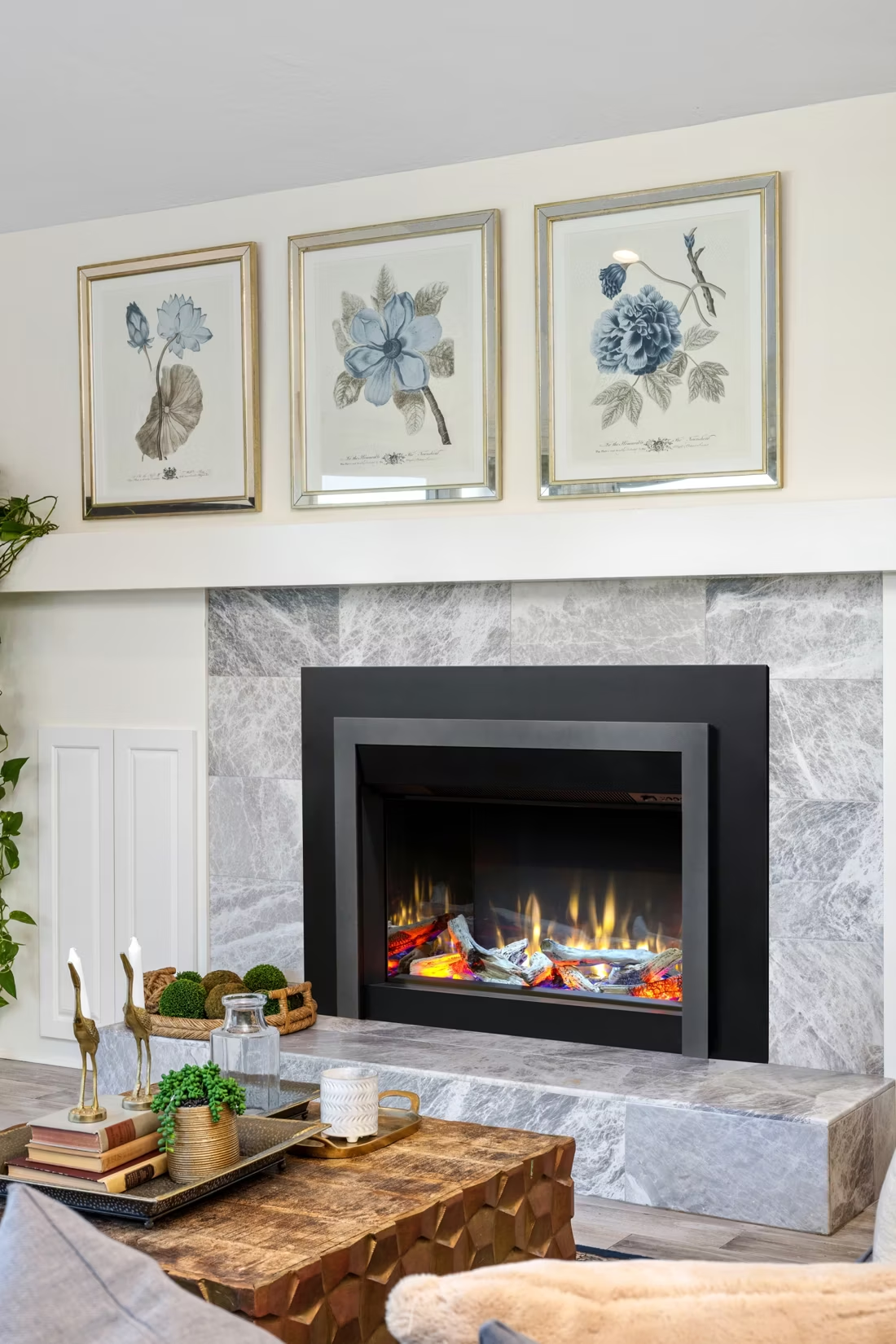
No chimney, no gas line, and no permit hassle for most units—just plug-in or hardwired warmth for homes from Washington to Odon and every community in between. Find the right electric fireplace and connect with a trusted local dealer.
Every Project Starts From One of These Five Situations
The simplest way to add heat and ambiance.
Daviess County sits in Indiana's southwest corner, where Washington serves as the county seat and communities like Odon, Montgomery, Cannelburg, and Elnora dot the farmland in between. At climate zone 4A with a moderate winter heating season and an average winter low near 24 degrees, the county's heating season is real but far less punishing than places like Madison, Wisconsin or Fargo, North Dakota. That moderate cold is exactly the kind of climate where an electric fireplace earns its keep—not as a home's sole heat source, but as an easy, no-mess way to add supplemental warmth and a real flame-look to a living room, bedroom, or finished basement.
One thing that sets Daviess County apart from most of the counties we cover: it's home to one of Indiana's largest Amish and Mennonite settlements, concentrated around Montgomery and Odon. Many of those households remain off standard grid electric service and rely on propane, wood, or other off-grid heat sources instead—electric fireplaces simply aren't part of that picture there. In Washington and the county's other grid-connected communities, though, electric units are a straightforward option: no chimney, no gas line, no venting to plan around, and often no permit at all for a plug-in unit. Larger built-in models that need a dedicated 240-volt circuit are still a fraction of the electrical work a gas line or masonry flue would require.
Three steps. No salesperson until you're ready.
Tell us about your project
Your zip code, your situation, and the fuel you're leaning toward—or let the answers point you to one.
See what's actually available
The brands dealers within 100 miles genuinely carry—real options, never a catalog mirage.
Get your dealer & Project Guide
A trusted local dealer, plus the free Project Guide & Parts List that names every component of the job.
Frequently Asked Questions
How much does it cost to install an electric fireplace in Daviess County?
Plug-in electric inserts and freestanding stoves that run on a standard 120-volt outlet are the least expensive option, often installed for $300 to $800 including a unit rated for a typical living room. Built-in wall units or larger inserts that draw more power sometimes need a dedicated 240-volt circuit, which adds an electrician's time—total installed cost for those runs closer to $1,200 to $2,500 depending on the unit and any wall framing or trim work. Either way, you're looking at a fraction of what a wood or gas installation costs in Daviess County, since there's no chimney, flue liner, or gas line to plan around.
Will an electric fireplace actually heat my house?
Most electric fireplaces put out somewhere around 4,000 to 5,000 BTU—enough to noticeably warm a single room, but not enough to replace a furnace during a Daviess County winter with lows averaging 24 degrees and a moderate heating season overall. Think of it as zone heating: a way to take the chill off a living room or bonus room without running the furnace harder, or to add ambiance to a room that doesn't get much heat otherwise. For farmhouses and older homes scattered around Odon, Cannelburg, and the rural county, that kind of targeted supplemental heat can meaningfully cut furnace runtime in the rooms people actually use.
Can I put an electric insert into my existing wood-burning fireplace?
Yes, and it's one of the most common electric fireplace projects in older Daviess County homes with an existing masonry fireplace. An electric insert slides into the firebox opening, plugs in (or gets hardwired, depending on the model), and gives you flame-effect heat without needing a working chimney, a liner, or annual sweeps. It's a popular option for homeowners who inherited a fireplace that's been capped off or who don't want the hassle of sourcing and seasoning oak, hickory, or maple firewood—all common species in this part of Indiana—but still want the look of a fire.
Do I need a permit or electrician to install an electric fireplace?
A plug-in electric fireplace that uses an existing outlet typically doesn't require a permit anywhere in Daviess County—you're just plugging in an appliance. If you're installing a built-in unit that requires a new dedicated circuit, running that circuit is electrical work that should be pulled through your local building department and done by a licensed electrician, even though it's a much simpler inspection than a gas line or chimney installation would require. Local hearth dealers who sell electric units can usually tell you upfront whether your chosen model needs new wiring.
What's the difference between an electric fireplace, insert, and stove?
An electric fireplace is typically a wall-mounted or built-in unit designed to look like a framed fireplace opening—popular in new construction or remodels in and around Washington. An electric insert is sized to slide into an existing masonry or prefab firebox, replacing a wood-burning setup with flame-effect heat. An electric stove is a freestanding cabinet-style unit that sits on the floor like a wood or pellet stove, popular for smaller rooms or manufactured and modular homes, which are common throughout rural Daviess County. All three plug in or hardwire—none require venting.
Will my electric fireplace work if the power goes out?
No—unlike a wood stove, an electric fireplace stops working the moment the power does, which matters during the ice storms that occasionally hit this part of southwestern Indiana. If backup heat during outages is a priority for your household, many Daviess County homeowners keep a wood or propane option as backup and use electric for daily convenience and ambiance the rest of the time. This is also part of why electric fireplaces aren't part of the picture in much of the county's Amish and Mennonite community, where households are often already set up around non-grid heat sources.
How much does it cost to run an electric fireplace?
Running an electric fireplace on its heat setting typically costs somewhere around 10 to 20 cents per hour, depending on your local electric rate and whether you're running it on high or just for the flame effect with the heater off. In a moderate climate like Daviess County's—zone 4A with an average winter low of 24 degrees—most owners run these for a few hours a day in the room they're using, rather than continuously, which keeps the added cost to a manageable line on the electric bill.
Electric vs. gas or pellet—which fireplace is right for my home?
Gas fireplaces and pellet stoves—pellets are available locally through brands like Lignetics and Somerset Pellet Fuel—both put out real, primary-heat-level BTUs and can genuinely warm a room or small home. Electric fireplaces can't compete with either on raw heat output, but they win on installation simplicity: no gas line, no venting, no ash to manage, and no combustion byproducts to worry about. For a Daviess County homeowner who wants ambiance and light supplemental heat with the least possible construction, electric is usually the answer. For anyone leaning on a fireplace as a real heat source through the winter, gas or wood is the better fit.
Are electric fireplaces a good fit for older rural Daviess County homes?
Often, yes. A lot of the farmhouses and older homes scattered around Elnora, Cannelburg, and the county's unincorporated areas have drafty, hard-to-heat rooms that the furnace never quite catches up on. An electric insert or stove is a low-commitment way to add warmth to one of those rooms without opening up walls, running new gas lines, or dealing with an old, possibly unsafe masonry chimney. It's also a common choice for additions and finished basements, where running new gas or solid-fuel venting would be far more disruptive than plugging in or wiring a single circuit.
Can I put a TV above my fireplace?
Yes—with an asterisk. Fireplaces are hot and TVs don't like heat. Either put a mantel between them to deflect rising warmth, or choose a fireplace with heat-management technology that creates a cool zone on the wall above—the wall stays around 125 degrees, barely warm, while the room still gets full heat. If you like clean lines and don't want a mantel, heat management is the answer.
Does an electric fireplace need a vent or chimney?
No—that's its superpower. An electric fireplace needs a wall and an outlet, period. No vent pipe, no gas line, no clearances to design around, which is why it works in bedrooms, offices, apartments, and walls where venting a gas or wood unit would be impractical or impossible. Installation is typically the simplest and least expensive of any fireplace type.
Can I install a fireplace myself?
If you're putting a fire in your house on purpose, it's best to work with an expert. Unless you're genuinely experienced in framing, gas line, vent pipe, and the national code on clearances to combustibles, have a professional do it—and ideally the same company that sells you the fireplace, so warranty, service, and liability all live under one roof.
Does a fireplace add value to my home?
On average, a fireplace adds back to the home about the same amount you spent installing it. Add the monthly savings from heating the rooms you actually use instead of the whole house—often hundreds of dollars a year—and the value case is strong before you even count what a fire does for how your family uses the room.
Stove and Fireplace Dealers in Daviess County
Find your electric fireplace in Daviess County.
Tell us about your home and we'll match you with a trusted local Daviess County dealer and send over a free Project Guide & Parts List—the exact unit, any wiring needs, and a clear plan for your electric fireplace project.
Find Your Fireplace →