
Consistent heat for Clinton County's corn-belt winters.
Thermostat-controlled pellet heat for the flat, windswept farmland around Frankfort and the rest of Clinton County. We match you with a trusted local dealer and hand you a free project plan.
Every Project Starts From One of These Five Situations
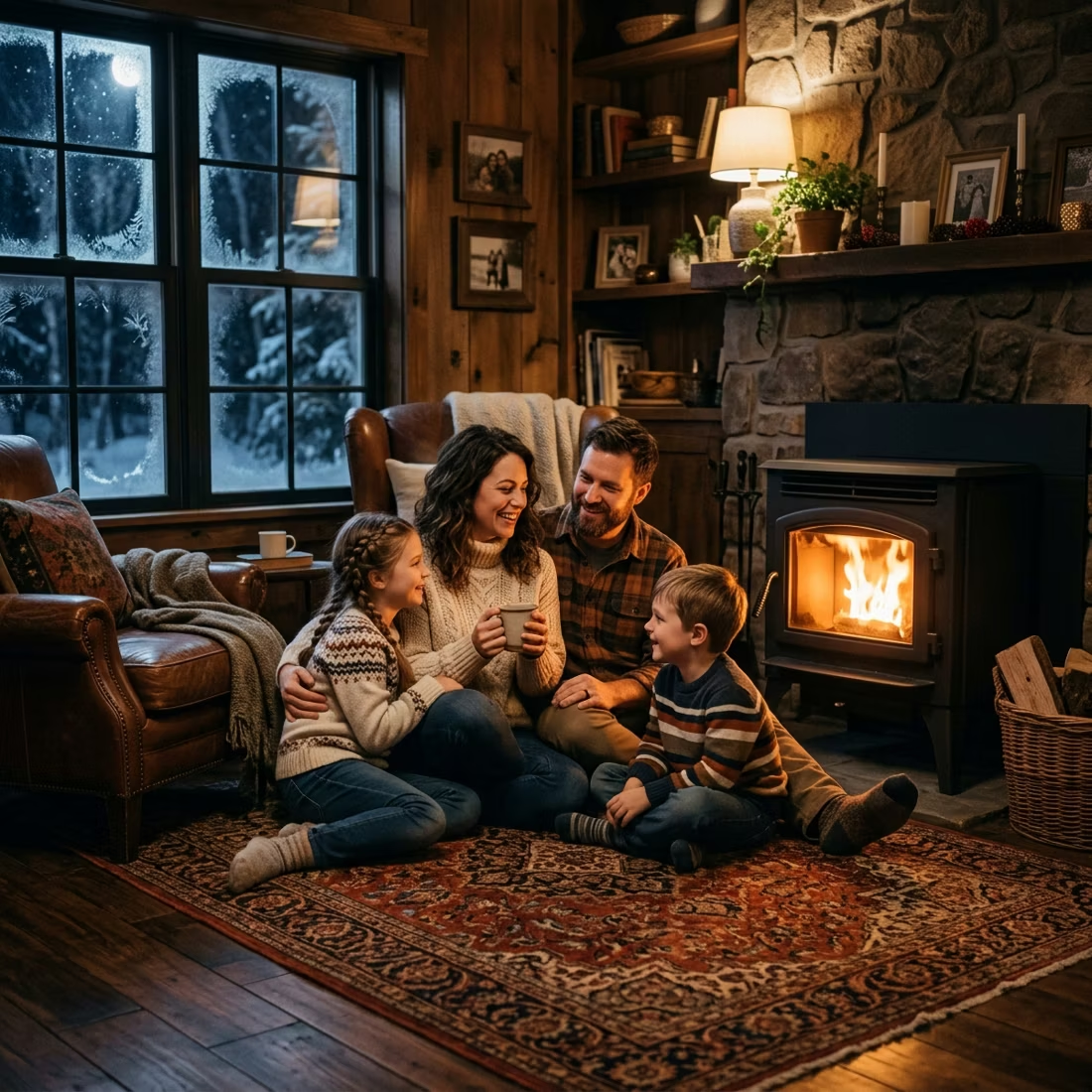
Set it, load it, and let it run.
Clinton County sits in the flat farmland of north-central Indiana, where open fields and few windbreaks let winter wind push the chill factor lower than the thermometer suggests. At roughly 5,718 heating degree days and average winter lows around 19°F, the county's climate zone 5A puts it in the same general heating-demand range as places like Madison, WI—a season long enough that homeowners want a heat source that doesn't require daily babysitting.
A pellet stove or insert loads from a hopper, runs on a thermostat, and burns compressed hardwood fuel far more evenly than cordwood. That's a real advantage for Clinton County households near Frankfort, Rossville, Michigantown, and Kirklin who want steady background heat through a farmhouse or ranch-style home without stacking, splitting, or cleaning up bark and ash all season. Regional pellet brands including Indeck Energy Services, Lignetics, and Somerset Pellet Fuel supply the corridor along I-65 and US-421, keeping fuel reasonably easy to source locally without long-haul delivery.
Three steps. No salesperson until you're ready.
Tell us about your project
Your zip code, your situation, and the fuel you're leaning toward—or let the answers point you to one.
See what's actually available
The brands dealers within 100 miles genuinely carry—real options, never a catalog mirage.
Get your dealer & Project Guide
A trusted local dealer, plus the free Project Guide & Parts List that names every component of the job.
Frequently Asked Questions
How much does a pellet stove installation cost in Clinton County?
Pellet stove and insert installations in Clinton County typically run in line with regional Midwest pricing, generally landing between $3,000 and $6,500 depending on the unit, whether it's a freestanding stove or an insert going into an existing fireplace, and how far the vent run has to travel through an exterior wall. Homes with an existing masonry fireplace usually see lower installation costs since the chimney or wall penetration is already roughed in. A trusted local dealer will give you a firm number after walking the space and confirming venting and electrical needs—pellet units require a standard outlet to run the auger and blower.
Does a pellet stove work during a power outage?
Not without a backup power source. Unlike a wood stove, a pellet stove depends on electricity to run the auger that feeds fuel and the blower that distributes heat, so a standard outage will shut it down. Some Clinton County homeowners pair a pellet stove with a small battery backup or generator specifically for this reason, since ice storms and high wind events do occasionally knock out power across the flat farmland here. If uninterrupted heat during outages is your top priority, a wood stove is worth comparing against a pellet unit before you decide.
What size pellet stove do I need for my Clinton County home?
Sizing depends on square footage, ceiling height, and how open your floor plan is. As a general guide for this region's climate: smaller units (rated for roughly 1,000-1,300 sq ft) suit a single large room or a modest ranch home, mid-size units (1,300-2,000 sq ft) cover most Clinton County farmhouses and split-levels, and larger units (2,000+ sq ft) are meant for open-concept homes used as a primary heat source rather than supplemental warmth. Older farmhouses around Frankfort and Rossville with less insulation often benefit from sizing up slightly. A local dealer will size the unit correctly during an in-home visit rather than relying on square footage alone.
What's the difference between a pellet stove and a pellet insert?
A pellet stove is a freestanding unit that sits on a hearth pad and vents through a wall or existing chimney—it can go almost anywhere in a room with the right clearances. A pellet insert is built to slide into an existing masonry fireplace opening, converting an old wood-burning fireplace into a controlled, thermostat-driven heat source while reusing the existing chimney chase for venting. For Clinton County homes with an older fireplace that's rarely used, an insert is usually the more cost-effective route since it doesn't require new venting to be run from scratch.
Do I need a permit to install a pellet stove in Clinton County?
Most new pellet stove and insert installations require a building permit, since the unit involves venting through a wall or chimney and sometimes a dedicated electrical outlet. Clinton County does not have significant air quality restrictions like some western counties do, so there's no burn-curtailment paperwork to navigate—a straightforward building permit through the local building department is typically all that's needed. A local installer will usually handle the permit application as part of the installation, so it's rarely something a homeowner has to manage directly.
What pellets are available near Clinton County, and how much do they cost?
Hardwood pellets from brands like Indeck Energy Services, Lignetics, and Somerset Pellet Fuel are distributed through the Indiana corridor and are commonly stocked at farm supply and hearth retailers within reach of Frankfort. Given the region's abundant local hardwoods—oak, hickory, maple, and beech are the common species in Clinton County's woodlots—pellet fuel here tends to be reasonably priced and consistently available compared to more remote parts of the country. Buying a season's supply (roughly 2-3 tons for an average home) in late summer or early fall, before demand picks up, is the standard way local homeowners avoid mid-winter shortages.
How often does a pellet stove need cleaning and maintenance?
Pellet stoves need more frequent light maintenance than wood stoves, but far less deep cleaning. Ash pans typically need emptying every few days to weekly depending on use, the burn pot needs scraping every week or two to keep the flame pattern clean, and the venting and hopper should get a full inspection annually—ideally before the season starts in early fall, given Clinton County's roughly five-and-a-half-month heating season. Neglecting the burn pot is the most common cause of poor pellet stove performance, showing up as a smoldering or uneven flame rather than the steady, clean burn these units are known for.
Pellet stove vs. wood stove—which is right for my Clinton County home?
Wood stoves work without electricity, which matters during the occasional ice storm or high-wind outage that hits this part of Indiana, and pair well with the abundant local oak, hickory, and maple that many Clinton County properties already have on hand. Pellet stoves offer more consistent, thermostat-controlled heat, less physical labor (no splitting or stacking cordwood), and cleaner burning with far less ash—but they need electricity to run and won't function as backup heat during an outage. For a primary heat source in a home with reliable power, pellet often wins on convenience. For homes prioritizing storm resilience or already set up with a woodlot, wood remains the more self-sufficient choice.
Can I use a pellet stove as my primary heat source in Clinton County?
Yes—many Clinton County homeowners run a pellet stove as primary heat in a well-insulated, appropriately sized space, especially in single-story or open-concept homes. With around 5,718 heating degree days, the season is long enough that a correctly sized unit set to run steadily through the coldest stretches can meaningfully offset or replace furnace use in the rooms it serves. The tradeoff is the electrical dependency mentioned above, plus the need to keep a pellet supply on hand rather than relying on a utility delivery. Most local dealers can walk through whether primary or supplemental use makes more sense for your specific home.
Why is a fireplace insert so efficient?
An insert does two things: it seals the chimney completely, so you stop losing air you already paid to heat, and it radiates warmth into the room through the firebox and glass. Most add a heat-exchange fan that pulls cool room air underneath, wraps it around the hot firebox, and pushes it back out warm. Your home is more efficient before you've even lit the first fire.
Why is my open fireplace making my house colder?
Open fireplaces suck—literally. As the fire burns, it consumes air your furnace already paid to heat and pulls it out through the chimney, so the house is actually colder after the fire goes out than before you lit it. An insert fixes this: it seals the chimney, puts fixed glass across the front, and turns that hole in your house into a real heat source.
Can a fireplace actually lower my heating bill?
Yes—by creating a comfort zone. A furnace heats every square foot of the house just to warm the one room you're in; a gas fireplace on low burns roughly a sixth of the gas a typical furnace does. Set the furnace around 55–60 degrees as a baseline, then heat the rooms your family actually uses. Families who heat this way commonly save $20–$60 a month.
Can I install a fireplace myself?
If you're putting a fire in your house on purpose, it's best to work with an expert. Unless you're genuinely experienced in framing, gas line, vent pipe, and the national code on clearances to combustibles, have a professional do it—and ideally the same company that sells you the fireplace, so warranty, service, and liability all live under one roof.
Pellet Brands Stocked Around Clinton County
Manufacturers will point you to the nearest stocking dealer.
Find your pellet stove in Clinton County.
Tell us a bit about your home and we'll match you with a trusted local dealer and send over your free Project Guide & Parts List—the exact parts, vent kit, and recommended dealer for your pellet project in Clinton County.
Find Your Fireplace →