
Real ambiance for Clinton County, without the venting hassle.
From Frankfort to Colfax to Michigantown, electric units give Clinton County homes flip-a-switch warmth in any room—no chimney, no gas line, no permit headaches. Find the right unit and connect with a trusted local dealer.
Every Project Starts From One of These Five Situations
Supplemental heat that goes anywhere in the house.
Clinton County sits in the flat farmland of west-central Indiana, with winters that bring a moderately long heating season and average lows near 19 degrees—cold enough to matter, but not the kind of extreme cold that forces every household toward wood or gas. That gives Frankfort, Colfax, Michigantown, and Kirklin homeowners real flexibility. An electric fireplace or insert supplements a bedroom, basement, or home office without touching the furnace, and it goes in an interior wall, a rental unit, or a room where running a flue or gas line just doesn't make sense.
Electric units also sidestep the permit and inspection process that comes with wood or gas installs in Clinton County. Most models plug into a standard outlet or a dedicated 240V circuit for larger built-ins, and installation is closer to hanging a heavy mirror than building a chimney. For older farmhouses around the county where adding venting is impractical, or for finished basements that need supplemental warmth on the coldest nights, electric is often the most practical fit—and it's the only fuel choice that works cleanly in a condo, apartment, or rental property in Frankfort.
Three steps. No salesperson until you're ready.
Tell us about your project
Your zip code, your situation, and the fuel you're leaning toward—or let the answers point you to one.
See what's actually available
The brands dealers within 100 miles genuinely carry—real options, never a catalog mirage.
Get your dealer & Project Guide
A trusted local dealer, plus the free Project Guide & Parts List that names every component of the job.
Frequently Asked Questions
How much does an electric fireplace installation cost in Clinton County?
A basic plug-in electric insert or freestanding unit runs $400 to $1,200 installed in most Clinton County homes, with the low end covering units that simply slide into an existing opening and plug into a standard outlet. Larger built-in wall units that require a dedicated 240V circuit run toward the higher end once an electrician runs new wiring. Because there's no venting or gas line involved, electric is consistently the least expensive fireplace fuel to install in the county—a fraction of the $4,500+ typical for a new wood or gas installation.
Do I need a permit to install an electric fireplace in Clinton County?
Most plug-in electric fireplaces and inserts don't require a building permit since there's no venting, gas line, or structural chimney work involved. If you're adding a built-in unit that requires new electrical wiring—a dedicated 240V circuit, for example—an electrical permit may apply and the work should be done by a licensed electrician. Local dealers can tell you which specific model requires what, and most straightforward insert or wall-mount installs are done in an afternoon with no inspection required.
Will an electric fireplace actually heat my room, or is it just for looks?
Modern electric fireplaces put out real heat—most units are rated between 4,000 and 5,000 BTU, enough to comfortably warm a single room of 400-1,000 square feet depending on insulation. That won't replace a furnace for a whole Clinton County house through a stretch of 19-degree overnight lows, but it's a legitimate supplemental heat source for a bedroom, den, or finished basement. Many homeowners run the flame visual without the heat element in warmer months and switch on the heater as a zone-heating boost once the furnace kicks into its harder winter cycle.
What's the difference between an electric insert and an electric fireplace?
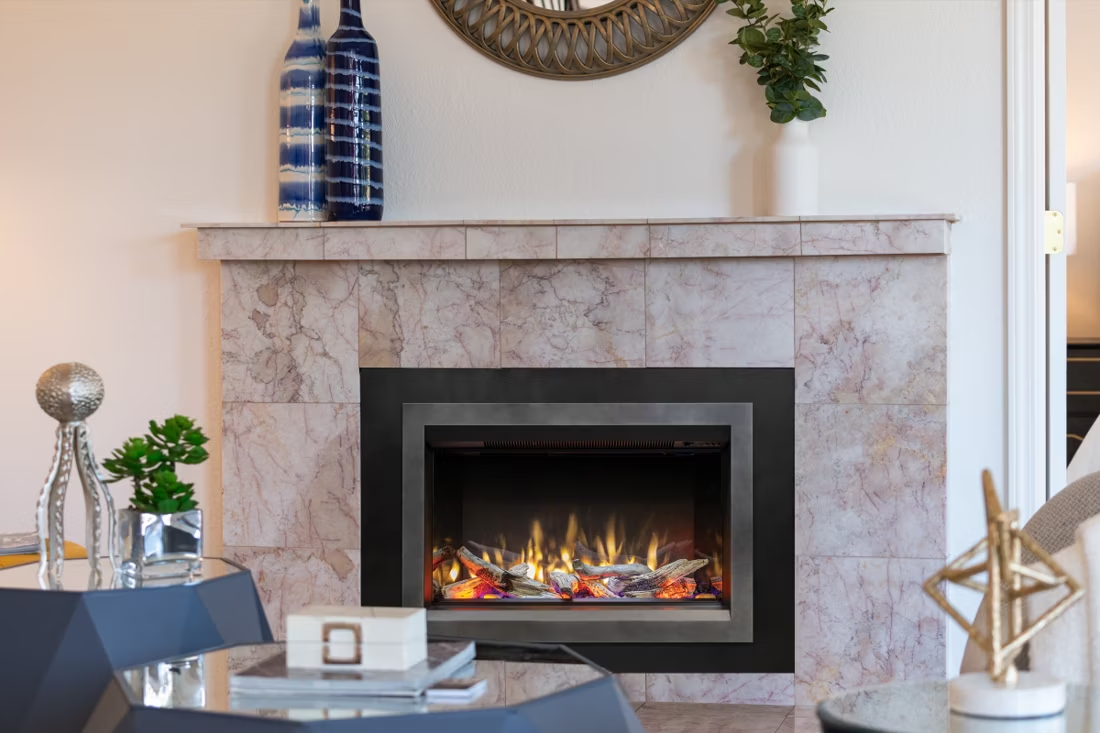
An electric insert is sized to slide into an existing fireplace opening—masonry or a defunct wood-burning box—and typically plugs into an outlet inside the firebox or nearby. An electric fireplace can be a freestanding cabinet unit, a wall-mounted unit that hangs like a large flat-screen TV, or a built-in unit framed into new construction. For a Clinton County home with an existing but unused wood fireplace, an insert is usually the simpler and cheaper upgrade. For a home without an existing fireplace opening—say, a bedroom or basement remodel—a wall-mount or freestanding electric unit is the better fit.
Can an electric fireplace run during a power outage?
No—electric fireplaces require power to operate the heating element, fan, and flame effect, so they go dark during an outage just like any other electric appliance. For Clinton County homes that see occasional winter storm outages, electric shouldn't be your only heat plan; it works well as a daily-use supplemental heater paired with a furnace, but a wood stove or a gas unit with battery-backup ignition is the better choice if backup heat during outages is a priority.
How do electric fireplace running costs compare to gas or wood in Clinton County?
Electric fireplaces are cheap to buy and install but can be more expensive per hour of heat than gas, depending on local electricity rates and how the unit is used. Running a 5,000 BTU electric heater for several hours a day adds a noticeable amount to a monthly electric bill, while a well-loaded wood stove burning local oak or hickory produces more heat per dollar if you're already set up to handle firewood. For most Clinton County households, electric fireplaces are used for occasional supplemental heat and ambiance rather than as a primary heat source, which keeps the operating cost modest in practice.
Are electric fireplaces safe for kids, pets, and older homes?
Yes—electric fireplaces are one of the safer options for households with young kids or pets since most models use LED flame effects with cool-touch glass and no real flame, embers, or combustion byproducts. There's no chimney to maintain, no creosote buildup, and no carbon monoxide risk, which also makes electric a strong fit for older Clinton County farmhouses where adding venting or gas lines would mean significant renovation. Look for units with an automatic shutoff and a UL safety listing.
What size electric fireplace do I need for my Clinton County home?
For a single bedroom or home office, a compact 26-40 inch wall-mount or insert unit is usually enough. For a larger living room or open-concept basement remodel, a 50-60+ inch unit or a larger built-in cabinet model provides more visual impact and heat coverage. Since electric heat output tops out around 5,000 BTU regardless of size—the larger units mainly add visual width and flame realism rather than more actual heat—sizing is really a design decision as much as a heating one. A local dealer can walk through options based on the wall or opening you're working with.
Electric vs. gas fireplace—which is right for my Clinton County home?
Gas fireplaces put out more real heat, can be configured to run during power outages with battery-backup ignition, and work well as a primary zone-heat source in a main living area. Electric fireplaces cost far less to install, require no gas line or venting, and can go anywhere there's an outlet—a rental unit, a bedroom, a basement, or an older farmhouse where running gas line isn't practical. For most Clinton County homes, gas makes sense for a primary living space and electric makes sense for secondary rooms, rentals, or homes where simplicity matters more than raw heat output.
Does an electric fireplace need a vent or chimney?
No—that's its superpower. An electric fireplace needs a wall and an outlet, period. No vent pipe, no gas line, no clearances to design around, which is why it works in bedrooms, offices, apartments, and walls where venting a gas or wood unit would be impractical or impossible. Installation is typically the simplest and least expensive of any fireplace type.
Can I put a TV above my fireplace?
Yes—with an asterisk. Fireplaces are hot and TVs don't like heat. Either put a mantel between them to deflect rising warmth, or choose a fireplace with heat-management technology that creates a cool zone on the wall above—the wall stays around 125 degrees, barely warm, while the room still gets full heat. If you like clean lines and don't want a mantel, heat management is the answer.
What is an in-home preview and do I need one?
It's a visit where a hearth professional measures your space, confirms the model you picked actually works in your home, and walks the specs—framing, gas line, venting, finish work—before anything is ordered. Some details you just can't know until you see the house. Never make a down payment without one; it's the single most-skipped step that burns buyers.
Does a fireplace add value to my home?
On average, a fireplace adds back to the home about the same amount you spent installing it. Add the monthly savings from heating the rooms you actually use instead of the whole house—often hundreds of dollars a year—and the value case is strong before you even count what a fire does for how your family uses the room.
Find your electric fireplace in Clinton County.
Tell us a bit about your home and we'll put together a free Project Guide & Parts List for your electric fireplace or insert—matched with a trusted local dealer in Clinton County.
Find Your Fireplace →