
Keep Your Family Warm and Safe—No Matter What
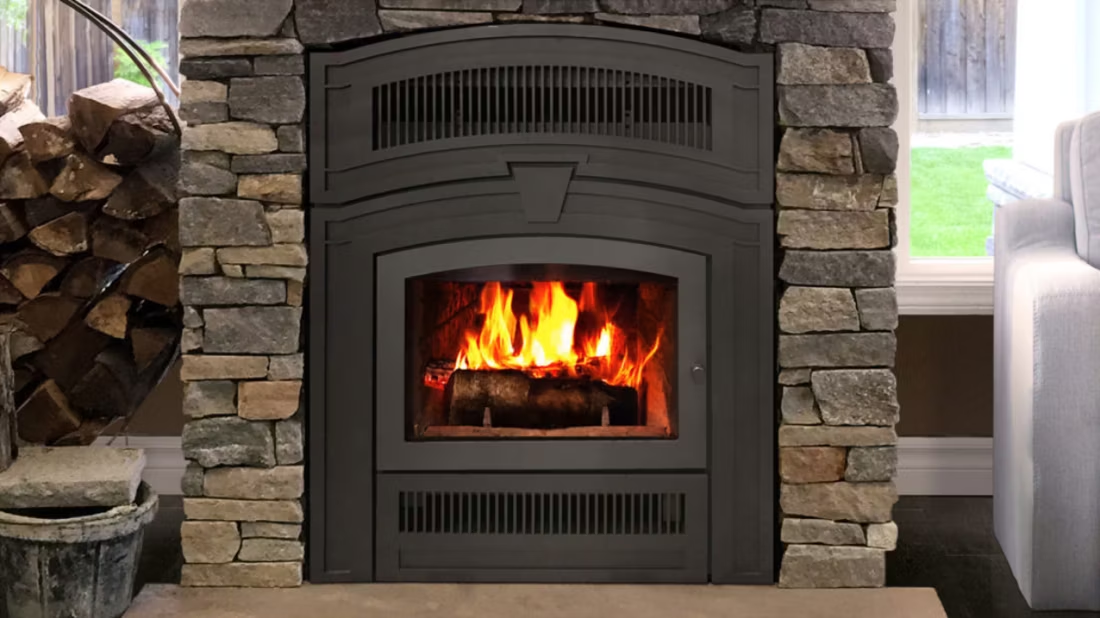
Most Cicero homes run on gas heat, but a wood stove or insert can still make sense for backup warmth, ambiance, or a lake property on Morse Reservoir. We'll help you figure out if it's right for your house and match you with a local dealer.
Every Project Starts From One of These Five Situations
Cicero was built for gas, not cordwood.
Cicero is a small, fast-growing town of about 5,400 people on Morse Reservoir in Hamilton County—one of the newest and most heavily developed suburban counties in the Indianapolis metro. Most of the housing stock here is recent construction, built with efficient gas furnaces from day one rather than retrofitted for a wood-burning appliance. Winters are real—the heating season is nearly as demanding as Madison, WI's, and overnight lows average around 17°F, comparable to what a place like Madison, WI sees over a season—but the local building pattern simply didn't put wood heat at the center of how people stay warm.
There's also a practical infrastructure gap: Indiana has almost no federal timberland near Hamilton County (the nearest national forest, Hoosier National Forest, sits roughly two hours south), so there's no local cutting-permit system the way there is in wood-heavy western states. Anyone burning wood in Cicero is buying seasoned cordwood—usually oak, hickory, maple, or beech, all common Indiana hardwoods sold by regional firewood dealers—rather than cutting their own. None of that means wood heat is off the table. It just means it's a deliberate choice here, not the default, and usually shows up as a supplemental stove for outage backup or a fireplace feature at a lake house rather than a primary heat source.
Three steps. No salesperson until you're ready.
Tell us about your project
Your zip code, your situation, and the fuel you're leaning toward—or let the answers point you to one.
See what's actually available
The brands dealers within 100 miles genuinely carry—real options, never a catalog mirage.
Get your dealer & Project Guide
A trusted local dealer, plus the free Project Guide & Parts List that names every component of the job.
Frequently Asked Questions
Is wood heat common in Cicero, IN?
Not really, and it's worth saying plainly. Cicero's housing stock is mostly newer subdivision construction built around Duke Energy Indiana electric service and gas furnaces, and many of these developments have HOA covenants that limit or prohibit exterior wood-burning appliances like outdoor wood boilers. Wood stoves and inserts do show up here—usually in older homes near the original town center or at properties along Morse Reservoir—but they're the exception rather than the norm you'd find in a rural Indiana county with more timberland and a longer wood-heating tradition.
How much does a wood stove installation cost in Cicero?
There isn't a deep bench of local wood-stove installers in Cicero the way there is for gas or electric work, so pricing tends to track regional Indianapolis-metro rates rather than a distinct local range. Nationally, a freestanding wood stove with a new Class A chimney typically runs $4,000 to $8,000 installed, while converting an existing masonry fireplace to a wood insert is usually less—often $3,000 to $6,000—since it reuses the existing chimney. Expect a local hearth dealer to travel from the broader Hamilton County or Indianapolis area for the installation, and get a firm in-home quote before committing, since venting complexity is the biggest cost swing.
Do I need a permit to install a wood stove in Cicero?
Yes. New wood-burning appliance installations in Cicero fall under the Hamilton County or Town of Cicero building permit process, and the stove needs to meet current EPA New Source Performance Standards. Most reputable hearth dealers handle the permit application and inspection scheduling as part of the installation, so you're not coordinating it yourself. If you're in a subdivision, it's also worth checking your HOA covenants before you buy—some Hamilton County developments restrict exterior venting or wood-burning appliances outright, which matters more here than the county permit itself.
What wood species are available for burning near Cicero?
Central Indiana hardwood forests supply the firewood sold in and around Hamilton County, and the dominant species are oak, hickory, maple, and beech—all dense hardwoods that burn hot and long once properly seasoned. Hickory in particular is a favorite among Indiana wood burners for its high BTU output and clean-splitting grain. Since there's no local cutting-permit system near Cicero, plan to buy seasoned, split cordwood from a regional firewood supplier rather than counting on cutting your own.
Where can I buy firewood in Cicero?
Because Hamilton County doesn't border national forest land, self-cut firewood permits aren't really an option here the way they are in western states. Instead, most Cicero homeowners buy seasoned cordwood from regional firewood dealers serving the Indianapolis-north suburbs, with oak and hickory being the most commonly sold species. Prices for delivered, seasoned cordwood in central Indiana typically run $200 to $300 per cord—ask any supplier whether the wood has been seasoned at least six to twelve months, since green wood burns poorly and builds creosote fast.
Would a wood stove actually help during a power outage in Cicero?
Yes, and this is one of the more legitimate reasons homeowners here still install one. Duke Energy Indiana serves Cicero, and like most Indiana utilities it sees occasional multi-day outages during winter ice storms. A wood stove keeps producing heat with zero electricity, which a gas furnace with an electric blower and ignition system cannot do on its own. If backup heat during outages is your main motivation, a simple, non-electric wood stove is one of the few appliances that will keep a room warm no matter what the grid is doing.
Wood insert or freestanding stove—which fits a Cicero home better?
It depends heavily on your home's age. Cicero's newer subdivisions, built over the last two decades as Hamilton County grew, mostly don't have existing masonry fireplaces, so a freestanding, zero-clearance wood stove with new Class A chimney venting is usually the practical path. Older homes near the original town center or along Morse Reservoir are more likely to have an existing masonry fireplace, in which case a wood insert that reuses the chimney is typically the simpler, less expensive upgrade. A local hearth dealer can tell you which category your home falls into in about five minutes.
Are there air quality restrictions on wood burning in Cicero?
No—Cicero and Hamilton County don't have the winter inversion or non-attainment issues you'd see in a basin or valley city, so there are no burn bans or curtailment periods to plan around. That said, in a suburban subdivision with houses closer together than a rural property, an EPA-certified, low-emission stove is still worth choosing over an older uncertified unit out of consideration for neighbors, even without a regulatory requirement pushing you there.
Wood vs. gas—which is right for my Cicero home?
For most Cicero homeowners, gas wins on the basics: it's the standard, widely available heat source here, installers are plentiful, and it requires no fuel storage or ash cleanup. Wood makes sense in narrower situations—as backup heat for Duke Energy Indiana outages, as a feature at a Morse Reservoir lake property, or for homeowners who specifically want the ambiance and radiant heat of a real fire and are willing to source cordwood from a regional supplier. If you're weighing the two, it usually comes down to whether you want a primary, low-maintenance heat source (gas) or a secondary, self-sufficient one (wood)—many homes here end up choosing gas for daily use and skip wood entirely.
What's the difference between an insert and a zero-clearance fireplace?
An insert is a fireplace that slides into a pre-existing wood-burning fireplace—if you don't have one, there's nothing to insert it into. A zero-clearance fireplace is built into a framed wall, which makes it the answer for remodels and new construction. Simple test: existing masonry fireplace means insert; blank or framed wall means zero-clearance.
Why is my open fireplace making my house colder?
Open fireplaces suck—literally. As the fire burns, it consumes air your furnace already paid to heat and pulls it out through the chimney, so the house is actually colder after the fire goes out than before you lit it. An insert fixes this: it seals the chimney, puts fixed glass across the front, and turns that hole in your house into a real heat source.
Can a fireplace actually lower my heating bill?
Yes—by creating a comfort zone. A furnace heats every square foot of the house just to warm the one room you're in; a gas fireplace on low burns roughly a sixth of the gas a typical furnace does. Set the furnace around 55–60 degrees as a baseline, then heat the rooms your family actually uses. Families who heat this way commonly save $20–$60 a month.
What is an in-home preview and do I need one?
It's a visit where a hearth professional measures your space, confirms the model you picked actually works in your home, and walks the specs—framing, gas line, venting, finish work—before anything is ordered. Some details you just can't know until you see the house. Never make a down payment without one; it's the single most-skipped step that burns buyers.
Nearby Dealers
Hearth shops serving Cicero and the surrounding area. Every listing shows whether it is a WhyFire partner, a dealer we have verified as authorized for the brands we recommend, or a local business carrying hearth products. No manufacturer pays for placement. How we verify dealers →
Newco Dealers Wholesale
The Cinder Box
Pate's Pool Service & Supply
See if wood heat fits your Cicero home.
Tell us about your house and how you'd use a wood stove or insert, and we'll send you a free Project Guide & Parts List—the exact parts, including the vent kit, and a recommended local dealer who can install it right.
Find Your Fireplace →