
Keep Your Family Warm and Safe—No Matter What
Most Woodridge homes run on natural gas, not cordwood. For the homeowners who still want a wood-burning option, we'll connect you with a local dealer who actually handles this niche.
Every Project Starts From One of These Five Situations
A DuPage County suburb built on natural gas, not cordwood.
Woodridge is a fully developed Chicago suburb of roughly 34,000 people, with lot sizes, HOA rules, and municipal infrastructure that assume gas heat, not wood. Winters here are genuinely cold—average lows around 17°F and a long, demanding heating season, in the same climate zone (5A) as Madison, WI—but almost every home in town was built with a furnace and, in many cases, a gas fireplace already in mind. There's no local cutting-permit office, no public land nearby for firewood harvesting, and no non-attainment air quality rules driving people toward or away from wood smoke. Wood heat simply never became part of how this area was built.
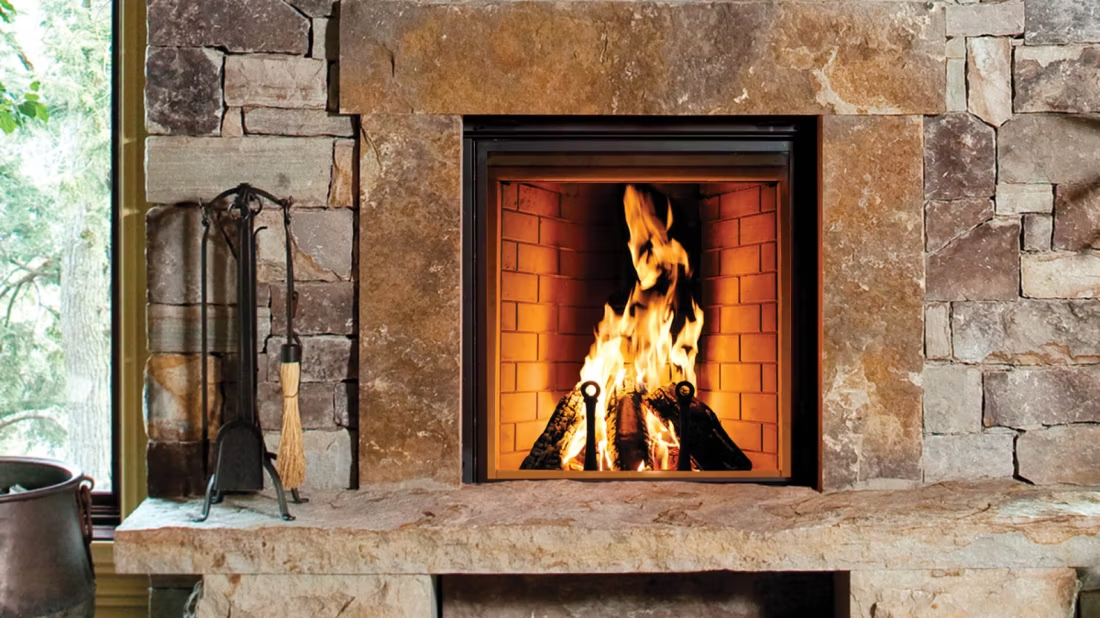
That doesn't mean nobody burns wood in Woodridge. A handful of older homes have existing masonry fireplaces, and some homeowners want a wood stove insert for ambiance, occasional weekend fires, or as backup heat if ComEd power goes out during a winter storm. If that's you, oak, hickory, walnut, and maple are the species most commonly available from tree services and firewood suppliers in the DuPage County area—all good, dense hardwoods that burn hot and clean once seasoned. We can still match you with a dealer who installs wood-burning appliances correctly, even in a market where it's the exception rather than the rule.
Three steps. No salesperson until you're ready.
Tell us about your project
Your zip code, your situation, and the fuel you're leaning toward—or let the answers point you to one.
See what's actually available
The brands dealers within 100 miles genuinely carry—real options, never a catalog mirage.
Get your dealer & Project Guide
A trusted local dealer, plus the free Project Guide & Parts List that names every component of the job.
Frequently Asked Questions
Is it even worth installing a wood stove in Woodridge?
For most Woodridge homes, no—natural gas is cheaper, more convenient, and already the default here. But there are legitimate reasons some homeowners still choose wood: a desire for heat that works without electricity during a ComEd outage, an existing masonry fireplace that's sitting unused, or simply wanting the ambiance and radiant heat of a real fire. If any of those apply to you, a wood stove or insert is still installable in Woodridge—you'll just be working with a smaller pool of local dealers than someone shopping for a gas fireplace would.
How much does a wood stove installation cost in Woodridge?
Because wood-burning installs are uncommon here, there isn't a large competitive local market publishing prices the way there is for gas. Based on typical Chicago-area hearth installs, expect somewhere in the $4,000 to $8,500 range—lower if you're inserting a unit into an existing masonry fireplace and already have a usable chimney, higher if you need new Class A chimney pipe and roof penetration from scratch. A local dealer will need to see your home to give you a firm number.
Can I put a wood insert into my existing fireplace?
If your Woodridge home has an older masonry fireplace—more common in the parts of town built before the area filled in with newer gas-heated construction—a wood-burning insert is often the most practical option. It uses the chimney you already have, dramatically improves the efficiency of an open hearth that's currently losing more heat than it produces, and doesn't require the framing and clearance work a freestanding stove needs. A local dealer can inspect your existing flue to confirm it's a good candidate before recommending a model.
Where do I get firewood in the Woodridge area?
There's no national forest or public cutting-permit program nearby, so self-cut firewood isn't really an option here the way it is in more rural parts of the country. Instead, expect to buy seasoned cordwood from local tree services, landscaping companies, or firewood delivery outfits serving DuPage County. Oak, hickory, walnut, and maple are the hardwoods you'll most often find locally—all season well and burn hot, with oak and hickory in particular giving longer burn times for overnight fires.
Do I need a permit to install a wood stove in Woodridge?
Yes—any new wood-burning appliance install requires a building permit through the Village of Woodridge, and the unit needs to meet current EPA emissions standards. Because wood installs are relatively rare here, it's worth confirming permit requirements directly with the Village before work begins, and using a dealer who's pulled permits for wood-burning appliances before rather than one who mostly handles gas.
Will a wood stove keep my home warm if the power goes out?
Yes, and this is one of the strongest reasons Woodridge homeowners still choose wood despite it being the less common option locally. A wood stove doesn't need electricity to produce heat, so it keeps working during a ComEd outage when your furnace's blower motor and any gas fireplace's electronic ignition won't. For a home in a 5A climate zone with real winter cold, that's a meaningful backup, not just a nice-to-have.
How do I find someone who actually installs wood stoves near Woodridge?
Since most hearth retailers in the Chicago suburbs are set up primarily around gas fireplaces, look specifically for a dealer who lists wood stoves and inserts among their regular installs, not just as an afterthought. NFI (National Fireplace Institute) certification is a good sign someone has real wood-burning training. We match Woodridge homeowners with dealers who genuinely stock and install wood-burning equipment, rather than sending you to a big-box store that mostly sells gas logs.
How often does a wood stove or chimney need to be inspected?
The Chimney Safety Institute of America recommends an annual inspection for any wood-burning appliance, and that holds even for occasional-use fires. Given how few chimney sweeps specialize in wood-burning systems in this part of DuPage County, plan ahead—book your inspection in late summer before burning season, rather than waiting until a cold November evening when you want to light your first fire.
Wood stove vs. gas fireplace—which makes more sense in Woodridge?
For the vast majority of homes in Woodridge, gas is the more practical choice—it's what the local market is built around, it's less maintenance, and Nicor or your builder likely already ran a gas line near your fireplace location. Wood makes sense in narrower cases: you want power-outage-proof heat, you have an existing masonry fireplace you'd like to bring back to life, or you simply want the experience of a real wood fire. Most Woodridge homeowners who go this route end up with gas as their primary heat and, occasionally, a wood-burning unit as a deliberate secondary choice rather than a default.
Why is a fireplace insert so efficient?
An insert does two things: it seals the chimney completely, so you stop losing air you already paid to heat, and it radiates warmth into the room through the firebox and glass. Most add a heat-exchange fan that pulls cool room air underneath, wraps it around the hot firebox, and pushes it back out warm. Your home is more efficient before you've even lit the first fire.
Why won't my new wood stove get going like my old one?
New wood stoves are 70%+ efficient, so far less heat goes up the flue—which also means less draft to get a fire established. The rule: build a genuinely hot fire for about 45 minutes before you choke it down. Skip that and you get smoke in the room, creosote in the chimney, and a fire that never takes off. Most performance complaints trace straight back to this.
Can a fireplace actually lower my heating bill?
Yes—by creating a comfort zone. A furnace heats every square foot of the house just to warm the one room you're in; a gas fireplace on low burns roughly a sixth of the gas a typical furnace does. Set the furnace around 55–60 degrees as a baseline, then heat the rooms your family actually uses. Families who heat this way commonly save $20–$60 a month.
How much should I budget for a fireplace?
For an average home—covering the fireplace, the vent pipe, and basic installation—a budget between $3,900 and $5,500 gives you a lot of options across wood, gas, and pellet. By the time you add finish work, gas line, and electrical, the average complete installation lands between $5,000 and $12,000 all-in. In a remodel or new build, a good rule is to put about 2.5% of the total project cost toward the fireplace.
Nearby Dealers
Hearth shops serving Woodridge and the surrounding area. Every listing shows whether it is a WhyFire partner, a dealer we have verified as authorized for the brands we recommend, or a local business carrying hearth products. No manufacturer pays for placement. How we verify dealers →
A Fireplace Store And More
A Cozy Fireplace
Ember Glow
A Cozy Fireplace
Urban Rooftops
Find your wood fireplace option in Woodridge.
Tell us about your home and we'll match you with a local dealer who actually installs wood-burning stoves and inserts in the Chicago suburbs, plus a free Project Guide & Parts List for your specific setup.
Find Your Fireplace →