
Pellet heat is rare in Wheaton—but not impossible.
Most Wheaton homes heat with natural gas, so pellet stoves stay a niche choice here. If you want one anyway—for backup heat, ambiance, or a den that isn't on the gas line—we'll match you with a dealer who can actually get one installed.
Every Project Starts From One of These Five Situations
Wheaton runs on natural gas, not pellets.
Wheaton is a built-out DuPage County suburb of roughly 53,000 people, with natural gas as the default heating fuel in the overwhelming majority of homes. Winters here are genuinely cold—average lows around 17°F and a long, demanding heating season, on par with Madison, WI—but that cold is answered by furnaces and gas fireplaces, not the wood or pellet stoves you'd find in a more rural, forested county. There's no national forest access nearby, no local cutting-permit culture, and few hearth shops built around solid-fuel appliances the way you'd see farther north or west.
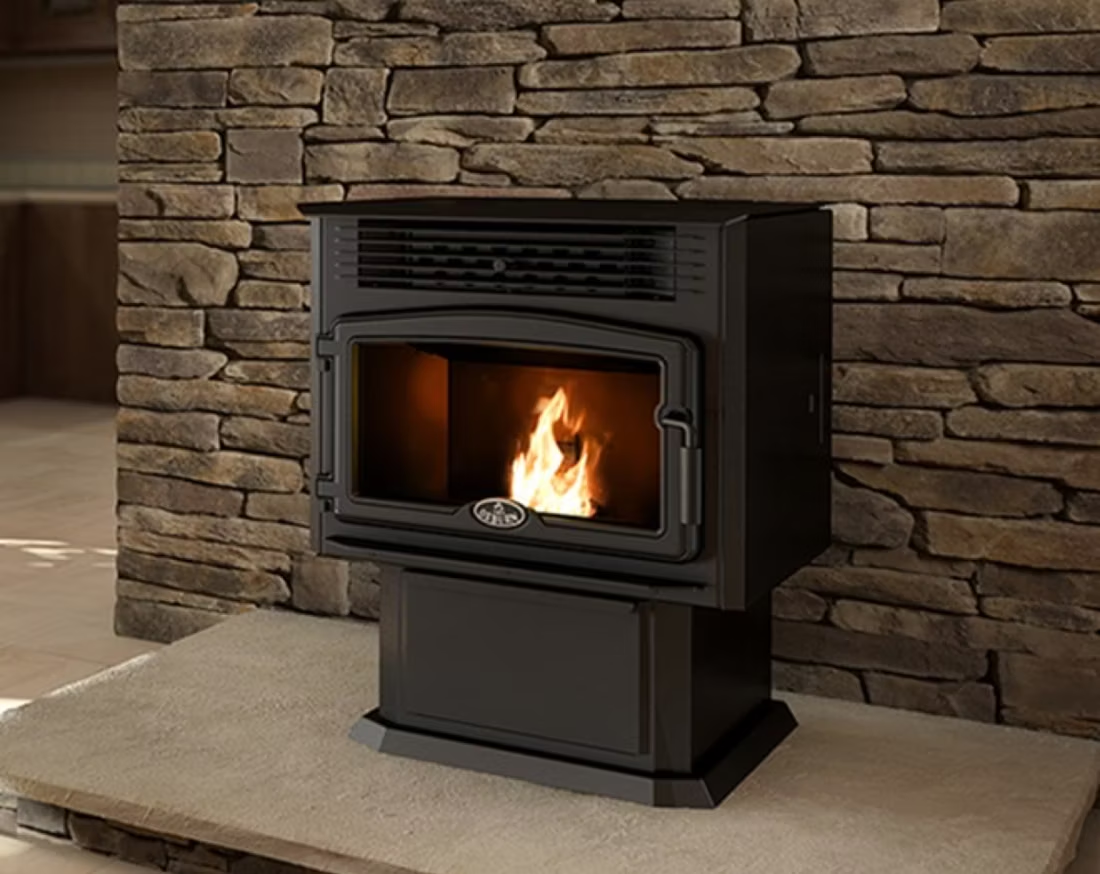
That doesn't mean pellet is off the table. A small but real number of Wheaton homeowners install a pellet stove or insert for supplemental heat during a ComEd outage, for a sunroom or basement that's expensive to run gas line to, or simply because they like the low-maintenance, real-flame option pellets offer over a wood stove. Regional pellet supply exists through producers like Indeck Energy Services, Lignetics, and Somerset Pellet Fuel, even if you won't find a dedicated pellet retailer on every corner. If pellet is the right fit for your specific situation, a trusted local dealer can size the unit and handle the install correctly—venting, hearth pad, and permit included.
Three steps. No salesperson until you're ready.
Tell us about your project
Your zip code, your situation, and the fuel you're leaning toward—or let the answers point you to one.
See what's actually available
The brands dealers within 100 miles genuinely carry—real options, never a catalog mirage.
Get your dealer & Project Guide
A trusted local dealer, plus the free Project Guide & Parts List that names every component of the job.
Frequently Asked Questions
How much does a pellet stove installation cost in Wheaton?
Because pellet stoves are uncommon in DuPage County, there isn't the dense, competitive local install market you'd see for gas fireplace conversions. Nationally, a pellet stove or insert installation typically runs $3,500 to $7,500 depending on the unit, whether it's a freestanding stove or an insert into an existing fireplace, and how far the venting run needs to travel through an exterior wall. In Wheaton specifically, expect the installer to also factor in electrical work for the hopper and blower circuit, since pellet units require a dedicated outlet. Get a firm, in-home quote from your matched local dealer rather than relying on a national average—it's the only way to know your real number.
Why aren't pellet stoves more common in Wheaton?
Two things work against pellet stoves here: infrastructure and geography. Wheaton homes are almost universally plumbed for natural gas already, so a gas insert or fireplace is a far simpler upgrade than adding a solid-fuel appliance that needs its own venting, electrical circuit, and fuel storage. On top of that, DuPage County is dense suburban development with no adjacent forest land, so there's none of the self-sufficient wood-and-pellet heating culture you'd find in a more rural, timber-adjacent county. Pellet stoves aren't prohibited or unsafe here—they're just competing against a gas system that's already installed in most homes.
Where can I buy pellets in the Wheaton area?
You won't find the wall of pellet bags that a rural hearth shop stocks, but supply does exist. Regional producers including Indeck Energy Services, Lignetics, and Somerset Pellet Fuel distribute through farm supply stores and home improvement retailers in the greater Chicago area, and some will arrange bulk-ton delivery directly to a residence. If you're buying a pellet stove, ask your installer where they source fuel locally—most dealers who sell the appliance also have a standing relationship with a supplier and can tell you realistically how far you'll need to drive or how delivery works before you commit to the appliance.
What's the best pellet stove for a Chicago-area winter?
With average lows around 17°F and a winter heating season about as long and demanding as Madison, WI or Minneapolis, you want a stove rated for genuine supplemental or zone heat, not just ambiance. Mid-size units from Harman, Englander, and Enviro in the 40,000–60,000 BTU range are common choices for a single large room or open-concept living area in a suburban Wheaton home. If backup heat during a ComEd outage matters to you, ask specifically about battery-backup compatibility, since standard pellet stoves stop feeding fuel the moment power drops.
Do I need a permit to install a pellet stove in Wheaton?
Yes. Any new solid-fuel or pellet-burning appliance requires a building permit through the City of Wheaton, and the installer will need to meet current clearance and venting code for the specific model. Because pellet installs are infrequent here, it's worth confirming your dealer has pulled a Wheaton permit before—not every installer working in the Chicago suburbs handles this type of appliance regularly, and getting it wrong on inspection can delay your install by weeks.
Pellet vs. gas—which makes more sense for a Wheaton home?
For most Wheaton homeowners, gas wins on pure convenience: it's already plumbed to the house, ignites instantly, and needs no fuel storage or hopper refilling. Pellet makes sense in narrower situations—a room without a nearby gas line, a desire for real flame and radiant heat without wood handling, or wanting a heat source that isn't dependent on the gas utility. The tradeoff is that pellet stoves need electricity to run the auger and blower, so unlike a battery-backup gas fireplace, most pellet units go dark in a ComEd outage unless you add a battery backup system. If your goal is emergency heat resilience specifically, that's worth discussing with your dealer before you choose between the two.
Will my pellet stove work during a power outage?
Not by default. Pellet stoves rely on an electric auger to feed fuel and a blower to distribute heat, so a standard unit shuts down the moment the power goes out—which matters in DuPage County, where winter storms do occasionally take down ComEd service for stretches. Some homeowners pair a pellet stove with a small battery backup or inverter generator sized to run the auger and blower circuit; ask your local dealer whether the specific model you're considering supports this, since not all do out of the box.
How often does a pellet stove need to be cleaned and serviced?
Pellet stoves need more frequent attention than a gas unit but less than a wood stove's chimney sweep. Plan on emptying and vacuuming the ash pot every few days of regular use, cleaning the burn pot weekly to prevent clinker buildup, and scheduling a full professional service—including the exhaust venting, hopper, and auger motor—once a year, typically before the fall heating season starts. Because so few Wheaton-area technicians specialize in pellet appliances, ask about ongoing service availability when you're choosing a dealer, not just the sale price of the stove.
Is a pellet stove even the right choice for my Wheaton home?
For most Wheaton homes already on natural gas, a gas insert or fireplace is the simpler, cheaper, lower-maintenance path—and that's why pellet stoves stay uncommon here. But there are legitimate reasons to choose pellet anyway: a detached space or room far from the gas meter, a preference for real flame with wood-like ambiance, or wanting a supplemental heat source that doesn't depend on the same gas utility as your furnace. If one of those applies to you, a pellet stove is a perfectly workable, well-supported appliance—it's just not the default, so working with a dealer who installs them regularly (rather than occasionally) matters more here than in a rural pellet-heavy market.
What's the difference between an insert and a zero-clearance fireplace?
An insert is a fireplace that slides into a pre-existing wood-burning fireplace—if you don't have one, there's nothing to insert it into. A zero-clearance fireplace is built into a framed wall, which makes it the answer for remodels and new construction. Simple test: existing masonry fireplace means insert; blank or framed wall means zero-clearance.
How often does a pellet stove need cleaning?
A clean pellet stove is a happy pellet stove. Plan on cleaning the burn pot about once a week when you're burning regularly—ash and clinkers gum up the air holes just like a pellet barbecue. Most pellet stove problems trace back to skipped cleaning that nobody explained up front. Some designs make it easy with a trapdoor burn pot: pull a lever and the gunk drops into the ash pan.
Can a fireplace actually lower my heating bill?
Yes—by creating a comfort zone. A furnace heats every square foot of the house just to warm the one room you're in; a gas fireplace on low burns roughly a sixth of the gas a typical furnace does. Set the furnace around 55–60 degrees as a baseline, then heat the rooms your family actually uses. Families who heat this way commonly save $20–$60 a month.
Can I install a fireplace myself?
If you're putting a fire in your house on purpose, it's best to work with an expert. Unless you're genuinely experienced in framing, gas line, vent pipe, and the national code on clearances to combustibles, have a professional do it—and ideally the same company that sells you the fireplace, so warranty, service, and liability all live under one roof.
Nearby Dealers
Hearth shops serving Wheaton and the surrounding area. Every listing shows whether it is a WhyFire partner, a dealer we have verified as authorized for the brands we recommend, or a local business carrying hearth products. No manufacturer pays for placement. How we verify dealers →
A Cozy Fireplace
Ember Glow
A Fireplace Store And More
Urban Rooftops
General Masonry Supply
A Cozy Fireplace
Pellet Brands Stocked Around Wheaton
Manufacturers will point you to the nearest stocking dealer.
Find your pellet stove in Wheaton.
Tell us about your home and we'll match you with a local dealer who actually installs pellet appliances in Wheaton—plus a free Project Guide & Parts List with the exact vent kit and parts your project needs.
Find Your Fireplace →