
Pellet heat that keeps up with Wayne County winters.
Consistent, thermostat-controlled heat for the farmhouses and small towns of Wayne County—from Fairfield to Cisne, Sims, and Geff. Find the right pellet stove or insert, and connect with a trusted local dealer.
Every Project Starts From One of These Five Situations
Consistent heat, without the woodpile.
Wayne County sits in southern Illinois' climate zone 4A, with a moderate winter heating load and winter lows averaging around 24 degrees. That's a meaningfully milder heating season than the upper Midwest—nothing like Duluth or Fargo—but the older farmhouses scattered across the county, many built before modern insulation standards, still need steady supplemental heat from November through March. Pellet stoves have become a practical answer for a lot of Wayne County households, especially for homeowners who want reliable warmth without the labor of splitting, stacking, and hauling cordwood every fall.
The oak-hickory-walnut-maple forests around the Wayne County Fish and Wildlife Area and the Skillet Fork bottomland mean firewood is genuinely abundant here, and plenty of residents still burn wood. But pellet stoves appeal to a different set of priorities: bagged fuel sourced through regional producers like Indeck Energy Services, Lignetics, and Somerset Pellet Fuel, a thermostat that holds a set temperature automatically, and far less daily tending than a wood stove requires. For retirees, farm families juggling other chores, or anyone managing a second heating zone in a large old house, that convenience matters. The right pellet stove or insert, sized and installed by a local dealer, gives you clean, consistent heat with a fraction of the daily work of a wood-burning setup.
Three steps. No salesperson until you're ready.
Tell us about your project
Your zip code, your situation, and the fuel you're leaning toward—or let the answers point you to one.
See what's actually available
The brands dealers within 100 miles genuinely carry—real options, never a catalog mirage.
Get your dealer & Project Guide
A trusted local dealer, plus the free Project Guide & Parts List that names every component of the job.
Frequently Asked Questions
How much does a pellet stove installation cost in Wayne County?
Most pellet stove installations in Wayne County run in the $3,500 to $6,500 range for a freestanding unit with a simple through-wall vent kit, and closer to $4,000 to $7,500 for a pellet insert going into an existing masonry fireplace with a liner. Rural installs where the dealer has to travel further out from Fairfield sometimes carry a modest trip charge, but the core install cost is driven mostly by the stove model and whether new electrical or venting work is needed. A local dealer will give you a firm number after seeing your chimney or wall configuration in person.
Does pellet heat make sense here when firewood is so easy to get?
It's a fair question in a county surrounded by oak, hickory, walnut, and maple stands. Plenty of Wayne County households still heat with cordwood because the wood is local and often free or cheap. Pellet stoves win on a different axis: no splitting, no stacking, no chimney creosote to manage every year, and a hopper that holds a steady burn for 24 hours or more without you tending it. If you've got the land and the time to process wood, wood heat is hard to beat on cost. If you'd rather load a bag of pellets once a day and let a thermostat do the rest, pellet is the better fit—especially for older residents or households managing a busy farm schedule.
Where can I buy pellets locally in Wayne County?
Wayne County doesn't have a pellet mill of its own, but regional producers supply the area well. Lignetics and Indeck Energy Services both distribute widely through farm supply stores and hearth retailers across southern Illinois, and Somerset Pellet Fuel is a common brand on shelves as well. Expect to buy by the ton (pallets of 40-pound bags) rather than single bags for winter-long use, and plan to store pellets somewhere dry—a garage or barn works, but keep bags off a bare concrete floor to avoid moisture wicking into the fuel.
Do I need a permit to install a pellet stove in Wayne County?
Most pellet stove and insert installations require a building permit through the local building department, primarily to confirm the venting and clearances meet code. It's a much simpler review than a masonry chimney project since pellet stoves vent through a small-diameter pipe rather than a full flue. Most local dealers handle the permit paperwork as part of the installation, so it's rarely something the homeowner has to manage directly.
What size pellet stove do I need for a Wayne County home?
With winter lows averaging around 24 degrees and a moderate winter heating load, Wayne County doesn't demand the largest stoves on the market the way a place with sub-zero winters would. A small to mid-size pellet stove (rated for 1,000 to 1,800 square feet) handles most single-story farmhouses and ranch homes as a primary or strong supplemental heat source. Larger two-story homes or drafty older construction with poor insulation may need a stove rated higher, or benefit from a second unit in a separate zone. A local dealer can size the stove properly after walking through your home.
Will my pellet stove work if the power goes out?
No—pellet stoves rely on electricity to run the auger that feeds fuel and the blower that circulates heat, so they shut down during a power outage unless you have a battery backup or generator. This matters in Wayne County, where spring and summer severe thunderstorms and occasional tornado activity can knock out rural power lines for extended stretches. If backup heat during outages is a priority, some households pair a pellet stove for daily convenience with a wood stove or fireplace as a no-electricity fallback. Ask your local dealer about battery backup options if you want the pellet stove itself to keep running through shorter outages.
How much maintenance does a pellet stove need?
Pellet stoves need more frequent light maintenance than a wood stove, but far less heavy work. Plan on emptying the ash pan every few days during regular use, cleaning the burn pot weekly to keep the flame pattern clean, and a full professional cleaning and inspection once a year—typically before the start of the burning season in early fall. Keeping up with this schedule matters more in pellet stoves than wood stoves because a dirty burn pot or clogged venting can trip the stove's safety sensors and shut it down.
What's the difference between a pellet stove and a pellet insert?
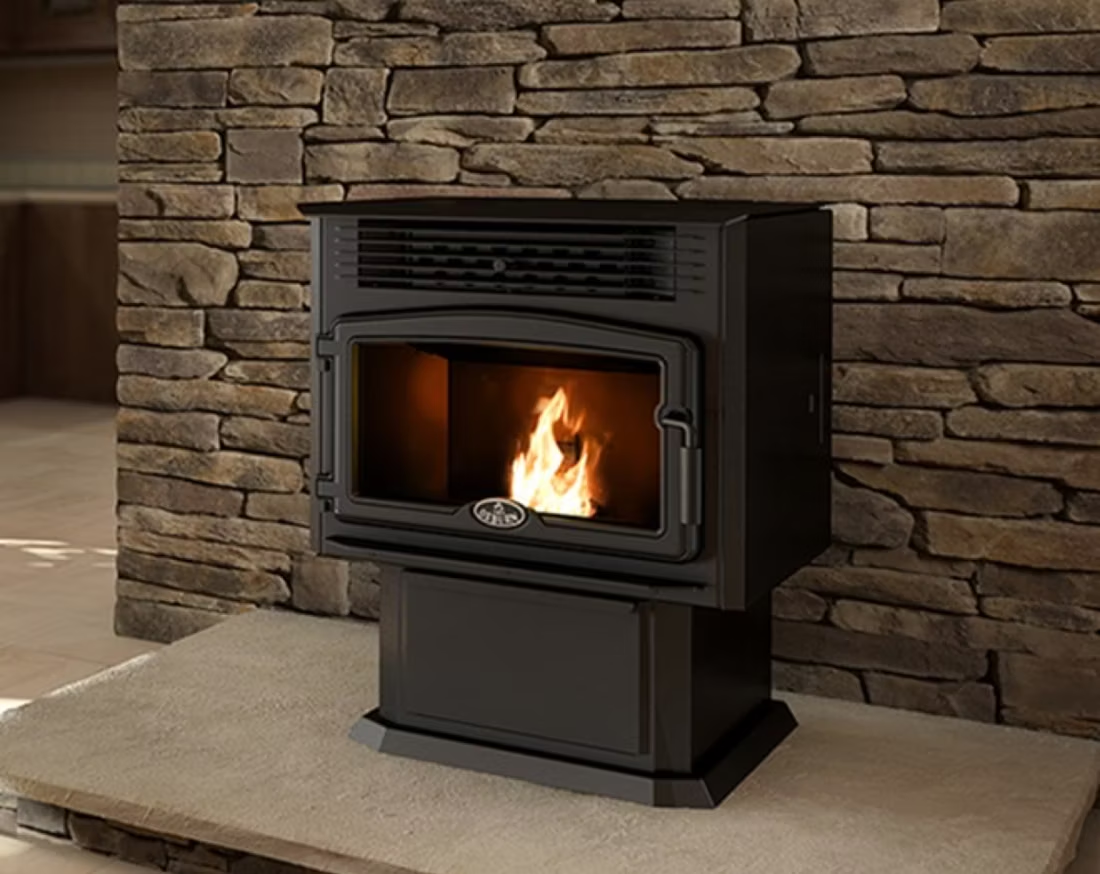
A pellet stove is a freestanding unit that sits on its own hearth pad and vents through a wall or existing chimney chase—it can go almost anywhere in the house. A pellet insert is built to slide into an existing masonry fireplace opening, using a vent liner run up through the old chimney. For Wayne County's older farmhouses with existing brick fireplaces, an insert is often the cleaner option because it reuses the chimney you already have. Homes without an existing fireplace, or anyone wanting more flexibility on placement, usually go with a freestanding stove instead.
Pellet stove vs. wood stove—which is right for my Wayne County home?
Wood stoves burn free or cheap local oak, hickory, walnut, or maple, keep working during power outages, and deliver the radiant heat a lot of people prefer—but they require splitting, stacking, seasoning wood a year ahead, and regular chimney sweeping. Pellet stoves trade that labor for a thermostat-controlled burn and bagged fuel from regional suppliers like Lignetics or Indeck Energy Services, at the cost of needing electricity to run. For a Wayne County household with the land and time to process wood, a wood stove often makes financial sense. For anyone prioritizing convenience, consistent temperature control, and less daily hands-on tending, pellet is usually the better fit. Local dealers carry both, so it's worth discussing your specific house and routine before deciding.
How often does a pellet stove need cleaning?
A clean pellet stove is a happy pellet stove. Plan on cleaning the burn pot about once a week when you're burning regularly—ash and clinkers gum up the air holes just like a pellet barbecue. Most pellet stove problems trace back to skipped cleaning that nobody explained up front. Some designs make it easy with a trapdoor burn pot: pull a lever and the gunk drops into the ash pan.
What's the difference between an insert and a zero-clearance fireplace?
An insert is a fireplace that slides into a pre-existing wood-burning fireplace—if you don't have one, there's nothing to insert it into. A zero-clearance fireplace is built into a framed wall, which makes it the answer for remodels and new construction. Simple test: existing masonry fireplace means insert; blank or framed wall means zero-clearance.
Does a fireplace add value to my home?
On average, a fireplace adds back to the home about the same amount you spent installing it. Add the monthly savings from heating the rooms you actually use instead of the whole house—often hundreds of dollars a year—and the value case is strong before you even count what a fire does for how your family uses the room.
Can a fireplace actually lower my heating bill?
Yes—by creating a comfort zone. A furnace heats every square foot of the house just to warm the one room you're in; a gas fireplace on low burns roughly a sixth of the gas a typical furnace does. Set the furnace around 55–60 degrees as a baseline, then heat the rooms your family actually uses. Families who heat this way commonly save $20–$60 a month.
Pellet Brands Stocked Around Wayne County
Manufacturers will point you to the nearest stocking dealer.
Find your pellet stove in Wayne County.
Tell us a bit about your home and we'll match you with the right pellet stove or insert, plus a free Project Guide & Parts List with your recommended local dealer.
Find Your Fireplace →