
Steady gas heat for Wayne County winters.
From Fairfield to the outlying farmsteads near Cisne, Sims, and Golden Gate, gas fireplaces deliver instant, low-maintenance warmth for Wayne County's four-month heating season. Find the right unit and get matched with a trusted local dealer.
Every Project Starts From One of These Five Situations
Dependable warmth without the wood pile.
Wayne County sits in the flat farm country of southeastern Illinois, with Fairfield as the county seat and roughly 7,065 residents spread thin across small communities like Cisne, Sims, Geff, Golden Gate, Barnhill, Jeffersonville, Mount Erie, Orchardville, Wayne City, and Zenith. The climate here is Zone 4A—about 4,398 heating degree days a year, with winter lows averaging around 24°F. That's a real heating season, running roughly from November through March, but it's nowhere near what places like Fargo, ND or Minneapolis, MN see; there's no chronic wood-smoke inversion problem and no air quality restrictions on burning here.
Natural gas service runs through Fairfield and its immediate surroundings, but a large share of Wayne County's households sit on farm acreage outside any incorporated town, where propane tanks are the standard fuel—a pattern typical of downstate Illinois. Either way, a gas fireplace or insert gives you heat at the flip of a switch, no chimney chores, and a good complement to a farmhouse's existing furnace, especially in the living room or a finished basement where families want reliable zone heat without tending a fire every evening.
Three steps. No salesperson until you're ready.
Tell us about your project
Your zip code, your situation, and the fuel you're leaning toward—or let the answers point you to one.
See what's actually available
The brands dealers within 100 miles genuinely carry—real options, never a catalog mirage.
Get your dealer & Project Guide
A trusted local dealer, plus the free Project Guide & Parts List that names every component of the job.
Frequently Asked Questions
How much does a gas fireplace installation cost in Wayne County?
A typical gas fireplace or insert installation in this part of southern Illinois runs roughly $3,800 to $9,000, depending on the unit, whether you're converting an existing masonry fireplace or building new, and whether a gas line needs to be run. A direct-vent insert into an existing fireplace with gas already nearby tends to land on the lower end. New construction, a fresh propane tank setup, or a long line run out to a detached family room pushes costs toward the higher end. A local dealer will give you a firm number after seeing your home.
Can I convert my existing wood fireplace to gas?
Yes, and it's a common project in Wayne County's older farmhouses, many of which still have the original masonry fireplace. A gas insert typically slides into that opening and vents through a stainless liner run up the existing chimney. Cost depends on whether you're on natural gas in town or need a propane hookup, plus any masonry repair the chimney needs first. It preserves the look of the original hearth while removing the wood-hauling and ash cleanup.
Should I use natural gas or propane for my fireplace?
It depends on where you live. Inside Fairfield and its immediate service area, natural gas lines are typically already run to the house, which makes adding a fireplace straightforward if you already have gas appliances. Outside town—which describes most of Wayne County's rural acreage—propane is the standard, either from an existing tank serving the house or a new tank set by a local propane supplier. Nearly every gas fireplace on the market can be configured for either fuel; your installer sets the correct orifice and regulator for whichever you have.
Will a gas fireplace still work if the power goes out?
Most will, with the right ignition system. Units with intermittent pilot ignition (IPI) run on a small battery backup that kicks in automatically when the power drops, so the fireplace still lights on demand—just remember to swap the batteries occasionally. A few manufacturers, including Valor, go a step further and generate their own electricity from the pilot's thermocouple, so there's no battery to maintain at all. For farm properties in Wayne County where outages during winter storms can stretch on for a while, that self-powered detail is worth asking about.
What's the difference between a gas fireplace, gas insert, and gas stove?
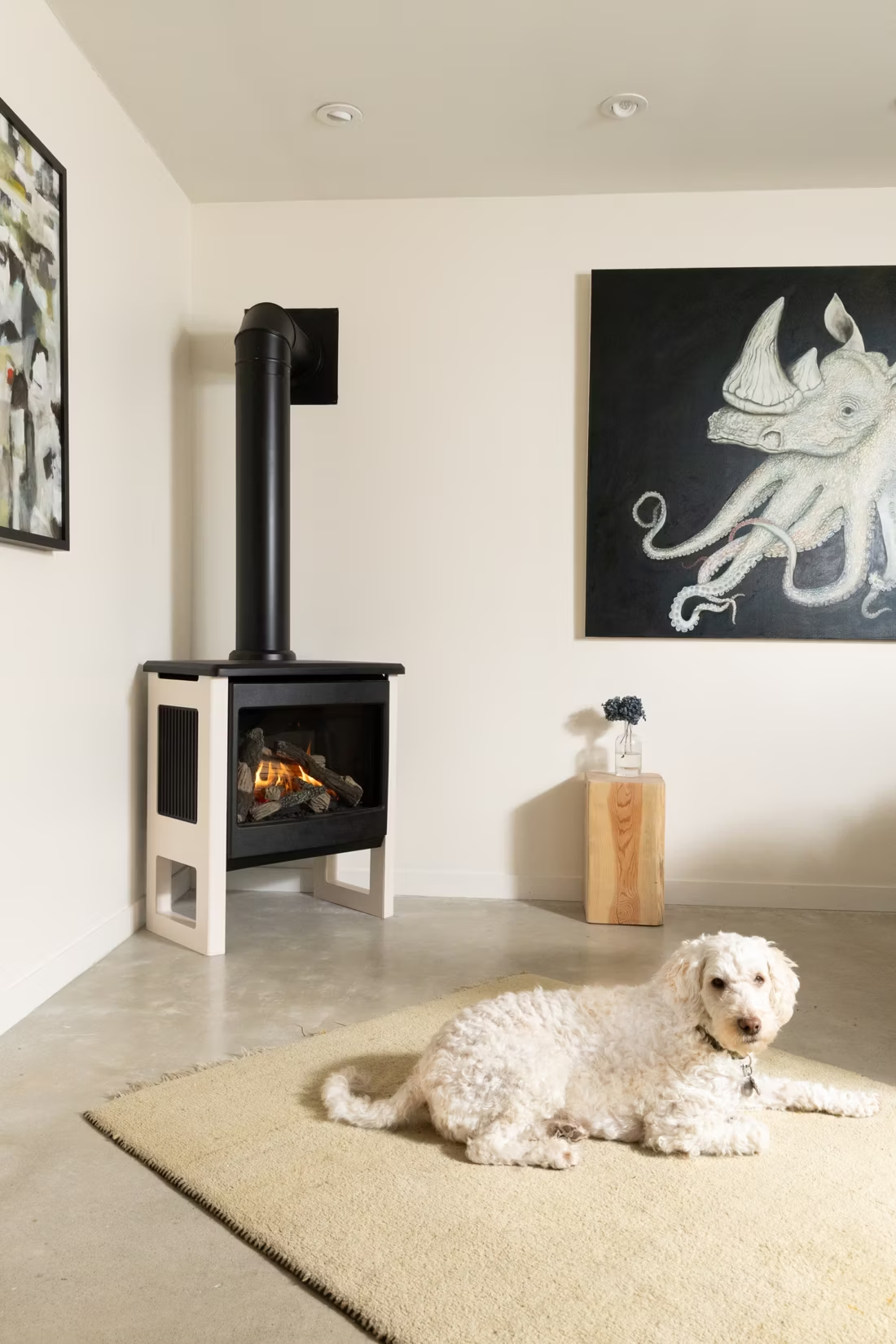
A gas fireplace is a fully built-in unit framed into a wall, typically used in new construction or a remodel. A gas insert drops into an existing masonry fireplace opening and uses the chimney as its vent path—the common choice for Wayne County's older homes with a fireplace already in place. A gas stove is a freestanding unit that sits on the floor on its own hearth pad, similar in footprint to a wood stove but running on gas. For a room without an existing fireplace, a stove or built-in unit is usually the practical option.
Do I need a permit to install a gas fireplace in Wayne County?
In most cases, yes. Inside Fairfield or another incorporated town, a building permit is typically pulled through the town's own office; in unincorporated parts of the county, it runs through the Wayne County zoning and building office. New gas fireplace installs also require licensed gas-fitter work for the line itself. A hearth dealer handling the full install will usually coordinate the permit and the gas-fitting together rather than leaving you to manage separate trades.
Vented or vent-free gas fireplace—which should I choose?
Vented (direct-vent) fireplaces pull combustion air from outside and exhaust the byproducts back outside through sealed venting—they're the more universally recommended choice and deliver real, sustained heat. Vent-free units burn directly into the room air; Illinois permits them, but they come with strict room-size and ventilation requirements, and they're not a good fit for smaller, tightly sealed farmhouse additions. For most Wayne County installs, a direct-vent unit is the simpler and safer call, but ask your local dealer to walk through both if you're weighing the tradeoff.
How often does a gas fireplace need to be serviced?
Plan on an annual inspection, ideally before the start of the November-to-March heating stretch. A technician checks the burner, pilot assembly, venting, and gas connections, and cleans the glass and interior. It's a much lighter job than a wood chimney sweep, usually running $150 to $250, but it matters—a fireplace that sits unused most of the summer can develop dust or insect nesting in the venting that's worth catching before you fire it up again in the fall.
Gas or wood—which makes more sense for a Wayne County home?
Wood has deep roots here—oak, hickory, walnut, and maple are all common on local farm woodlots, and a wood stove keeps working when the power doesn't. Gas trades that self-sufficiency for convenience: instant on-off heat, no hauling or ash cleanup, and a cleaner look with no smoke smell. With winters here averaging in the mid-20s rather than sub-zero for weeks at a stretch, gas alone is usually enough to keep a main living space comfortable. Plenty of Wayne County households run both—gas for everyday convenience, a wood stove or fireplace kept ready for backup heat when a winter storm knocks the power out.
Why is a fireplace insert so efficient?
An insert does two things: it seals the chimney completely, so you stop losing air you already paid to heat, and it radiates warmth into the room through the firebox and glass. Most add a heat-exchange fan that pulls cool room air underneath, wraps it around the hot firebox, and pushes it back out warm. Your home is more efficient before you've even lit the first fire.
Can I put a TV above my fireplace?
Yes—with an asterisk. Fireplaces are hot and TVs don't like heat. Either put a mantel between them to deflect rising warmth, or choose a fireplace with heat-management technology that creates a cool zone on the wall above—the wall stays around 125 degrees, barely warm, while the room still gets full heat. If you like clean lines and don't want a mantel, heat management is the answer.
Does a fireplace add value to my home?
On average, a fireplace adds back to the home about the same amount you spent installing it. Add the monthly savings from heating the rooms you actually use instead of the whole house—often hundreds of dollars a year—and the value case is strong before you even count what a fire does for how your family uses the room.
Can I install a fireplace myself?
If you're putting a fire in your house on purpose, it's best to work with an expert. Unless you're genuinely experienced in framing, gas line, vent pipe, and the national code on clearances to combustibles, have a professional do it—and ideally the same company that sells you the fireplace, so warranty, service, and liability all live under one roof.
Find your gas fireplace in Wayne County.
Tell us a bit about your home and whether you're on natural gas or propane, and we'll match you with a trusted local dealer and a free Project Guide & Parts List for your gas fireplace, insert, or stove.
Find Your Fireplace →