
Find your pellet stove for Schuyler County's long, cold winters.
Automated, hardwood-fueled heat for the farmhouses and rural properties between Rushville and the Illinois River bluffs. Find the right stove or insert, and connect with a trusted local dealer.
Every Project Starts From One of These Five Situations
Reliable heat without the woodpile.
Schuyler County is farm country—rolling fields and hardwood bluffs along the Illinois River, a small, spread-out population, and winters that run cold enough (average lows around 17°F, with a long six-month heating season) to matter for six months of the year, even if they never get as brutal as places like Duluth MN or International Falls MN. Homes here are often older farmhouses on acreage, and heating one room reliably without hauling and splitting cordwood from the county's oak, hickory, walnut, and maple stands has real appeal—especially for retirees, working farm households, and anyone who wants consistent heat on a thermostat instead of a fire that needs tending every few hours.
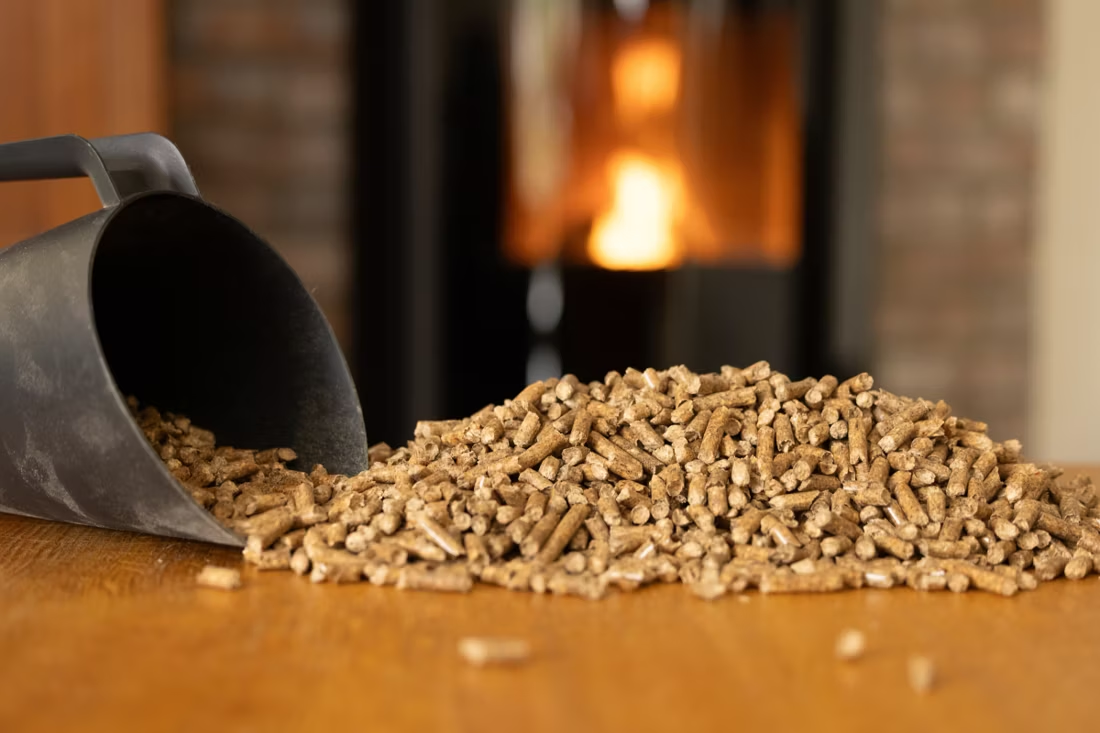
Schuyler County has no air quality non-attainment issues or winter inversion restrictions, so there's nothing standing in the way of running a pellet stove daily through the season. Regional pellet suppliers including Indeck Energy Services, Lignetics, and Somerset Pellet Fuel keep bagged hardwood pellets reasonably accessible in west-central Illinois, often through farm-supply and co-op outlets that already serve the county. A pellet stove gives you automated feed, a steady burn, and far less ash and creosote than cordwood—the tradeoff is that it needs electricity to run the auger and blower, which is worth thinking through given how rural power service can be during an ice storm or high-wind event out here.
Three steps. No salesperson until you're ready.
Tell us about your project
Your zip code, your situation, and the fuel you're leaning toward—or let the answers point you to one.
See what's actually available
The brands dealers within 100 miles genuinely carry—real options, never a catalog mirage.
Get your dealer & Project Guide
A trusted local dealer, plus the free Project Guide & Parts List that names every component of the job.
Frequently Asked Questions
How much does a pellet stove installation cost in Schuyler County?
Cost depends mainly on whether you're installing a freestanding stove or a pellet insert into an existing masonry fireplace, the length and path of the vent run, and whether a dedicated electrical outlet needs to be added near the unit. Rural properties outside Rushville sometimes add a modest travel charge to the quote since fewer dealers cover the far edges of the county. A local dealer can give you a firm number after seeing your home, your existing chimney (if any), and your electrical setup—that's a better answer than any flat estimate.
What size pellet stove do I need for my Schuyler County home?
Sizing depends on square footage, ceiling height, and how well-insulated the space is—older Schuyler County farmhouses with original windows and uninsulated additions typically need more heating capacity than a newer build of the same size. Given average winter lows near 17°F and a long six-month heating season here, a mid-size unit is usually enough for a main living area used as zone heat, while whole-home reliance calls for a larger hopper and higher BTU output. A local dealer will walk your space and size it properly rather than guess from square footage alone.
What's the difference between a pellet stove and a wood stove?
A wood stove burns split cordwood—oak, hickory, walnut, and maple are all common locally—and needs to be fed and tended by hand every few hours. A pellet stove burns compressed hardwood pellets from an automatic hopper, so it holds a steady temperature on a thermostat with far less daily labor, no splitting or stacking, and much less ash. The tradeoff is that a pellet stove needs electricity to run, while a wood stove will keep producing heat through a power outage. For a lot of Schuyler County households—especially anyone managing a farm operation or without the time to process firewood—the convenience of pellet heat outweighs that dependency on the grid.
Do I need a permit to install a pellet stove in Schuyler County?
Most pellet stove and insert installations require a building permit through your local building or zoning office, and the venting work needs to meet manufacturer clearance and code specifications regardless of jurisdiction. In practice, most local dealers handle the permitting as part of the installation, so you're not left tracking down paperwork yourself. If you're in unincorporated Schuyler County, confirm with the county building office directly before work starts, since requirements can differ slightly from what applies inside Rushville city limits.
What's the best pellet stove for Schuyler County's winters?
Look for a unit with a large enough hopper to get through an overnight burn without refilling, and pay attention to models with a battery backup option for the igniter, auger, and blower motors—rural power outages during winter storms are a real consideration here, and a battery backup lets the stove restart itself once power returns instead of going cold and needing to be relit by hand. For a primary heat source in an older farmhouse, size up rather than down; for supplemental heat in one room, a smaller unit will do the job efficiently. A local dealer familiar with rural Schuyler County installs can point you toward specific models that have held up well locally.
Where can I buy pellets in or near Schuyler County?
Regional brands including Indeck Energy Services, Lignetics, and Somerset Pellet Fuel supply hardwood pellets throughout this part of west-central Illinois, typically sold through farm-supply stores, co-ops, and hardware retailers rather than dedicated pellet-only outlets. Given the county's rural layout, it's worth buying a season's supply—usually delivered or picked up by the ton or in stacked pallets of 40-pound bags—early in the fall before winter demand picks up. Store bags off the ground in a dry barn, garage, or shed; pellets that absorb moisture swell and jam the auger.
How much maintenance does a pellet stove need?
Pellet stoves need more frequent light upkeep than a wood stove but far less heavy cleaning. Plan on emptying the ash pan and cleaning the burn pot every few days to weekly depending on use, wiping the glass, and vacuuming the hopper area periodically. An annual professional inspection of the venting, gaskets, and blower motor is still worth scheduling—even without a masonry chimney to sweep, the mechanical components (auger motor, exhaust fan, igniter) benefit from a yearly check, especially heading into a full Schuyler County winter of daily use.
What happens to my pellet stove during a power outage?
A pellet stove's auger, igniter, and blower motors all run on electricity, so without power the stove stops feeding and the fire goes out—this is the main tradeoff compared to a wood stove. Some models offer a battery backup that keeps the unit running through short outages and lets it restart automatically once grid power is restored. For rural Schuyler County properties where outages can stretch longer during winter storms, it's worth asking your dealer about battery backup options or pairing the stove with a small generator if reliable heat during an outage matters to you.
Pellet stove vs. electric fireplace—which is right for my home?
A pellet stove burns hardwood pellets and can put out real, whole-room heat—useful given Schuyler County's long six-month heating season and average winter lows near 17°F. An electric fireplace or heater plugs into a standard outlet, needs no venting or fuel storage, and is simple to install, but it's generally better suited to supplemental warmth in a smaller space than to carrying a drafty farmhouse through a full winter. If you want meaningful heat output with automated, low-labor operation, pellet is usually the better fit here; if you want a no-fuss ambiance unit for a bedroom or den, electric is the simpler choice.
What's the difference between an insert and a zero-clearance fireplace?
An insert is a fireplace that slides into a pre-existing wood-burning fireplace—if you don't have one, there's nothing to insert it into. A zero-clearance fireplace is built into a framed wall, which makes it the answer for remodels and new construction. Simple test: existing masonry fireplace means insert; blank or framed wall means zero-clearance.
How often does a pellet stove need cleaning?
A clean pellet stove is a happy pellet stove. Plan on cleaning the burn pot about once a week when you're burning regularly—ash and clinkers gum up the air holes just like a pellet barbecue. Most pellet stove problems trace back to skipped cleaning that nobody explained up front. Some designs make it easy with a trapdoor burn pot: pull a lever and the gunk drops into the ash pan.
What is an in-home preview and do I need one?
It's a visit where a hearth professional measures your space, confirms the model you picked actually works in your home, and walks the specs—framing, gas line, venting, finish work—before anything is ordered. Some details you just can't know until you see the house. Never make a down payment without one; it's the single most-skipped step that burns buyers.
Does a fireplace add value to my home?
On average, a fireplace adds back to the home about the same amount you spent installing it. Add the monthly savings from heating the rooms you actually use instead of the whole house—often hundreds of dollars a year—and the value case is strong before you even count what a fire does for how your family uses the room.
Pellet Brands Stocked Around Schuyler County
Manufacturers will point you to the nearest stocking dealer.
Find your pellet stove in Schuyler County.
Tell us a bit about your home and we'll match you with the right pellet stove or insert, plus a free Project Guide & Parts List—including the vent kit and a recommended local dealer serving Schuyler County.
Find Your Fireplace →