
Steady, low-hassle heat for Saline County winters.
Thermostat-controlled warmth for the Shawnee Hills country—from Harrisburg to Eldorado to Carrier Mills. Find the right pellet stove or insert, and connect with a trusted local dealer.
Every Project Starts From One of These Five Situations
A hopper of pellets, a thermostat, and heat that keeps up.
Saline County sits in the Shawnee Hills of southern Illinois, with Harrisburg as the county seat and Eldorado, Carrier Mills, and Raleigh rounding out a rural, close-knit population of around 15,600. Climate zone 4A means humid summers and moderate winters—a moderate heating season overall, well short of the brutal totals you'd see in a place like Duluth or International Falls, but still enough cold-weather stretches, with average lows near 24°F, that a serious secondary or primary heat source matters. For homes that don't want the daily wood-hauling routine but still want real, radiant-style heat when the temperature drops, pellet stoves have become a common answer.
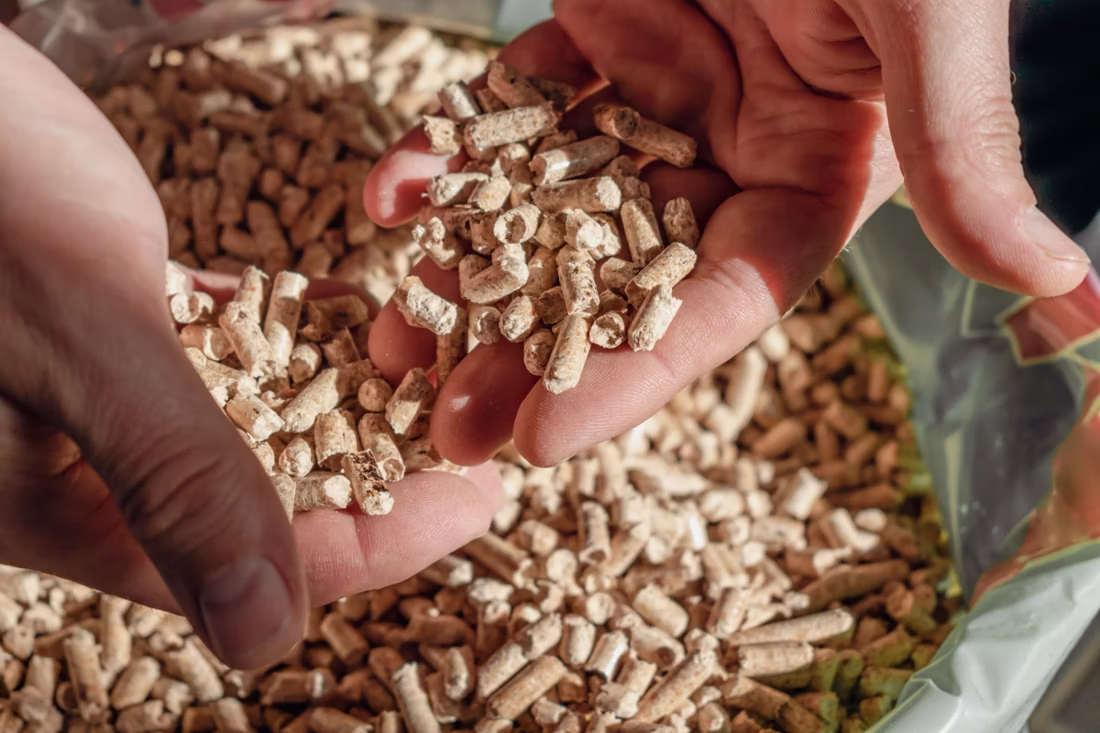
Southern Illinois' oak-hickory forests supply the hardwood sawdust that regional pellet producers turn into fuel, and Saline County homeowners have decent access to that supply chain through brands like Indeck Energy Services, Lignetics, and Somerset Pellet Fuel. With no air quality non-attainment status or winter burn restrictions in the county, pellet stoves run here without the curtailment concerns some other regions deal with—you load the hopper, set the thermostat, and the auger handles the rest. For homes off the natural gas main, especially out in the county's farmland and wooded acreage around Carrier Mills and Raleigh, a pellet stove or insert offers a cleaner, easier-to-manage alternative to running a wood stove daily.
Three steps. No salesperson until you're ready.
Tell us about your project
Your zip code, your situation, and the fuel you're leaning toward—or let the answers point you to one.
See what's actually available
The brands dealers within 100 miles genuinely carry—real options, never a catalog mirage.
Get your dealer & Project Guide
A trusted local dealer, plus the free Project Guide & Parts List that names every component of the job.
Frequently Asked Questions
How much does a pellet stove installation cost in Saline County?
Most pellet stove and insert installations run in the $3,000 to $6,000 range nationally, and Saline County generally falls in that band—the exact number depends on the unit, whether you're converting an existing masonry fireplace to a pellet insert, and how much venting work is required. Pellet venting is simpler than wood-stove chimney work (typically 3-inch or 4-inch PL pipe run through an exterior wall), which keeps costs down compared to a full wood-burning install. If your project is within Harrisburg or Eldorado city limits, check with the local building department on permit requirements; outside city limits, Saline County handles zoning and building permits. Most local dealers fold the permit process into the installation.
Pellet stove vs. wood stove—which makes sense for my home?
Saline County sits in oak, hickory, walnut, and maple country, and plenty of homeowners here still burn cordwood the traditional way. But pellet stoves trade the splitting-and-stacking routine for a hopper you fill every day or two, consistent thermostat-controlled heat output, and far less ash and creosote to manage. If you want the ritual of a real fire and don't mind the labor, wood still has a place. If you want set-it-and-forget-it heat that runs steady through a cold front without tending, pellet is the easier daily-driver—and it's a common secondary heat source in homes across the county that already have central HVAC.
Do pellet stoves work during a power outage?
This is the one real tradeoff with pellet heat: the auger, igniter, and combustion blower all run on electricity, so a standard pellet stove won't operate without power. Saline County doesn't see the frequent multi-day outages of some storm-prone regions, but ice storms and summer downed lines do happen. Some homeowners pair a pellet stove with a small battery backup or generator specifically to bridge outages; others keep a wood-burning unit as backup heat for exactly this reason. Ask your local dealer about battery backup options if reliable heat during outages is a priority for your household.
What size pellet stove do I need for my home?
With Saline County's moderate winter heating needs and average winter lows around 24°F, most homes don't need the largest units on the market. A stove rated for 1,000 to 1,500 square feet handles a typical living area or ranch-style home as primary supplemental heat, while larger, well-insulated homes or those using pellet heat as the primary source may want a unit rated closer to 2,000 square feet. Older farmhouses around Carrier Mills and Raleigh with less insulation often need to size up from the square-footage chart alone. A local dealer can walk your home and size the unit correctly—oversizing wastes fuel and undersizing leaves you cold on the coldest nights.
Where can I buy pellets in or near Saline County?
Southern Illinois has decent access to hardwood pellet supply thanks to regional producers like Indeck Energy Services, Lignetics, and Somerset Pellet Fuel, all of which distribute through farm supply stores, hardware stores, and hearth dealers in the area. Pellets are typically sold in 40-pound bags, and most households burn somewhere between 1 and 3 tons over a full heating season depending on how the stove is used. Buying in bulk before the season starts—rather than bag by bag mid-winter—usually gets you the best price and avoids the risk of local stores selling out during a cold stretch.
What's the difference between a pellet stove and a pellet insert?
A pellet stove is a freestanding unit that sits on its own hearth pad and can go almost anywhere in a room with proper clearances—a good fit for homes without an existing fireplace. A pellet insert is built to slide into an existing masonry fireplace opening, converting an old wood-burning fireplace into an efficient, thermostat-controlled heat source while keeping the existing hearth's footprint. For Saline County homes with an older masonry fireplace that's mostly decorative right now, an insert is usually the more practical upgrade—you keep the look, gain real heat output, and simplify venting since you're using the existing chimney chase.
How much maintenance does a pellet stove need?
Pellet stoves need more frequent light maintenance than wood stoves, but each task is quick. Plan on emptying the ash pan every few days during regular use, cleaning the burn pot weekly to keep the fire feeding properly, and running a full deep clean—glass, hopper, exhaust fan, gaskets—every one to two tons of pellets burned. An annual professional service checks the venting, gaskets, and electrical components. It's less physically demanding than splitting and stacking cordwood, but it does require more consistent small upkeep than people expect going in.
Can I convert my wood-burning fireplace to pellet?
Yes—this is one of the more common upgrades for older Saline County homes with an underused masonry fireplace. A pellet insert slides into the existing firebox, uses a liner run through your current chimney (or a direct-vent kit through an exterior wall in some setups), and converts a drafty, inefficient fireplace into a controllable heat source. It also solves the smoke and ash issues some homeowners are looking to move away from without giving up the visual of a real fire in the living room. A local dealer can confirm your existing masonry opening will accommodate the insert size you want.
Is a pellet stove a good fit for Saline County's climate?
Yes—with a moderate winter heating load and winters that dip into the 20s regularly but rarely stay brutally cold for extended stretches, Saline County's climate is well within the range where pellet heat performs efficiently as either a primary or supplemental source. It's a milder heating demand than northern climates like Madison or Minneapolis see, which means a mid-sized pellet unit generally covers most homes here without needing to run at maximum output around the clock. Combined with no local air quality burn restrictions, pellet stoves in Saline County can run through the full winter season without the curtailment headaches some regions impose on solid-fuel heating.
Why is a fireplace insert so efficient?
An insert does two things: it seals the chimney completely, so you stop losing air you already paid to heat, and it radiates warmth into the room through the firebox and glass. Most add a heat-exchange fan that pulls cool room air underneath, wraps it around the hot firebox, and pushes it back out warm. Your home is more efficient before you've even lit the first fire.
Why is my open fireplace making my house colder?
Open fireplaces suck—literally. As the fire burns, it consumes air your furnace already paid to heat and pulls it out through the chimney, so the house is actually colder after the fire goes out than before you lit it. An insert fixes this: it seals the chimney, puts fixed glass across the front, and turns that hole in your house into a real heat source.
How much should I budget for a fireplace?
For an average home—covering the fireplace, the vent pipe, and basic installation—a budget between $3,900 and $5,500 gives you a lot of options across wood, gas, and pellet. By the time you add finish work, gas line, and electrical, the average complete installation lands between $5,000 and $12,000 all-in. In a remodel or new build, a good rule is to put about 2.5% of the total project cost toward the fireplace.
Does a fireplace add value to my home?
On average, a fireplace adds back to the home about the same amount you spent installing it. Add the monthly savings from heating the rooms you actually use instead of the whole house—often hundreds of dollars a year—and the value case is strong before you even count what a fire does for how your family uses the room.
Pellet Brands Stocked Around Saline County
Manufacturers will point you to the nearest stocking dealer.
Find your pellet stove in Saline County.
Tell us a bit about your home and we'll put together a free Project Guide & Parts List—the right pellet stove or insert for your space, the vent kit it needs, and a recommended local dealer in Saline County to get it installed.
Find Your Fireplace →