
Find the right electric fireplace for your Saline County home.
Plug-in warmth and zero-clearance installs for Harrisburg, Eldorado, Carrier Mills, and the rest of Saline County—matched with a local dealer who handles the wiring and the install.
Every Project Starts From One of These Five Situations
Simple heat that fits almost anywhere.
Saline County sits in southern Illinois' 4A climate zone, with winter lows averaging around 24 degrees and a heating season noticeably milder than what northern Illinois sees—a milder heating season than northern Illinois, but still cold enough that supplemental heat in bedrooms, additions, and finished basements matters through December and January. Around Harrisburg, Eldorado, and Carrier Mills, older homes with plaster walls and no existing chimney make electric units an easy add where running gas line or masonry work isn't practical.
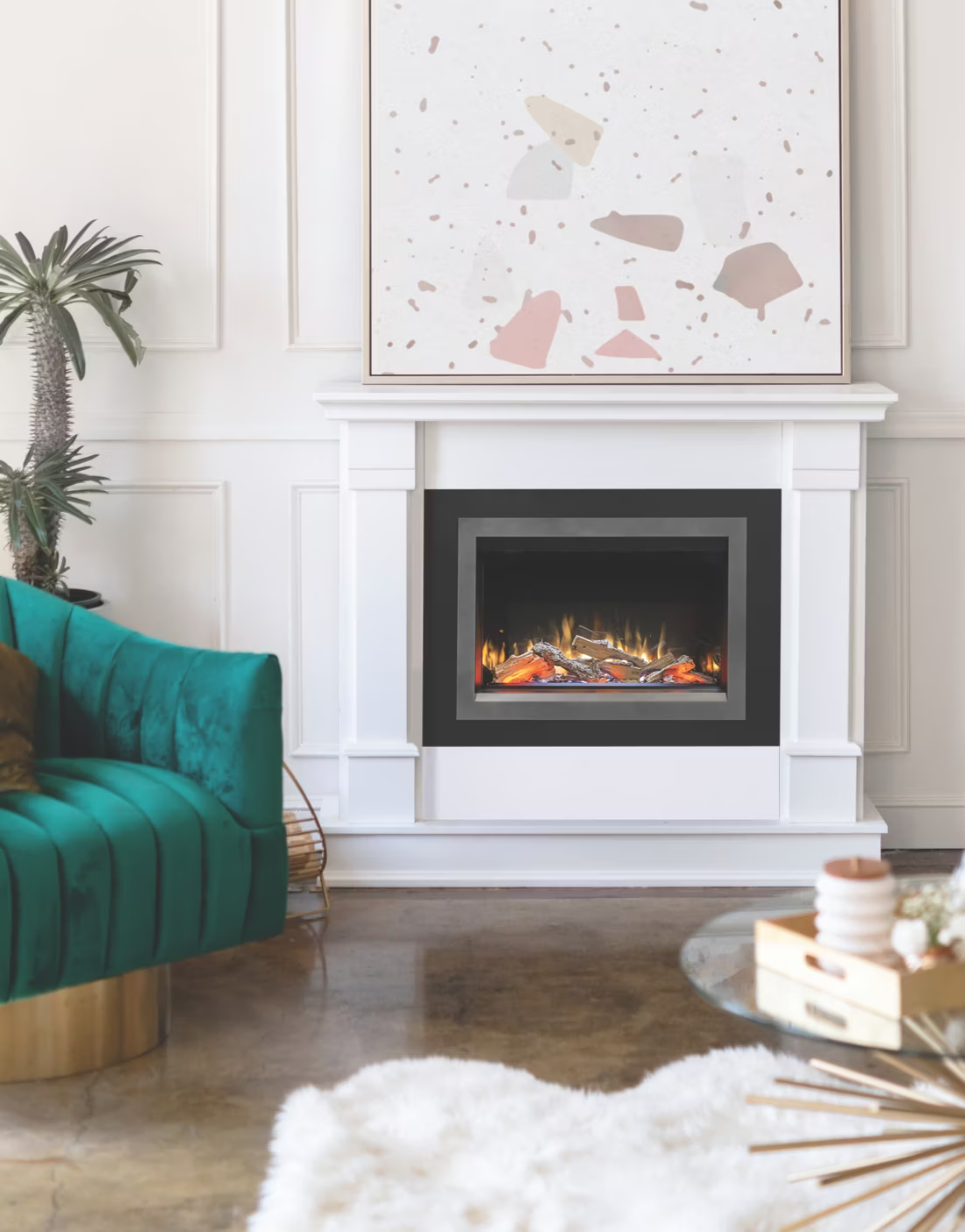
An electric fireplace or insert plugs into a standard outlet or a dedicated 20-amp circuit, requires no venting, no gas line, and no chimney, and can go into a bedroom, basement rec room, or rental property in an afternoon. For Saline County homeowners upgrading a rental unit, finishing a basement along the Saline River bottoms, or adding heat to a room that a wood or gas system can't reach, electric is often the most practical option—and the lowest-cost one to install.
Three steps. No salesperson until you're ready.
Tell us about your project
Your zip code, your situation, and the fuel you're leaning toward—or let the answers point you to one.
See what's actually available
The brands dealers within 100 miles genuinely carry—real options, never a catalog mirage.
Get your dealer & Project Guide
A trusted local dealer, plus the free Project Guide & Parts List that names every component of the job.
Frequently Asked Questions
How much does an electric fireplace installation cost in Saline County?
Most electric fireplace and insert installations in Saline County run between $400 and $1,200. A plug-in unit that drops into an existing mantel opening or wall recess is on the low end—often just the cost of the unit itself plus minor trim work. Installations requiring a dedicated 20-amp circuit run by an electrician, a wall-mounted linear unit with in-wall wiring, or a built-in surround add to that range. Local dealers can tell you quickly which category your project falls into during an in-home or virtual consultation.
Do I need an electrician to install an electric fireplace?
It depends on the unit. Many electric fireplaces and inserts are designed to plug into a standard 120-volt outlet, which means no electrician is required—you mount or set the unit and plug it in. Larger built-in models, or installations where the fireplace will be the primary heat source for a room, often call for a dedicated circuit, which does require a licensed electrician. In Saline County, a local dealer can spec the unit to match your home's existing wiring, or tell you upfront if a dedicated circuit is worth the extra cost for the room you're heating.
Do I need a permit to install an electric fireplace in Saline County?
Most plug-in electric fireplaces don't require a permit since there's no venting, gas line, or structural chimney work involved. If your project involves running new electrical circuits or a built-in installation with wall modifications, check with your local building department—permit requirements can vary between Harrisburg, Eldorado, and unincorporated parts of Saline County. A local dealer familiar with the area's requirements can tell you whether your specific project needs sign-off.
What's the difference between an electric fireplace, insert, and stove?
An electric fireplace is typically a wall-mounted or built-in unit designed to look like a traditional fireplace, often with a flame-effect display. An electric insert is sized to slide into an existing masonry fireplace opening—a good option for Saline County homes with an old wood-burning fireplace that's no longer used and doesn't need the upkeep of a real fire. An electric stove is a freestanding unit styled like a classic wood stove but with no venting requirement. For most homeowners converting an unused fireplace, an insert is the simplest path; for new rooms or additions, a wall-mounted fireplace or stove works without any existing opening.
How much heat does an electric fireplace actually put out?
Most electric fireplaces are rated around 5,000 to 6,000 BTUs, which is enough to comfortably heat a single room of 300 to 400 square feet—a bedroom, den, or basement rec room. They're not designed to heat an entire home, and in Saline County's climate, they work best as supplemental or zone heat rather than a whole-house solution. If you're trying to heat an open-concept living area or a larger addition, talk to a local dealer about unit size and whether a larger linear model or a secondary unit makes more sense than assuming one fireplace will cover the whole space.
Will an electric fireplace work during a power outage?
No—electric fireplaces require power to run the heater and, in most models, the flame-effect display. If Saline County loses power during a winter storm, an electric unit goes dark along with everything else on the circuit. Homeowners who want heat that survives an outage typically pair an electric fireplace in the main living space with a wood stove or a battery-backed gas unit elsewhere in the home. It's worth factoring in if backup heat during outages is a real concern for your household.
Can I put an electric fireplace in a rental property or apartment?
Yes—this is one of the more common uses for electric units in Saline County, particularly in Harrisburg and Eldorado rental housing. A plug-in electric fireplace requires no venting, no gas line, and no permanent alteration to the structure, which makes it landlord-friendly and easy to remove if a tenant moves out. Wall-mounted units that need in-wall wiring are a bigger commitment and usually make more sense for owner-occupied homes.
Electric vs. gas—which is right for my Saline County home?
Gas delivers real heat output—enough to serve as a genuine secondary heat source—along with the look and sound of a live flame, but it requires venting or a gas line and a higher upfront installation cost, typically well above what an electric unit runs. Electric costs far less to install, requires no venting or gas work, and can go into almost any room in an afternoon, but it's best treated as supplemental heat rather than a heating solution on its own. For a finished basement, a bedroom addition, or a rental unit in Saline County, electric usually wins on cost and simplicity. For a main living room where you want the fireplace to actually contribute to heating the house on a cold January night, gas is the stronger choice.
What's the difference between an electric fireplace and a space heater?
Functionally, both plug into an outlet and produce heat through a resistive element or fan—but an electric fireplace is built into cabinetry, a wall mount, or a mantel surround with a realistic flame display, so it does double duty as a piece of furniture and a design feature rather than a utilitarian appliance you tuck behind a couch. For Saline County homeowners who want the ambiance of a fireplace without the cost of gas line work or chimney venting, an electric fireplace gets you both the look and a reasonable amount of supplemental heat, which a plain space heater doesn't offer.
Do electric fireplaces actually produce heat?
Yes—most put out around 4,800–5,000 BTUs from a standard outlet, which comfortably warms a bedroom, office, or den as a comfort-zone heater. What they won't do is carry a whole house the way wood, gas, or pellet can. Think of electric as ambiance-first with honest supplemental heat: flames on with no heat in July, flames plus warmth in January.
Can I put a TV above my fireplace?
Yes—with an asterisk. Fireplaces are hot and TVs don't like heat. Either put a mantel between them to deflect rising warmth, or choose a fireplace with heat-management technology that creates a cool zone on the wall above—the wall stays around 125 degrees, barely warm, while the room still gets full heat. If you like clean lines and don't want a mantel, heat management is the answer.
Can a fireplace actually lower my heating bill?
Yes—by creating a comfort zone. A furnace heats every square foot of the house just to warm the one room you're in; a gas fireplace on low burns roughly a sixth of the gas a typical furnace does. Set the furnace around 55–60 degrees as a baseline, then heat the rooms your family actually uses. Families who heat this way commonly save $20–$60 a month.
Does a fireplace add value to my home?
On average, a fireplace adds back to the home about the same amount you spent installing it. Add the monthly savings from heating the rooms you actually use instead of the whole house—often hundreds of dollars a year—and the value case is strong before you even count what a fire does for how your family uses the room.
Get your Saline County electric fireplace Project Guide & Parts List.
Tell us about your room and your home's wiring, and we'll match you with a trusted local dealer and send a free Project Guide & Parts List for your electric fireplace project.
Find Your Fireplace →