
Keep Your Family Warm and Safe—No Matter What
Rockford runs on natural gas, not cordwood—but for backup heat, ambiance, or a home shop tucked away from the grid, a properly installed wood stove still has a place here. We'll connect you with a local dealer who does it correctly.
Every Project Starts From One of These Five Situations
Wood heat here is the exception, not the rule.
Rockford sits in climate zone 5A with a long, demanding winter heating season and average winter lows around 14°F—cold enough that a place like Duluth or Fargo would burn wood as primary heat without a second thought. But Winnebago County is farm country and city grid, not national forest, so there's no equivalent of a Forest Service cutting permit office to feed a wood-heat culture. Natural gas reaches the vast majority of Rockford homes, and that's what most furnaces and fireplaces here run on.
That said, wood stoves haven't disappeared. Homeowners on the outskirts of Rockford with a few mature oaks, hickories, or walnuts on the property still install a stove for shop heat, a cabin-style room, or as a hedge against a ComEd or Rock Energy Cooperative outage during an ice storm. If that's your situation, the install still needs to be done right—code-compliant clearances, a properly sized flue, and a stove rated for the fuel you'll actually be burning. A local dealer who installs wood-burning appliances regularly, even in a gas-dominant market like this one, is worth finding.
Three steps. No salesperson until you're ready.
Tell us about your project
Your zip code, your situation, and the fuel you're leaning toward—or let the answers point you to one.
See what's actually available
The brands dealers within 100 miles genuinely carry—real options, never a catalog mirage.
Get your dealer & Project Guide
A trusted local dealer, plus the free Project Guide & Parts List that names every component of the job.
Frequently Asked Questions
How much does a wood stove installation cost in Rockford?
Because wood isn't the default heating fuel here, pricing isn't as standardized as it is in cordwood country, but a straightforward freestanding wood stove installation with a new Class A chimney typically lands in the $3,500 to $8,000 range depending on the stove and how much chimney chase work is needed. If you're installing into an existing masonry fireplace with a liner, costs run lower. Because so few Rockford installers specialize in wood, get a firm in-home quote from a dealer who actually stocks wood-burning units rather than one who primarily sells gas.
Does a wood stove even make sense in Rockford, or should I just go gas?
For most Rockford homes, gas makes more practical sense—natural gas service is widely available in the city, and a gas fireplace or insert gets you instant, thermostat-controlled heat without sourcing and stacking cordwood. Wood earns its keep in specific situations: a detached shop or garage without gas service, a rural property on the edge of Winnebago County with hardwood already on the land, or as a genuine off-grid backup for the ice storms that occasionally take down power lines here. If your goal is everyday convenience, look at gas. If your goal is a fuel source that works with zero electricity when the grid is down, wood is the one option that qualifies.
Where do I get firewood in Rockford if there's no national forest nearby?
Unlike wood-heat regions out west with Forest Service cutting permits, Winnebago County doesn't have public timberland to cut on. Locally, firewood comes from licensed tree services and arborists doing removals—oak, hickory, walnut, and maple are the species you'll most commonly find seasoned and split for sale around Rockford, often through Craigslist listings, tree companies, or small-scale firewood dealers who sell by the rick or half-cord. Prices vary more than in forest states since there's no permit-based supply; expect to shop around and ask how long the wood has been seasoned, since local hardwoods like oak need a full year or more to dry properly.
What's the difference between a wood stove and a wood insert, and which fits a Rockford home?
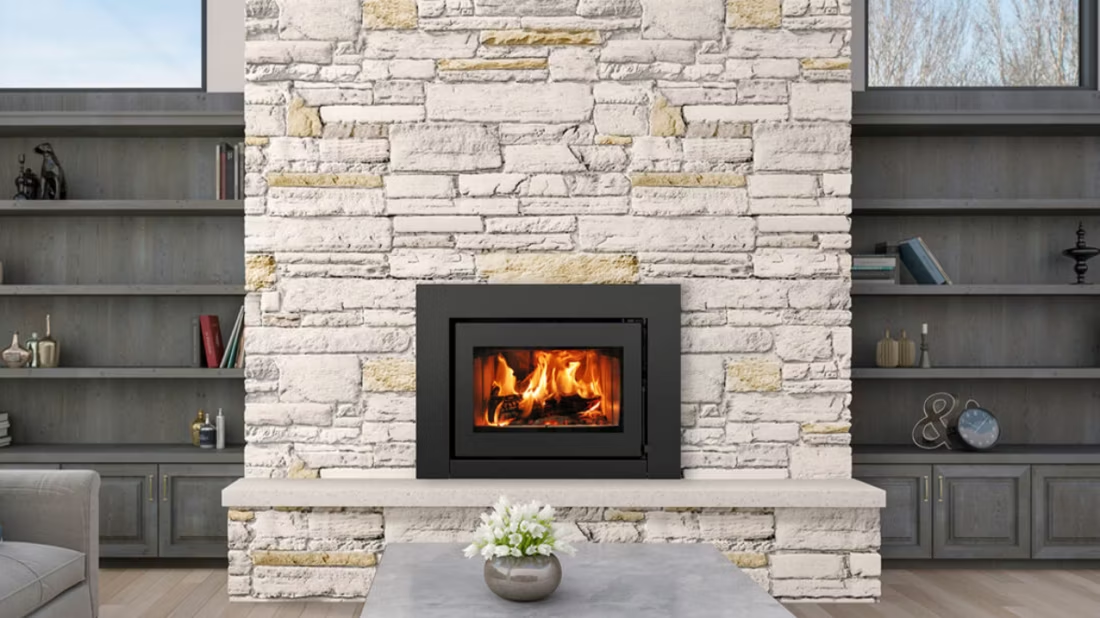
A freestanding wood stove sits on a hearth pad and vents through new Class A pipe—the more common choice in Rockford since most homes here were built for gas or oil heat and don't have an existing wood-rated masonry chimney. A wood insert drops into an existing masonry fireplace and uses that chimney (usually with a stainless liner). If your Rockford home has an older brick fireplace from a pre-1970s build, an insert can turn a decorative, heat-losing fireplace into a real heat source. If you're adding wood heat to a shop, addition, or a home with no existing chimney, a freestanding stove with new venting is the more straightforward path.
Do I need a permit to install a wood stove in Rockford?
Yes. New wood-burning appliance installations require a building permit through the City of Rockford's Community & Economic Development Department (or the Winnebago County Building Division for unincorporated areas), covering the stove clearances, hearth pad, and chimney or vent penetration. The stove itself needs to meet current EPA 2020 NSPS emissions standards—this is standard nationwide at this point, so any wood stove sold by a reputable dealer will already be certified. Most local installers pull the permit as part of the job, which is one more reason to work with a dealer who regularly does wood installs rather than a general contractor.
What's the best wood stove for Rockford's winters?
With average lows around 14°F and a winter heating season about as long and demanding as Madison or Duluth's, Rockford's winters are genuinely cold, even if the local wood-heat culture is thinner. If you're burning wood as real supplemental or backup heat, a mid-size non-catalytic stove from a brand like Pacific Energy or Lopi will handle a shop or addition efficiently on regionally available oak and hickory, both dense hardwoods that burn hot and long. If you want maximum burn time between loads—useful if you're not tending the stove daily—a catalytic model from Blaze King extends burn times significantly on a full load of seasoned hardwood.
How often should a wood stove chimney be inspected in Rockford?
Annually, per CSIA guidelines, regardless of how lightly the stove is used. Because wood heat is less common here, it can be tempting to skip a season if the stove only ran occasionally—but oak and walnut, the hardwoods most Rockford burners use, produce plenty of creosote if not fully seasoned, and irregular use patterns (a stove that sits unused for weeks between cold snaps) can actually increase creosote buildup risk. Schedule the sweep before the first hard freeze each fall.
Wood vs. gas—which makes more sense for my Rockford home?
Gas is the practical default in Rockford: natural gas service covers most of the city, installation is simpler, and you get instant, thermostat-controlled heat with none of the wood handling. Wood's real advantage is independence—a wood stove keeps producing heat with zero electricity or gas supply, which matters if you've dealt with a ComEd or Rock Energy Cooperative outage during a winter storm. For a primary living space in town, gas is almost always the better fit. For a detached shop, a rural property, or genuine grid-down backup, wood is the fuel that still works when everything else doesn't.
What about a pellet stove instead of wood?
Pellet stoves are also uncommon in Rockford for similar reasons—the local heating culture is built around natural gas, not biomass fuel, so pellet fuel isn't as widely stocked locally as it would be in a wood-heat region, though regional brands like Indeck Energy Services and Lignetics do supply pellets through hearth and farm-supply retailers in the broader Illinois-Wisconsin market. Pellet stoves burn cleaner and are easier to load than cordwood, but they require electricity to run the auger and blower, which defeats the grid-down advantage that makes wood worth considering here in the first place. If backup heat during an outage is your priority, wood beats pellet. If convenience matters more than outage resilience, either a pellet stove or a gas insert will serve you better than straight cordwood.
Why won't my new wood stove get going like my old one?
New wood stoves are 70%+ efficient, so far less heat goes up the flue—which also means less draft to get a fire established. The rule: build a genuinely hot fire for about 45 minutes before you choke it down. Skip that and you get smoke in the room, creosote in the chimney, and a fire that never takes off. Most performance complaints trace straight back to this.
Why is my open fireplace making my house colder?
Open fireplaces suck—literally. As the fire burns, it consumes air your furnace already paid to heat and pulls it out through the chimney, so the house is actually colder after the fire goes out than before you lit it. An insert fixes this: it seals the chimney, puts fixed glass across the front, and turns that hole in your house into a real heat source.
Does a fireplace add value to my home?
On average, a fireplace adds back to the home about the same amount you spent installing it. Add the monthly savings from heating the rooms you actually use instead of the whole house—often hundreds of dollars a year—and the value case is strong before you even count what a fire does for how your family uses the room.
Can I install a fireplace myself?
If you're putting a fire in your house on purpose, it's best to work with an expert. Unless you're genuinely experienced in framing, gas line, vent pipe, and the national code on clearances to combustibles, have a professional do it—and ideally the same company that sells you the fireplace, so warranty, service, and liability all live under one roof.
Nearby Dealers
Hearth shops serving Rockford and the surrounding area. Every listing shows whether it is a WhyFire partner, a dealer we have verified as authorized for the brands we recommend, or a local business carrying hearth products. No manufacturer pays for placement. How we verify dealers →
The Fireworks Store
Advanced Chimney Systems
Find your wood stove in Rockford.
Tell us about your home, your shop, or your backup-heat goals, and we'll match you with a local Rockford dealer experienced in wood-burning installs—plus a free Project Guide & Parts List with the exact venting and hearth components your project needs.
Find Your Fireplace →