
Real Heat, Zero Venting, in Any Rockford Room.
Rockford has a long, cold winter season with lows averaging 14°F—enough cold to justify supplemental heat, without the chimney, gas line, or permitting headaches of a full hearth remodel.
Every Project Starts From One of These Five Situations
Efficient heat that fits Rockford's electric grid and older housing stock.
Rockford sits in climate zone 5A at 729 feet, with a winter heating load in the same range as Madison, Wisconsin. Winters here are genuinely cold, but they're not the kind of extreme, multi-week deep-freeze that drives most Rock River Valley homeowners toward a full wood or pellet setup. Instead, electric fireplaces have become a popular way to add real, felt heat to a specific room—a finished basement in a Rockford bungalow, a converted sunporch, a condo along the river, or an addition that the furnace never quite reaches.
Electricity here is split between Commonwealth Edison in most of the city and Rock Energy Cooperative in outlying parts of Winnebago County, with residential rates running roughly 13.4 to 14.5 cents per kWh—moderate by Midwest standards. That matters for electric heat, since a 1,500-watt insert running a few hours an evening adds a modest, predictable line to the bill rather than a seasonal fuel expense. It's also worth being direct about what electric heat isn't good for locally: wood and pellet appliances see little demand inside Rockford's city limits, where lot sizes, HOA rules in newer subdivisions, and the prevalence of forced-air furnaces make an unvented, no-permit electric unit the more practical fit for most homes.
Three steps. No salesperson until you're ready.
Tell us about your project
Your zip code, your situation, and the fuel you're leaning toward—or let the answers point you to one.
See what's actually available
The brands dealers within 100 miles genuinely carry—real options, never a catalog mirage.
Get your dealer & Project Guide
A trusted local dealer, plus the free Project Guide & Parts List that names every component of the job.
Frequently Asked Questions
How much does an electric fireplace cost to install in Rockford?
Plug-in wall-mount and freestanding electric fireplaces typically run $200 to $1,500 for the unit itself, with no professional installation required beyond hanging it and plugging into an existing outlet. Built-in electric fireplaces and mantel packages—the kind local dealers install into a wall cavity or existing masonry opening—usually land between $1,500 and $4,000 installed, including trim and any millwork. If the unit needs a dedicated 20-amp circuit (common for larger built-ins), expect to add $150 to $400 for a licensed Rockford electrician to run that line. There's no chimney, venting, or gas line to budget for, which is the main reason electric installs cost a fraction of a comparable wood or gas project here.
Which electric utility serves my home, and does it affect my fireplace's running cost?
Most homes within Rockford city limits are served by Commonwealth Edison (ComEd), while parts of outlying Winnebago County are served by Rock Energy Cooperative. Residential rates run about 13.4 cents per kWh with ComEd and closer to 14.5 cents with Rock Energy, so your address does shift the math slightly. In practice, a typical 1,500-watt electric insert run four hours a night for the length of Rockford's roughly six-month heating season costs somewhere in the range of $110 to $160 in electricity, depending on which utility bills you and how often you actually run it on high versus flame-only mode.
Should I get an electric fireplace or a gas fireplace in Rockford?
Gas is the stronger choice for whole-room, daily-use heat—Rockford has solid natural gas infrastructure and a gas insert or built-in unit will out-heat any electric option in a real Illinois winter. Electric wins on install simplicity and cost: no gas line, no venting, no permit for a plug-in unit, and it can go anywhere there's an outlet, including a finished basement or upstairs bedroom a gas line will never reach. A lot of Rockford homeowners end up with both—gas in the main living space, electric in a secondary room where running new gas piping isn't worth the cost.
Why don't more Rockford homes use wood or pellet stoves instead?
Winnebago County has plenty of oak, hickory, walnut, and maple in the surrounding woodlots, but wood and pellet appliances see very little demand within Rockford's city limits. Most of the housing stock here—from East State Street bungalows to newer subdivisions near Perryville Road—is on lots too tight for a woodpile and covered by HOA or municipal rules that discourage solid-fuel burning. Between that and Rockford's reliable natural gas and electric service, homeowners almost always land on gas or electric rather than wood or pellet, even though the region itself has no shortage of hardwood.
Do I need a permit to install an electric fireplace in Rockford?
A plug-in electric fireplace that runs off an existing standard outlet doesn't require a permit—it's treated like any other appliance. If your unit needs a new dedicated circuit or your installer is opening up a wall to recess a built-in model, that electrical work does need a permit through the City of Rockford's Community and Economic Development Department (or the applicable township office outside city limits), and it should be pulled by a licensed electrician. Most local hearth dealers who handle built-in installs will manage this step for you as part of the project.
What kind of electric fireplace works best for a Rockford home?
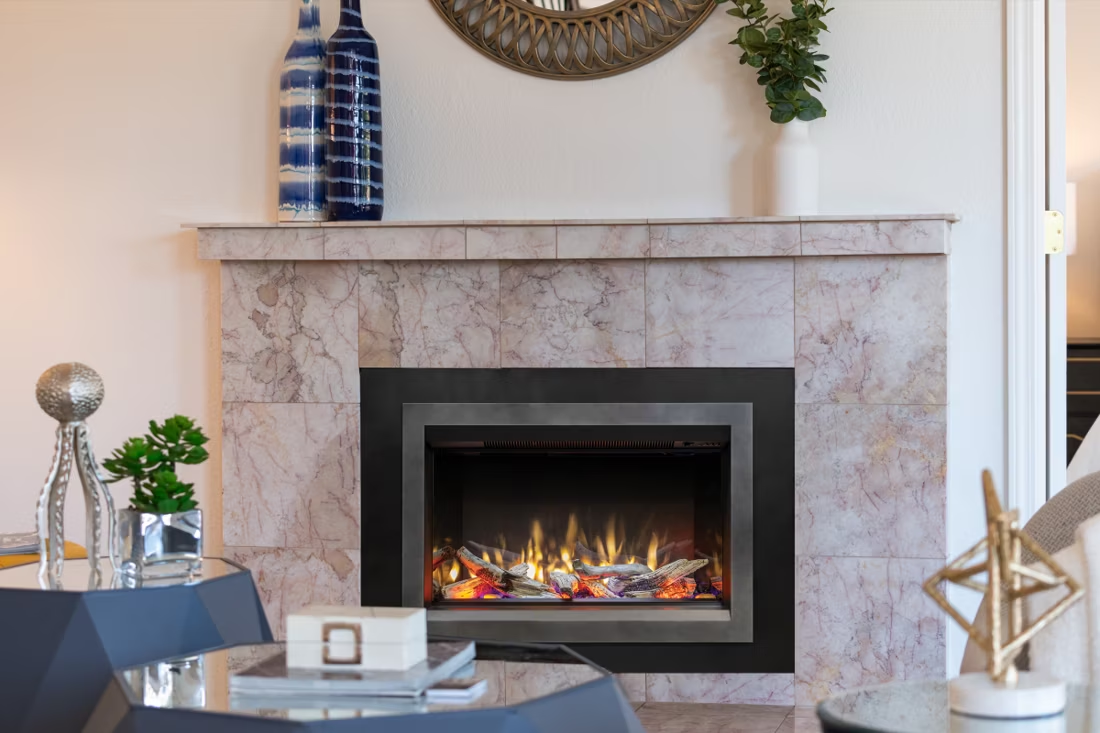
For older Rockford housing stock—bungalows, Cape Cods, and split-levels built before central air was standard—a built-in insert set into an existing wall cavity or unused masonry opening tends to look the most intentional and heats a single room effectively. For finished basements or additions with no existing fireplace footprint, a linear wall-mount unit is popular and doesn't require any framing changes. Freestanding stove-style electric units are a good fit for renters or condo owners near downtown who want supplemental heat without any wall modification at all. A local dealer will size the wattage and heater output to your actual square footage rather than guessing.
How much does it cost to run an electric fireplace through a Rockford winter?
Rockford's heating season runs roughly October through April. A standard 1,500-watt electric insert on its heat setting costs roughly 20 to 22 cents an hour to run at current ComEd and Rock Energy Cooperative rates. Used as supplemental heat for a few hours each evening rather than as a whole-house solution, that typically adds up to $15 to $25 a month during the coldest stretch—far less than most homeowners expect, since electric units let you shut off the heater and run flame-only for ambiance the rest of the time.
Will my electric fireplace still work if the power goes out?
No—electric fireplaces require power to run both the heater and the flame effect, so a ComEd or Rock Energy Cooperative outage takes it offline along with everything else in the house. Rockford does see occasional winter storm and summer derecho outages that knock out power for hours at a time. If backup heat during an outage matters to you, a gas unit with a battery-backed ignition system, or a wood-burning appliance, is a better primary choice—electric is best treated as everyday supplemental heat, not an emergency heat source.
What's the difference between an electric fireplace and a regular space heater?
Both use resistive electric elements to produce heat, and the wattage is often similar—but an electric fireplace insert or built-in is designed to look and feel like a real hearth feature, with a realistic flame effect, glass front, and finish options that integrate into cabinetry or a mantel surround the way a portable space heater never will. Many models also let you run the flame effect without the heater, useful in Rockford's shoulder seasons (September and April) when you want ambiance without added heat. For a permanent room feature rather than a temporary appliance, the fireplace-style unit is generally the better investment.
Can I put a TV above my fireplace?
Yes—with an asterisk. Fireplaces are hot and TVs don't like heat. Either put a mantel between them to deflect rising warmth, or choose a fireplace with heat-management technology that creates a cool zone on the wall above—the wall stays around 125 degrees, barely warm, while the room still gets full heat. If you like clean lines and don't want a mantel, heat management is the answer.
Does an electric fireplace need a vent or chimney?
No—that's its superpower. An electric fireplace needs a wall and an outlet, period. No vent pipe, no gas line, no clearances to design around, which is why it works in bedrooms, offices, apartments, and walls where venting a gas or wood unit would be impractical or impossible. Installation is typically the simplest and least expensive of any fireplace type.
Can a fireplace actually lower my heating bill?
Yes—by creating a comfort zone. A furnace heats every square foot of the house just to warm the one room you're in; a gas fireplace on low burns roughly a sixth of the gas a typical furnace does. Set the furnace around 55–60 degrees as a baseline, then heat the rooms your family actually uses. Families who heat this way commonly save $20–$60 a month.
How much should I budget for a fireplace?
For an average home—covering the fireplace, the vent pipe, and basic installation—a budget between $3,900 and $5,500 gives you a lot of options across wood, gas, and pellet. By the time you add finish work, gas line, and electrical, the average complete installation lands between $5,000 and $12,000 all-in. In a remodel or new build, a good rule is to put about 2.5% of the total project cost toward the fireplace.
Nearby Dealers
Hearth shops serving Rockford and the surrounding area. Every listing shows whether it is a WhyFire partner, a dealer we have verified as authorized for the brands we recommend, or a local business carrying hearth products. No manufacturer pays for placement. How we verify dealers →
The Fireworks Store
Advanced Chimney Systems
Electric Service in Rockford
An electric fireplace's heater draws about 1,500 watts—pennies per hour at local rates.
Commonwealth Edison Co
Rock Energy Cooperative
Find your electric fireplace in Rockford.
Tell us about your Rockford home and the room you're heating, and we'll match you with a trusted local dealer and put together a free Project Guide & Parts List—sized, specced, and ready to install.
Find Your Fireplace →