
Is a pellet stove realistic in Oak Park?
Pellet appliances are uncommon on Oak Park's tight, tree-lined lots—but for the right home, a pellet insert can still make sense. We'll help you find out and connect you with a local dealer who knows the terrain.
Every Project Starts From One of These Five Situations
Pellet stoves are the exception, not the rule, here.
Oak Park is a densely built inner-ring suburb of Chicago—53,834 people packed into just over four square miles of Cook County, much of it historic housing stock with narrow side yards and homes set close to their neighbors. At 635 feet elevation with a winter heating season comparable to Madison, WI, and average winter lows near 19°F, the climate here isn't drastically different from Madison, WI—cold enough that supplemental heat matters, but not so severe that homeowners are chasing 20-hour burn times the way they might further north.
What makes pellet stoves genuinely rare in Oak Park isn't the weather—it's the housing. Most homes here are already tied into piped utility heat, and the Village's building and historic preservation review process (many blocks fall under local landmark districts tied to the neighborhood's Frank Lloyd Wright-era architecture) makes exterior venting penetrations on close-set lots a harder sell than in a rural or exurban setting. Regional pellet fuel producers like Indeck Energy Services, Lignetics, and Somerset Pellet Fuel are all based in Illinois and supply the broader Midwest—the fuel supply chain exists—but very few Oak Park homes are actually set up to burn it. That said, a handful of homeowners still install pellet inserts for a sunroom, a converted garage, or a detached workshop where the appliance and venting can be sited without disturbing the main structure's footprint or facade.
Three steps. No salesperson until you're ready.
Tell us about your project
Your zip code, your situation, and the fuel you're leaning toward—or let the answers point you to one.
See what's actually available
The brands dealers within 100 miles genuinely carry—real options, never a catalog mirage.
Get your dealer & Project Guide
A trusted local dealer, plus the free Project Guide & Parts List that names every component of the job.
Frequently Asked Questions
How much does a pellet stove installation cost in Oak Park?
There isn't a well-established local cost baseline for pellet installs in Oak Park simply because so few happen here each year—most hearth dealers serving Cook County are set up for gas conversions, not pellet venting. When we've matched Chicago-area homeowners with similar side-wall-vent projects, installed costs have generally landed somewhere between $3,500 and $6,500, depending on the unit, whether a hearth pad is needed, and how much wall or roof penetration work is involved. A trusted local dealer can give you a firm number after seeing your specific lot and structure.
Why are pellet stoves so uncommon in Oak Park compared to other parts of Illinois?
Two things work against pellet stoves here: lot density and existing infrastructure. Oak Park homes sit close together on narrow lots, which limits where a side-wall pellet vent can terminate without crowding a property line or a neighbor's window. Many blocks also fall under Village historic preservation guidelines tied to the town's landmark architecture, which adds review steps for any new exterior penetration. On top of that, the overwhelming majority of homes already have piped heating infrastructure in place, so there's less incentive to add a solid-fuel hopper appliance that needs a dedicated electrical circuit and periodic pellet deliveries.
If pellet stoves are rare here, can I even get pellets delivered to Oak Park?
Yes—fuel supply isn't the bottleneck. Illinois is home to several established pellet producers, including Indeck Energy Services, Lignetics, and Somerset Pellet Fuel, and bagged hardwood pellets are widely stocked at home improvement retailers throughout Cook County. The scarcity in Oak Park is installed appliances, not available fuel—if you do install a pellet stove or insert, keeping it stocked through a Chicago winter won't be a problem.
Does a pellet stove make sense for a garage, workshop, or detached structure in Oak Park?
This is actually where most of the pellet interest we see in Oak Park lands. A detached garage, converted coach house, or workshop gives you a venting path that doesn't touch the historic main house facade or trigger the same preservation review a front-facing installation would. If you're heating a secondary structure rather than your primary living space, a freestanding pellet stove with a straightforward side-wall vent kit is often more achievable than trying to retrofit one into the main house.
Should I just install a gas insert instead of a pellet stove?
For most Oak Park homes, yes—gas is the more practical fit. Natural gas service is standard throughout the city, most homes are already plumbed for it, and a direct-vent gas insert avoids the exterior side-wall clearance and hopper-loading routine a pellet stove requires. Pellet still has a place if you specifically want the look and heft of a real hardwood flame, don't mind loading pellets and cleaning an ash pan periodically, and have a structure—like a detached garage—where venting is simpler. If your priority is set-it-and-forget-it heat in the main house, a local dealer will likely steer you toward gas.
What are the venting requirements for a pellet stove on a narrow Oak Park lot?
Pellet stoves vent through a small-diameter side-wall pipe, similar to a gas insert, which is easier to route than a full masonry chimney—but Oak Park's close lot lines still matter. Codes typically require the vent termination to sit a minimum distance from property lines, windows, and doors, and on a lot where homes are set just feet apart, that can eliminate one or two walls as options entirely. A local installer will walk your property line setbacks before recommending where the appliance and vent can go.
Do I need a permit to install a pellet stove in Oak Park?
Yes. Any new solid-fuel or pellet-burning appliance requires a building permit through the Village of Oak Park's Building Department, and if your home sits within one of the village's historic districts, exterior venting work may also require a review for compatibility with the district's design guidelines. This is one more reason most Oak Park pellet installations we see involve local dealers experienced in navigating both the permit and, where applicable, the preservation review process.
Do pellet stoves need electricity to run, and is that a concern in Oak Park?
Yes—pellet stoves rely on an electric auger to feed fuel and a blower to distribute heat, so unlike a wood stove, they won't operate during a power outage unless you add a battery backup. ComEd, the local electric utility, serves Oak Park with generally reliable year-round service, so outages aren't a major planning concern here the way they would be in a more storm-prone or rural service area—but if backup heat during outages is a priority for you, that's worth discussing with your installer, since a pellet stove alone won't cover that need.
Pellet vs. electric heat—which is the better supplemental option in Oak Park?
Electric options—a plug-in insert, an electric fireplace, or a heat pump-based system—require no venting, no fuel deliveries, and no permitting beyond a standard electrical hookup, which fits Oak Park's tight lots well. Pellet stoves offer real flame and higher heat output per hour of use, but come with hopper loading, ash cleanup, and the venting and permitting hurdles described above. At Oak Park's residential electric rate of roughly $0.134/kWh through ComEd, electric supplemental heat is inexpensive to run occasionally but not a substitute for real heating load. For most main-house applications here, electric wins on simplicity; pellet only pulls ahead if you specifically want the ambiance and heat output of a real hardwood fire in a structure where venting is straightforward.
How often does a pellet stove need cleaning?
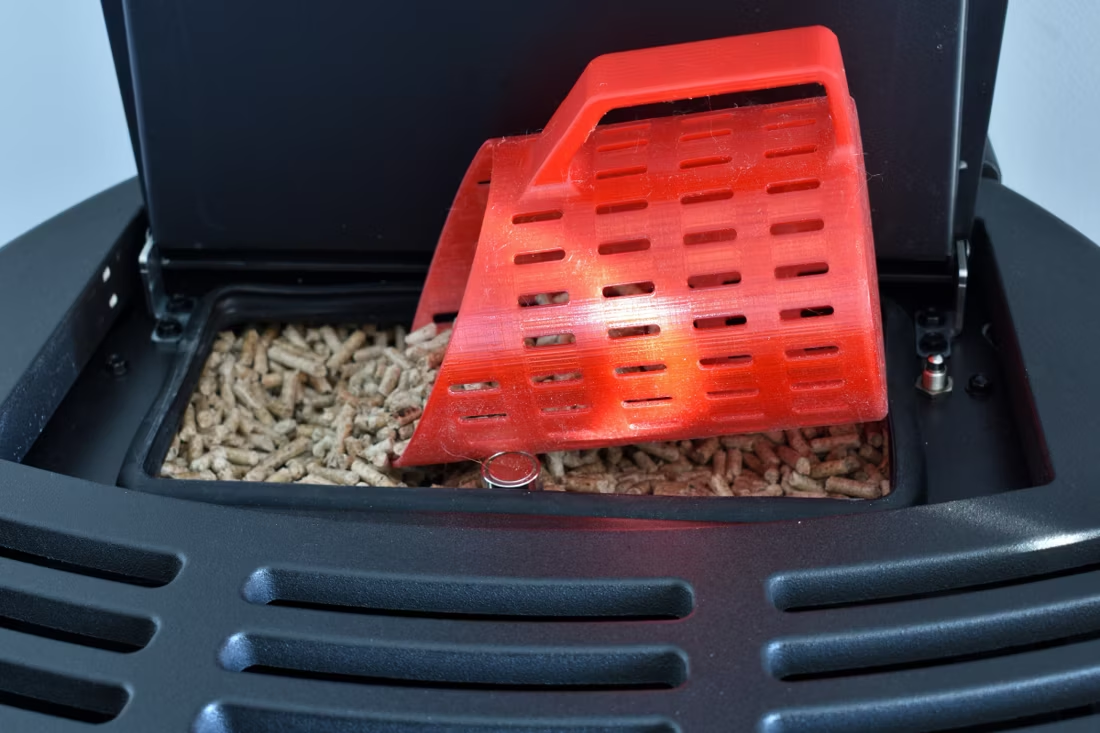
A clean pellet stove is a happy pellet stove. Plan on cleaning the burn pot about once a week when you're burning regularly—ash and clinkers gum up the air holes just like a pellet barbecue. Most pellet stove problems trace back to skipped cleaning that nobody explained up front. Some designs make it easy with a trapdoor burn pot: pull a lever and the gunk drops into the ash pan.
Why is my open fireplace making my house colder?
Open fireplaces suck—literally. As the fire burns, it consumes air your furnace already paid to heat and pulls it out through the chimney, so the house is actually colder after the fire goes out than before you lit it. An insert fixes this: it seals the chimney, puts fixed glass across the front, and turns that hole in your house into a real heat source.
Can a fireplace actually lower my heating bill?
Yes—by creating a comfort zone. A furnace heats every square foot of the house just to warm the one room you're in; a gas fireplace on low burns roughly a sixth of the gas a typical furnace does. Set the furnace around 55–60 degrees as a baseline, then heat the rooms your family actually uses. Families who heat this way commonly save $20–$60 a month.
Does a fireplace add value to my home?
On average, a fireplace adds back to the home about the same amount you spent installing it. Add the monthly savings from heating the rooms you actually use instead of the whole house—often hundreds of dollars a year—and the value case is strong before you even count what a fire does for how your family uses the room.
Nearby Dealers
Hearth shops serving Oak Park and the surrounding area.
Fireside Collection By Fireplaces Plus
Pellet Brands Stocked Around Oak Park
Manufacturers will point you to the nearest stocking dealer.
Find your pellet stove fit in Oak Park.
Tell us about your home—including whether you're heating the main house or a detached structure—and we'll give it to you straight: whether pellet makes sense, and which trusted local dealer can put together your free Project Guide & Parts List.
Find Your Fireplace →