
Keep Your Family Warm and Safe—No Matter What
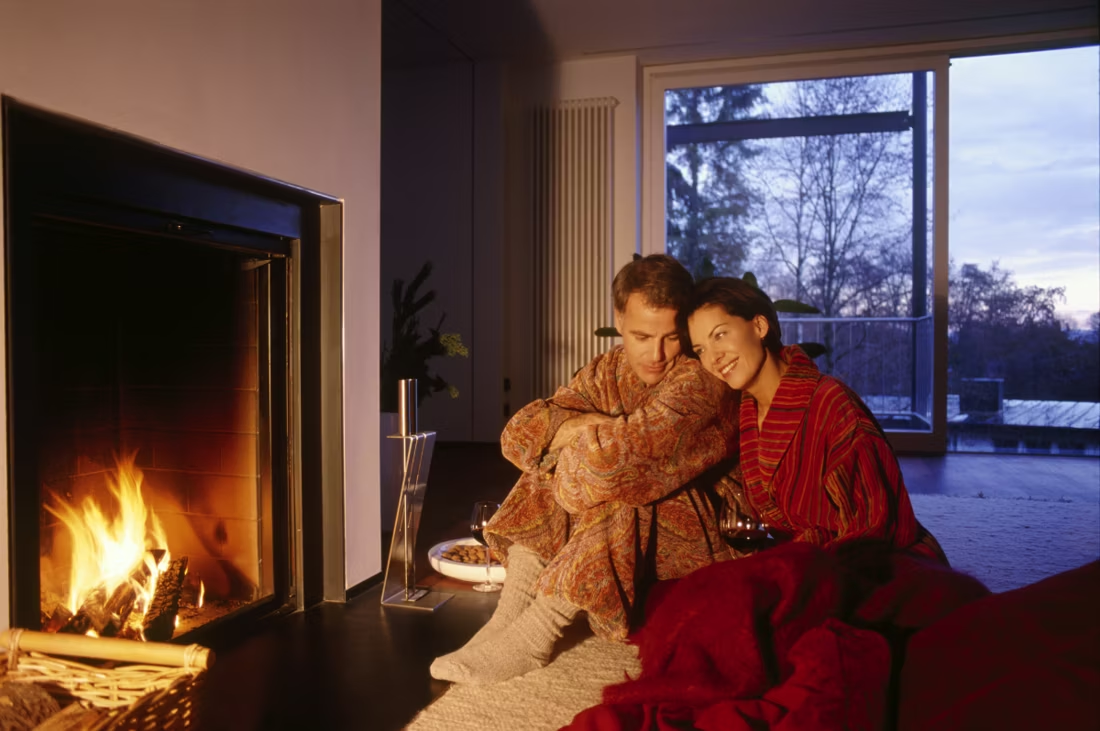
Most Oak Lawn homes run on natural gas, but a handful of owners still choose a wood stove or insert for backup heat during outages or the ambiance of a real fire. We'll match you with a trusted local dealer who installs it to code.
Every Project Starts From One of These Five Situations
In this pocket of Cook County, gas took over the hearth generations ago.
Oak Lawn sits at 605 feet in the flat, densely built inner-ring suburbs just southwest of Chicago, where winter lows average around 20°F and the heating season is a long, demanding stretch of the year—cold, but nowhere near the extremes of a place like Duluth or Fargo. Almost every home here, from the postwar ranches to the newer subdivisions, was built with natural gas already piped to the block, and that infrastructure shaped how the village heats: gas furnaces and gas fireplaces are the default, and true wood-burning stoves or inserts are the exception rather than the rule.
That doesn't mean wood heat is off the table. A small number of Oak Lawn homeowners—often in older bungalows with an existing masonry fireplace—install a wood-burning insert for real backup heat during a Cook County ice storm outage, or simply because they want the smell and crackle of an actual fire rather than a switch-operated flame. Local hardwoods like oak, hickory, walnut, and maple are easy to find through regional firewood dealers and tree services, since there's no nearby national forest with cut-your-own permits the way there is in more rural parts of the Midwest. If wood heat is what you want, it can absolutely be done right—it's just a specialty project here, not a commodity one, which makes picking the right local installer more important, not less.
Three steps. No salesperson until you're ready.
Tell us about your project
Your zip code, your situation, and the fuel you're leaning toward—or let the answers point you to one.
See what's actually available
The brands dealers within 100 miles genuinely carry—real options, never a catalog mirage.
Get your dealer & Project Guide
A trusted local dealer, plus the free Project Guide & Parts List that names every component of the job.
Frequently Asked Questions
Is wood heat even a normal choice for a home in Oak Lawn?
Not really, and we'll say that plainly. Wood fuel relevance in Oak Lawn is low—natural gas is already run to nearly every block in this part of Cook County, and most homes built here since the 1950s were designed around a gas furnace and, at most, a decorative gas log set. The homeowners who do install a real wood stove or insert are usually doing it for one of two reasons: they want genuine backup heat that works without electricity or gas service during a winter outage, or they have an existing masonry fireplace and want to actually use it instead of leaving it decorative. Either is a legitimate reason—it's just a smaller, more specialized market than in wood-heating regions.
What does a wood stove or insert installation cost in Oak Lawn?
Because wood installs are uncommon here, there isn't a large pool of local pricing to draw from, but projects in this part of northern Illinois generally run $3,500 to $8,000. An insert into an existing masonry fireplace with a stainless liner sits toward the lower end; a freestanding stove that needs a new Class A chimney run through the roof of a ranch or bungalow costs more. Because so few Oak Lawn dealers specialize in wood-burning equipment, get at least two quotes—pricing varies more here than it would in a market where wood heat is the norm.
Do I need a permit to install a wood stove in Oak Lawn?
Yes. The Village of Oak Lawn Building Department requires a permit for any new solid-fuel burning appliance, and the unit itself needs to meet current EPA 2020 NSPS emissions standards, same as anywhere else in Illinois. Cook County doesn't add additional air-quality restrictions on top of that here—Oak Lawn isn't a non-attainment area—but the permit and inspection still exist to verify clearances, venting, and hearth pad requirements under the current fire code. A local installer familiar with the village's process will typically pull the permit for you.
Where do I get firewood in Oak Lawn if I install a wood stove?
You'll be buying, not cutting. There's no national forest or large public land parcel near Oak Lawn with cut-your-own firewood permits—that's a downstate or out-of-state option, not a Cook County one. Instead, plan on sourcing seasoned cordwood from a regional firewood dealer or tree service; oak, hickory, walnut, and maple are the most common species available locally, since they're the hardwoods that come down in tree removal work across the south suburbs. Buy split, seasoned wood at least six months ahead of burning season, and ask the dealer for moisture content—wet wood is the single biggest cause of poor-burning, high-creosote wood stoves.
Should I choose wood or just stick with a gas fireplace?
For most Oak Lawn homes, gas is the more practical everyday choice—it's instant, it doesn't require wood storage in a small suburban yard, and the gas infrastructure is already there. Wood makes sense in a narrower set of cases: if you want heat that works when the power and gas both go down in a bad Midwest ice storm, or if you have an existing masonry fireplace you'd like to actually use rather than convert. If your main goal is ambiance without any of the wood handling, an electric fireplace or a gas insert will get you there with a lot less complexity—Commonwealth Edison's residential rate here runs about 13.4 cents per kWh, which makes an electric unit cheap to run for occasional use.
How often does a wood-burning chimney need to be inspected in Oak Lawn?
Once a year, no matter how little you burn—the Chimney Safety Institute of America recommends an annual Level 1 inspection for any wood-burning appliance, and that holds true here as much as anywhere. Because so few Oak Lawn homes burn wood as a primary heat source, most local systems are used occasionally, which can actually make creosote buildup harder to predict—infrequent, cooler fires sometimes creosote more per hour of use than a steady, well-managed burn. Schedule the sweep in late summer or early fall, before you're tempted to light the first fire of the season.
What size wood stove or insert makes sense for an Oak Lawn home?
Most housing stock in Oak Lawn is modest—postwar ranches and bungalows in the 1,000 to 1,800 square foot range—so a small to mid-size stove or insert (rated for roughly 1,000-1,600 square feet) is usually plenty, especially since wood is almost always supplemental or backup heat here rather than the only heat source. Oversizing is the more common mistake in a home this size: a stove that's too large for the space will push the homeowner into constant damping-down, which drives up creosote. A local dealer should size the unit to your actual square footage and insulation, not just the biggest model in the showroom.
Will installing a wood stove affect my homeowners insurance or resale value in Oak Lawn?
It can affect both, so it's worth asking about before you install. Some homeowners insurance carriers in Cook County require notification of a new solid-fuel appliance and may ask for proof of a code-compliant installation and inspection; a permitted install through the Village of Oak Lawn makes that documentation easy to produce. On resale, because wood stoves are uncommon in this market, some buyers see it as a bonus (backup heat, ambiance) and others see it as a maintenance item they'd rather not deal with—a professionally installed, EPA-certified unit with a clean inspection history reads much better to either kind of buyer than an older, uncertified stove.
Is an electric fireplace a better fit than wood for my Oak Lawn home?
For a lot of homeowners here, yes—especially in condos, townhomes, or smaller lots where storing cordwood isn't practical. Electric fireplaces plug into a standard outlet, need no chimney or venting, and run on Commonwealth Edison power at roughly 13.4 cents per kWh, which is inexpensive for occasional evening use. What you give up is real backup heat during a power outage, since an electric unit obviously needs electricity to run. If backup heat during outages is the priority, wood or even a battery-backed gas insert makes more sense; if ambiance and simplicity are the priority, electric is hard to beat in a dense suburb like Oak Lawn.
Why is a fireplace insert so efficient?
An insert does two things: it seals the chimney completely, so you stop losing air you already paid to heat, and it radiates warmth into the room through the firebox and glass. Most add a heat-exchange fan that pulls cool room air underneath, wraps it around the hot firebox, and pushes it back out warm. Your home is more efficient before you've even lit the first fire.
What's the difference between an insert and a zero-clearance fireplace?
An insert is a fireplace that slides into a pre-existing wood-burning fireplace—if you don't have one, there's nothing to insert it into. A zero-clearance fireplace is built into a framed wall, which makes it the answer for remodels and new construction. Simple test: existing masonry fireplace means insert; blank or framed wall means zero-clearance.
Does a fireplace add value to my home?
On average, a fireplace adds back to the home about the same amount you spent installing it. Add the monthly savings from heating the rooms you actually use instead of the whole house—often hundreds of dollars a year—and the value case is strong before you even count what a fire does for how your family uses the room.
What is an in-home preview and do I need one?
It's a visit where a hearth professional measures your space, confirms the model you picked actually works in your home, and walks the specs—framing, gas line, venting, finish work—before anything is ordered. Some details you just can't know until you see the house. Never make a down payment without one; it's the single most-skipped step that burns buyers.
Nearby Dealers
Hearth shops serving Oak Lawn and the surrounding area.
Fireside Collection By Fireplaces Plus
Find your wood fireplace option in Oak Lawn.
Tell us about your home and whether you're after backup heat or a real fire's ambiance—we'll match you with a trusted local Oak Lawn dealer and send over a free Project Guide & Parts List with the exact parts, venting, and installer recommendation for your project.
Find Your Fireplace →