
Pellet Stoves Are a Niche Fit in Normal, IL.
With Ameren Illinois natural gas running through most of McLean County, pellet heat plays a small, specific role here—not the primary heat source it is out West. We'll help you figure out if it's right for your home and connect you with a local dealer.
Every Project Starts From One of These Five Situations
Natural gas dominates here—pellet stoves fill a narrow role.
Normal sits in the heart of McLean County's corn belt, with a winter heating season that rivals Madison, Wisconsin for sustained demand and average winter lows around 16°F. But unlike the mountain West or New England, central Illinois doesn't have wildfire-driven wood restrictions or winter air-quality non-attainment zones pushing homeowners toward pellet appliances. Air quality concerns here are listed as none, and Ameren Illinois natural gas service reaches most of the Bloomington-Normal metro, so gas furnaces and gas fireplaces remain the default choice for both new construction near Illinois State University and older neighborhoods alike.
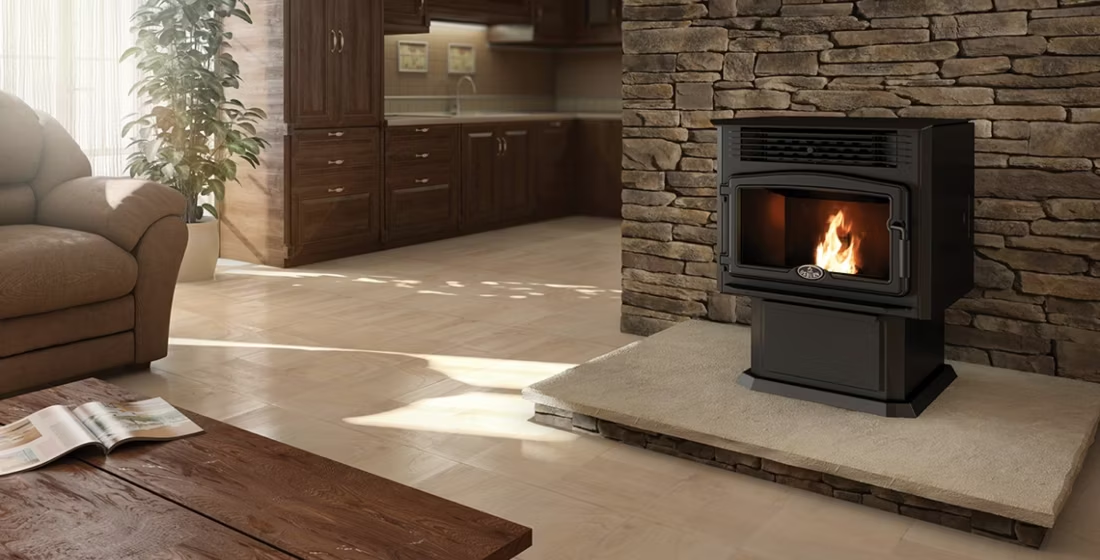
That said, pellet fuel does move through this region—Indeck Energy Services, a biomass energy company based in Illinois, along with Lignetics and Somerset Pellet Fuel, supply pellets to farm and hardware retailers across central Illinois. The homeowners who do install pellet stoves in Normal tend to be specific cases: rural properties served by Corn Belt Energy Corporation's cooperative lines that sit outside easy natural gas access, households wanting a backup heat source for the ice storms that occasionally knock out power in McLean County, or people who simply want the look and feel of a stove-fed fire without hauling cordwood. It's a real option here—just not the mainstream one.
Three steps. No salesperson until you're ready.
Tell us about your project
Your zip code, your situation, and the fuel you're leaning toward—or let the answers point you to one.
See what's actually available
The brands dealers within 100 miles genuinely carry—real options, never a catalog mirage.
Get your dealer & Project Guide
A trusted local dealer, plus the free Project Guide & Parts List that names every component of the job.
Frequently Asked Questions
How much does a pellet stove installation cost in Normal?
Nationally, a typical pellet stove installation runs $3,000 to $6,000, covering the unit, a dedicated electrical outlet, hearth pad if needed, and venting through an exterior wall (pellet stoves don't require a full masonry chimney like wood stoves do). Because pellet heat is a smaller market in Normal than gas, expect fewer specialist hearth dealers than you'd find in, say, Duluth or Bozeman—some homeowners end up working with a Bloomington-Normal HVAC contractor or driving to a regional hearth shop rather than a dedicated pellet specialist. Get a firm quote after an in-home consultation rather than relying on a national average.
If winters here are this cold, why isn't pellet heat more common in Normal?
It comes down to infrastructure and incentives. Ameren Illinois natural gas is widely available and priced competitively across most of the Bloomington-Normal area, so gas furnaces and gas fireplaces already do the job efficiently through a winter heating season comparable to what a city like Madison, Wisconsin handles every winter. There's also no local air-quality non-attainment designation here the way there is in parts of the West, which elsewhere pushes homeowners toward EPA-certified pellet appliances as a cleaner alternative to open wood burning. Without that regulatory push, and with cheap gas already piped to most homes, pellet stoves stay a niche choice rather than a mainstream one.
Who actually ends up installing a pellet stove in Normal?
Three groups, mostly. Rural McLean County homeowners on Corn Belt Energy Corporation's cooperative electric lines who don't have a natural gas main running to their property. Homeowners who want a backup heat source that doesn't depend on the furnace during the ice storms that periodically hit central Illinois. And a smaller group who simply like the ambiance and lower smoke profile of pellet fuel over cordwood, often in a basement, sunroom, or secondary living space rather than as the home's primary heat.
Can I actually buy pellet fuel locally, or does it have to be shipped in?
You can buy it locally, though selection is thinner than in regions where pellet heat is standard. Indeck Energy Services, headquartered in Illinois, along with Lignetics and Somerset Pellet Fuel, distribute bagged pellets through farm supply and hardware stores across the Bloomington-Normal area. Because demand is lower here than in the Northeast or Pacific Northwest, it's worth buying your season's supply—typically sold by the ton or by 40-pound bag pallets—in late summer or early fall before the first cold snap, rather than assuming a store will have stock mid-winter.
What size pellet stove do I need for a Normal-area home?
Sizing depends on square footage, insulation, and whether the stove is your main heat or a supplement to your existing gas furnace. Small units (up to roughly 1,000 sq ft) suit a single room or finished basement; medium units (1,000-2,000 sq ft) can handle a main living area in one of the newer, well-insulated homes common around Illinois State University; larger units are rarely necessary here since almost no one is asking a pellet stove to heat an entire McLean County house on its own. A local dealer can size the unit correctly during an in-home visit—oversizing is the most common mistake with a niche appliance like this.
Pellet stove vs. gas fireplace—which makes more sense in Normal?
For most homes here, gas wins on convenience: instant on-off operation, no hopper to refill, and a fuel source already piped in by Ameren Illinois. Pellet stoves need electricity to run the auger and blower, which means they won't function during a power outage unless you have a generator or battery backup—an important caveat if your reason for considering pellet heat is storm resilience. Where pellet still makes sense is on properties without a gas hookup, or as a secondary heat source where the wood-stove look and feel matters more than push-button convenience.
Do I need a permit to install a pellet stove in Normal?
Most likely yes—new solid-fuel and pellet-burning appliances typically require a building permit through your local jurisdiction, whether that's the Town of Normal or McLean County depending on your address, along with confirmation that venting and clearances meet current code. Because pellet installs are uncommon locally, it's worth confirming directly with the permitting office rather than assuming the process mirrors a gas fireplace permit, which most contractors here handle far more routinely.
How much maintenance does a pellet stove actually need?
More hands-on than a gas fireplace, less than a wood stove and chimney. Plan on emptying the ash pot every few days during regular use, a deeper cleaning of the burn pot and heat exchanger tubes every few weeks, and an annual inspection of the exhaust venting and auger motor before each heating season. Because there are fewer dedicated pellet-stove technicians in the Bloomington-Normal area than gas-appliance service techs, factor in either learning the maintenance yourself or building a relationship with one of the handful of dealers who service what they sell.
Pellet stove vs. electric fireplace—which is the better backup option?
Neither is a true off-grid backup, but they fail differently. A pellet stove needs a small but steady draw of electricity to run its auger and combustion blower—at Ameren Illinois or Corn Belt Energy Corporation's residential rates (roughly $0.12-$0.16 per kWh locally), that's a modest running cost, but zero power means zero heat. An electric fireplace or heater is even more dependent on grid power and delivers less real heat output per dollar during a true cold snap. If backup heat during a McLean County ice storm is the priority, a battery or generator paired with either appliance matters more than which fuel you choose.
Why is my open fireplace making my house colder?
Open fireplaces suck—literally. As the fire burns, it consumes air your furnace already paid to heat and pulls it out through the chimney, so the house is actually colder after the fire goes out than before you lit it. An insert fixes this: it seals the chimney, puts fixed glass across the front, and turns that hole in your house into a real heat source.
Are pellet stoves loud?
They make some noise—there are two fans running plus an auger motor that turns as it feeds pellets. But there's a real range: premium models are engineered quiet, and the best offer a whisper-quiet mode you can comfortably watch TV next to. If noise matters in your room, ask to hear a stove running before you buy—it's a five-minute test that saves years of annoyance.
Can a fireplace actually lower my heating bill?
Yes—by creating a comfort zone. A furnace heats every square foot of the house just to warm the one room you're in; a gas fireplace on low burns roughly a sixth of the gas a typical furnace does. Set the furnace around 55–60 degrees as a baseline, then heat the rooms your family actually uses. Families who heat this way commonly save $20–$60 a month.
Does a fireplace add value to my home?
On average, a fireplace adds back to the home about the same amount you spent installing it. Add the monthly savings from heating the rooms you actually use instead of the whole house—often hundreds of dollars a year—and the value case is strong before you even count what a fire does for how your family uses the room.
Nearby Dealers
Hearth shops serving Normal and the surrounding area.
Pellet Brands Stocked Around Normal
Manufacturers will point you to the nearest stocking dealer.
Find your pellet stove in Normal.
Tell us about your home and how you'd use a pellet stove, and we'll send you a free Project Guide & Parts List—the exact parts, including venting, and a trusted local dealer who can install it correctly.
Find Your Fireplace →