
Steady, hands-off heat for Mercer County's long farm-country winters.
From Aledo to New Boston, Viola, and Sherrard, Mercer County sees a long, demanding heating season and winter lows averaging 13°F—enough cold to make a thermostat-controlled pellet stove worth the investment. Find the right unit and connect with a trusted local dealer.
Every Project Starts From One of These Five Situations
Convenience built for a working county's pace.
Mercer County sits along the Mississippi River in northwestern Illinois, with Aledo as the county seat and small communities like New Boston, Viola, and Sherrard spread across roughly 8,700 residents and a lot of farmland. Climate zone 5A here means real winter—an average low of 13°F and a long, demanding heating season most years, with stretches of sub-freezing cold that can run for days at a time. For farm families and anyone else with a full schedule, a pellet stove offers something a wood stove can't: set a thermostat, fill the hopper, and let it run without daily tending.
The river bottomlands here support a lot of oak, hickory, walnut, and maple, and hardwood sawmill byproducts from timber like this are exactly what feeds regional pellet producers such as Indeck Energy Services, Lignetics, and Somerset Pellet Fuel—all of which supply dealers in this part of Illinois. Mercer County has no air quality non-attainment designations and no winter burn curtailment periods, so a pellet stove here runs on your schedule, not around inversion advisories. That combination of local hardwood pellet supply and thermostat-driven convenience is why pellet units have become a common secondary or even primary heat source in this county's older farmhouses and newer homes alike.
Three steps. No salesperson until you're ready.
Tell us about your project
Your zip code, your situation, and the fuel you're leaning toward—or let the answers point you to one.
See what's actually available
The brands dealers within 100 miles genuinely carry—real options, never a catalog mirage.
Get your dealer & Project Guide
A trusted local dealer, plus the free Project Guide & Parts List that names every component of the job.
Frequently Asked Questions
How much does a pellet stove installation cost in Mercer County?
A straightforward pellet stove installation in Mercer County—the unit itself, a direct-vent kit run through an exterior wall, and hearth pad work if your floor isn't already rated for it—typically runs $3,000 to $6,000. That's usually less than a wood stove install because pellet venting doesn't require a full masonry chimney or Class A pipe running through the roof; a small-diameter vent through a side wall is often all that's needed. Costs move higher if you're adding a dedicated electrical circuit for the auger and blower, or if the installer has to travel out to rural stretches near New Boston or Keithsburg. A local dealer will give you a firm number after seeing your home.
What size pellet stove do I need for my Mercer County home?
Sizing comes down to square footage, insulation, and how many older, less-sealed rooms you're trying to heat—a real factor in a county with plenty of pre-1960s farmhouses. As a rough guide for this climate zone: small units (under 1,000 sq ft) work for a single living area or a well-insulated cabin, mid-size units (1,000–2,000 sq ft) cover most main floors, and larger units with bigger hoppers handle whole homes or drafty older construction. With winter lows averaging 13°F and long cold stretches typical here, undersizing means the stove runs at maximum output constantly and still can't keep up on the coldest nights—a local dealer will size your space correctly during an in-home visit.
Where can I find certified pellet stove installers near me in Mercer County?
Look for installers with NFI (National Fireplace Institute) certification—it signals training specific to venting, clearances, and electrical requirements for pellet appliances. Established hearth dealers serving Mercer County typically cover Aledo, New Boston, Viola, and Sherrard without a major travel charge, though the most rural properties near the river may see a modest trip fee. Stick with a dealer who both sells and installs the unit—it keeps warranty coverage and code compliance under one roof, and avoids the venting mistakes that come with a general handyman install.
What's the difference between a pellet stove and a pellet insert?
A pellet stove is a freestanding unit that sits on a hearth pad and vents through a wall or existing chimney chase—it can go almost anywhere in a room with the right clearances. A pellet insert is built to slide into an existing masonry fireplace opening, turning an old wood-burning fireplace into an automated, thermostat-controlled heat source while reusing the existing chimney as a liner-run vent path. For Mercer County's older farmhouses with an existing brick fireplace that rarely gets used, an insert is usually the more efficient upgrade. Homes without an existing fireplace opening are better suited to a freestanding stove.
Do I need a permit to install a pellet stove in Mercer County?
Yes—a building permit is required for a new pellet stove installation, and because the auger and combustion blower need a dedicated grounded electrical outlet, an electrical inspection is usually part of the process too. Permits go through Mercer County's building department in Aledo. Most established local dealers handle the permit filing as part of the installation quote, so it's rarely something you have to manage yourself.
What's the best pellet stove for Mercer County's climate?
With winter lows averaging 13°F and cold stretches that can run several days without a break, hopper capacity matters more here than it would in a milder climate—a 40-pound hopper that needs refilling twice a day gets old fast during a January cold snap. Look for units with 60-pound-plus hoppers and at least a 24-hour burn time on low, which cuts down on daily tending during the coldest weeks. Widely available brands like Harman, Lopi, and Quadra-Fire all make models suited to sustained cold-climate use. A local dealer can match hopper size and BTU output to your specific square footage and insulation level.
Where can I buy pellet fuel in Mercer County?
Regional producers including Indeck Energy Services, Lignetics, and Somerset Pellet Fuel supply dealers throughout this part of Illinois, and most hearth retailers either stock bags directly or can point you to a nearby farm-and-home store that carries them. Pellets are sold in 40-pound bags, with roughly 50 bags making up a ton—a useful unit to know when budgeting for a full heating season. Buying a season's supply early in fall, before the first cold snap drives up local demand, is common practice among Mercer County pellet stove owners.
Are there burn restrictions on pellet stoves in Mercer County?
No—Mercer County has no air quality non-attainment designation and no winter inversion or curtailment advisories, unlike some western counties where wood-burning restrictions kick in during stagnant winter air. That means a pellet stove here can run on your own schedule without checking a daily air quality advisory before lighting it. Pellet appliances also burn cleaner than open wood fires by design, which is one reason they're allowed to operate even in jurisdictions elsewhere that do restrict wood-burning.
Pellet stove vs. wood stove—which is right for my Mercer County home?
Wood stoves burn cordwood—plentiful here given the oak, hickory, walnut, and maple growing along the river bottoms—and keep working without electricity, which matters if you're on a rural line prone to outages during winter storms. Pellet stoves trade that off-grid resilience for convenience: load the hopper, set the thermostat, and the auger and blower handle the rest, with far less daily tending and a cleaner, more consistent burn. For Mercer County farm households with a wood lot and time to split and stack, wood still makes sense. For homes that want dependable heat without the daily firewood routine, and where reliable electric service isn't in question, pellet is usually the better fit. Local dealers carry both.
What's the difference between an insert and a zero-clearance fireplace?
An insert is a fireplace that slides into a pre-existing wood-burning fireplace—if you don't have one, there's nothing to insert it into. A zero-clearance fireplace is built into a framed wall, which makes it the answer for remodels and new construction. Simple test: existing masonry fireplace means insert; blank or framed wall means zero-clearance.
How often does a pellet stove need cleaning?
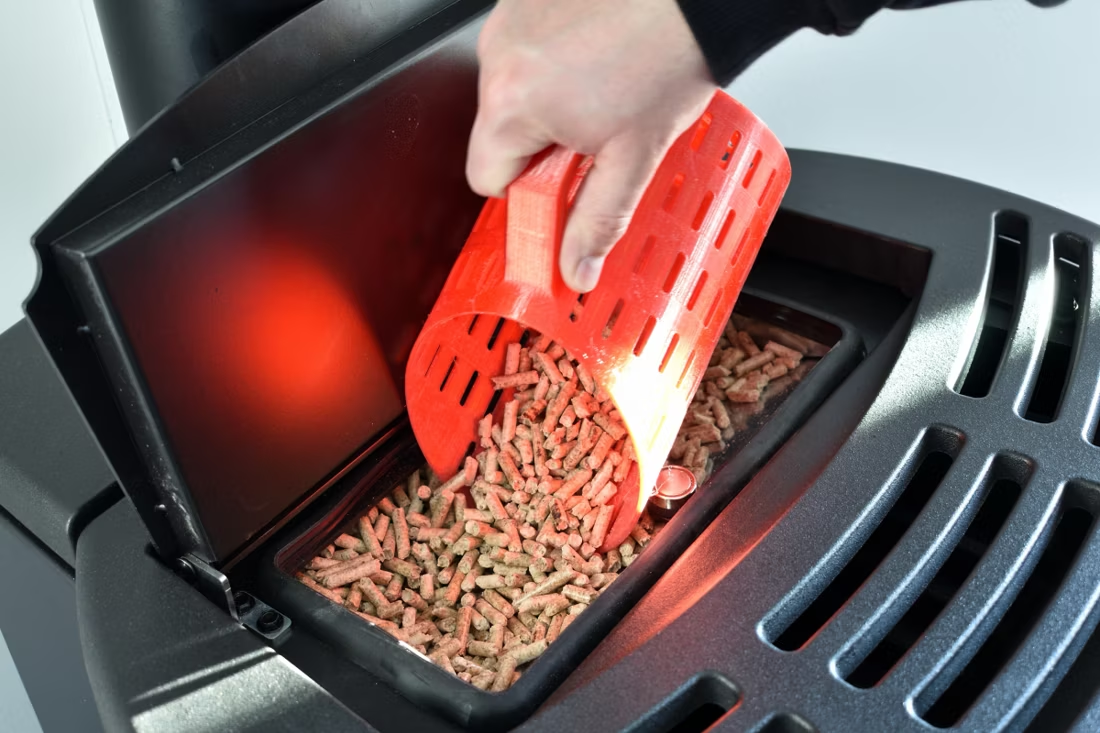
A clean pellet stove is a happy pellet stove. Plan on cleaning the burn pot about once a week when you're burning regularly—ash and clinkers gum up the air holes just like a pellet barbecue. Most pellet stove problems trace back to skipped cleaning that nobody explained up front. Some designs make it easy with a trapdoor burn pot: pull a lever and the gunk drops into the ash pan.
Does a fireplace add value to my home?
On average, a fireplace adds back to the home about the same amount you spent installing it. Add the monthly savings from heating the rooms you actually use instead of the whole house—often hundreds of dollars a year—and the value case is strong before you even count what a fire does for how your family uses the room.
What is an in-home preview and do I need one?
It's a visit where a hearth professional measures your space, confirms the model you picked actually works in your home, and walks the specs—framing, gas line, venting, finish work—before anything is ordered. Some details you just can't know until you see the house. Never make a down payment without one; it's the single most-skipped step that burns buyers.
Pellet Brands Stocked Around Mercer County
Manufacturers will point you to the nearest stocking dealer.
Find your pellet stove in Mercer County.
Tell us a bit about your home and we'll match you with the right pellet stove or insert, plus a free Project Guide & Parts List—the exact parts, including the vent kit, and a recommended local Mercer County dealer to install it.
Find Your Fireplace →