
Add clean, instant heat to any room in Mercer County.
From Aledo to the river towns along the Mississippi, electric fireplaces give Mercer County homes zone heat and real-flame ambiance without a chimney, a gas line, or a woodpile. Find the right unit and connect with a trusted local dealer.
Every Project Starts From One of These Five Situations
Electric heat that fits the way Mercer County really heats its homes.
Mercer County is a farming county of roughly 8,700 people along the Mississippi River in western Illinois, with Aledo as the county seat and small communities like Viola, New Boston, Joy, and Seaton spread across the townships. Winters here are genuinely cold—climate zone 5A, average lows around 13°F, and 6,309 heating degree days a season, on par with what you'd expect further north toward Madison or Fargo. Most rural Mercer County homes lean on propane furnaces or wood stoves burning local oak, hickory, walnut, and maple as their primary heat, since resistance electric heat gets expensive fast once the degree-day count climbs this high.
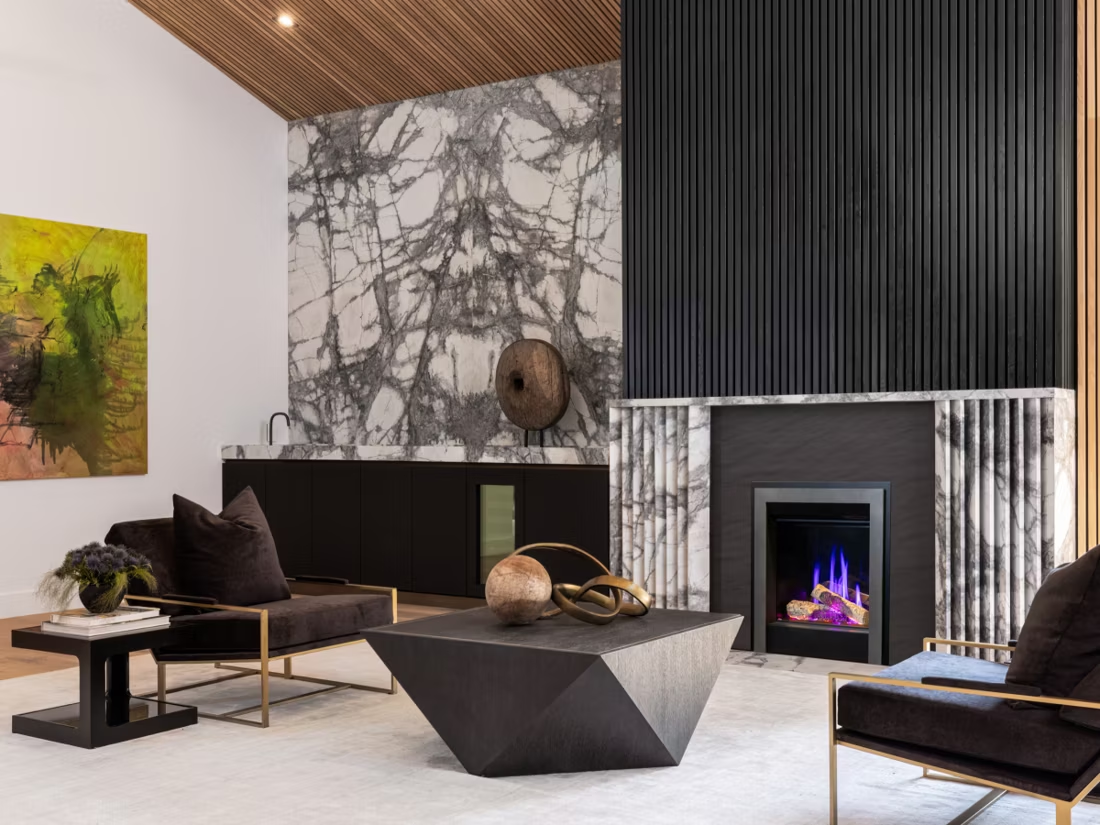
That's exactly why electric fireplaces have found a real niche here—not as whole-home heat, but as zone heat and ambiance for the rooms that need it most: a finished basement, a converted porch, a primary bedroom addition on an older farmhouse without existing ductwork to that space, or a sunroom that the propane furnace never quite reaches. No venting, no gas line, no chimney—just a 120V plug-in unit or a 240V hardwired insert tied into the panel. Ameren Illinois serves most of the county's electric accounts, and a straightforward install means a licensed local electrician or hearth dealer can have a unit running the same day.
Three steps. No salesperson until you're ready.
Tell us about your project
Your zip code, your situation, and the fuel you're leaning toward—or let the answers point you to one.
See what's actually available
The brands dealers within 100 miles genuinely carry—real options, never a catalog mirage.
Get your dealer & Project Guide
A trusted local dealer, plus the free Project Guide & Parts List that names every component of the job.
Frequently Asked Questions
How much does an electric fireplace installation cost in Mercer County?
Plug-in electric fireplaces and freestanding stoves typically run $300 to $1,200 installed, since most just need a standard outlet and a mantel or stand—no permit required in most cases. Hardwired built-in units or wall-mount inserts run higher, roughly $1,200 to $2,500, once you factor in a dedicated 240V circuit, in-wall electrical work, and any surround or mantel finishing. Older Mercer County farmhouses with older panels sometimes need a small electrical upgrade first, which a local electrician will flag during the initial visit.
What size electric fireplace do I need for my room?
Electric fireplaces are sized by heater wattage rather than whole-home BTU load—a standard 1,500-watt heater comfortably takes the chill off a 400 to 600 square foot room, which covers most bonus rooms, finished basements, and sunroom additions common in Mercer County homes. Because most local houses already rely on a propane furnace or a wood stove for primary heat, the electric unit is almost always sized for a single space rather than the whole structure. A local dealer can confirm sizing based on ceiling height, window exposure, and whether the room has any existing ductwork.
Is electric heat a good primary heat source in Mercer County?
Generally no—with 6,309 heating degree days and average winter lows around 13°F, straight electric resistance heat gets expensive as a whole-home solution, which is why most Mercer County homes run on propane furnaces, with wood stoves burning local oak and hickory as backup or supplemental heat. Electric fireplaces make far more sense here as zone heat: warming up a specific room without running the furnace harder, or adding ambiance to a space that doesn't have its own heat source at all. Homeowners who want electric as a true backup during a propane delivery gap should still plan for supplemental heat elsewhere in the house.
Do I need a permit to install an electric fireplace in Mercer County?
Plug-in units that use an existing standard outlet generally don't require a permit. Hardwired built-in inserts or wall-mount units that need a new 240V circuit typically do require an electrical permit, handled through the Mercer County Zoning and Building Department for work outside city limits, or the local municipal office if you're in Aledo or another incorporated town. Most local dealers and electricians pull this permit as part of the installation, so it's rarely something the homeowner has to manage directly.
Will my electric fireplace work during a power outage?
No—electric fireplaces require grid power (or a generator) to run, so they go dark the moment the power does. That's an important consideration in rural Mercer County, where ice storms and high winds can knock out power for a day or more at a time. If backup heat during an outage matters to you, a wood stove burning local hardwood, or a propane space heater rated for indoor use, is a better fit for that specific need—many local homeowners run an electric fireplace for daily ambiance and zone heat, with wood or propane as their true storm backup.
What's the best electric fireplace option for an older Mercer County farmhouse?
For farmhouses without an existing fireplace or chimney, a built-in electric insert set into a stud-wall cavity, or a freestanding mantel package, gives you the look of a real fireplace without any structural work. Wall-mount units are a good fit for rooms with limited floor space, like a converted porch or upstairs bedroom addition. Since most older homes in the county have older electrical panels, it's worth having a local electrician confirm available capacity before choosing a hardwired 240V unit over a simpler plug-in model.
How much does it cost to run an electric fireplace in Mercer County?
A standard 1,500-watt electric fireplace running on heat mode costs roughly 15 to 25 cents an hour at typical western Illinois electric rates through Ameren Illinois, or a bit less if you're served by a local rural cooperative. Running it a few hours an evening in a bonus room or finished basement adds up to a modest monthly bump—far less than heating that same space by running your propane furnace harder, which is part of why electric zone heat has caught on for supplemental use here.
Electric fireplace vs. wood stove—which is right for my home?
Wood stoves burning local oak, hickory, walnut, or maple deliver real heat output, work with no electricity at all, and are the traditional backup-heat choice across rural Mercer County. Electric fireplaces offer none of that off-grid resilience, but they're far simpler to install, need no chimney or wood supply, and give you instant ambiance at the flip of a switch—a good fit for a room where running a wood stove doesn't make sense. Many Mercer County households end up with both: wood heat for the shop or main living area, electric for a bedroom or basement that just needs a little extra warmth and atmosphere.
Where can I find someone to install an electric fireplace near me in Mercer County?
For plug-in units, most hearth retailers in the Quad Cities region that serve Mercer County can deliver and set one up with no electrical work involved. For hardwired built-ins or wall-mount inserts, you'll want a licensed electrician alongside the hearth dealer to run the new circuit and confirm your panel has capacity—especially in older farmhouses. A trusted local dealer will coordinate both pieces so you're not left managing two separate contractors.
Can I put a TV above my fireplace?
Yes—with an asterisk. Fireplaces are hot and TVs don't like heat. Either put a mantel between them to deflect rising warmth, or choose a fireplace with heat-management technology that creates a cool zone on the wall above—the wall stays around 125 degrees, barely warm, while the room still gets full heat. If you like clean lines and don't want a mantel, heat management is the answer.
Do electric fireplaces actually produce heat?
Yes—most put out around 4,800–5,000 BTUs from a standard outlet, which comfortably warms a bedroom, office, or den as a comfort-zone heater. What they won't do is carry a whole house the way wood, gas, or pellet can. Think of electric as ambiance-first with honest supplemental heat: flames on with no heat in July, flames plus warmth in January.
Does a fireplace add value to my home?
On average, a fireplace adds back to the home about the same amount you spent installing it. Add the monthly savings from heating the rooms you actually use instead of the whole house—often hundreds of dollars a year—and the value case is strong before you even count what a fire does for how your family uses the room.
Can a fireplace actually lower my heating bill?
Yes—by creating a comfort zone. A furnace heats every square foot of the house just to warm the one room you're in; a gas fireplace on low burns roughly a sixth of the gas a typical furnace does. Set the furnace around 55–60 degrees as a baseline, then heat the rooms your family actually uses. Families who heat this way commonly save $20–$60 a month.
Find your electric fireplace in Mercer County.
Tell us a bit about your home and room, and we'll match you with the right electric fireplace or insert—plus a free Project Guide & Parts List and a trusted local dealer to install it.
Find Your Fireplace →