
Steady pellet heat for Lawrence County winters, without the wood pile.
From Lawrenceville down to Bridgeport, Sumner, and St. Francisville along the Wabash, pellet stoves deliver clean, thermostat-controlled heat without splitting, stacking, or hauling cordwood. Find the right unit and connect with a trusted local dealer.
Every Project Starts From One of These Five Situations
Set-it-and-forget-it heat for hardwood country.
Lawrence County sits in southeastern Illinois along the Wabash River, with Lawrenceville as the county seat and smaller communities like Bridgeport, Sumner, and St. Francisville spread across the surrounding farmland and river bottoms. The county's climate zone 4A profile brings winter lows averaging around 21°F and roughly 4,929 heating degree days a year—cold enough to matter, but noticeably milder than genuinely brutal cold climates like Duluth, MN, which racks up nearly double the heating degree days. That moderate cold is exactly the kind of climate where a pellet stove earns its keep as steady, hands-off heat rather than a survival appliance.
The county's oak, hickory, walnut, and maple hardwood bottomlands have supported wood heat for generations, but pellet stoves have become the practical alternative for homeowners who want that same radiant warmth without the chainsaw, the splitting maul, or the ash pile that comes with cordwood. Bagged fuel from regional suppliers like Indeck Energy Services, Lignetics, and Somerset Pellet Fuel is easy to source and store, and with no air quality non-attainment status or winter inversion restrictions in Lawrence County, there are no curtailment periods or burn advisories to work around—you load the hopper, set the thermostat, and the stove does the rest.
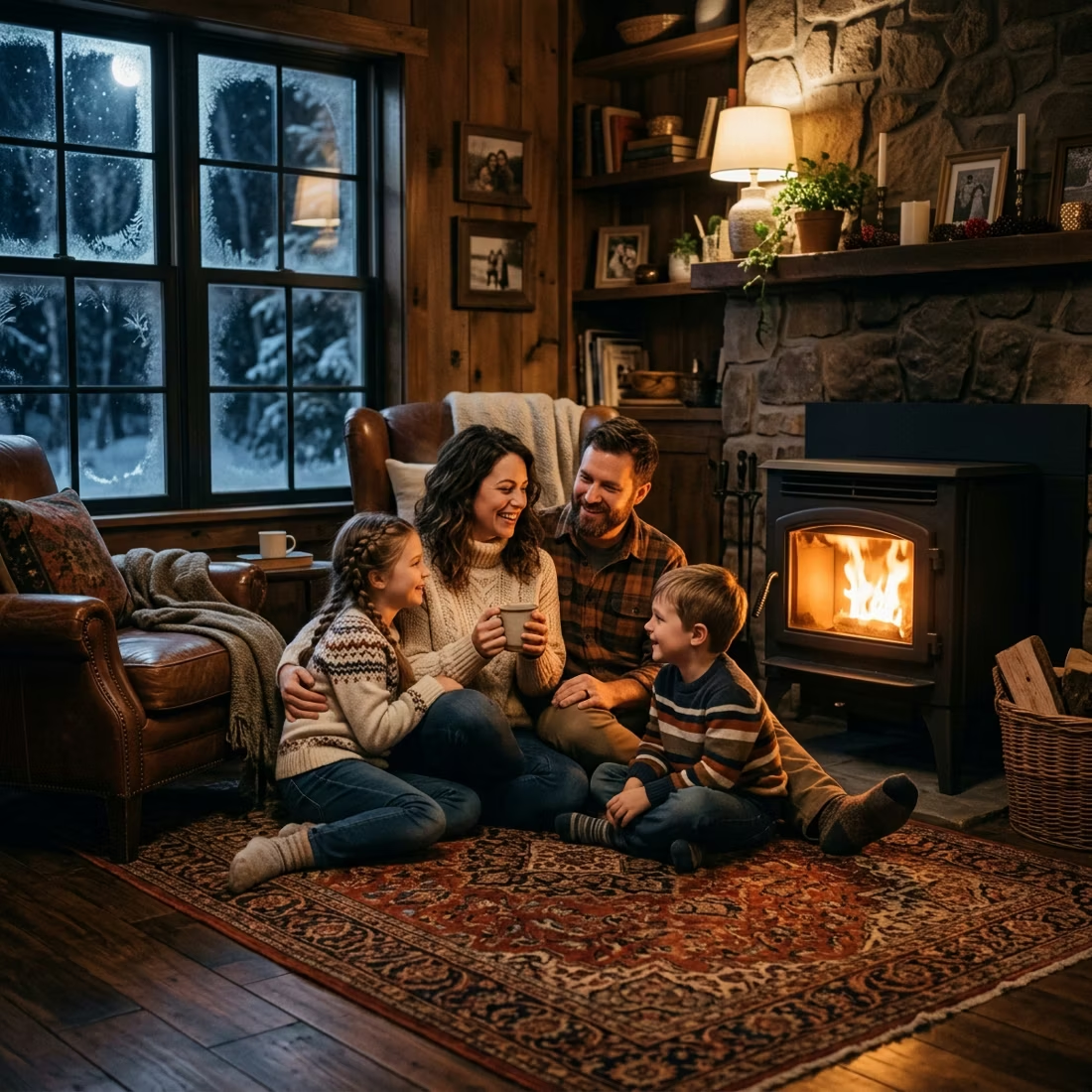
Three steps. No salesperson until you're ready.
Tell us about your project
Your zip code, your situation, and the fuel you're leaning toward—or let the answers point you to one.
See what's actually available
The brands dealers within 100 miles genuinely carry—real options, never a catalog mirage.
Get your dealer & Project Guide
A trusted local dealer, plus the free Project Guide & Parts List that names every component of the job.
Frequently Asked Questions
How much does a pellet stove installation cost in Lawrence County?
A typical pellet stove installation in Lawrence County runs roughly $3,500 to $7,000, depending on whether you're installing a freestanding stove that vents through an exterior wall or a pellet insert into an existing masonry fireplace. Inserts using an existing chimney with a stainless liner tend to land on the lower end; new venting through a wall in a home without an existing fireplace pushes toward the higher end once electrical work for the auger and blower is factored in. Local dealers serving Lawrenceville and the surrounding towns will give you a firm number after an in-home look at your space.
What size pellet stove do I need for my home?
With Lawrence County's moderate 4A climate and winter lows averaging around 21°F, most homes don't need the largest hopper-capacity units built for genuinely harsh cold. A small pellet stove (rated for 500-1,000 sq ft) works well for a single living area or as supplemental heat in an older farmhouse; a medium unit (1,000-1,800 sq ft) covers most main floors in Lawrenceville or Bridgeport homes; larger units make sense mainly for open-concept or poorly insulated older houses common in the county's rural stock. A local dealer will size the stove to your square footage and insulation level rather than just your home's total footprint.
Where can I find certified pellet stove installers near me?
Look for installers with NFI (National Fireplace Institute) certification, which covers proper venting, clearance, and electrical setup for pellet appliances. Lawrence County is a small, rural county, so some homeowners in Lawrenceville, Bridgeport, or St. Francisville end up working with dealers based across the Wabash River in Vincennes, Indiana, or as far as Terre Haute or Evansville—all reasonable driving distances for install and service work. Ask any dealer whether they employ NFI-certified techs directly rather than subcontracting the install; that keeps warranty coverage and code compliance under one roof.
What's the difference between a pellet stove and a pellet insert?
A pellet stove is a freestanding appliance that sits on the floor and vents through an exterior wall or existing chimney—it can go almost anywhere with a nearby electrical outlet. A pellet insert is built to slide into an existing masonry fireplace opening, using a liner run up your current chimney while sealing off the open hearth for efficiency. For Lawrence County homes with an older fireplace that's rarely used because it lets more heat escape than it provides, an insert is usually the better fit. Homes without an existing fireplace, or rooms where you want heat somewhere new, are better suited to a freestanding stove.
Do I need a permit to install a pellet stove in Lawrence County?
Most pellet stove installations require a building permit through your local township or the Lawrence County building department, along with an electrical inspection since pellet stoves rely on an auger motor and combustion blower that need a dedicated outlet. Most hearth dealers handle the permitting as part of the installation, so it's rarely something homeowners have to navigate on their own. Because Lawrence County has no air quality non-attainment designation, there are no seasonal curtailment periods or burn restrictions to plan around—pellet or wood, you're not watching an advisory calendar here the way homeowners in some western states do.
What's the best pellet stove for Lawrence County's climate?
Since Lawrence County's winters are moderate rather than extreme—4,929 heating degree days and average lows around 21°F—most EPA-certified pellet stoves from mainstream manufacturers handle the job well without needing the largest hopper capacity on the market. A mid-size unit with a 40-60 lb hopper is usually enough to run overnight without a refill. Because Indeck Energy Services produces pellets regionally in Illinois, supply and delivery tend to be more reliable and less seasonally constrained than in areas dependent on distant fuel shipments—worth asking your dealer about when comparing brands and fuel compatibility.
How often does a pellet stove need to be serviced?
Pellet stoves need less intensive upkeep than wood stoves, but they're not maintenance-free. Plan on cleaning the burn pot and ash pan weekly during regular use, a deeper cleaning of the exhaust venting and hopper monthly, and a full professional service annually—checking the auger, gaskets, blower motor, and venting for buildup. Compared to the annual chimney sweep a wood-burning household in Lawrence County needs, pellet maintenance is lighter, but skipping the annual service is still the most common cause of stoves that start running poorly mid-winter.
Where can I buy pellet fuel in Lawrence County?
Bagged pellets from Indeck Energy Services, Lignetics, and Somerset Pellet Fuel are the most common brands available through regional farm and hardware suppliers serving Lawrenceville and the surrounding towns. Prices typically run somewhere in the $230 to $290 per ton range depending on the brand and whether you buy by the pallet (roughly 50 forty-pound bags) or individual bags. Buying a full pallet ahead of the season is usually the most economical option and gives you enough fuel to get through a typical Lawrence County winter without a mid-season run.
Pellet stove vs. wood stove—which is right for my home?
Wood stoves burn cordwood—plentiful in Lawrence County's oak, hickory, walnut, and maple bottomlands—and keep working without electricity, which matters if you want backup heat during a winter storm outage. Pellet stoves need power to run the auger and blower, so they go dark in an outage unless you add a battery backup, but they offer thermostat-set convenience, cleaner burning, and far less ash and creosote to manage. Given the county's moderate 4A climate, many homeowners here choose pellet for the ease of daily use and reserve wood heat, if they have it, for backup. Either option is available through local dealers, who can walk you through which fits your home and habits better.
How often does a pellet stove need cleaning?
A clean pellet stove is a happy pellet stove. Plan on cleaning the burn pot about once a week when you're burning regularly—ash and clinkers gum up the air holes just like a pellet barbecue. Most pellet stove problems trace back to skipped cleaning that nobody explained up front. Some designs make it easy with a trapdoor burn pot: pull a lever and the gunk drops into the ash pan.
What's the difference between an insert and a zero-clearance fireplace?
An insert is a fireplace that slides into a pre-existing wood-burning fireplace—if you don't have one, there's nothing to insert it into. A zero-clearance fireplace is built into a framed wall, which makes it the answer for remodels and new construction. Simple test: existing masonry fireplace means insert; blank or framed wall means zero-clearance.
Can a fireplace actually lower my heating bill?
Yes—by creating a comfort zone. A furnace heats every square foot of the house just to warm the one room you're in; a gas fireplace on low burns roughly a sixth of the gas a typical furnace does. Set the furnace around 55–60 degrees as a baseline, then heat the rooms your family actually uses. Families who heat this way commonly save $20–$60 a month.
What is an in-home preview and do I need one?
It's a visit where a hearth professional measures your space, confirms the model you picked actually works in your home, and walks the specs—framing, gas line, venting, finish work—before anything is ordered. Some details you just can't know until you see the house. Never make a down payment without one; it's the single most-skipped step that burns buyers.
Pellet Brands Stocked Around Lawrence County
Manufacturers will point you to the nearest stocking dealer.
Find your pellet stove in Lawrence County.
Tell us a bit about your home and we'll match you with the right pellet stove or insert, plus a free Project Guide & Parts List—your exact parts, including the vent kit, and a recommended local dealer serving Lawrenceville, Bridgeport, Sumner, and St. Francisville.
Find Your Fireplace →