
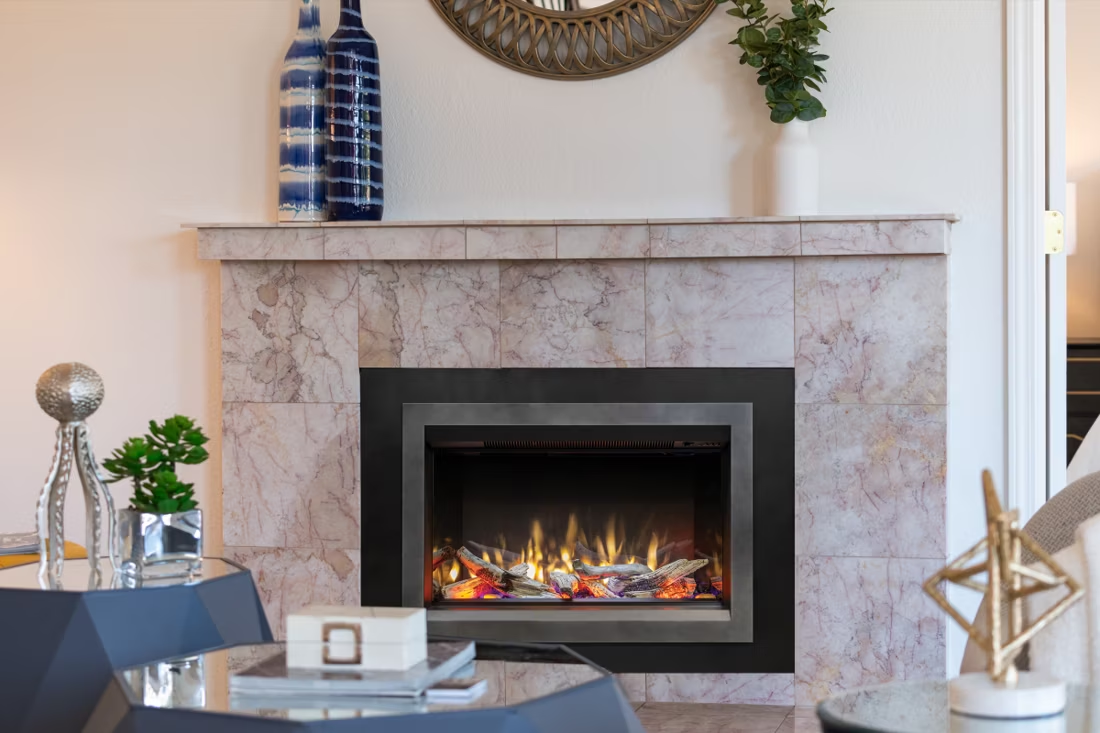
Real warmth and ambiance without a chimney or gas line.
With a solid, moderate winter heating load and winter lows averaging 21 degrees, Lawrence County gets a genuine four-season heating load, but plenty of homes here don't have an existing flue or a nearby gas main. Electric fireplaces plug into that gap. I'll match you with a trusted local dealer who knows which unit actually fits your room and your panel.
Every Project Starts From One of These Five Situations
A straightforward fit for the Wabash Valley's older housing stock.
Lawrence County sits along the Wabash River in southeastern Illinois, with Lawrenceville as the county seat and a population of just over 9,300 spread across mostly farmland and small towns. It's climate zone 4A, with a solid, moderate winter heating load and winter lows that average around 21 degrees—a solid, if not extreme, Midwest heating season that runs roughly November through March. A lot of the housing stock here predates central air and modern gas infrastructure: older farmhouses, converted masonry fireplaces that haven't held a fire in decades, and additions built without any venting path at all. That's exactly the situation electric fireplaces solve well.
Inside Lawrenceville, Ameren Illinois delivers power to most residential accounts; step out into the surrounding farmland and Norris Electric Cooperative's lines take over for a lot of rural county properties. Either way, an electric fireplace or insert runs on a standard outlet or a simple dedicated circuit—no gas line to trench, no chimney to build or inspect, no smoke to manage. Lawrence County doesn't carry any air quality restrictions on burning, so that's not a driver here the way it is elsewhere; the real appeal of electric locally is that it's the fastest, least invasive way to add supplemental heat and a fireplace look to a room that was never set up for one.
Three steps. No salesperson until you're ready.
Tell us about your project
Your zip code, your situation, and the fuel you're leaning toward—or let the answers point you to one.
See what's actually available
The brands dealers within 100 miles genuinely carry—real options, never a catalog mirage.
Get your dealer & Project Guide
A trusted local dealer, plus the free Project Guide & Parts List that names every component of the job.
Frequently Asked Questions
How much does an electric fireplace installation cost in Lawrence County?
Plug-in electric fireplaces and freestanding units run on the lower end, often a few hundred dollars for the unit itself with no installation labor beyond setting it in place. Built-in electric fireplaces or inserts that need a dedicated 120V or 240V circuit run higher once an electrician is involved—typically in the range of $300 to $2,500 depending on the unit, cabinetry or surround work, and whether new wiring has to be run from the panel. Homes in outlying parts of the county on Norris Electric Cooperative service may need a quick panel capacity check before a larger built-in unit goes in; your local dealer can flag that during the initial visit.
Will an electric fireplace actually heat a room during a Lawrence County winter?
It depends on what you're asking it to do. Most electric fireplaces put out around 5,000 BTU from a standard 1,500-watt heater element, which is enough to comfortably warm a single room or den during the shoulder months and take the edge off on the coldest days when the average low sits around 21 degrees. They're not sized to replace a furnace across a whole house through a full Midwest winter heating season, but as supplemental heat for a converted porch, a finished basement, or a room that runs cold, they're a legitimate, low-cost option.
Do I need a permit to install an electric fireplace in Lawrence County?
A plug-in unit that runs off an existing outlet typically doesn't require any permit. A built-in electric fireplace that needs new wiring or a dedicated circuit does fall under standard electrical work, which usually means pulling a permit through the county's building department and having a licensed electrician handle the run. It's a much lighter process than a wood or gas installation—no venting inspection, no gas line pressure test—but it's still worth confirming with the county before work starts, especially on older farmhouse wiring that may need updating anyway.
Is electric a good option for homes outside Lawrenceville without natural gas service?
Yes, and it's one of the more common reasons rural Lawrence County homeowners go electric. A lot of the county's farmland and unincorporated areas sit outside any natural gas main, relying on propane or electric heat, and running a new propane tank and line just for a fireplace can add real cost to a gas project. Electric fireplaces sidestep that entirely—as long as Norris Electric Cooperative or Ameren Illinois service reaches the house, which covers nearly every property in the county, the fireplace itself needs nothing more than a standard circuit.
Electric vs. wood—which makes more sense for my Lawrence County home?
Wood has deep roots here—oak, hickory, walnut, and maple are all common in county woodlots, and a wood stove or insert keeps working through a power outage, which matters during the ice storms that occasionally hit southeastern Illinois. Electric can't run without power, so it's not a backup-heat solution. But wood requires a chimney, annual sweeps, and ongoing fuel handling, while an electric unit needs none of that and can go into a room a wood stove never could. Plenty of Lawrence County households run both: wood or a wood insert as the primary or backup heat source, and an electric unit in a bedroom, sunroom, or basement where running a flue isn't practical.
How much maintenance does an electric fireplace need?
Very little compared to wood or gas. There's no chimney to sweep and no burner or pilot assembly to service. Basic upkeep is dusting the unit, occasionally cleaning the front glass, and checking that the heater fan and LED ember bed are running properly—most manufacturers rate the heating element for years of regular use before it needs replacing. For a Lawrence County household weighing a low-maintenance supplemental heat source against the annual sweep a wood-burning fireplace requires, that difference is often the deciding factor.
Can I convert an old masonry fireplace to electric instead of tearing it out?
Yes, and it's a common project in Lawrenceville's older neighborhoods where a masonry fireplace has sat unused for years, sometimes with a damaged flue or a chimney that's no longer safe to burn in. An electric insert slides into the existing firebox opening, gets connected to a nearby outlet or a new dedicated circuit, and gives you the fireplace look and some supplemental heat back without touching the chimney at all. It's typically the least expensive way to bring a dead fireplace back into daily use.
Are there any rebates for installing an electric fireplace in Lawrence County?
Electric fireplaces are supplemental space heaters rather than whole-home HVAC equipment, so they generally don't qualify for the efficiency rebates that apply to furnaces or heat pumps. That said, Norris Electric Cooperative members and Ameren Illinois customers should check directly with their provider—cooperative and utility efficiency programs change from year to year, and it costs nothing to ask before you buy.
What size electric fireplace do I need for my room?
Most electric fireplaces are sized by heater wattage rather than firebox dimensions—a standard 1,500-watt unit is rated to comfortably heat a room in the 400 to 1,000 square foot range under normal insulation, which covers most living rooms and dens in Lawrence County's older single-story homes. Larger open floor plans or rooms with poor insulation, common in some of the county's older farmhouses, may need a higher-output unit or realistic expectations that it's supplemental heat rather than a full replacement for the home's furnace. A local dealer can walk the room and confirm before you buy.
Do electric fireplaces actually produce heat?
Yes—most put out around 4,800–5,000 BTUs from a standard outlet, which comfortably warms a bedroom, office, or den as a comfort-zone heater. What they won't do is carry a whole house the way wood, gas, or pellet can. Think of electric as ambiance-first with honest supplemental heat: flames on with no heat in July, flames plus warmth in January.
Can I put a TV above my fireplace?
Yes—with an asterisk. Fireplaces are hot and TVs don't like heat. Either put a mantel between them to deflect rising warmth, or choose a fireplace with heat-management technology that creates a cool zone on the wall above—the wall stays around 125 degrees, barely warm, while the room still gets full heat. If you like clean lines and don't want a mantel, heat management is the answer.
What is an in-home preview and do I need one?
It's a visit where a hearth professional measures your space, confirms the model you picked actually works in your home, and walks the specs—framing, gas line, venting, finish work—before anything is ordered. Some details you just can't know until you see the house. Never make a down payment without one; it's the single most-skipped step that burns buyers.
Can I install a fireplace myself?
If you're putting a fire in your house on purpose, it's best to work with an expert. Unless you're genuinely experienced in framing, gas line, vent pipe, and the national code on clearances to combustibles, have a professional do it—and ideally the same company that sells you the fireplace, so warranty, service, and liability all live under one roof.
Get your free electric fireplace Project Guide & Parts List for Lawrence County.
Tell me about your home, your panel, and the room you want to heat, and I'll match you with a trusted local Lawrence County dealer and send over a free Project Guide & Parts List—the exact unit, wiring needs, and recommended installer for your electric fireplace project.
Find Your Fireplace →