
Pellet Stoves Are Uncommon in Lansing—Here's Where They Still Fit.
Natural gas and ComEd electric service cover most heating needs in Lansing's south suburbs, so pellet stoves are a niche pick. For the homes where one makes sense, we'll connect you with a dealer who actually stocks and services them.
Every Project Starts From One of These Five Situations
Pellet heat is a niche choice in natural-gas country.
Lansing sits in Cook County's far south suburbs at about 628 feet elevation, in climate zone 5A. With a winter heating season comparable to Madison, WI and average winter lows near 15°F, the cold here is real—but it isn't the kind of remote, off-grid cold that drives pellet stove adoption in places without reliable utility infrastructure.
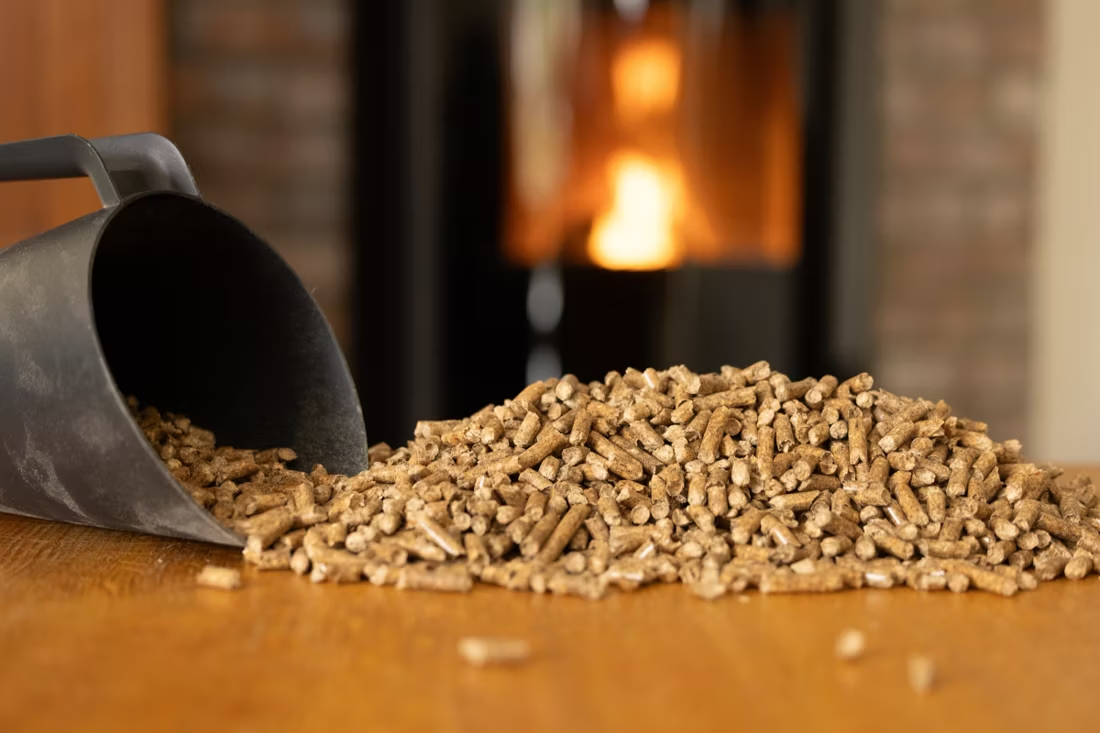
Most Lansing homes already have natural gas service and Commonwealth Edison electric, which covers primary and backup heating needs without the fuel storage, ash cleanup, or hopper-loading routine a pellet stove requires. That's why pellet fuel relevance here is genuinely limited—it isn't the default hearth product for this market. Still, a small number of Lansing homeowners install pellet stoves in sunrooms, detached workshops, or homes without an existing gas line, drawing on regional suppliers like Indeck Energy Services, Lignetics, and Somerset Pellet Fuel for bagged fuel. If that's your situation, we can still get you matched with a dealer who actually carries and services these units.
Three steps. No salesperson until you're ready.
Tell us about your project
Your zip code, your situation, and the fuel you're leaning toward—or let the answers point you to one.
See what's actually available
The brands dealers within 100 miles genuinely carry—real options, never a catalog mirage.
Get your dealer & Project Guide
A trusted local dealer, plus the free Project Guide & Parts List that names every component of the job.
Frequently Asked Questions
How much does a pellet stove installation cost in Lansing?
Because pellet stoves are a specialty request in the Lansing area rather than a stocked, high-volume product, exact local pricing varies more than it would for a gas insert. Nationally, a comparable freestanding pellet stove with venting typically runs $3,000 to $6,000 installed; wall-vented models without a masonry chimney tend to land on the lower end. Given how few Cook County dealers stack pellet units on the showroom floor, plan on getting a firm, in-home quote rather than relying on a published price list—a trusted local dealer will factor in your specific wall or hearth configuration.
Why are pellet stoves so rare in Lansing compared to other parts of the Midwest?
Lansing is fully built out with natural gas service and Commonwealth Edison electric, so most homeowners solve their heating and backup-heat needs with a gas fireplace, gas furnace, or electric option rather than a solid-fuel appliance. Pellet stoves also depend on grid power to run the auger and blower, which removes the main selling point they have in more rural or outage-prone areas: true off-grid heat. In a dense south-suburban market like Lansing, that trade-off tips most buyers toward gas.
Will a pellet stove keep my house warm during a power outage?
Not on its own. Pellet stoves rely on an electric auger to feed fuel and a blower to push heat into the room, so a standard unit shuts down the moment ComEd power drops—even with a full hopper of pellets. Some models accept a battery backup or small generator hookup, but that's an add-on, not a given. If outage-proof heat is your priority in Lansing, a battery-backup gas insert (Lansing has strong natural gas coverage) is generally the more dependable choice; pellet is better suited to homeowners who just want efficient, low-maintenance supplemental heat under normal conditions.
What pellet brands can I actually get near Lansing?
Regional suppliers like Indeck Energy Services, Lignetics, and Somerset Pellet Fuel distribute bagged hardwood and softwood pellets throughout the Chicago south suburbs, including hardware stores and farm supply outlets that serve Cook County. Because demand is modest here, stock isn't always deep or year-round—buying a season's supply in early fall before cold weather sets in is the safer bet rather than waiting until the first cold snap when other Lansing-area buyers are doing the same.
Do I need a permit to install a pellet stove in Lansing?
Yes. Any new solid-fuel or pellet-burning appliance install requires a permit through the Village of Lansing Building Department, and because pellet stoves need a dedicated electrical outlet for the auger and blower, an electrical inspection is typically part of that process too. Since so few local contractors handle pellet installs regularly, it's worth confirming your installer has pulled permits for this specific appliance type before work begins—the process is a little different than a standard gas insert permit.
What size pellet stove do I need for a Lansing home?
With a long, cold winter season and winter lows averaging 15°F, Lansing's cold is enough that undersizing a stove will leave you cold on the worst nights. As a rough guide: small units (under 1,000 sq ft) suit a single room or three-season porch, medium units (1,000-1,800 sq ft) can supplement a main living area, and larger units can heat more space if the home is well insulated. Because pellet stoves are typically installed as supplemental heat here rather than a whole-home primary source, most Lansing installs skew toward the small-to-medium end. A local dealer will size it against your actual floor plan rather than square footage alone.
Pellet vs. gas—which makes more sense for my Lansing home?
For most Lansing homeowners, gas wins on practicality: natural gas service is already common throughout Cook County's south suburbs, installation is usually simpler, and there's no bagged fuel to store or ash to empty. Pellet stoves make more sense in specific situations—a room without an existing gas line, a detached structure, or simply a preference for the stove aesthetic and a self-contained fuel source you control. If your home is already on natural gas, a gas insert or fireplace is the more common and typically more cost-effective route; pellet is the right call when gas genuinely isn't a practical option for that space.
Can I get pellet fuel delivered in bulk in the Lansing area?
Not typically. Bulk pellet delivery by the ton is more common in New England and parts of the rural Midwest where pellet heat is a primary fuel source. Around Lansing, pellets are almost always sold in 40-pound bags through hardware stores, farm supply retailers, and regional distributors tied to producers like Lignetics and Somerset Pellet Fuel. Plan to store several dozen bags for the season in a dry garage or basement rather than expecting a delivered bulk load.
Where can I find a dealer who actually installs pellet stoves near Lansing?
This is the real challenge in the Lansing market—most Cook County hearth dealers built their business around gas fireplaces and inserts because that's what sells locally, and pellet stoves end up as a secondary line, if they're carried at all. A big-box store will sell you a unit but rarely install or service it properly. Find My Fireplace exists to solve exactly this problem: we match you with a trusted local dealer who genuinely stocks and services pellet appliances, rather than sending you somewhere that only handles them as an afterthought.
How often does a pellet stove need cleaning?
A clean pellet stove is a happy pellet stove. Plan on cleaning the burn pot about once a week when you're burning regularly—ash and clinkers gum up the air holes just like a pellet barbecue. Most pellet stove problems trace back to skipped cleaning that nobody explained up front. Some designs make it easy with a trapdoor burn pot: pull a lever and the gunk drops into the ash pan.
Can a pellet stove heat a whole house?
It genuinely can. I burned a pellet stove as my only heat source for years after a furnace died, and it kept the entire house warm. Pellets feed automatically from a hopper, so you get wood-heat economics with thermostat-style control. Two honest caveats: it needs weekly cleaning during the season, and most models need electricity to run—ask about battery backup if outages are a concern.
How much should I budget for a fireplace?
For an average home—covering the fireplace, the vent pipe, and basic installation—a budget between $3,900 and $5,500 gives you a lot of options across wood, gas, and pellet. By the time you add finish work, gas line, and electrical, the average complete installation lands between $5,000 and $12,000 all-in. In a remodel or new build, a good rule is to put about 2.5% of the total project cost toward the fireplace.
Can a fireplace actually lower my heating bill?
Yes—by creating a comfort zone. A furnace heats every square foot of the house just to warm the one room you're in; a gas fireplace on low burns roughly a sixth of the gas a typical furnace does. Set the furnace around 55–60 degrees as a baseline, then heat the rooms your family actually uses. Families who heat this way commonly save $20–$60 a month.
Nearby Dealers
Hearth shops serving Lansing and the surrounding area.
Fireside Collection By Fireplaces Plus
Pellet Brands Stocked Around Lansing
Manufacturers will point you to the nearest stocking dealer.
Find your pellet stove in Lansing.
Tell us about your home and, if pellet heat is genuinely the right fit for your space, we'll match you with a trusted local dealer and send over a free Project Guide & Parts List—the exact parts, venting, and recommended installer for your Lansing project.
Find Your Fireplace →