
Steady, thermostat-controlled heat for Johnson County winters.
With roughly 4,200 heating degree days and average winter lows near 26°F, Johnson County doesn't need extreme heat—it needs steady, hands-off heat. Find the right pellet stove or insert and connect with a trusted local dealer.
Every Project Starts From One of These Five Situations
Convenient heat for a county with modest winters and rural roots.
Johnson County sits in the Shawnee National Forest region of southern Illinois, home to about 4,400 people spread across small communities like Vienna, Cypress, Buncombe, and New Burnside. Winters here fall into Climate Zone 4A—mild by Midwest standards, with an average low around 26°F and roughly 4,206 heating degree days, well short of what a place like Madison, WI or Minneapolis, MN sees in a typical winter. That means a fireplace or stove in Johnson County usually isn't fighting for survival heat; it's providing steady, cost-effective warmth in a county where oak, hickory, walnut, and maple have always been the backbone of the local woodpile.
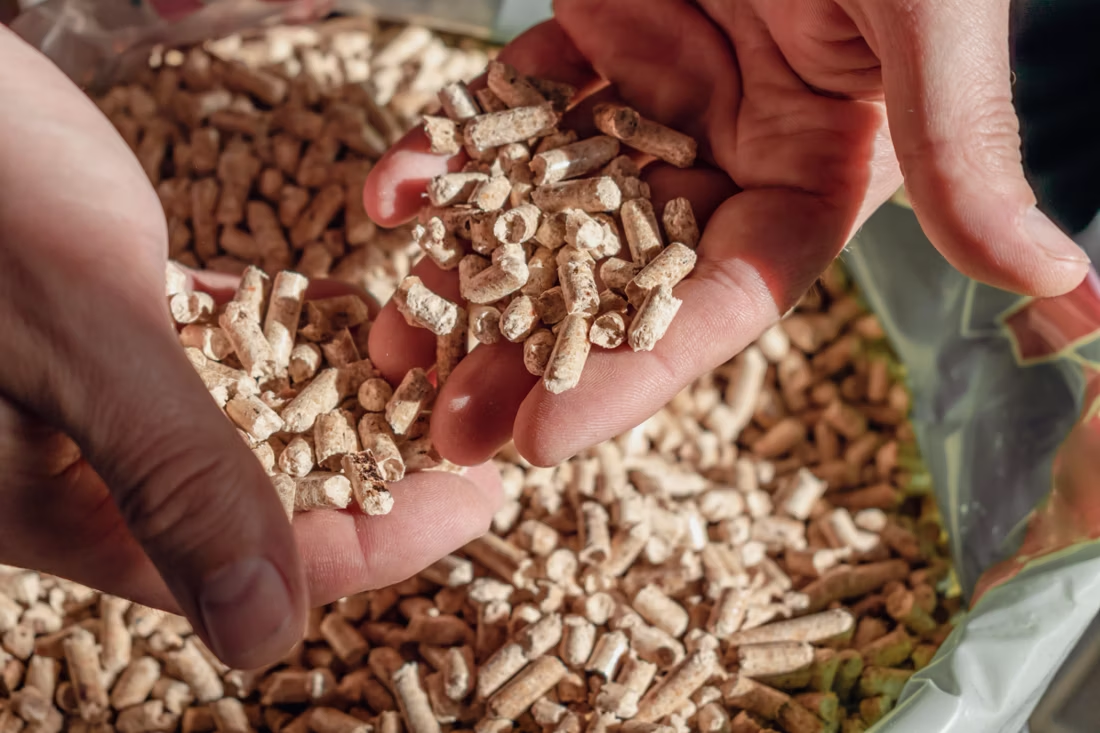
Pellet appliances fit that role well. They don't require a masonry chimney or a full cord-splitting operation—just a small vent through the wall and a bag of pellets from a hopper. Regional producers including Indeck Energy Services, Lignetics, and Somerset Pellet Fuel supply the wider Midwest market, so bagged pellets aren't something homeowners here have to special-order or have shipped long distances. With no air quality restrictions on solid-fuel burning in the county, permitting and day-to-day operation stay straightforward—which matters in a rural county where many homes rely on propane or electric baseboard as primary heat and want a reliable, lower-cost supplement for the coldest stretches of January and February.
Three steps. No salesperson until you're ready.
Tell us about your project
Your zip code, your situation, and the fuel you're leaning toward—or let the answers point you to one.
See what's actually available
The brands dealers within 100 miles genuinely carry—real options, never a catalog mirage.
Get your dealer & Project Guide
A trusted local dealer, plus the free Project Guide & Parts List that names every component of the job.
Frequently Asked Questions
How much does a pellet stove installation cost in Johnson County?
Most pellet stove installations in Johnson County run in the $2,500 to $5,500 range, depending on the unit and whether it's a freestanding stove or an insert going into an existing fireplace. Because pellet stoves vent through a small-diameter pipe rather than a full masonry chimney, installation labor and materials are generally lower than a comparable wood stove project—there's no chimney liner or Class A pipe stack to build out. Inserts going into an existing fireplace opening are usually on the lower end of that range; new freestanding installations that require wall penetration and exterior vent termination run a bit higher. A local dealer will give you a firm number after seeing your home.
Pellet stove or wood stove—which makes more sense in Johnson County?
Given how much oak, hickory, walnut, and maple grows around Johnson County, plenty of homeowners still burn cordwood, and a wood stove remains a solid choice for anyone with access to a woodlot or a chainsaw. But pellet stoves win on convenience: no splitting, stacking, or seasoning wood, more consistent heat output from a thermostat-controlled auger feed, and less ash to deal with. In a county with relatively mild winters—4,206 heating degree days is modest compared to much of the Midwest—many households find a pellet stove gives them enough backup or zone heat without the labor commitment of a full wood-burning setup. The tradeoff is that pellet stoves need electricity to run the auger and blower, where a wood stove doesn't.
Where can I buy pellets locally in Johnson County?
Bagged pellets in Johnson County typically come through regional Midwest producers rather than being shipped cross-country, which helps keep supply steady. Indeck Energy Services, Lignetics, and Somerset Pellet Fuel are common regional brands carried by hearth retailers and farm supply stores throughout southern Illinois. Pricing runs roughly $200 to $280 per ton depending on brand and time of year—buying early in the fall before demand peaks is the usual way to avoid the tightest supply and highest prices. A ton of pellets covers a meaningful chunk of a mild Johnson County winter for most households running a stove as supplemental heat.
Will my pellet stove work during a power outage?
Not without help. Pellet stoves rely on an electric auger to feed fuel and a blower to circulate heat, so a standard unit shuts down when the power goes out—an important thing to know in a rural county where storm-related outages can stretch longer than in town. Some homeowners pair a pellet stove with a small battery backup or a portable generator sized to run just the stove's electronics, which keeps the heat going through a multi-hour or multi-day outage. If uninterrupted heat during outages is a priority for your household, a wood stove or a battery-backed gas fireplace is worth discussing with a local dealer as an alternative or a complement.
Do I need a permit to install a pellet stove in Johnson County?
Most pellet stove installations require a building permit, though requirements in a small rural county like Johnson can vary between incorporated towns and unincorporated areas. If you're inside Vienna or another municipality, check with that town's building office; outside city limits, the county building department handles permitting. Because Johnson County has no air quality non-attainment issues or wood-burning curtailment rules, the permit process is mainly about verifying clearances, venting, and that the unit meets current safety listings—most local dealers handle this paperwork as part of the installation.
What size pellet stove do I need for my home?
Sizing depends on square footage and how the stove will be used. In Johnson County's relatively mild 4A climate, a small to mid-size pellet stove (rated for 1,000 to 1,800 square feet) is usually enough to serve as primary heat for a modest home or supplemental heat for a larger one—you're not fighting the kind of sub-zero stretches that push sizing up in places like Bismarck, ND or Duluth, MN. Older farmhouses or homes with less insulation may need to size up slightly. A local dealer can walk your space and give you an accurate recommendation rather than relying on square-footage rules of thumb alone.
How often does a pellet stove vent need to be cleaned?
Pellet stove venting should be inspected and cleaned at least once a year, typically before the start of the heating season in the fall. Unlike a wood stove chimney, a pellet vent doesn't build heavy creosote, but ash and fly ash residue can accumulate in the vent pipe and exhaust fan over a season of regular use. Homeowners running the stove as primary heat through a full Johnson County winter should also plan on cleaning the burn pot and glass every one to two weeks and vacuuming the ash pan regularly—routine maintenance that keeps the auger feed and combustion blower working properly.
What's a good pellet stove for Johnson County's climate?
Because Johnson County's winters are moderate—an average low near 26°F and well under half the heating degree days of the northern Midwest—homeowners here generally don't need the largest, highest-BTU units on the market. Mid-size freestanding stoves or inserts with a wide heat output range (so the stove can run low on shoulder-season days and higher during the occasional cold snap) tend to be the better fit than a unit sized for extreme cold. A local dealer familiar with the housing stock in and around Vienna, Cypress, and the rest of the county can match a specific model to your square footage and insulation level.
Pellet vs. gas—which is right for my Johnson County home?
Gas fireplaces offer instant on-off operation with no fuel handling, which appeals to homeowners who want zero maintenance. Pellet stoves require loading a hopper every day or two and periodic ash removal, but they give you a real flame, run on a fuel that's produced regionally by companies like Lignetics and Somerset Pellet Fuel, and generally cost less to operate than propane in a county where natural gas service is limited outside town centers. For households in rural parts of Johnson County without easy natural gas access, pellet heat is often the more budget-friendly year-round choice; for in-town homes already piped for gas, a gas fireplace may be the simpler install.
What's the difference between an insert and a zero-clearance fireplace?
An insert is a fireplace that slides into a pre-existing wood-burning fireplace—if you don't have one, there's nothing to insert it into. A zero-clearance fireplace is built into a framed wall, which makes it the answer for remodels and new construction. Simple test: existing masonry fireplace means insert; blank or framed wall means zero-clearance.
How often does a pellet stove need cleaning?
A clean pellet stove is a happy pellet stove. Plan on cleaning the burn pot about once a week when you're burning regularly—ash and clinkers gum up the air holes just like a pellet barbecue. Most pellet stove problems trace back to skipped cleaning that nobody explained up front. Some designs make it easy with a trapdoor burn pot: pull a lever and the gunk drops into the ash pan.
Does a fireplace add value to my home?
On average, a fireplace adds back to the home about the same amount you spent installing it. Add the monthly savings from heating the rooms you actually use instead of the whole house—often hundreds of dollars a year—and the value case is strong before you even count what a fire does for how your family uses the room.
How much should I budget for a fireplace?
For an average home—covering the fireplace, the vent pipe, and basic installation—a budget between $3,900 and $5,500 gives you a lot of options across wood, gas, and pellet. By the time you add finish work, gas line, and electrical, the average complete installation lands between $5,000 and $12,000 all-in. In a remodel or new build, a good rule is to put about 2.5% of the total project cost toward the fireplace.
Pellet Brands Stocked Around Johnson County
Manufacturers will point you to the nearest stocking dealer.
Find your pellet stove in Johnson County, IL.
Tell us a bit about your home and we'll match you with the right pellet stove or insert, plus a free Project Guide & Parts List—the exact parts, vent kit, and a recommended local Johnson County dealer for your project.
Find Your Fireplace →