
Instant warmth for Johnson County homes, no venting required.
From Vienna to Goreville, Buncombe, Cypress, and New Burnside, Johnson County's mild winters make electric fireplaces an easy fit for zone heat and ambiance. Find the right unit and connect with a trusted local dealer.
Every Project Starts From One of These Five Situations
Mild winters, straightforward installs.
Johnson County sits at the southern tip of Illinois, bordered by Shawnee National Forest and the Cache River wetlands, with around 4,431 residents spread across Vienna and small communities like Goreville, Buncombe, Cypress, and New Burnside. The climate here is Zone 4A mixed-humid, with an average winter low around 26 degrees and roughly 4,206 heating degree days a year—about half of what a home in Duluth, Minnesota endures each winter. Winters are cool but rarely brutal, which changes the calculus on what kind of hearth appliance actually makes sense.
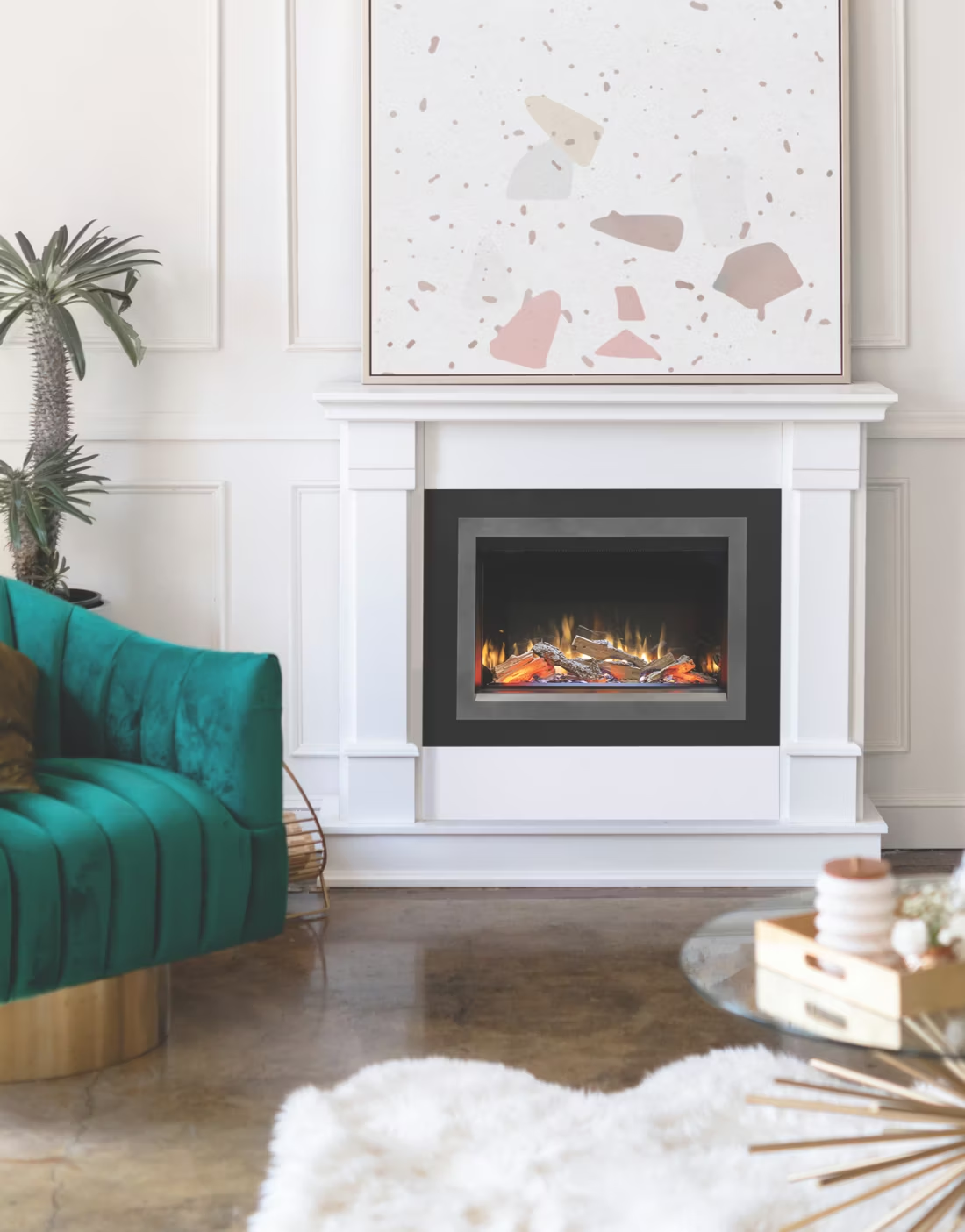
Wood has deep roots in this part of Illinois—oak, hickory, walnut, and maple are all common in the hardwood forests surrounding Shawnee, and plenty of Johnson County homes still burn cordwood for primary or backup heat. But for homeowners who want supplemental warmth in a bonus room, a sunroom, or a farmhouse without an existing chimney, an electric fireplace sidesteps the venting, gas line, and combustion-air questions entirely. Plug-in units and simple electric inserts run on standard household power (Ameren Illinois serves Vienna and much of the county, with rural electric cooperatives covering outlying areas), which means installation in Johnson County is usually a matter of placement and outlet access, not permits and chimney sweeps.
Three steps. No salesperson until you're ready.
Tell us about your project
Your zip code, your situation, and the fuel you're leaning toward—or let the answers point you to one.
See what's actually available
The brands dealers within 100 miles genuinely carry—real options, never a catalog mirage.
Get your dealer & Project Guide
A trusted local dealer, plus the free Project Guide & Parts List that names every component of the job.
Frequently Asked Questions
How much does an electric fireplace installation cost in Johnson County?
Most electric fireplace projects in Johnson County fall into two categories. A plug-in freestanding unit or a basic electric insert dropped into an existing masonry opening typically runs $150 to $600 installed, since there's no venting or gas line to run. A built-in wall unit or a larger insert that needs a dedicated 20-amp circuit run by an electrician generally lands in the $800 to $2,500 range, depending on how far the unit sits from the panel and whether any framing or trim work is involved. Either way, costs stay well below wood or gas installs because there's no chimney, flue, or combustion venting to account for.
Do I need a permit to install an electric fireplace in Johnson County?
In most cases, no. A plug-in freestanding electric fireplace or a standard electric insert that uses an existing outlet doesn't trigger a building or mechanical permit anywhere in Johnson County, since there's no venting, gas line, or structural chimney work involved. If your project requires a licensed electrician to add a new dedicated circuit—common for larger built-in units or wall-mounted models—that electrical work may need to be permitted through the county, so it's worth confirming with your installer before work begins. This is one of the simplest hearth projects available for that reason alone.
How does an electric fireplace compare to wood heat in Johnson County?
Wood remains popular in Johnson County thanks to abundant local oak, hickory, walnut, and maple from the Shawnee National Forest region, and it works as backup heat during power outages, which electric units cannot provide. But wood heat means chimney maintenance, ash cleanup, and building permits for new installations. Electric fireplaces skip all of that—no cutting, stacking, or sweeping—and with the county's relatively mild 4,206 heating degree days, an electric unit is often plenty for supplemental warmth in a den, bedroom, or sunroom where running a full wood or gas system wouldn't make sense.
Is natural gas or propane a better option than electric in Johnson County?
Natural gas infrastructure is limited across much of rural Johnson County, so propane is the more common gas alternative outside Vienna, and it requires a tank, a fuel delivery contract, and periodic servicing. Electric fireplaces avoid all of that: no tank, no delivery schedule, no annual gas appliance inspection. For homeowners who want supplemental heat and fire ambiance without adding a new fuel account to manage, electric is usually the simpler path, particularly in outlying communities like Cypress or New Burnside where propane delivery can mean a longer wait.
What size electric fireplace do I need for my Johnson County home?
Most electric fireplaces are rated for supplemental heat in a single room—typically 400 to 1,000 square feet depending on the model's wattage and your ceiling height. Given the county's mild winter lows (averaging around 26 degrees), an electric unit sized for one main living space is usually enough to take the edge off without needing central heat running constantly. For open floor plans or drafty older farmhouses common in the rural parts of the county, a local dealer can walk through square footage and insulation to recommend a wattage that actually keeps up.
What's the best electric fireplace for a mild-winter climate like Johnson County?
Because Johnson County's heating needs are moderate compared to colder parts of the Midwest, homeowners here have more flexibility to prioritize appearance and features over raw heat output. Realistic-flame models from brands like Dimplex and Napoleon are popular for living rooms and dens, while simpler insert-style units work well for anyone converting an old masonry fireplace that's rarely used for wood anymore. A local dealer can match flame style, heat output, and mounting option (built-in, insert, or freestanding) to your specific room.
Will my electric fireplace work during a power outage?
No—electric fireplaces require power to run the heater and flame effect, so they shut off during an outage just like any other electric appliance. In parts of rural Johnson County served by cooperative power lines, outages can run longer during ice storms or high winds than in town. If backup heat during outages matters for your household, many local homeowners pair an electric fireplace for everyday ambiance with a wood stove or gas unit elsewhere in the house for emergency heat.
Can I install an electric fireplace in a manufactured or mobile home in Johnson County?
Yes, and it's a common request in this part of the county, where manufactured and modular homes are widespread outside Vienna. Look for units listed as UL-certified for mobile home use—this matters for insurance and resale, and it's a spec any local dealer can confirm before you buy. Because there's no venting or gas line involved, electric is often the most straightforward hearth upgrade available for a manufactured home.
Electric vs. wood vs. gas—which is right for my Johnson County home?
Wood makes sense if you want real heat during outages and have access to local oak or hickory—common throughout the Shawnee National Forest area—and don't mind the maintenance. Gas (mostly propane outside Vienna) offers instant, consistent heat but adds a fuel account and annual servicing. Electric is the simplest and lowest-cost option for supplemental heat and fire ambiance, especially given the county's moderate 4,206 heating degree days, but it won't help during a power outage. Many Johnson County homeowners land on electric for a bonus room or den and keep a wood stove or propane unit as their primary or backup heat source elsewhere in the house.
Can I put a TV above my fireplace?
Yes—with an asterisk. Fireplaces are hot and TVs don't like heat. Either put a mantel between them to deflect rising warmth, or choose a fireplace with heat-management technology that creates a cool zone on the wall above—the wall stays around 125 degrees, barely warm, while the room still gets full heat. If you like clean lines and don't want a mantel, heat management is the answer.
Do electric fireplaces actually produce heat?
Yes—most put out around 4,800–5,000 BTUs from a standard outlet, which comfortably warms a bedroom, office, or den as a comfort-zone heater. What they won't do is carry a whole house the way wood, gas, or pellet can. Think of electric as ambiance-first with honest supplemental heat: flames on with no heat in July, flames plus warmth in January.
Can a fireplace actually lower my heating bill?
Yes—by creating a comfort zone. A furnace heats every square foot of the house just to warm the one room you're in; a gas fireplace on low burns roughly a sixth of the gas a typical furnace does. Set the furnace around 55–60 degrees as a baseline, then heat the rooms your family actually uses. Families who heat this way commonly save $20–$60 a month.
How much should I budget for a fireplace?
For an average home—covering the fireplace, the vent pipe, and basic installation—a budget between $3,900 and $5,500 gives you a lot of options across wood, gas, and pellet. By the time you add finish work, gas line, and electrical, the average complete installation lands between $5,000 and $12,000 all-in. In a remodel or new build, a good rule is to put about 2.5% of the total project cost toward the fireplace.
Find your electric fireplace in Johnson County.
Tell us a bit about your home and we'll match you with the right electric fireplace or insert, plus a free Project Guide & Parts List and a trusted local dealer to install it.
Find Your Fireplace →