
Find your pellet stove in Jasper County.
Consistent, thermostat-controlled heat for the farmhouses and rural homesteads of Jasper County—from Newton to Willow Hill and every township in between. Get matched with a trusted local dealer who can size and install it right.
Every Project Starts From One of These Five Situations
Steady heat, without the woodpile, for rural Jasper County homes.
Jasper County sits in Zone 4A, with a moderate winter heating season and winter lows that average around 22°F—cold enough for a real heating season, though nowhere near what a place like Madison or Minneapolis sees. It's a farm county of under 4,000 residents spread across townships around Newton, Wheeler, Willow Hill, and Ste. Marie, and a lot of the housing stock is older farmhouses and manufactured homes that benefit from a dedicated heat source in the main living space rather than relying on a stretched-thin furnace alone.
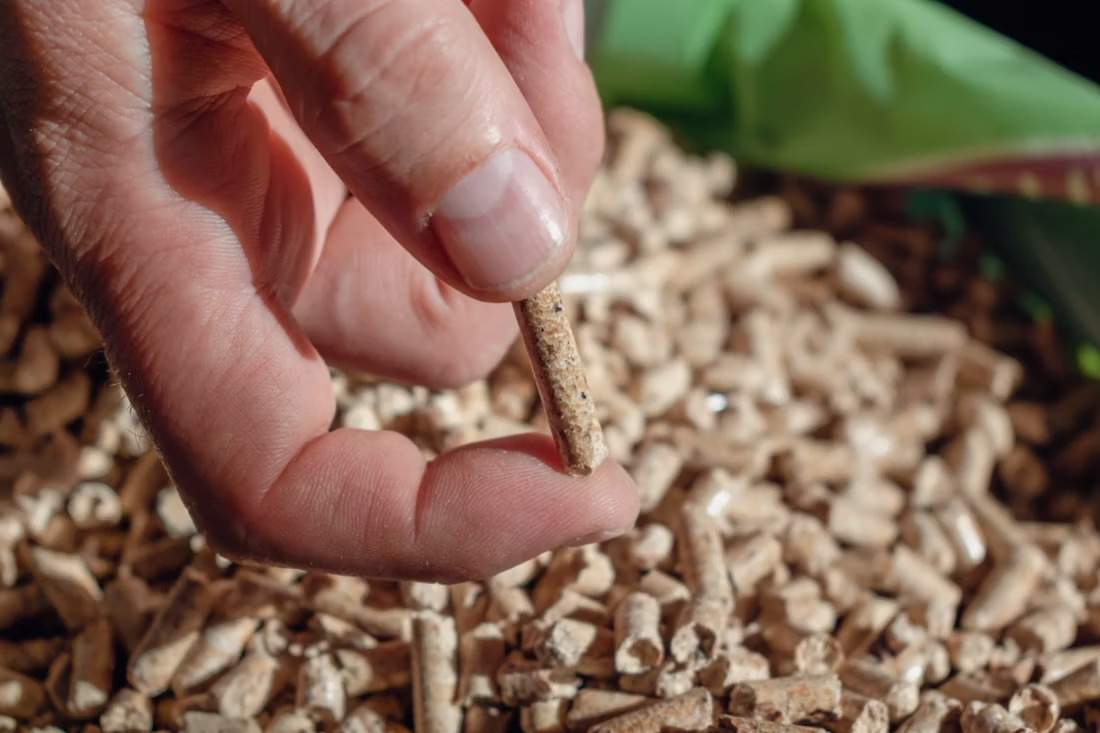
Jasper County has no air quality non-attainment issues and no burn-ban ordinances to navigate, which simplifies things—but it also means most homes here already burn wood from the local oak, hickory, walnut, and maple that's common on area farms. Pellet stoves appeal to a different slice of that same household: same radiant-heat comfort and lower fuel bills, but with a hopper you fill once a day instead of splitting and stacking cordwood. Regional producers like Indeck Energy Services, Lignetics, and Somerset Pellet Fuel supply the Midwest pellet market this county draws from, so fuel availability isn't the issue—sizing and venting the right unit for your home is where a local installer earns their fee.
Three steps. No salesperson until you're ready.
Tell us about your project
Your zip code, your situation, and the fuel you're leaning toward—or let the answers point you to one.
See what's actually available
The brands dealers within 100 miles genuinely carry—real options, never a catalog mirage.
Get your dealer & Project Guide
A trusted local dealer, plus the free Project Guide & Parts List that names every component of the job.
Frequently Asked Questions
How much does a pellet stove installation cost in Jasper County?
Pellet stove installations in this part of southeastern Illinois typically run in the $3,000 to $6,500 range, with the spread driven by whether you're installing a freestanding stove that vents through an exterior wall (lower end) or a pellet insert going into an existing masonry fireplace with liner work (higher end). Because Jasper County is rural and thinly populated, expect a modest travel charge if your installer is based out of a hub town like Effingham, Olney, or Robinson rather than Newton itself—worth asking about up front when you get a quote.
What size pellet stove do I need for my Jasper County home?
A lot of Jasper County's housing stock is older farmhouses with less insulation than newer construction, so sizing tends to run a bit larger than a simple square-footage chart would suggest. A stove rated for 1,000-1,500 square feet is usually the right call for a single-story farmhouse main living area; homes over 2,000 square feet or with an open floor plan often do better with a larger unit paired with a fan to push heat down the hallway. A local dealer walking your home in person—checking ceiling height, window count, and how the rooms connect—will get you closer than any online sizing chart.
Where can I find a pellet stove dealer near me in Jasper County?
With a population under 4,000, Jasper County doesn't support its own big hearth showroom, so most residents end up working with a dealer based in a neighboring hub—Effingham, Olney, or the Robinson area are the closest towns with established hearth retailers that regularly install in Jasper County. What matters more than proximity is whether the dealer actually services your township; some will travel to Newton, Wheeler, or Ste. Marie without issue, others cap their service radius. We match you with whichever trusted dealer actually covers your address, rather than the nearest name on a map.
What's the difference between a pellet stove and a pellet insert?
A pellet stove is a freestanding, self-contained unit that vents through an exterior wall using a small-diameter PVC or stainless pipe—it doesn't need an existing chimney and can go almost anywhere with wall access. A pellet insert is built to slide into an existing masonry fireplace opening, using the old chimney (typically with a stainless liner) as the vent path. If your Jasper County home already has an open wood fireplace you rarely use, an insert converts it into an efficient, thermostat-controlled heat source. If you don't have a fireplace, a freestanding stove is the simpler, cheaper install.
Do I need a permit to install a pellet stove in Jasper County?
Most rural Illinois counties, Jasper County included, require a permit for any permanently installed hearth appliance that involves wall penetration or new venting—that's typically handled through the county zoning or building office in Newton. In practice, most established dealers pull the permit as part of the installation quote, so you're not the one filing paperwork. It's still worth confirming with whoever you hire, especially if you're doing an insert into an older fireplace that hasn't had work done on it in decades.
What's the best pellet stove for Jasper County's climate?
With a moderate winter heating season and winter lows averaging in the low 20s, Jasper County doesn't need the extreme-cold, catalytic-grade heat output that a place like Bismarck or International Falls would call for—but you still want a stove that can carry a farmhouse through a stretch of single-digit nights. Mid-size units in the 40,000-50,000 BTU range from mainstream pellet brands cover most homes here comfortably. Because the county draws pellet supply from regional Midwest producers rather than a single dominant local brand, stick with a stove that isn't finicky about pellet quality—ash content varies more between bag brands than most people expect, and a forgiving auger and burn pot save you headaches over a season.
How often does a pellet stove need cleaning and maintenance?
Pellet stoves need more frequent attention than a wood stove, but it's lighter-duty work. Plan on emptying and vacuuming the ash pot every few days during regular heating-season use, a deeper burn pot and glass cleaning weekly, and a full professional service—venting, auger, exhaust fan—once a year, usually before the season starts in the fall. Homes running the stove as a primary heat source through a full Jasper County winter will want to stay on top of the weekly cleaning; skipping it is the most common reason a stove starts underperforming mid-January.
Where do I buy pellets, and how much do they cost?
Pellets for this area typically come from regional Midwest producers—Indeck Energy Services, Lignetics, and Somerset Pellet Fuel are all names you'll see on bags sold through farm supply stores and hearth retailers serving southeastern Illinois. Pricing moves with the season and with hardwood vs. softwood blend, so it's worth calling ahead in early fall before demand picks up rather than assuming a farm store will have a full pallet on hand in January. Buying a season's supply early, rather than bag by bag through the winter, is the more economical approach most Jasper County pellet-stove owners settle into after their first year.
Pellet stove vs. wood stove—which makes more sense in Jasper County?
Jasper County has abundant local hardwood—oak, hickory, walnut, maple—and a lot of farm households already have access to cut wood or the equipment to process it themselves, which is a real point in favor of a traditional wood stove, especially since wood stoves keep working through a power outage that would stop a pellet stove's auger and blower cold. Pellet stoves win on convenience: no splitting, no daily reloading, and a cleaner, more consistent burn you dial in with a thermostat. For a primary residence where reliable heat during an ice-storm outage matters, wood is worth serious consideration. For a household that values set-it-and-forget-it heat and doesn't want to manage a woodpile, pellet is usually the better everyday fit. Plenty of Jasper County homes end up with one of each.
Why is a fireplace insert so efficient?
An insert does two things: it seals the chimney completely, so you stop losing air you already paid to heat, and it radiates warmth into the room through the firebox and glass. Most add a heat-exchange fan that pulls cool room air underneath, wraps it around the hot firebox, and pushes it back out warm. Your home is more efficient before you've even lit the first fire.
What do I measure to size a fireplace insert?
Four numbers tell you what fits: the front width, the front height, the back width, and the overall depth of your existing fireplace opening. Grab a tape measure, jot those down, and snap a photo of the wall—those two things do more to move your project forward than anything else you can do today.
Can a fireplace actually lower my heating bill?
Yes—by creating a comfort zone. A furnace heats every square foot of the house just to warm the one room you're in; a gas fireplace on low burns roughly a sixth of the gas a typical furnace does. Set the furnace around 55–60 degrees as a baseline, then heat the rooms your family actually uses. Families who heat this way commonly save $20–$60 a month.
Can I install a fireplace myself?
If you're putting a fire in your house on purpose, it's best to work with an expert. Unless you're genuinely experienced in framing, gas line, vent pipe, and the national code on clearances to combustibles, have a professional do it—and ideally the same company that sells you the fireplace, so warranty, service, and liability all live under one roof.
Pellet Brands Stocked Around Jasper County
Manufacturers will point you to the nearest stocking dealer.
Get your Jasper County pellet stove project planned right.
Tell us about your home and we'll match you with a trusted local dealer and send over a free Project Guide & Parts List—the specific stove or insert, vent kit, and installation plan for your Jasper County address.
Find Your Fireplace →