
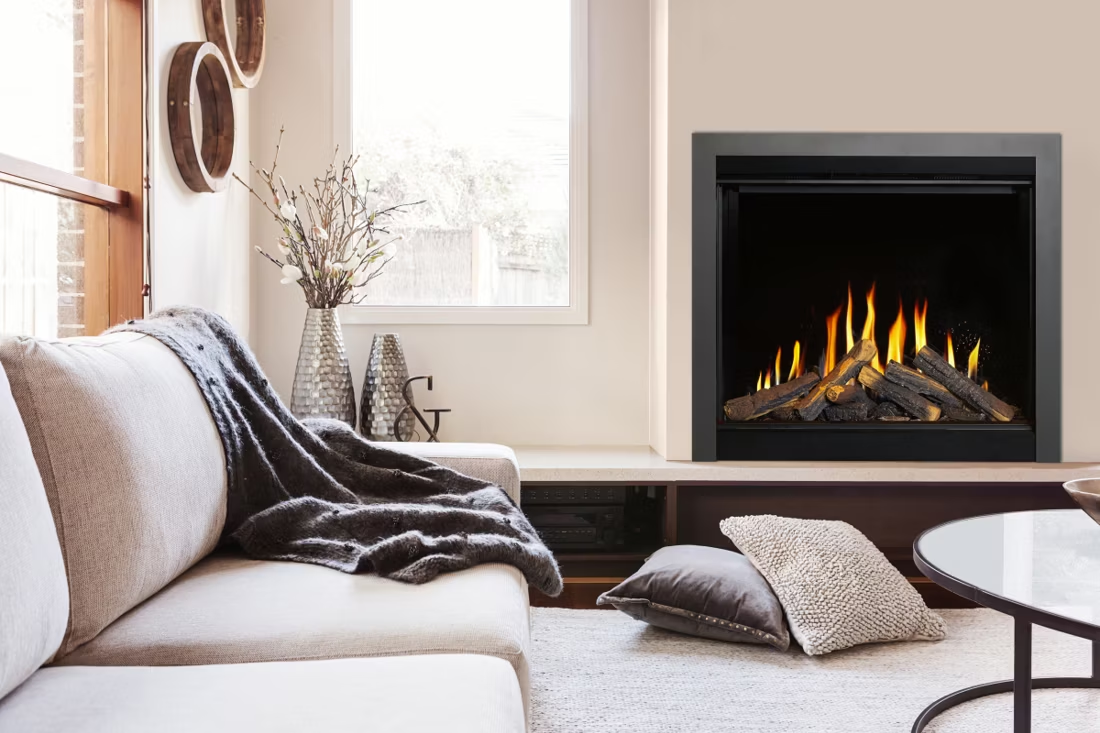
Add warmth to any room—no chimney required.
For homes and additions across Jasper County that don't have a gas line or a working chimney, an electric fireplace still delivers real supplemental heat and a convincing flame. Find the right unit and get matched with a local dealer who installs it correctly.
Every Project Starts From One of These Five Situations
The simplest way to add heat where you need it.
Jasper County is small and rural—about 3,900 residents spread across Newton, Willow Hill, Wheeler, Rose Hill, and the farmland between them. At climate zone 4A with a real but moderate winter heating season and average winter lows near 22°F, the county sees a real heating season, though a milder one than places like Madison, WI or Fargo, ND. The oak, hickory, walnut, and maple woodlots that have supplied firewood here for generations tell you plenty about the county's heating heritage, but not every home is set up to burn it. Additions, finished basements, mobile and manufactured homes, and older farmhouses without a working chimney are common throughout the county, and that's exactly where electric fireplaces fill the gap.
Most of rural Jasper County is served by Norris Electric Cooperative rather than a municipal gas utility, and natural gas lines are limited outside Newton—which makes an electric unit a practical choice when running new gas service isn't worth the cost. A plug-in or built-in electric fireplace needs no venting, no chimney, and no combustion air, so it can go into a sunroom, a bedroom, a mobile home, or a converted garage with minimal construction. It won't replace a woodstove as a primary heat source during a winter power outage, but for everyday zone heating and ambiance, it's the lowest-friction option available in the county.
Three steps. No salesperson until you're ready.
Tell us about your project
Your zip code, your situation, and the fuel you're leaning toward—or let the answers point you to one.
See what's actually available
The brands dealers within 100 miles genuinely carry—real options, never a catalog mirage.
Get your dealer & Project Guide
A trusted local dealer, plus the free Project Guide & Parts List that names every component of the job.
Frequently Asked Questions
How much does an electric fireplace installation cost in Jasper County?
Plug-in electric fireplace inserts and mantels that simply plug into a standard 120V outlet typically run $300 to $1,200 installed, since there's no venting or gas line to run—most of the cost is the unit itself plus a few hours of carpentry if it's going into a mantel surround. Built-in wall units or larger inserts that need a dedicated 240V circuit run higher, often $1,200 to $2,500, once an electrician is involved. Local dealers in and around Newton can give you a firm number once they know the model and whether your electrical panel has room for a new circuit.
Do I need a permit to install an electric fireplace in Jasper County?
In most cases, no—a plug-in electric fireplace that uses an existing outlet doesn't require a permit. If you're installing a built-in unit that needs a new dedicated circuit or panel work, that electrical work typically does require a permit through the Jasper County Building Department, and it should be pulled by a licensed electrician regardless of whether you technically need the paperwork. Unlike wood or gas installs, there's no venting or chimney inspection involved, which keeps the process simple.
What's the difference between an electric fireplace, insert, and stove?
An electric fireplace is typically a built-in unit set into a wall or mantel surround, designed to look like a traditional fireplace. An electric insert is sized to slide into an existing masonry firebox—a common option for older Jasper County farmhouses that have a fireplace opening but no longer burn wood in it. An electric stove is a freestanding cabinet-style unit that sits on the floor like a wood stove but plugs into an outlet. All three use the same basic heating element and flame-effect technology; the choice mostly comes down to whether you have an existing fireplace opening to fill.
How much heat does an electric fireplace actually put out?
Most electric fireplaces put out around 4,000 to 5,000 BTU, enough to comfortably heat a single room in the 300 to 600 square foot range—a bedroom, den, or finished basement space. With Jasper County's real but moderate winter heating season, that's genuinely useful supplemental heat for shoulder-season mornings and evenings, but it's not sized to be a whole-house primary heat source the way a wood stove or gas furnace would be. Think of it as zone heat for the room you're actually sitting in, which also lets you turn down the thermostat elsewhere in the house.
Is an electric fireplace a good option for a mobile or manufactured home?
Yes—electric fireplaces are one of the safest heating additions for manufactured and mobile homes, which are common throughout rural Jasper County. There's no open flame, no combustion byproducts, and no venting to cut through a wall or roof, which sidesteps the clearance and structural questions that come with wood or gas units in manufactured housing. A plug-in unit or a low-profile wall-mount model can add real supplemental warmth to a mobile home living room without any modification to the home's structure.
What does it cost to run an electric fireplace day to day?
A typical electric fireplace running on its heat setting draws about 1,500 watts. At Norris Electric Cooperative's residential rates, running one for several hours a day through the coldest stretch of winter adds a modest amount to your monthly bill—noticeably less than running a space heater of comparable output, and far less than heating an entire home with electric resistance heat. Most homeowners in Jasper County run these units on the flame-only (no heat) setting for ambiance much of the year and switch on the heat function only when they want extra warmth in that specific room.
Can I put an electric fireplace into my existing wood fireplace opening?
Often, yes. Many older Jasper County homes have a masonry fireplace that's no longer used for wood—chimney issues, air quality preference, or simply convenience have taken it out of service. An electric insert sized to the firebox opening slides in without any venting work, giving you flame and heat again without the chimney maintenance or ash cleanup. A local dealer can measure your firebox opening and recommend a model that fits.
Do electric fireplaces work during a power outage?
No—electric fireplaces require power to operate, so they won't provide heat during an outage, which is worth factoring into your planning given that rural Jasper County can see extended outages during winter ice storms. If backup heat during outages matters to your household, a wood stove is the more reliable choice for that specific need. Many homeowners in the county actually run both: a wood stove or insert for storm-season backup heat, and an electric unit for everyday convenience and ambiance in a room that doesn't have a chimney.
Electric vs. wood—which makes more sense for my Jasper County home?
Wood heat draws on the same oak, hickory, walnut, and maple that's heated homes in this part of Illinois for generations, works without electricity during storm outages, and can serve as genuine primary heat in a farmhouse. Electric heat requires no chimney, no wood handling, no ash, and can go almost anywhere in the house with an outlet nearby, but it depends entirely on grid power and is best suited to supplemental, zone-specific heating rather than whole-home warmth. For a converted addition, a mobile home, or a room without a working flue, electric is usually the simpler and lower-cost path. For a primary heat source in an older farmhouse, wood still tends to win.
Can I put a TV above my fireplace?
Yes—with an asterisk. Fireplaces are hot and TVs don't like heat. Either put a mantel between them to deflect rising warmth, or choose a fireplace with heat-management technology that creates a cool zone on the wall above—the wall stays around 125 degrees, barely warm, while the room still gets full heat. If you like clean lines and don't want a mantel, heat management is the answer.
Does an electric fireplace need a vent or chimney?
No—that's its superpower. An electric fireplace needs a wall and an outlet, period. No vent pipe, no gas line, no clearances to design around, which is why it works in bedrooms, offices, apartments, and walls where venting a gas or wood unit would be impractical or impossible. Installation is typically the simplest and least expensive of any fireplace type.
Can a fireplace actually lower my heating bill?
Yes—by creating a comfort zone. A furnace heats every square foot of the house just to warm the one room you're in; a gas fireplace on low burns roughly a sixth of the gas a typical furnace does. Set the furnace around 55–60 degrees as a baseline, then heat the rooms your family actually uses. Families who heat this way commonly save $20–$60 a month.
What is an in-home preview and do I need one?
It's a visit where a hearth professional measures your space, confirms the model you picked actually works in your home, and walks the specs—framing, gas line, venting, finish work—before anything is ordered. Some details you just can't know until you see the house. Never make a down payment without one; it's the single most-skipped step that burns buyers.
Find your electric fireplace in Jasper County.
Tell us about your room and your home, and we'll match you with a trusted local dealer and send over a free Project Guide & Parts List—the exact unit, mounting or insert hardware, and electrical requirements for your Jasper County home.
Find Your Fireplace →