
A Niche Comfort Choice in a Gas-Heated Suburb.
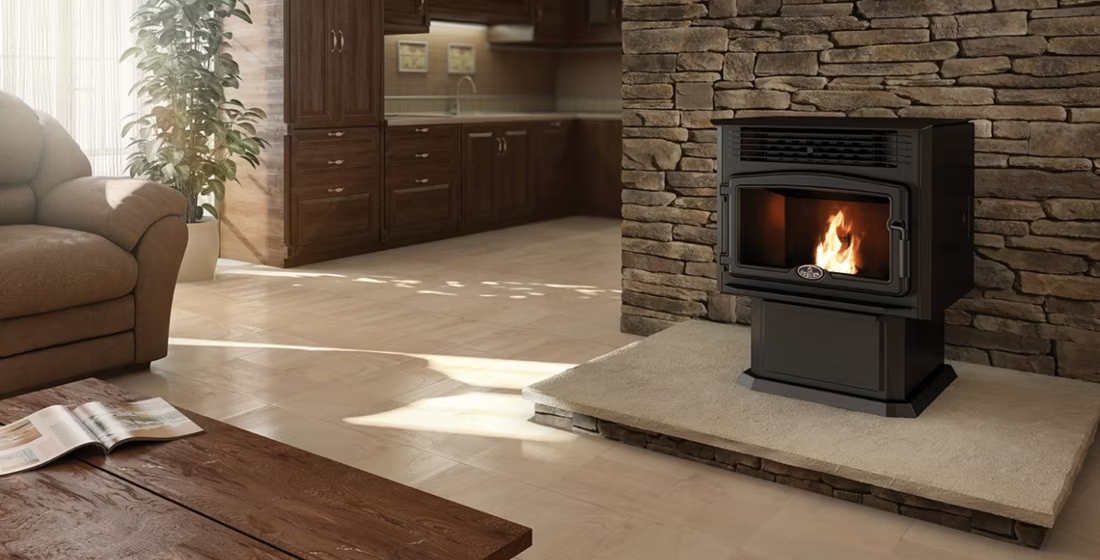
Pellet stoves are uncommon in Hanover Park, where nearly every block already runs on natural gas and ComEd electric service. For homeowners who still want one—in a basement, a sunroom, or as a wood-like supplemental heat source—we'll connect you with a trusted local dealer who can size and vent it correctly.
Every Project Starts From One of These Five Situations
A gas-first suburb with room for one more option.
Hanover Park is a fully built-out DuPage County suburb where winters are genuinely cold—a long, demanding heating season and an average winter low of 14°F put it in the same climate territory as Madison, Wisconsin. But unlike a rural Midwest town where wood and pellet heat fill gaps in the grid, Hanover Park's housing stock was built with forced-air furnaces and natural gas already run to nearly every lot. That's why both wood and pellet fuel show up as niche, rather than standard, choices here.
That doesn't mean a pellet stove is off the table. It means the use case looks different than it would in, say, rural Illinois or northern Wisconsin: a pellet insert in a finished basement rec room, a freestanding stove in a three-season porch, or a homeowner who simply wants the visual warmth of a real flame without a gas line or masonry chimney. Pellet fuel itself is easy to source regionally—Indeck Energy Services, Lignetics, and Somerset Pellet Fuel all supply hardwood pellets to the greater Chicago market, often milled from the same oak, hickory, walnut, and maple that fill DuPage County's hardwood stands. A local dealer can still install and vent a pellet appliance properly; there just aren't as many of them doing this work compared to gas fireplace installers in town.
Three steps. No salesperson until you're ready.
Tell us about your project
Your zip code, your situation, and the fuel you're leaning toward—or let the answers point you to one.
See what's actually available
The brands dealers within 100 miles genuinely carry—real options, never a catalog mirage.
Get your dealer & Project Guide
A trusted local dealer, plus the free Project Guide & Parts List that names every component of the job.
Frequently Asked Questions
Is a pellet stove a realistic option for a home in Hanover Park?
It's realistic, just not typical. Hanover Park homes are almost all wired for ComEd electric service and piped for natural gas, so a pellet stove isn't usually anyone's primary heat source here. Where it makes sense is as supplemental heat—a finished basement, an attached garage, or a three-season room that isn't on the main furnace zone. A local dealer can still handle the venting and hopper setup properly; you're just working with a smaller pool of installers than you'd find for a gas insert.
How much does it cost to install a pellet stove or insert in Hanover Park?
Because pellet installations are uncommon here, there isn't the dense local pricing history you'd find for gas fireplace work in DuPage County. As a general range, a pellet stove or insert installation typically runs $3,000 to $6,500 depending on whether it's a through-wall vent or a full chimney liner, and whether new electrical circuits are needed for the hopper motor and combustion blower. A local dealer will give you a firm number after seeing your basement, porch, or room in person—that's part of the free Project Guide we help arrange.
Where do I buy pellets in Hanover Park?
You won't find pellet fuel on every corner the way you might in a rural Midwest town, but regional supply isn't a problem. Indeck Energy Services, a major Illinois biomass and pellet producer, along with Lignetics and Somerset Pellet Fuel, all distribute hardwood pellets through hearth and hardware retailers serving the Chicago suburbs. Most of what's available regionally is milled from oak, hickory, and maple—the same hardwoods common across DuPage County's remaining wooded lots.
Why don't more Hanover Park homes use pellet stoves?
Mostly infrastructure and lot size. Hanover Park's housing stock was built with forced-air gas furnaces and natural gas lines already in place, so there's little incentive to add a second solid-fuel heat source. Many of the subdivisions here also have tighter lots with less room for bulk pellet storage than a rural property would have, and some homeowners' associations in DuPage County restrict exterior venting changes. None of that makes a pellet stove impossible—it just means it's a deliberate choice rather than the default.
Will a pellet stove keep working during a ComEd power outage?
No. Pellet stoves rely on an electric auger to feed fuel and a blower to push combustion air, so they shut down in a power outage unless you've added a battery backup or a generator. Given Hanover Park's occasional winter ice storms and summer thunderstorm outages, this is worth planning around. If backup heat during an outage is your main concern, a gas fireplace with a standing pilot or battery-backed ignition is generally the more dependable option.
What size pellet stove do I need to supplement my home's heat?
Since most Hanover Park installs are supplemental rather than whole-home heat, a smaller unit is usually the right call—typically enough to cover 800 to 1,500 square feet, which fits a finished basement, a great room, or a converted porch. Given the area's cold stretches (winter lows averaging 14°F, similar to what Madison, Wisconsin sees most winters), undersizing will leave a room cold on the harshest nights, while oversizing just means more idle cycling. A local dealer can size it to the actual room, not the whole house.
Do I need a permit to install a pellet stove in Hanover Park?
Yes—any new venting penetration through an exterior wall or roof typically requires a building permit, whether that's through Hanover Park's building department or DuPage County if the property falls in an unincorporated area. This is the same process a gas fireplace or insert would go through. Most established hearth dealers pull the permit as part of the installation, so this usually isn't something you have to manage yourself.
Pellet vs. gas fireplace—which makes more sense for a Hanover Park home?
For most homes here, gas wins on convenience: it's instant, requires no fuel loading or ash removal, and the infrastructure to run a gas line is already in nearly every subdivision. Pellet stoves require periodic hopper refills, occasional ash cleanup, and electricity to run—but they deliver a real flame with actual combustion, which some homeowners prefer over a gas burner. If you already have gas service to the room, gas is the simpler path. If you specifically want the look and feel of a wood-burning appliance without cutting or storing firewood, pellet is the closer match.
Pellet vs. electric fireplace—which is better for supplemental heat in Hanover Park?
Electric fireplaces plug into a standard outlet with no venting at all, which makes them the easier retrofit for an interior basement wall or a room without exterior access. Running one costs whatever ComEd charges per kilowatt-hour (currently around $0.1339), which tends to run higher per BTU than pellet fuel. Pellet stoves need venting and a fuel supply on hand, but they put out more real, sustained heat for a room that gets genuinely cold in a Hanover Park winter. If venting isn't feasible, go electric; if you want real heat output and can accommodate a vent run, pellet is worth the extra installation step.
How often does a pellet stove need cleaning?
A clean pellet stove is a happy pellet stove. Plan on cleaning the burn pot about once a week when you're burning regularly—ash and clinkers gum up the air holes just like a pellet barbecue. Most pellet stove problems trace back to skipped cleaning that nobody explained up front. Some designs make it easy with a trapdoor burn pot: pull a lever and the gunk drops into the ash pan.
Can a pellet stove heat a whole house?
It genuinely can. I burned a pellet stove as my only heat source for years after a furnace died, and it kept the entire house warm. Pellets feed automatically from a hopper, so you get wood-heat economics with thermostat-style control. Two honest caveats: it needs weekly cleaning during the season, and most models need electricity to run—ask about battery backup if outages are a concern.
How much should I budget for a fireplace?
For an average home—covering the fireplace, the vent pipe, and basic installation—a budget between $3,900 and $5,500 gives you a lot of options across wood, gas, and pellet. By the time you add finish work, gas line, and electrical, the average complete installation lands between $5,000 and $12,000 all-in. In a remodel or new build, a good rule is to put about 2.5% of the total project cost toward the fireplace.
Can a fireplace actually lower my heating bill?
Yes—by creating a comfort zone. A furnace heats every square foot of the house just to warm the one room you're in; a gas fireplace on low burns roughly a sixth of the gas a typical furnace does. Set the furnace around 55–60 degrees as a baseline, then heat the rooms your family actually uses. Families who heat this way commonly save $20–$60 a month.
Nearby Dealers
Hearth shops serving Hanover Park and the surrounding area. Every listing shows whether it is a WhyFire partner, a dealer we have verified as authorized for the brands we recommend, or a local business carrying hearth products. No manufacturer pays for placement. How we verify dealers →
Ember Glow
A Cozy Fireplace
A Fireplace Store And More
Jhb Group, Inc.
General Masonry Supply
Fireplace And Patio
Smokin' Deal Bbq
Fireplaces Plus
Pellet Brands Stocked Around Hanover Park
Manufacturers will point you to the nearest stocking dealer.
Find your pellet stove in Hanover Park.
Tell us about your basement, porch, or supplemental heating project and we'll send a free Project Guide & Parts List—the exact parts, including the vent kit, and a trusted local Hanover Park dealer who actually installs pellet appliances.
Find Your Fireplace →