
Steady, automated heat for Franklin County's oak-and-hickory country.
Clean-burning, thermostat-controlled heat for Benton, West Frankfort, Sesser, and every community across Franklin County. Find the right pellet stove or insert, and connect with a trusted local dealer.
Every Project Starts From One of These Five Situations
A modern alternative to Franklin County's coal-heating past.
Franklin County sits in Illinois' old coal belt—West Frankfort, Sesser, Zeigler, and Christopher all grew up around the mines—and wood heat has long run alongside that history, thanks to the oak, hickory, walnut, and maple stands that cover much of the county. Winters here are real but not brutal: an average low near 24°F and a heating load that's noticeably lighter than the deep cold of a Madison, Wisconsin winter put Franklin County in climate zone 4A, cold enough that a supplemental or primary heat source matters from November through March.
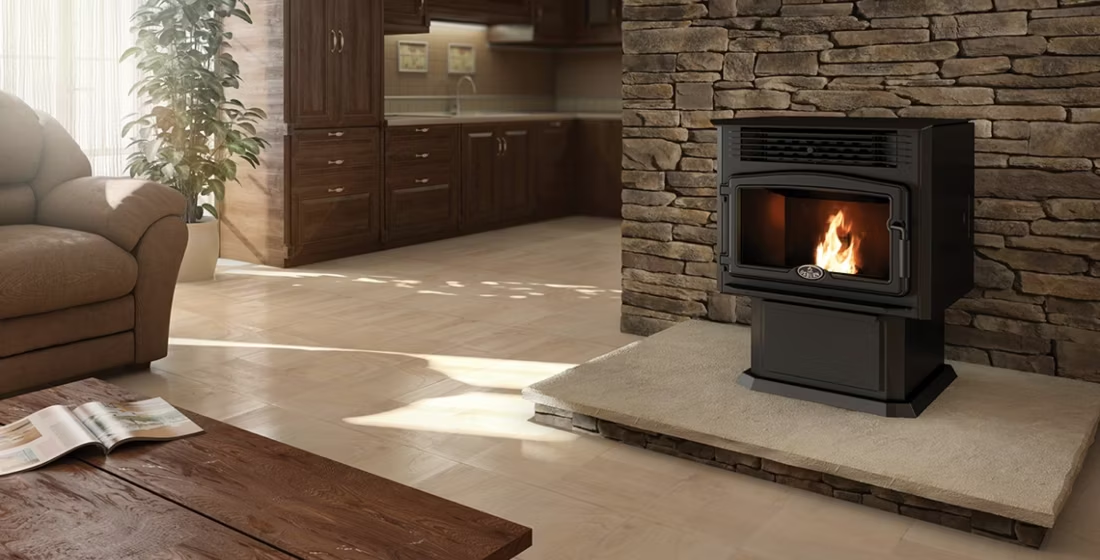
Pellet appliances fit that climate well. With no local air quality restrictions on solid-fuel burning, a pellet stove or insert can run daily through the coldest stretch without curtailment concerns—something homeowners in non-attainment counties out west have to think about. Regional pellet supply is solid, too: Indeck Energy Services and Somerset Pellet Fuel both draw on the same hardwood sawmill residue—oak, hickory, walnut—that's abundant in southern Illinois, and Lignetics pellets are widely stocked at farm and hardware stores throughout the region. The result is a clean, automated heat source—load the hopper, set the thermostat—without the ash handling of a coal stove or the chimney maintenance of a full wood-burning setup.
Three steps. No salesperson until you're ready.
Tell us about your project
Your zip code, your situation, and the fuel you're leaning toward—or let the answers point you to one.
See what's actually available
The brands dealers within 100 miles genuinely carry—real options, never a catalog mirage.
Get your dealer & Project Guide
A trusted local dealer, plus the free Project Guide & Parts List that names every component of the job.
Frequently Asked Questions
How much does a pellet stove installation cost in Franklin County?
Most pellet stove and insert installations in Franklin County run $3,000 to $6,500, depending on whether it's a freestanding stove or an insert going into an existing fireplace, and how much wall or through-roof venting the PL vent pipe needs. Freestanding stoves near an exterior wall with a short vent run tend to land on the lower end; inserts into masonry fireplaces with a full chimney liner run higher. Unlike a wood stove, a pellet unit also needs a standard 120V outlet nearby for the auger and blower—worth flagging to your installer if the fireplace location wasn't wired for it.
How does a pellet stove compare to a wood stove for Franklin County homes?
Wood stoves burn cordwood—plentiful here given the oak, hickory, walnut, and maple that cover much of the county—and keep working during a power outage, which matters in a rural county where storm-related outages aren't rare. Pellet stoves trade that off for convenience: load a bag of pellets, set a thermostat, and the auger and blower handle the rest, with a cleaner burn and far less ash than cordwood. The catch is pellet stoves need electricity to run, so they're not a fallback heat source when the grid goes down unless paired with a battery backup or generator. For a lot of Franklin County homeowners, the choice comes down to whether they want outage-proof heat or day-to-day convenience.
Where can I buy pellets in Franklin County?
Pellets from Lignetics are widely carried at farm supply and hardware stores throughout southern Illinois, and Indeck Energy Services and Somerset Pellet Fuel both supply the region as well, often available through local hearth dealers or feed stores in and around Benton and West Frankfort. Premium hardwood pellets typically burn cleaner and leave less ash than softwood blends—worth asking your dealer which brand they stock and recommend for your specific stove.
What size pellet stove do I need for my home?
Sizing depends on square footage, insulation, and whether the stove is your primary or supplemental heat. In Franklin County's climate zone 4A—with a winter heating load milder than places like Duluth or Fargo but still cold enough to matter—a mid-size pellet stove (rated for 1,200 to 2,000 sq ft) handles most single-family homes as primary heat, while a smaller unit works fine as a supplemental heater for one or two main rooms. Older farmhouses around the county with less insulation typically need to size up from the manufacturer's baseline rating.
Do I need a permit to install a pellet stove in Franklin County?
Most jurisdictions in and around Franklin County—including Benton, West Frankfort, and unincorporated areas—require a building permit for a permanent pellet stove or insert installation, since it involves venting through an exterior wall or roof and sometimes new electrical work. Local hearth dealers who handle installation typically pull the permit as part of the job, so you generally don't have to coordinate it yourself. It's worth confirming with your specific town or township office before work begins, since requirements can vary slightly by municipality.
Will my pellet stove work if the power goes out?
Not on its own. Pellet stoves rely on an electric auger to feed fuel and a blower to distribute heat, so a power outage stops the stove even with a full hopper. Some homeowners in rural Franklin County pair their pellet stove with a small battery backup or a generator specifically to keep it running during storm outages, since outages can stretch longer in outlying areas than in Benton or West Frankfort. If outage-proof heat is a priority, a wood stove burning local oak or hickory is the more reliable backup.
How often does a pellet stove need cleaning and maintenance?
Pellet stoves need more frequent light maintenance than wood stoves but far less deep cleaning. Plan to empty the ash pan every few days during regular use, clean the burn pot weekly, and have the venting and hopper mechanism professionally inspected once a year—typically before the start of burning season. Because pellet fuel burns cleaner than cordwood, chimney or vent buildup is minimal compared to a wood-burning setup, but the mechanical parts (auger, blower, igniter) do wear and benefit from an annual once-over from a local dealer or service tech.
What's the best pellet stove for Franklin County's climate?
Given the county's moderate winters—average lows around 24°F and a heating season that's lighter than many colder regions—most homes don't need the largest hopper or highest BTU output on the market. A mid-size unit with a 40-60 lb hopper capacity (good for roughly 24-40 hours of burn time on a low-to-medium setting) covers most Franklin County homes comfortably. Homeowners using pellet heat as their primary source through the coldest stretch of January and February may want to size up slightly and look for a model with a larger hopper to reduce how often they're reloading overnight.
Pellet stove vs. gas fireplace—which is right for my home?
Gas fireplaces offer instant on-off heat with no fuel handling, and they're a good fit if you already have natural gas or propane service. Pellet stoves require more hands-on involvement—filling the hopper, emptying ash—but burn a renewable, regionally produced fuel and often deliver more heat output per dollar than propane, which can be pricier in rural parts of the county. For homes without existing gas service, adding a pellet stove is usually simpler and less costly than running a new gas line or installing a propane tank. Either way, a local dealer can walk you through the operating cost difference for your specific home.
What's the difference between an insert and a zero-clearance fireplace?
An insert is a fireplace that slides into a pre-existing wood-burning fireplace—if you don't have one, there's nothing to insert it into. A zero-clearance fireplace is built into a framed wall, which makes it the answer for remodels and new construction. Simple test: existing masonry fireplace means insert; blank or framed wall means zero-clearance.
Why is a fireplace insert so efficient?
An insert does two things: it seals the chimney completely, so you stop losing air you already paid to heat, and it radiates warmth into the room through the firebox and glass. Most add a heat-exchange fan that pulls cool room air underneath, wraps it around the hot firebox, and pushes it back out warm. Your home is more efficient before you've even lit the first fire.
How much should I budget for a fireplace?
For an average home—covering the fireplace, the vent pipe, and basic installation—a budget between $3,900 and $5,500 gives you a lot of options across wood, gas, and pellet. By the time you add finish work, gas line, and electrical, the average complete installation lands between $5,000 and $12,000 all-in. In a remodel or new build, a good rule is to put about 2.5% of the total project cost toward the fireplace.
Can a fireplace actually lower my heating bill?
Yes—by creating a comfort zone. A furnace heats every square foot of the house just to warm the one room you're in; a gas fireplace on low burns roughly a sixth of the gas a typical furnace does. Set the furnace around 55–60 degrees as a baseline, then heat the rooms your family actually uses. Families who heat this way commonly save $20–$60 a month.
Pellet Brands Stocked Around Franklin County
Manufacturers will point you to the nearest stocking dealer.
Find your pellet stove in Franklin County.
Tell us a bit about your home and we'll match you with the right pellet stove or insert, plus a free Project Guide & Parts List—the exact parts, including the vent kit, and our recommended local dealer for your Franklin County installation.
Find Your Fireplace →