
Zone heat and ambiance, without the chimney work.
From Benton to West Frankfort, Sesser, and Zeigler, Franklin County homeowners are turning to electric fireplaces for supplemental warmth and everyday ambiance—no gas line, no venting, no masonry work. Find the right unit and connect with a trusted local dealer.
Every Project Starts From One of These Five Situations
Ambiance and zone heat that plug right in.
Franklin County sits in the old coal belt of southern Illinois—Benton as the county seat, with West Frankfort, Sesser, Zeigler, and Christopher built up around the mines that once powered the region. Winters here are moderate by Midwest standards: Climate Zone 4A, an average winter low around 24°F, and roughly 4,550 heating degree days a year—less than half of what a place like Duluth, MN or International Falls, MN racks up each winter. That milder profile is exactly why electric fireplaces make sense here as a supplement to a home's furnace rather than a replacement for it.
Many homes in Benton and West Frankfort date to the early-1900s coal boom, with older brick construction and masonry fireplace openings that were never built for a modern wood-burning insert. An electric insert drops into that same opening with no chimney liner, no venting, and no combustion byproducts to worry about. Renters and owners of the smaller frame houses common throughout the county also lean on electric because a plug-in unit needs no permit and no gas line—just a standard outlet, or a dedicated 240-volt circuit for larger built-ins, run by an electrician. Ameren Illinois serves the incorporated towns; Tri-County Electric Cooperative covers much of the surrounding rural county—either way, a local dealer can tell you what your panel can handle before you buy.
Three steps. No salesperson until you're ready.
Tell us about your project
Your zip code, your situation, and the fuel you're leaning toward—or let the answers point you to one.
See what's actually available
The brands dealers within 100 miles genuinely carry—real options, never a catalog mirage.
Get your dealer & Project Guide
A trusted local dealer, plus the free Project Guide & Parts List that names every component of the job.
Frequently Asked Questions
How much does an electric fireplace installation cost in Franklin County?
Plug-in freestanding and wall-mount electric fireplaces are the least expensive option—many homeowners in Benton and West Frankfort install these themselves for under $1,000 including the unit, since no wiring changes or permits are involved. Built-in electric inserts and linear wall units that require a dedicated 240-volt circuit run higher once an electrician is involved, typically $1,500 to $3,500 depending on the unit and whether new wiring has to be run from the panel. Custom mantels, surrounds, or shiplap surrounds add to the total but aren't required for the unit to function.
Do I need a permit to install an electric fireplace in Franklin County?
A standard plug-in electric fireplace that runs on a regular household outlet typically doesn't require a permit anywhere in the county. If you're installing a built-in unit that needs a new dedicated circuit—common with larger linear or wall-mount models—an electrical permit is usually required. Benton, West Frankfort, Sesser, and Zeigler each issue their own permits within city limits; homes in unincorporated Franklin County fall under the county's building and zoning office. Most local dealers coordinate with a licensed electrician as part of the installation so you're not chasing paperwork yourself.
What's the difference between an electric fireplace, insert, and wall-mount unit?
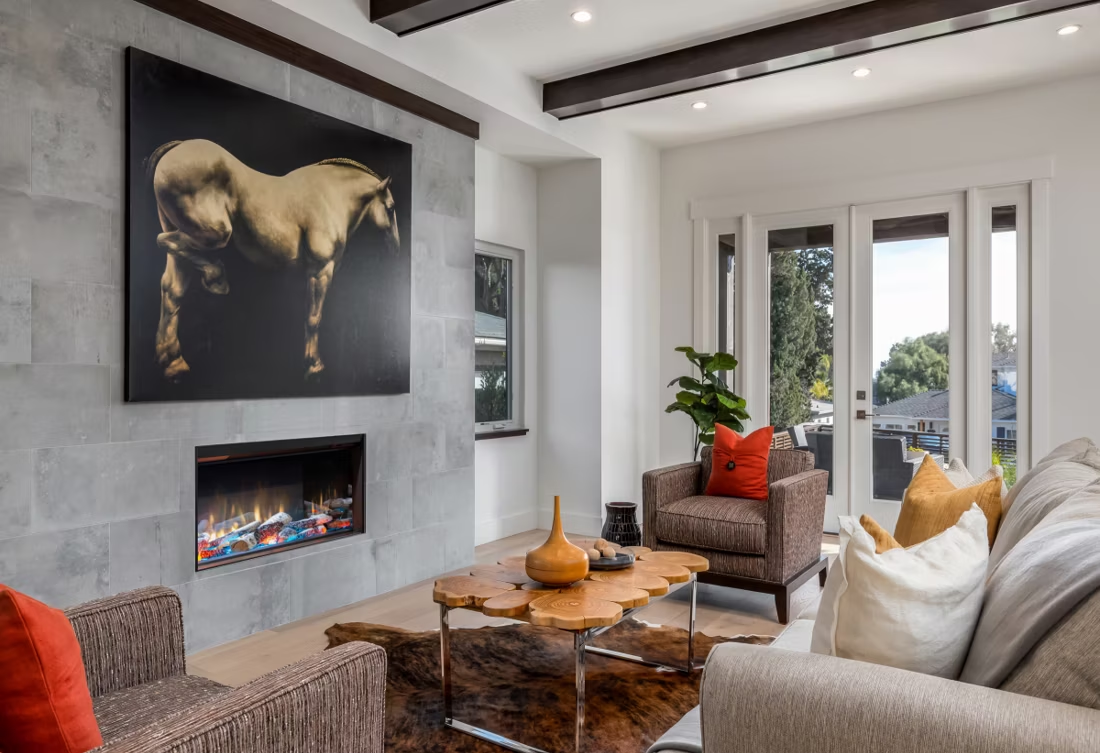
An electric fireplace insert is built to slot into an existing masonry or zero-clearance firebox opening—a common fit for the older brick homes around Benton and West Frankfort that have a fireplace shell but no working chimney. A freestanding electric fireplace looks like a stove or cabinet and sits anywhere near an outlet, no opening required. A wall-mount or linear electric fireplace hangs flush on a wall like a large TV and is popular in newer builds and remodels where a low-profile, modern look matters more than replicating a traditional hearth. All three heat a room the same way—the difference is really about the space you're working with.
Will an electric fireplace heat my whole house?
No—and this is the most common misconception. Electric fireplaces are zone heaters, typically rated around 1,500 watts and roughly 5,000 BTUs, enough to noticeably warm a single room but not sized to replace a furnace. Given Franklin County's moderate 4,550 heating degree days, that's usually fine—most homeowners use an electric unit to take the edge off a living room or bedroom on cold nights while the central system handles the rest of the house. If you're trying to heat a larger open area or an uninsulated addition, a local dealer can help you figure out whether electric alone will keep up or whether you need a supplemental plan.
Electric vs. wood-burning—which is right for my Franklin County home?
Wood heat still has deep roots in this part of southern Illinois, with plenty of oak, hickory, and walnut available locally for anyone willing to season and split their own firewood—and a wood stove keeps working during a power outage, which electric units can't. But wood-burning requires a real chimney or Class A venting, annual sweeping, and ongoing fuel handling. Electric fireplaces skip all of that: no venting, no ash, no creosote, and no masonry work, which is why they're a popular choice in the older brick homes around Benton and West Frankfort where the original chimney isn't in usable shape. If you want ambiance and supplemental warmth without the upkeep, electric is usually the simpler answer; if you want backup heat during storms, wood is worth keeping in the conversation.
What electrical circuit does an electric fireplace need?
Small plug-in units run fine on a standard 120-volt, 15- or 20-amp household circuit—the same outlet you'd use for a lamp or space heater. Larger built-in inserts and wide linear wall units often draw enough power to need their own dedicated 120-volt circuit, and some higher-output models require 240 volts, similar to an electric dryer. Before buying a larger unit, it's worth having a local dealer or electrician check your home's panel capacity—older Franklin County homes from the coal-boom era sometimes have panels that are already near capacity and may need an upgrade before a new circuit can be added.
What brands of electric fireplaces are worth considering?
Dimplex, Napoleon, and Amantii are among the most widely stocked and reliable electric fireplace brands carried by hearth dealers serving southern Illinois, offering everything from simple plug-in log inserts to large linear wall units with adjustable flame color and heat output. Features worth comparing include flame realism, whether the heater can run independently of the flame effect (useful if you want ambiance without warmth in summer), and remote or app control. A local dealer can show you units in person, which matters more with electric fireplaces than most other fuel types since the flame effect varies a lot between brands.
Electric vs. propane—which makes more sense for a Franklin County home?
Natural gas service is limited outside the incorporated towns in Franklin County, so propane is the common gas alternative in rural parts of the county—but it requires a tank, delivery, and a gas line run to the fireplace, all of which add cost and ongoing fuel bills. Electric fireplaces skip the tank and delivery entirely; you're just paying for what you use on your electric bill, through either Ameren Illinois in town or Tri-County Electric Cooperative in the surrounding rural areas. For a secondary heat source or an ambiance-focused install, electric is usually the lower-hassle, lower-upfront-cost option; propane still wins on raw heat output for larger spaces.
How much does it cost to run an electric fireplace?
A typical electric fireplace draws around 1,500 watts on its heater setting. Running at that draw for a full hour costs roughly 15 to 20 cents at typical southern Illinois electric rates, whether you're on Ameren Illinois service in town or a Tri-County Electric Cooperative account in the rural county. Running the flame effect alone without heat draws a fraction of that, often under 100 watts, so leaving it on for ambiance without warming the room costs very little. Compared to running a furnace to heat an entire house, using an electric fireplace to zone-heat one room you're actually sitting in can save on the overall winter heating bill.
Can I put a TV above my fireplace?
Yes—with an asterisk. Fireplaces are hot and TVs don't like heat. Either put a mantel between them to deflect rising warmth, or choose a fireplace with heat-management technology that creates a cool zone on the wall above—the wall stays around 125 degrees, barely warm, while the room still gets full heat. If you like clean lines and don't want a mantel, heat management is the answer.
Does an electric fireplace need a vent or chimney?
No—that's its superpower. An electric fireplace needs a wall and an outlet, period. No vent pipe, no gas line, no clearances to design around, which is why it works in bedrooms, offices, apartments, and walls where venting a gas or wood unit would be impractical or impossible. Installation is typically the simplest and least expensive of any fireplace type.
Can a fireplace actually lower my heating bill?
Yes—by creating a comfort zone. A furnace heats every square foot of the house just to warm the one room you're in; a gas fireplace on low burns roughly a sixth of the gas a typical furnace does. Set the furnace around 55–60 degrees as a baseline, then heat the rooms your family actually uses. Families who heat this way commonly save $20–$60 a month.
Does a fireplace add value to my home?
On average, a fireplace adds back to the home about the same amount you spent installing it. Add the monthly savings from heating the rooms you actually use instead of the whole house—often hundreds of dollars a year—and the value case is strong before you even count what a fire does for how your family uses the room.
Find your electric fireplace in Franklin County.
Tell us a bit about your home and we'll put together a free Project Guide & Parts List—the right electric fireplace or insert for your space, the exact parts and circuit needs, and a trusted local Franklin County dealer to install it.
Find Your Fireplace →