
Reliable gas heat for Elmwood Park homes, no chimney required.
With winter lows averaging 19°F and a long, cold heating season, Elmwood Park's tight-lot bungalows and Cape Cods need dependable zone heat. Find the right gas unit and get matched with a vetted local dealer.
Every Project Starts From One of These Five Situations
The practical choice for a dense, close-built suburb.
Elmwood Park is a compact, fully built-out Cook County suburb of narrow lots and shared property lines, mostly filled with 1920s-to-1950s brick bungalows and Cape Cods. There's no national forest nearby for cutting permits and little room on most lots for stacked cordwood, which is why wood stoves are essentially absent here and gas has become the default upgrade for homeowners replacing an old, drafty masonry fireplace or adding heat to a finished basement or sunroom.
Most homes in Elmwood Park are served by Nicor Gas, and with winters comparable to Madison, Wisconsin, a direct-vent gas fireplace or insert earns its keep for a real chunk of the year, not just as a decorative feature. Air quality here isn't a limiting factor the way it is in some regions, so the main decisions are about venting path, gas line access, and whether you're converting an existing fireplace or starting from scratch.
Three steps. No salesperson until you're ready.
Tell us about your project
Your zip code, your situation, and the fuel you're leaning toward—or let the answers point you to one.
See what's actually available
The brands dealers within 100 miles genuinely carry—real options, never a catalog mirage.
Get your dealer & Project Guide
A trusted local dealer, plus the free Project Guide & Parts List that names every component of the job.
Frequently Asked Questions
How much does a gas fireplace installation cost in Elmwood Park?
Most gas fireplace or insert installations in Elmwood Park run roughly $4,000 to $9,500, depending on the unit, whether an existing masonry fireplace and chimney are already in place, and whether Nicor Gas line work is needed to reach the install location. Converting an existing wood-burning fireplace in an older bungalow to a direct-vent gas insert tends to land on the lower end if a gas line is already nearby. A brand-new built-in gas fireplace in a basement remodel or addition—with framing, venting through an exterior wall, and a new gas line run—sits at the higher end. A local dealer will give you a firm number after seeing the space.
Can I convert my existing wood fireplace to gas?
Yes, and it's one of the most common projects in Elmwood Park's older housing stock. Many of the brick bungalows and Cape Cods here were built in the 1920s through 1950s with a wood-burning masonry fireplace that rarely gets used. A gas insert can go into that existing opening, using a stainless liner run up the original chimney, which preserves the mantel and surround while eliminating ash, smoke, and the hassle of sourcing firewood in a neighborhood with no real access to cut-your-own cordwood.
Do I need natural gas to install a gas fireplace, or can I use propane?
Natural gas is standard throughout Elmwood Park, with Nicor Gas serving most homes in the village—if your house already has gas heat, a gas water heater, or a gas range, adding a fireplace typically just means a new branch line to the install location. Propane is uncommon in a densely built inner suburb like this one, since there's rarely room for a tank and nearly every block already has gas service. Most fireplace models can technically run on either fuel, but in Elmwood Park the practical answer is almost always natural gas.
Will my gas fireplace work during a power outage?
Most direct-vent gas fireplaces with IPI (intermittent pilot ignition) include a battery backup that automatically takes over if ComEd power drops, so the fireplace still lights and runs on demand. Valor units go a step further—their pilot assembly generates its own electricity through the thermocouple, so there's no battery to remember or replace. For a Chicago-area winter storm that knocks out ComEd service for a stretch, that's a meaningful difference. Ask your local retailer which ignition system is on any unit you're considering.
What's the difference between a gas fireplace, gas insert, and gas stove?
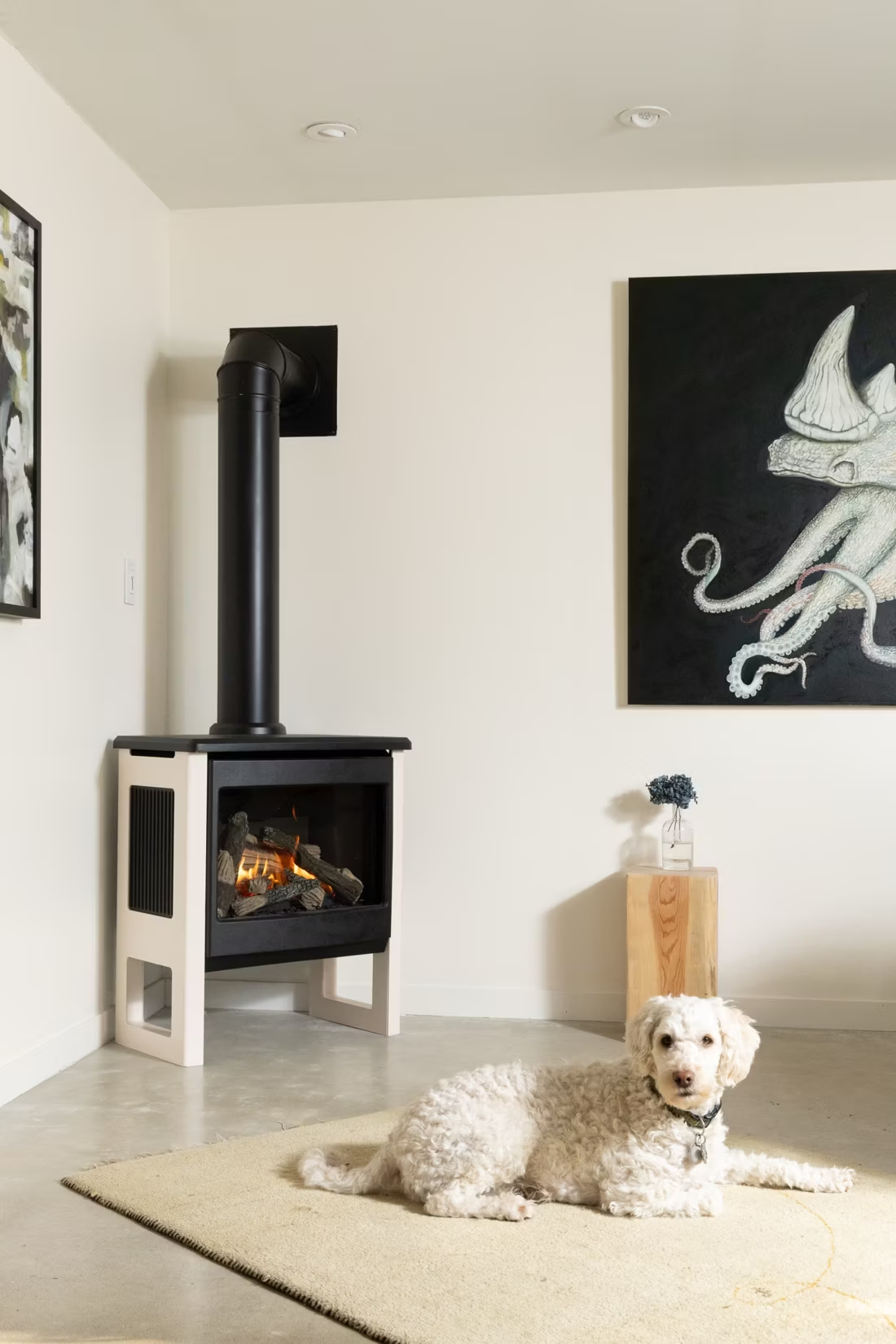
A gas fireplace is a fully built-in unit framed into a wall—the right choice for a basement remodel or an addition without an existing hearth. A gas insert slides into an existing masonry fireplace opening, which describes a large share of Elmwood Park's older bungalows, and uses the existing chimney (relined) as the vent path. A gas stove is a freestanding cabinet unit that sits on the floor, useful when there's no fireplace opening at all but you want a fixed focal point in a room. For most homes here with an unused wood fireplace, an insert is the straightforward upgrade.
Do I need a permit to install a gas fireplace in Elmwood Park?
Yes—new gas fireplace installations require a permit through the Village of Elmwood Park Building Department, and the gas line work itself must be done by a licensed gas-fitter, with Nicor Gas involved for any new service tap. Most established hearth retailers handle the permit application and inspection scheduling as part of the installation, which is one of the practical advantages of using a certified local dealer instead of a handyman install.
What's the difference between vented and vent-free gas fireplaces?
Vented (direct-vent) gas fireplaces pull combustion air from outside and exhaust it back outside through a sealed pipe—they're the standard choice and work in essentially any room size. Vent-free units burn gas directly into the room without external venting; Illinois permits them, but they come with strict room-volume and oxygen-depletion-sensor requirements, and they add moisture and combustion byproducts to indoor air. In a tightly built Elmwood Park bungalow with a smaller floor plan, a direct-vent unit is almost always the better fit—it delivers real heat without the room-size restrictions that come with vent-free.
How often should my gas fireplace be serviced?
Plan on an annual inspection, ideally before the heating season starts. A certified technician checks the burner, pilot assembly, venting, and gas connections, and cleans the glass and interior—a much shorter visit than a wood chimney sweep, but just as important for safety. Local gas appliance service providers typically charge $150 to $250 for this annual check, and it's worth scheduling before the first cold stretch rather than after a unit starts acting up.
Gas vs. wood—which is right for my home?
For most Elmwood Park homes, this isn't really a close call. Wood stoves need cordwood storage, a clear chimney, and realistic access to fuel—none of which fit well on a narrow Cook County lot, and there's no nearby national forest for cutting permits the way there is in more rural parts of Illinois. A small number of homeowners keep a decorative wood-burning fireplace for occasional use, but as a heating strategy, gas is the practical fit here: instant on-off operation, no ash or smoke, and reliable output through a long Chicago-area heating season. If your home already has an old masonry fireplace, converting it to a gas insert usually makes more sense than trying to make wood heat work.
Is my gas fireplace wasting gas?
If it was installed more than 15 years ago, probably. Older gas fireplaces keep a standing pilot light burning all the time, and that little flame can cost a couple hundred dollars a year. Newer models use pilot-on-demand ignition—the pilot lights only when you use the fireplace and goes out when you turn it off.
What's the difference between radiant and convective fireplace heat?
Most fireplaces are a thin metal box—they heat fine, but you rely on the fan to move the warmth into the room. Radiant models use a thick cast-ceramic firebox, about an inch and a quarter thick, that soaks up the fire's heat and radiates roughly 25–30% more warmth into the room with no fan running. If you watch TV in the same room or want heat in a power outage, radiant is worth asking about.
What is an in-home preview and do I need one?
It's a visit where a hearth professional measures your space, confirms the model you picked actually works in your home, and walks the specs—framing, gas line, venting, finish work—before anything is ordered. Some details you just can't know until you see the house. Never make a down payment without one; it's the single most-skipped step that burns buyers.
Does a fireplace add value to my home?
On average, a fireplace adds back to the home about the same amount you spent installing it. Add the monthly savings from heating the rooms you actually use instead of the whole house—often hundreds of dollars a year—and the value case is strong before you even count what a fire does for how your family uses the room.
Nearby Dealers
Hearth shops serving Elmwood Park and the surrounding area.
Fireside Collection By Fireplaces Plus
Find your gas fireplace in Elmwood Park.
Tell us a bit about your home and we'll match you with the right gas fireplace, insert, or stove—plus a free Project Guide & Parts List with the exact parts, vent kit, and a recommended local dealer for your Elmwood Park install.
Find Your Fireplace →