
Real Warmth, No Chimney Required.
Zone heat and real ambiance for Cook County's bungalows and two-flats—no chimney, no gas line, and often no permit at all. Find the right unit and a trusted local dealer near Elmwood Park.
Every Project Starts From One of These Five Situations
The easiest heating upgrade for Cook County's brick bungalows.
Elmwood Park sits just west of Chicago's city limits in Cook County, a dense grid of brick bungalows, two-flats, and postwar Cape Cods built mostly between the 1920s and 1950s. Winters here are genuinely cold—the average winter low runs around 19°F, with a long, demanding heating season in the same range as Madison, Wisconsin. What the housing stock rarely has is the masonry chimney or hearth infrastructure that wood or pellet heat depends on, and a lot of the two-flats, condos, and rentals here carry insurance policies or association rules that rule out open-flame solid-fuel appliances entirely.
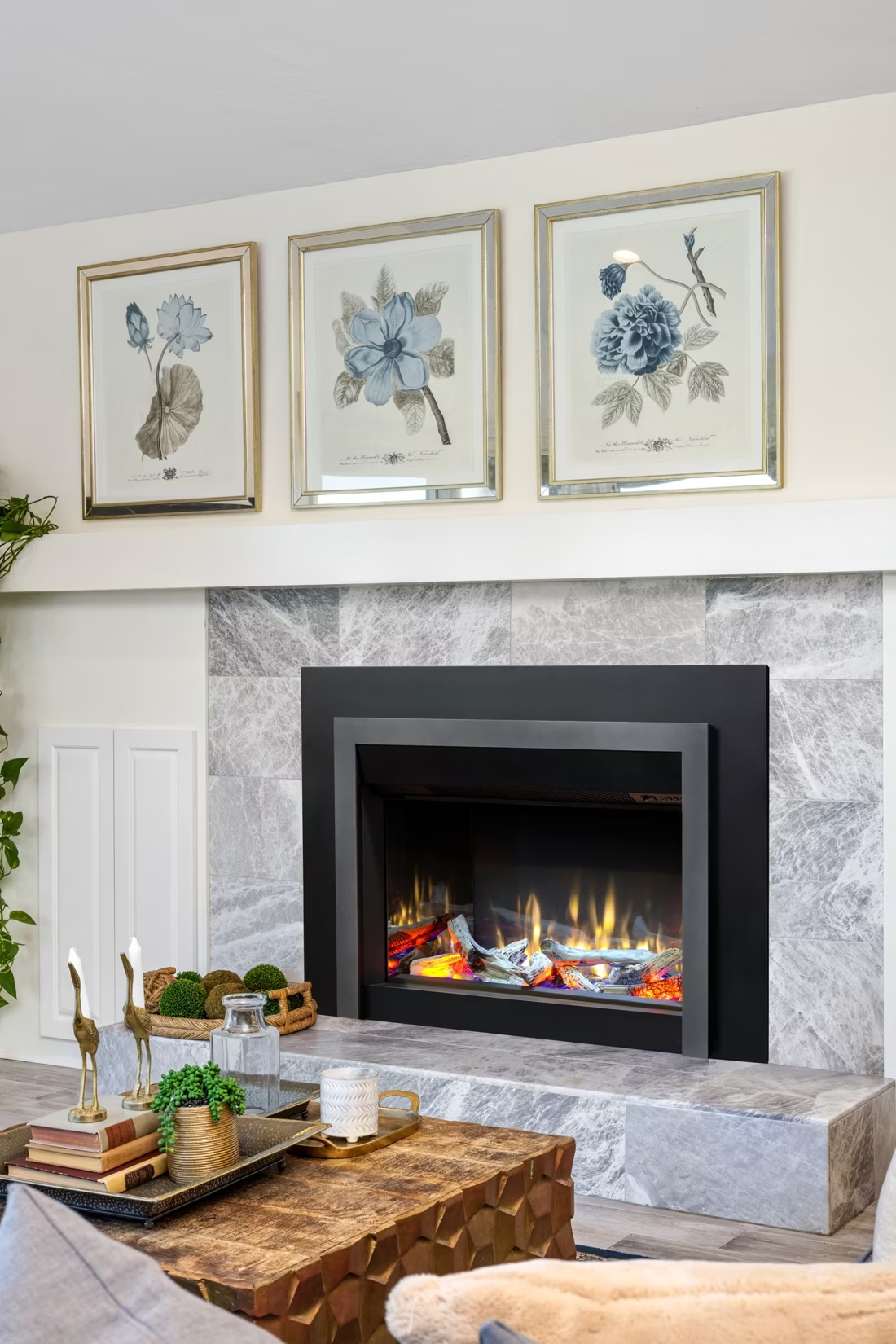
That's a big part of why electric fireplaces have become the default retrofit option in Elmwood Park: no venting, no chimney, no gas line, and often no permit at all if you're installing a plug-in unit. Running one is inexpensive, too—at Commonwealth Edison's residential rate of $0.1339 per kWh, a typical 1,500-watt unit costs roughly fifteen to twenty cents an hour to run, cheap zone heat for a den, basement, or bedroom while the furnace handles the rest of the house. For homes with an old, unused fireplace opening, a recessed electric insert is often the simplest way to bring that space back into use without touching the chimney at all.
Three steps. No salesperson until you're ready.
Tell us about your project
Your zip code, your situation, and the fuel you're leaning toward—or let the answers point you to one.
See what's actually available
The brands dealers within 100 miles genuinely carry—real options, never a catalog mirage.
Get your dealer & Project Guide
A trusted local dealer, plus the free Project Guide & Parts List that names every component of the job.
Frequently Asked Questions
How much does an electric fireplace installation cost in Elmwood Park?
A basic plug-in electric insert or freestanding unit runs $200 to $600 and needs nothing more than an existing outlet—most homeowners handle this without a contractor. A built-in linear wall unit or mantel package that requires a dedicated 20-amp circuit typically runs $1,000 to $2,500 once you factor in a licensed electrician, wall framing if you're recessing it, and any drywall patching. Retrofitting an electric insert into an old, unused masonry fireplace opening usually lands in the middle of that range, since the opening often needs minor surround work but no chimney modifications.
Do I need a permit to install an electric fireplace in Elmwood Park?
If you're plugging a freestanding or wall-mounted unit into an existing outlet, no permit is required—it's treated like any other appliance. If your installer needs to run a new dedicated circuit for a built-in unit, that electrical work requires a permit and inspection through the Village of Elmwood Park Building Department. Either way, it's a far simpler process than gas or wood installations, since there's no venting, gas line, or chimney work to inspect.
Why isn't wood heat common in Elmwood Park?
Most of Elmwood Park's housing was built between the 1920s and 1950s as brick bungalows and two-flats, and the majority of that stock was never fitted with a masonry chimney suited to a wood-burning stove or insert. Add to that the fact that many local two-flats, condos, and rental units carry association rules or insurance terms that prohibit open-flame solid-fuel appliances, and wood heat becomes impractical for most residents even though oak, hickory, walnut, and maple firewood are all available from suppliers around Cook County. A handful of detached single-family homes with existing masonry fireplaces are the exception, but electric and gas are the practical defaults here.
What's the difference between an electric fireplace and a gas fireplace for my Elmwood Park home?
A gas fireplace needs a gas line and either direct venting or a ventless setup, but it produces a real flame and meaningfully more heat—a good fit for homes already on natural gas service. An electric fireplace just needs an outlet or a simple dedicated circuit, uses an LED flame effect instead of real combustion, and is often the easier and cheaper choice for condos, rentals, or older two-flats where running a new gas line isn't practical. At ComEd's $0.1339 per kWh rate, a standard electric unit costs about fifteen to twenty-five cents an hour to run, which makes it an easy, low-commitment way to add ambiance and supplemental heat to a single room.
How much does it actually cost to run an electric fireplace here?
Most electric fireplaces draw around 1,500 watts on the heat setting. At Commonwealth Edison's residential rate of $0.1339 per kWh, that works out to roughly $0.20 an hour, or about $1.60 to $2.00 for an eight-hour evening of use. Running the flame effect alone, without the heater engaged, costs only a few cents an hour since it draws a fraction of the wattage. That makes electric one of the cheapest fireplace options to operate day to day, even if the installed cost is comparable to a small gas insert.
What's the best electric fireplace for an older Elmwood Park bungalow or two-flat?
If your home has an existing but unused masonry fireplace opening, a recessed linear electric insert is usually the cleanest fix—it slides into the existing opening without any chimney work. For homes without a fireplace at all, a wall-mounted linear unit works well in narrower two-flat living rooms where floor space is tight, while a freestanding stove-style unit is a good option for a basement or bedroom. Given the smaller room sizes typical of local bungalows, a 30- to 40-inch unit is usually plenty—a local dealer can size it to your actual square footage during a quick walkthrough.
Will an electric fireplace actually heat a room during a Chicago winter?
Most standard electric fireplaces put out around 5,000 to 9,000 BTU on a 1,500-watt heater, which comfortably warms an enclosed room up to roughly 400 square feet. With Elmwood Park's average winter low around 19°F and a long, demanding heating season comparable to Madison, Wisconsin, an electric unit works best as supplemental zone heat for a den, bedroom, or basement rather than a replacement for your furnace, especially in older homes with less wall insulation. Pair it with your existing central gas heat and it can meaningfully cut how often that furnace has to run in the room you actually use.
Where can I get an electric fireplace installed near Elmwood Park?
I match Elmwood Park homeowners with a trusted local dealer serving Cook County and the greater Chicago area—someone who will look at your actual wall, outlet, and circuit situation, handle any electrical permit through the Village of Elmwood Park Building Department if new wiring is needed, and make sure the unit is sized right for the room. You'll get a free Project Guide & Parts List spelling out exactly what's recommended for your space before you ever talk pricing.
Electric vs. pellet stove—why is pellet so uncommon in Elmwood Park?
Pellet stoves need exterior venting and a spot to store 40-pound bags of pellets, which is workable on a rural lot but difficult in the attached two-flats, condos, and small yards typical of Elmwood Park. Electric units sidestep both problems entirely—no venting, no fuel storage, just an outlet or a simple circuit. That's why pellet stays a niche option here even though regional suppliers like Indeck Energy Services, Lignetics, and Somerset Pellet Fuel serve the broader Chicago market for other applications.
Can I put a TV above my fireplace?
Yes—with an asterisk. Fireplaces are hot and TVs don't like heat. Either put a mantel between them to deflect rising warmth, or choose a fireplace with heat-management technology that creates a cool zone on the wall above—the wall stays around 125 degrees, barely warm, while the room still gets full heat. If you like clean lines and don't want a mantel, heat management is the answer.
Do electric fireplaces actually produce heat?
Yes—most put out around 4,800–5,000 BTUs from a standard outlet, which comfortably warms a bedroom, office, or den as a comfort-zone heater. What they won't do is carry a whole house the way wood, gas, or pellet can. Think of electric as ambiance-first with honest supplemental heat: flames on with no heat in July, flames plus warmth in January.
Can I install a fireplace myself?
If you're putting a fire in your house on purpose, it's best to work with an expert. Unless you're genuinely experienced in framing, gas line, vent pipe, and the national code on clearances to combustibles, have a professional do it—and ideally the same company that sells you the fireplace, so warranty, service, and liability all live under one roof.
How much should I budget for a fireplace?
For an average home—covering the fireplace, the vent pipe, and basic installation—a budget between $3,900 and $5,500 gives you a lot of options across wood, gas, and pellet. By the time you add finish work, gas line, and electrical, the average complete installation lands between $5,000 and $12,000 all-in. In a remodel or new build, a good rule is to put about 2.5% of the total project cost toward the fireplace.
Nearby Dealers
Hearth shops serving Elmwood Park and the surrounding area.
Fireside Collection By Fireplaces Plus
Electric Service in Elmwood Park
An electric fireplace's heater draws about 1,500 watts—pennies per hour at local rates.
Commonwealth Edison Co
Find your electric fireplace in Elmwood Park.
Tell us about your room and we'll match you with the right electric fireplace or insert—plus a trusted local dealer who can get it installed correctly.
Find Your Fireplace →