
Consistent, thermostat-controlled heat for Douglas County homes.
From Tuscola to Arthur to Villa Grove, pellet stoves give east-central Illinois farmhouses steady, low-maintenance heat without the wood-splitting. Find the right unit and connect with a trusted local dealer.
Every Project Starts From One of These Five Situations
Hands-off heat for a flat, hard-working prairie county.
Douglas County sits on the flat farmland of east-central Illinois, where the county seat of Tuscola, the Amish and Mennonite community around Arthur, and smaller towns like Villa Grove, Camargo, and Newman all see real winter—a heating season on par with places like Peoria, and average lows near 18°F, with occasional stretches colder than that when an Alberta clipper rolls through. It's a Zone 5A climate, colder than most of the Midwest imagines when they picture Illinois, but nowhere near the extremes of a place like Madison, WI. There's no air quality non-attainment designation here and no winter burning bans to plan around, which makes pellet heat an easy, uncomplicated choice for local homeowners.
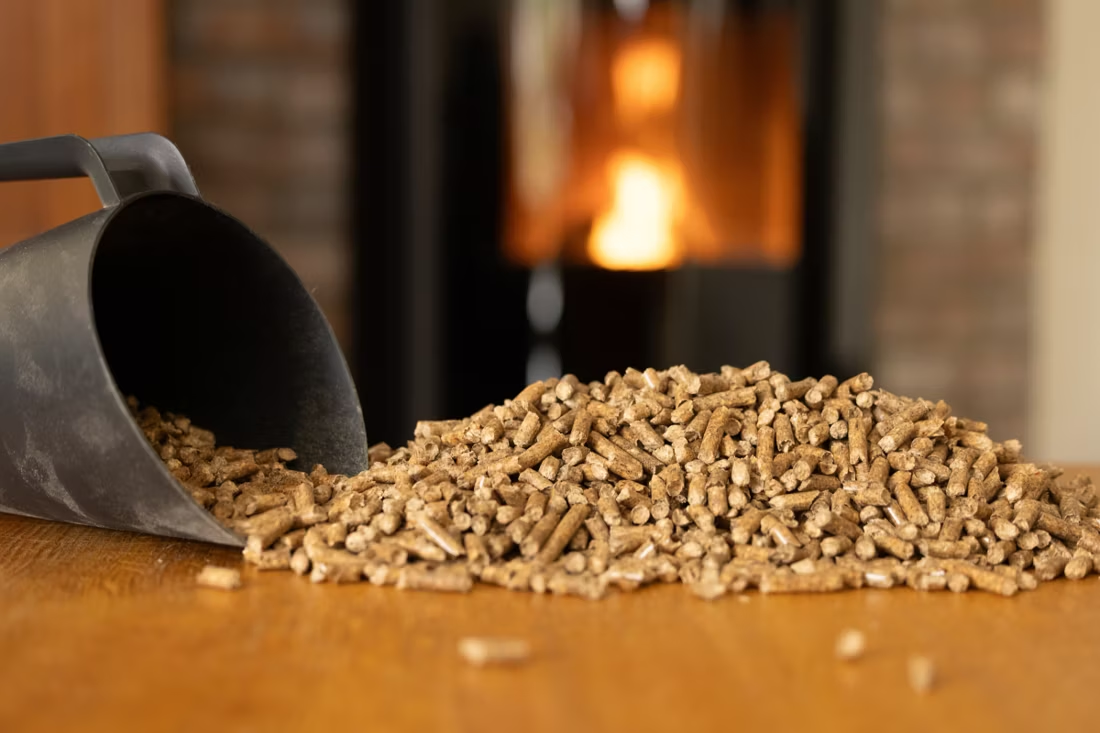
The oak, hickory, walnut, and maple that grow in the county's river-bottom woodlots along the Embarras and Kaskaskia tributaries are the same hardwoods that feed regional pellet production—and Illinois-based Indeck Energy Services along with Lignetics and Somerset Pellet Fuel keep bagged hardwood pellets reasonably accessible through farm supply and hardware stores in Tuscola and Villa Grove. One local nuance worth knowing: Arthur's sizable Old Order Amish and Mennonite population often avoids electricity-dependent appliances, so pellet stoves—which need power to run the auger and blower—tend to be more common among the county's non-Amish households, while off-grid Amish farms typically stick with wood. For everyone else, a pellet stove's thermostat control and long burn-to-refill cycle make it a practical fit for busy farm households who want steady heat without tending a fire every few hours.
Three steps. No salesperson until you're ready.
Tell us about your project
Your zip code, your situation, and the fuel you're leaning toward—or let the answers point you to one.
See what's actually available
The brands dealers within 100 miles genuinely carry—real options, never a catalog mirage.
Get your dealer & Project Guide
A trusted local dealer, plus the free Project Guide & Parts List that names every component of the job.
Frequently Asked Questions
How much does a pellet stove installation cost in Douglas County?
Most pellet stove and insert installations in Douglas County run in the $3,500 to $7,000 range, depending on the unit, whether it's a freestanding stove or an insert going into an existing fireplace, and whether new venting has to be run through an exterior wall. Freestanding stoves in a mobile home or ranch-style farmhouse without an existing chimney tend to land on the lower end since venting is simpler. Inserts going into an older masonry fireplace in one of Tuscola's or Villa Grove's older homes can run higher if the flue needs a liner. A local dealer will give you a firm number after seeing your home.
Where can I buy pellets locally in Douglas County?
Bagged hardwood pellets from regional producers—Indeck Energy Services, Lignetics, and Somerset Pellet Fuel are the three brands most commonly stocked in this part of Illinois—are typically available through farm supply and hardware retailers in Tuscola and Villa Grove, with seasonal availability at some Arthur-area stores as well. Buying a full winter's supply (usually 2 to 3 tons for a primary-heat home) early in fall, before the coldest stretch drives up demand, is the standard move for Douglas County pellet burners. Dry, covered storage in a garage or outbuilding keeps pellets from absorbing moisture, which is the main thing that ruins a bag before it ever reaches the hopper.
Will a pellet stove work if the power goes out?
No—this is the one honest tradeoff to know before buying. Pellet stoves rely on an electric auger to feed fuel and a blower to distribute heat, so a power outage shuts the unit down. In rural Douglas County, where ice storms and summer derechos occasionally knock out power for a day or more, that matters. Some homeowners pair a pellet stove with a small battery backup or generator sized to run just the stove's electronics, which keeps the heat going through most outages. If backup heat during outages is the top priority for your household, a wood stove is worth comparing against a pellet unit—your local dealer can walk through both.
What size pellet stove do I need for my home?
Sizing depends on square footage, ceiling height, and how open your floor plan is—a common consideration in the older farmhouses scattered around Tuscola, Arthur, and Camargo, many of which have less insulation than newer construction. As a rough guide: smaller stoves (up to 1,200 sq ft) suit a single large room or a compact ranch home, mid-size units (1,200–2,000 sq ft) cover most Douglas County main living areas, and larger stoves (2,000+ sq ft) can serve as primary heat for a bigger farmhouse. Homes with drafty older windows or minimal attic insulation should generally size up rather than down. A local dealer will size your specific home during an in-person visit rather than going off square footage alone.
Do I need a permit to install a pellet stove in Douglas County?
Most jurisdictions require a building permit for a new pellet stove installation, particularly when it involves new venting through an exterior wall or roof, and Douglas County is no exception—check with the county building department based out of the courthouse in Tuscola, or your city office if you're inside Tuscola, Villa Grove, or Arthur city limits. Most established local dealers handle the permit paperwork as part of the installation, so it's rarely something homeowners have to manage themselves. Pellet stoves also need to meet current EPA emissions standards, which any legitimate dealer will already have covered in the models they sell.
How often does a pellet stove need cleaning and maintenance?
Plan on emptying the ash pan every few days during regular winter use and doing a deeper clean of the burn pot, hopper, and exhaust venting roughly once a month during the heating season. A full annual service—checking the auger motor, blower, gaskets, and venting—is worth scheduling every fall before the cold really sets in, similar to how you'd service a furnace. Pellet stoves generate far less creosote than wood stoves, so the maintenance burden is lighter, but skipping the exhaust vent cleaning is the most common cause of reduced heat output and nuisance shutdowns reported by Douglas County pellet stove owners.
Is pellet stove burning restricted for air quality reasons in Douglas County?
No. Douglas County has no air quality non-attainment designation and no winter burning curtailment periods, unlike some western counties dealing with inversion or wildfire smoke issues. That means you can run a pellet stove on the coldest nights of the year without checking an advisory first—one less thing to plan around compared to homeowners in more air-quality-restricted parts of the country.
Pellet stove vs. wood stove—which is right for my Douglas County home?
Wood stoves work without electricity, burn the oak, hickory, walnut, and maple that grow locally along the county's river bottoms, and appeal to households—including many in the Arthur area—who prefer not to depend on powered appliances. Pellet stoves trade that off-grid resilience for convenience: load the hopper, set the thermostat, and the stove regulates itself for a day or more without tending, with far less ash and no splitting or stacking cordwood. For a household with reliable power and a preference for hands-off heat, pellet wins. For a household prioritizing storm resilience or an off-grid lifestyle, wood is the better fit. Local dealers carry both and can walk through the tradeoffs based on your specific home.
What pellet stove brands are available through local Douglas County dealers?
Availability varies by dealer, but Douglas County homeowners typically have access to established national pellet stove manufacturers through hearth retailers in the Champaign-Urbana and Decatur trade areas that serve this part of the county, alongside regional hardwood pellet fuel from Indeck Energy Services, Lignetics, and Somerset Pellet Fuel to burn in them. Rather than shopping a brand name first, it's worth starting with a trusted local dealer who can tell you which models they actually stock, service, and can get parts for quickly—that matters more long-term than the badge on the stove.
Why is my open fireplace making my house colder?
Open fireplaces suck—literally. As the fire burns, it consumes air your furnace already paid to heat and pulls it out through the chimney, so the house is actually colder after the fire goes out than before you lit it. An insert fixes this: it seals the chimney, puts fixed glass across the front, and turns that hole in your house into a real heat source.
Can a pellet stove heat a whole house?
It genuinely can. I burned a pellet stove as my only heat source for years after a furnace died, and it kept the entire house warm. Pellets feed automatically from a hopper, so you get wood-heat economics with thermostat-style control. Two honest caveats: it needs weekly cleaning during the season, and most models need electricity to run—ask about battery backup if outages are a concern.
Can a fireplace actually lower my heating bill?
Yes—by creating a comfort zone. A furnace heats every square foot of the house just to warm the one room you're in; a gas fireplace on low burns roughly a sixth of the gas a typical furnace does. Set the furnace around 55–60 degrees as a baseline, then heat the rooms your family actually uses. Families who heat this way commonly save $20–$60 a month.
What is an in-home preview and do I need one?
It's a visit where a hearth professional measures your space, confirms the model you picked actually works in your home, and walks the specs—framing, gas line, venting, finish work—before anything is ordered. Some details you just can't know until you see the house. Never make a down payment without one; it's the single most-skipped step that burns buyers.
Pellet Brands Stocked Around Douglas County
Manufacturers will point you to the nearest stocking dealer.
Find your pellet stove in Douglas County.
Tell us a bit about your home and we'll match you with the right pellet stove or insert, plus a free Project Guide & Parts List with the exact vent kit and parts you'll need—and a trusted local dealer to install it.
Find Your Fireplace →