
Add real warmth without new venting in Douglas County.
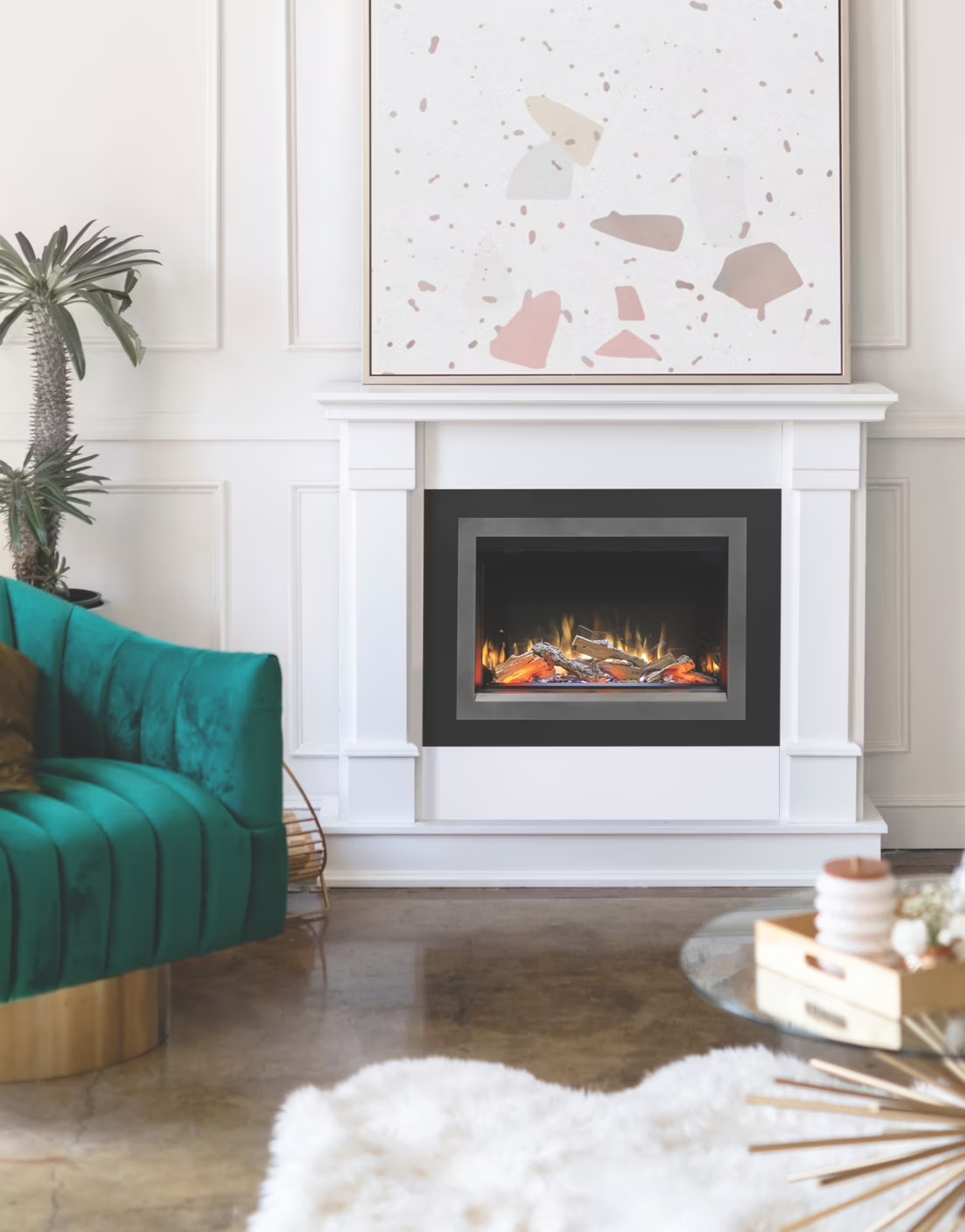
For farmhouses and ranch homes across Tuscola, Villa Grove, Arthur, and Newman, an electric fireplace adds zone heat and ambiance with no chimney, no gas line, and no combustion to permit. Find the right unit and connect with a trusted local dealer.
Every Project Starts From One of These Five Situations
Clean, flexible heat for a county built on farmhouses.
Douglas County sits in the flat farmland of east-central Illinois, with about 13,650 residents spread across Tuscola (the county seat), Villa Grove, Camargo, Newman, and the edge of Arthur's Amish country. Climate zone 5A here brings roughly 5,635 heating degree days and average winter lows around 18°F—colder than St. Louis, but nowhere near the brutal stretch a place like Bismarck, ND pulls through each winter. Still, it's cold enough that a lot of these older farmhouses and mid-century ranch homes run cold in back bedrooms, sunrooms, and finished basements that the furnace never quite reaches.
With no air quality restrictions on the books in Douglas County, the choice between wood, gas, and electric heat here comes down to cost, convenience, and what a given room can actually accommodate—not regulation. Electric fireplaces have carved out a real niche for exactly that reason: no masonry chimney to build, no gas line to run, and no permit headaches for a plug-in unit. For rental properties in Tuscola and Villa Grove, finished basements, and additions where running venting isn't practical, electric is often the fastest and least invasive way to add real supplemental heat and the look of a fire.
Three steps. No salesperson until you're ready.
Tell us about your project
Your zip code, your situation, and the fuel you're leaning toward—or let the answers point you to one.
See what's actually available
The brands dealers within 100 miles genuinely carry—real options, never a catalog mirage.
Get your dealer & Project Guide
A trusted local dealer, plus the free Project Guide & Parts List that names every component of the job.
Frequently Asked Questions
How much does an electric fireplace installation cost in Douglas County?
A plug-in electric insert or freestanding unit that uses an existing outlet typically runs $300 to $900 installed, including the unit itself and any minor trim work to fit an existing firebox opening. Built-in wall units or mantel packages that require a dedicated 20-amp circuit run higher—usually $800 to $1,800—because you're paying an electrician to run new wiring, not just mount a box. Homes without an accessible outlet near the install location, or basement installs that require running a circuit down from the panel, land at the top of that range. Local dealers can tell you within a few minutes of looking at your space which category you're in.
Do I need a permit to install an electric fireplace in Douglas County?
A simple plug-in unit generally doesn't require a permit since there's no venting, gas line, or structural change involved. Where a permit does come into play is the electrical work: if you're adding a dedicated circuit for a built-in unit, that circuit needs to be pulled and inspected under Illinois electrical code, and your electrician will typically file for that through the local building department—Tuscola and Villa Grove each handle their own permitting inside city limits, while unincorporated parts of the county go through the Douglas County Zoning and Building Office. Any licensed electrician doing the circuit work should handle this as a matter of course.
Will an electric fireplace actually heat a room in Douglas County's winters?
Most electric fireplace inserts put out 5,000 to 10,000 BTU on the heat setting, which is enough to noticeably warm a single room—a bedroom, sunroom, or finished basement—but not enough to replace a furnace when the county's average winter low sits around 18°F. Think of it as targeted, supplemental heat: it's the right tool for a room the central system struggles to reach, or for taking the edge off a cold morning before the furnace catches up. If you're trying to heat an entire drafty farmhouse, electric alone isn't going to get there—that's a job for a properly sized wood stove or a gas system.
Electric vs. wood—which makes more sense for my Douglas County home?
Wood still has real staying power in this county—oak, hickory, walnut, and maple are all common locally, firewood is easy to source from farm ground and windbreaks, and there's no air quality restriction pushing anyone away from burning. Wood also keeps working when the power goes out, which matters during the ice storms that occasionally roll through east-central Illinois. Electric wins on convenience and low upfront cost: no chimney, no ash, no wood storage, and it's the practical choice for renters in Tuscola or Villa Grove, condos, or any room where running a flue simply isn't in the cards. A lot of households here end up with both—wood for the shop or living room, electric for a bedroom or basement.
What's the difference between an electric insert, a built-in wall unit, and a freestanding electric stove?
An electric insert is sized to slide into an existing masonry or gas fireplace opening, giving you real heat output and flame effect out of a fireplace you already have but rarely use. A built-in wall unit is framed into new construction or a remodel, similar to how you'd frame a gas fireplace, and usually needs that dedicated circuit. A freestanding electric stove sits on the floor like a wood stove but plugs into a standard outlet—no framing, no circuit work, easiest of the three to install in an older Douglas County farmhouse where you don't want to open up a wall.
What happens to my electric fireplace during a power outage?
It stops working—electric units have no battery backup and no fuel supply beyond the grid, which is worth knowing given how storms occasionally take down power in rural parts of the county for a day or more. If backup heat during an outage matters to you, an electric fireplace should be a supplement, not your only plan; a wood stove that burns local oak or hickory, or a battery-backed gas unit, is the better choice for a home that needs heat when Ameren Illinois service is interrupted.
How much does it cost to run an electric fireplace day to day?
Most electric fireplace inserts draw around 1,500 watts on the heat setting. At typical Ameren Illinois residential rates, running one for a few hours an evening costs somewhere in the range of a few dollars a month—noticeably cheaper than heating an entire farmhouse with propane or running the furnace harder to cover a cold back room. On flame-only mode with the heater off, the draw is minimal, which is why a lot of Douglas County homeowners run these units for ambiance well outside heating season without worrying about the electric bill.
Can I put an electric fireplace into an old farmhouse fireplace opening?
Often, yes. If you have an existing masonry fireplace that's gone unused—common in older Douglas County farmhouses around Newman and Camargo—an electric insert can slide into that opening and give you heat and flame effect without touching the chimney or masonry at all. The main thing a local dealer will check is the opening's exact dimensions, since inserts come in fairly specific size ranges, and whether there's an outlet already inside or nearby the firebox. If not, running one is a small job for an electrician rather than a reason to rule out the project.
Where can I find a local dealer who installs electric fireplaces in Douglas County?
This is exactly what Find My Fireplace exists for—I match Douglas County homeowners with a trusted local dealer who actually installs and stands behind the units they carry, rather than sending you to a big-box shelf to guess. Tell us about your room, your existing opening (if any), and whether you're leaning toward a plug-in insert or a built-in unit that needs new wiring, and we'll connect you with a dealer serving the Tuscola–Villa Grove–Arthur area along with a free Project Guide & Parts List spelling out what your specific project needs.
Can I put a TV above my fireplace?
Yes—with an asterisk. Fireplaces are hot and TVs don't like heat. Either put a mantel between them to deflect rising warmth, or choose a fireplace with heat-management technology that creates a cool zone on the wall above—the wall stays around 125 degrees, barely warm, while the room still gets full heat. If you like clean lines and don't want a mantel, heat management is the answer.
Do electric fireplaces actually produce heat?
Yes—most put out around 4,800–5,000 BTUs from a standard outlet, which comfortably warms a bedroom, office, or den as a comfort-zone heater. What they won't do is carry a whole house the way wood, gas, or pellet can. Think of electric as ambiance-first with honest supplemental heat: flames on with no heat in July, flames plus warmth in January.
Can a fireplace actually lower my heating bill?
Yes—by creating a comfort zone. A furnace heats every square foot of the house just to warm the one room you're in; a gas fireplace on low burns roughly a sixth of the gas a typical furnace does. Set the furnace around 55–60 degrees as a baseline, then heat the rooms your family actually uses. Families who heat this way commonly save $20–$60 a month.
What is an in-home preview and do I need one?
It's a visit where a hearth professional measures your space, confirms the model you picked actually works in your home, and walks the specs—framing, gas line, venting, finish work—before anything is ordered. Some details you just can't know until you see the house. Never make a down payment without one; it's the single most-skipped step that burns buyers.
Find your electric fireplace in Douglas County.
Tell us about your room and your home, and we'll match you with a trusted local Douglas County dealer and send over a free Project Guide & Parts List—the exact parts, including any wiring needs, for your specific install.
Find Your Fireplace →