
Keep Your Family Warm and Safe—No Matter What
Chicago Heights winters get genuinely cold, but almost nobody heats with wood here. For the homeowners who still want it, we'll connect you with a local dealer who can do it right.
Every Project Starts From One of These Five Situations
Cold enough for wood heat—but gas and electric won this suburb long ago.
Chicago Heights sits about 30 miles south of the Loop in Cook County, at 651 feet elevation, with average winter lows near 15°F and a heating season about as demanding as a long, hard winter—cold enough to put it in the same range as parts of Madison WI or Fargo ND. In a lot of places with numbers like that, wood heat is a fixture. Here, it isn't. Lots are small, homes are close together, and natural gas infrastructure reaches nearly every block, which has made gas the default heating and supplemental-heat choice for generations of Chicago Heights homeowners.
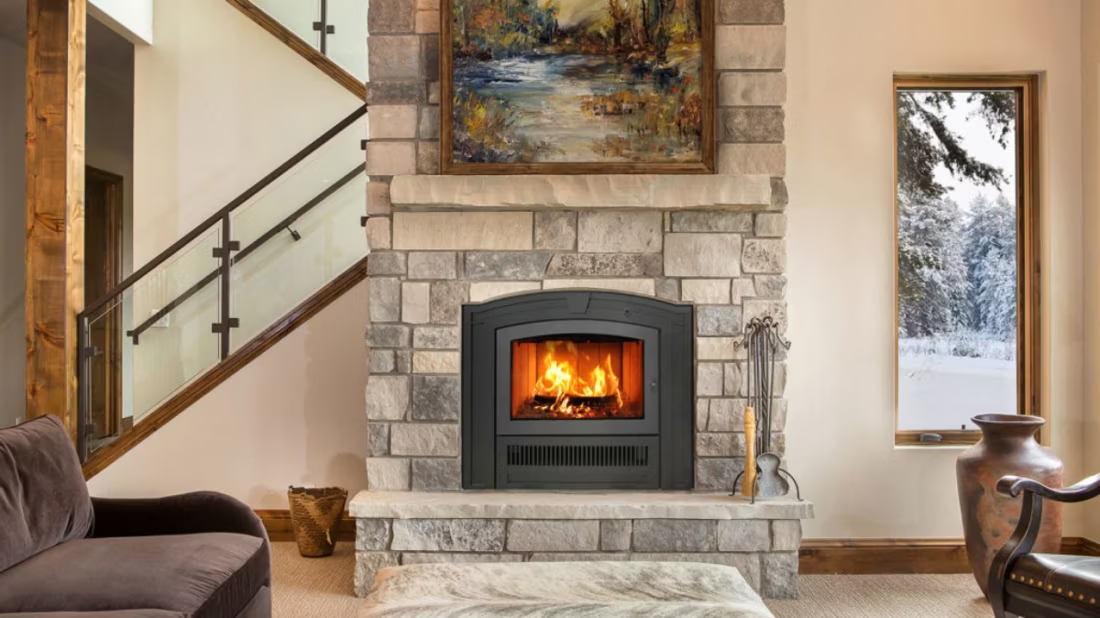
That's why wood is flagged as not applicable for this city rather than standard—not because the climate is wrong for it, but because the local market, permitting norms, and housing stock weren't built around it the way they were in forested, rural parts of the Midwest. That said, wood heat isn't off the table. A handful of homeowners here install a certified EPA wood stove or insert for backup heat during ComEd outages, for the ambiance of a real fire, or because they grew up with wood heat somewhere else. Local hardwood—oak, hickory, walnut, and maple—is widely available from area firewood suppliers, and a good hearth dealer can still size, vent, and permit a wood-burning unit correctly for an older Chicago Heights home.
Three steps. No salesperson until you're ready.
Tell us about your project
Your zip code, your situation, and the fuel you're leaning toward—or let the answers point you to one.
See what's actually available
The brands dealers within 100 miles genuinely carry—real options, never a catalog mirage.
Get your dealer & Project Guide
A trusted local dealer, plus the free Project Guide & Parts List that names every component of the job.
Frequently Asked Questions
Is wood heat common in Chicago Heights?
No—it's the exception rather than the rule. Chicago Heights has full natural gas coverage and stable electric service through ComEd, so gas fireplaces and inserts, along with electric units, make up the vast majority of hearth installations in this area. Wood stoves and wood-burning fireplaces show up occasionally, usually in older homes with existing masonry chimneys or in households prioritizing backup heat, but you won't find the density of wood-heat culture you'd see in a rural, forested part of the Midwest or in a place like Duluth MN.
How much does a wood stove installation cost in Chicago Heights?
Because there isn't a well-established wood stove market locally, pricing data specific to Chicago Heights is thin. Across the broader Chicago metro, a wood stove installation—unit, hearth pad, and Class A chimney venting—typically runs $3,500 to $8,500, with the higher end reflecting homes that need new roof penetrations or full chimney construction rather than a retrofit into an existing masonry flue. A local dealer can give you a firm number after seeing your home, since venting is usually the biggest cost swing.
Where can I get firewood in Chicago Heights?
There's no national forest or BLM land near Chicago Heights, so self-cut firewood permits—common out West—aren't part of the picture here. Firewood is purchased by the cord from local and regional suppliers serving Cook and Will counties, with oak, hickory, and maple the most commonly sold species given the hardwood forests that once covered this part of Illinois. Expect to source firewood commercially rather than cut your own.
Do I need a permit to install a wood stove in Chicago Heights?
Yes—any permanent wood-burning appliance installation typically requires a building permit through your local jurisdiction, and Chicago Heights is no exception. Because wood stove installs are infrequent here compared to gas conversions, it's worth confirming current requirements directly with the city's building department before work starts. Air quality isn't a local concern the way it is in some Western cities with winter inversions—Chicago Heights has no air quality non-attainment designation—so there aren't seasonal burn bans to plan around, just standard code compliance and inspection.
What's the best wood stove for Chicago Heights's winters?
With average winter lows around 15°F, a mid-sized EPA-certified stove from a mainstream brand like Pacific Energy, Regency, or Jøtul will comfortably heat a supplemental zone or a smaller home. Given that most Chicago Heights installations are for backup heat rather than primary heat, a non-catalytic stove is often the simpler, lower-maintenance choice—catalytic models from brands like Blaze King make more sense in homes actually planning to burn wood as a daily heat source through a full Midwest winter.
Should I get a wood stove or a wood insert?
Chicago Heights has a good number of older homes—many built in the early-to-mid 1900s—with existing masonry fireplaces that were designed for wood but rarely used efficiently. For those homes, a wood insert is usually the better call: it drops into the existing firebox, uses the chimney you already have, and turns a decorative fireplace into a real heat source. A freestanding wood stove makes more sense if you don't have an existing chimney and are starting from scratch, though that adds the cost of full Class A venting.
Why is gas so much more common than wood in this area?
Natural gas infrastructure reaches nearly every home in Chicago Heights, and gas fireplaces and inserts deliver instant, thermostat-controlled heat without firewood storage, ash cleanup, or chimney maintenance—a much easier fit for the smaller lots and attached housing common in this suburb. Wood requires cordwood storage, seasoning time, and more hands-on upkeep, which is a harder sell in a dense suburban setting than it is in a rural area where firewood is essentially free and abundant.
Are there any local restrictions on burning wood?
Chicago Heights has no air quality non-attainment designation and no winter inversion issues, so there aren't the seasonal wood-burning curtailment days you'd see in a basin city out West. That said, individual Cook County municipalities sometimes have their own nuisance-smoke ordinances or restrictions on outdoor wood burning, so it's worth a quick check with the city before installing an outdoor unit specifically. Indoor EPA-certified stoves and inserts generally aren't affected.
Wood vs. gas—which makes more sense for a Chicago Heights home?
For the vast majority of homeowners here, gas is the more practical choice: it's instant, clean, doesn't require firewood storage, and matches the infrastructure already built into the area. Wood makes sense in narrower cases—an existing masonry fireplace you want to actually use, a desire for heat that works without electricity during a ComEd outage, or simply wanting the experience of a real wood fire. Pellet stoves, for reference, are similarly uncommon here for the same infrastructure reasons as wood. If you're weighing options, a local dealer can walk through what's realistic for your specific house.
Why is a fireplace insert so efficient?
An insert does two things: it seals the chimney completely, so you stop losing air you already paid to heat, and it radiates warmth into the room through the firebox and glass. Most add a heat-exchange fan that pulls cool room air underneath, wraps it around the hot firebox, and pushes it back out warm. Your home is more efficient before you've even lit the first fire.
Why won't my new wood stove get going like my old one?
New wood stoves are 70%+ efficient, so far less heat goes up the flue—which also means less draft to get a fire established. The rule: build a genuinely hot fire for about 45 minutes before you choke it down. Skip that and you get smoke in the room, creosote in the chimney, and a fire that never takes off. Most performance complaints trace straight back to this.
Does a fireplace add value to my home?
On average, a fireplace adds back to the home about the same amount you spent installing it. Add the monthly savings from heating the rooms you actually use instead of the whole house—often hundreds of dollars a year—and the value case is strong before you even count what a fire does for how your family uses the room.
Can a fireplace actually lower my heating bill?
Yes—by creating a comfort zone. A furnace heats every square foot of the house just to warm the one room you're in; a gas fireplace on low burns roughly a sixth of the gas a typical furnace does. Set the furnace around 55–60 degrees as a baseline, then heat the rooms your family actually uses. Families who heat this way commonly save $20–$60 a month.
Nearby Dealers
Hearth shops serving Chicago Heights and the surrounding area.
Fireside Collection By Fireplaces Plus
Get your Chicago Heights wood project planned right.
Tell us about your home and we'll send a free Project Guide & Parts List—the stove, venting, and parts your project needs—and match you with a trusted local dealer who actually installs wood-burning appliances in this area.
Find Your Fireplace →