
See if a pellet stove actually makes sense for your Chatham home.
Chatham is natural-gas country first—but a pellet stove still has a role for backup heat, ambiance, or a sunroom that central HVAC never quite reaches. We'll help you figure out if it's worth it.
Every Project Starts From One of These Five Situations
In Chatham, pellet is the exception, not the default.
Chatham sits just south of Springfield in Sangamon County, at about 600 feet of elevation with a winter heating load that adds up to a solid, cold season—cold enough for a real winter, but nowhere near the extremes of a place like Fargo, ND or Duluth, MN. Ameren Illinois provides both electric and natural gas service through most of the village, and that gas infrastructure is a big reason pellet stoves never became common here the way they have in more rural, off-grid-leaning parts of the Midwest. When a house is already piped for gas, a gas insert or fireplace is almost always the simpler, lower-maintenance upgrade.
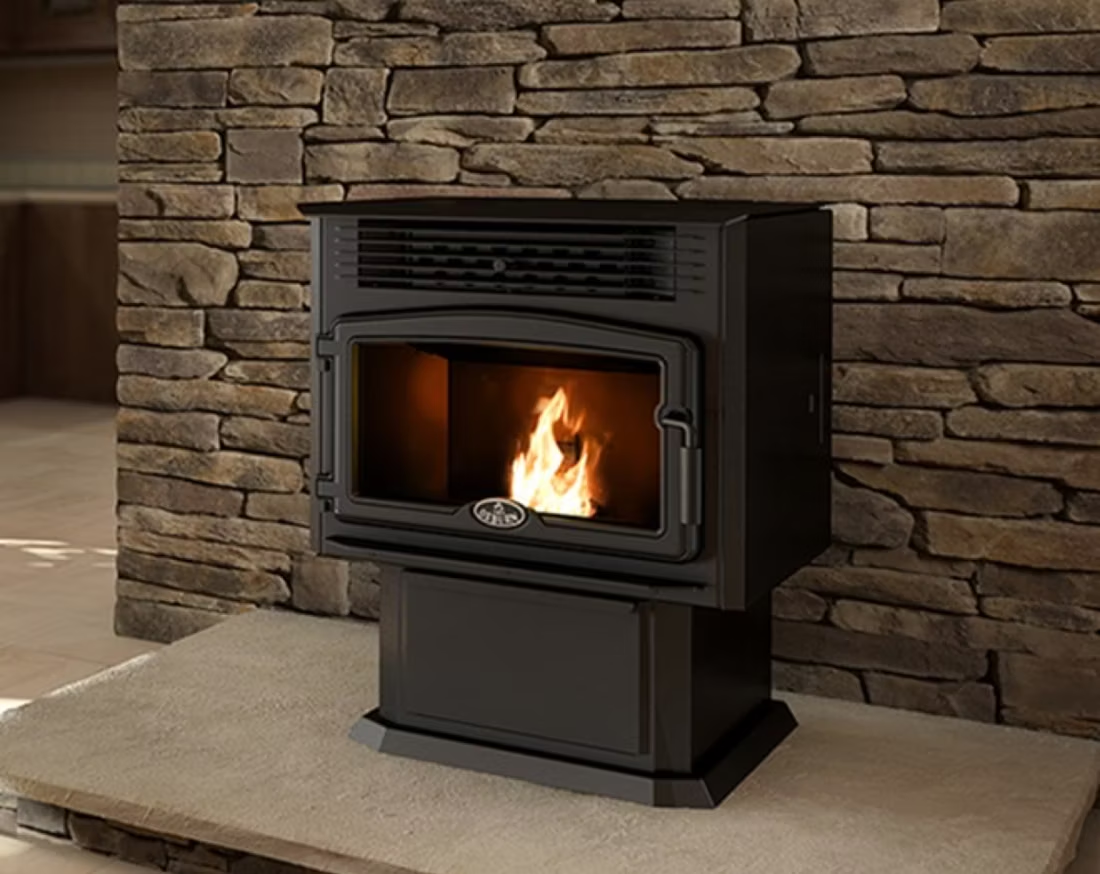
That said, pellet appliances aren't off the table. A handful of Chatham homeowners install a freestanding pellet stove for a detached garage, a sunroom addition that the furnace ductwork never reached, or as a hedge against the kind of multi-day outage that Ameren Illinois, the City of Springfield utility, or the local rural electric cooperative occasionally see during ice storms. If that's your situation, regional suppliers like Indeck Energy Services, Lignetics, and Somerset Pellet Fuel keep the central Illinois pellet market stocked, and a trusted local dealer can tell you honestly whether it's the right call for your house.
Three steps. No salesperson until you're ready.
Tell us about your project
Your zip code, your situation, and the fuel you're leaning toward—or let the answers point you to one.
See what's actually available
The brands dealers within 100 miles genuinely carry—real options, never a catalog mirage.
Get your dealer & Project Guide
A trusted local dealer, plus the free Project Guide & Parts List that names every component of the job.
Frequently Asked Questions
Is a pellet stove a good fit for a house in Chatham?
For most Chatham homes, probably not as a primary heat source—natural gas is widely available through Ameren Illinois, and a gas insert or furnace does the job with less hands-on maintenance than a pellet appliance. Where pellet stoves do make sense here is as supplemental heat: a detached workshop, a bonus room over a garage, or a household that wants heat that keeps running (with a battery backup) during an ice-storm outage from the local rural electric co-op. Be honest with yourself about how often you'll actually load the hopper and empty the ash pan before committing.
What does a pellet stove installation typically cost?
A freestanding pellet stove install generally runs $3,000 to $6,000 in this part of central Illinois, depending on the unit and whether you're venting through an existing chimney or running new sidewall venting. That's usually more than a comparable direct-vent gas insert costs to run day to day, since pellets also carry an ongoing fuel cost on top of the appliance—which is part of why gas remains the more popular choice for homes already served by Ameren Illinois' gas lines.
Where do Chatham homeowners buy pellets?
Because pellet stoves are uncommon here, you won't find pallets of fuel stacked at every hardware store the way you might in New England. Regional producers like Indeck Energy Services, Lignetics, and Somerset Pellet Fuel supply dealers throughout central Illinois, and most owners either order a season's supply in fall or buy a few bags at a time from a Springfield-area hearth shop. Expect prices in the $230–$280 per ton range for a decent hardwood or softwood blend, with early-fall pre-buys sometimes running a bit cheaper.
Do I need a permit to install a pellet stove in Chatham?
Yes—new hearth appliance installations typically require a building permit through the Village of Chatham, covering the appliance placement, clearances, and venting termination. Unlike a wood stove, there's no cutting permit to worry about since you're buying bagged fuel rather than harvesting it, and Sangamon County has little public forest land anyway. A local installer who's pulled permits in Chatham before can usually handle the paperwork as part of the install.
Will a pellet stove keep working if the power goes out?
Only with a backup power source. Pellet stoves rely on an electric auger to feed fuel and a blower to distribute heat, so a standard unit goes cold the moment the power drops—whether you're served by Ameren Illinois, the City of Springfield utility, or a rural electric cooperative. Homeowners who want pellet heat specifically as storm-outage insurance usually pair the stove with a small battery backup or portable generator sized to run the auger and blower motor, which draw relatively little wattage.
Pellet stove vs. gas fireplace—which makes more sense here?
For a Chatham household on the natural gas grid, a gas fireplace or insert is usually the more practical choice: no fuel to store, no ash to empty, and instant heat at the flip of a switch or thermostat call. A pellet stove burns cleaner than cordwood and can run without a gas line, which matters for a detached structure or a home relying on propane, but it still needs electricity to operate and periodic hopper loading. If your house already has gas service, that's typically the deciding factor.
Pellet stove vs. wood stove—is either common in Chatham?
Neither is especially common here, honestly. Sangamon County is mostly farmland and subdivisions rather than forest, so there's no local Forest Service cutting-permit culture the way there is in wooded parts of the Midwest, even though oak, hickory, walnut, and maple all grow in the area. Between the two, a pellet stove is the lower-maintenance option if you do want a biomass appliance, since bagged pellets store more easily than a wood supply and burn more consistently. But most Chatham homeowners land on gas for the reasons above.
What size pellet stove do I need?
Pellet stoves are typically rated for anywhere from 500 to 2,500 square feet, and sizing depends on the space you're actually trying to heat rather than your whole home. A small stove suits a single bonus room or detached garage; anything heating more than one or two rooms should be sized by a dealer who can account for your insulation and ceiling height. Because pellet use in Chatham skews toward supplemental heat rather than whole-home heating, most installs here fall on the smaller end of that range.
How often does a pellet stove need maintenance?
Plan on emptying the ash pan every few days during regular use and doing a deeper cleaning of the burn pot, exhaust fan, and venting once a season—typically before the first cold snap in late fall. Because pellet stoves are less common in Chatham than gas appliances, it's worth confirming your local dealer or a regional hearth service technician actually services pellet units before you buy, rather than assuming every hearth shop in the Springfield area handles them.
Why is my open fireplace making my house colder?
Open fireplaces suck—literally. As the fire burns, it consumes air your furnace already paid to heat and pulls it out through the chimney, so the house is actually colder after the fire goes out than before you lit it. An insert fixes this: it seals the chimney, puts fixed glass across the front, and turns that hole in your house into a real heat source.
What do I measure to size a fireplace insert?
Four numbers tell you what fits: the front width, the front height, the back width, and the overall depth of your existing fireplace opening. Grab a tape measure, jot those down, and snap a photo of the wall—those two things do more to move your project forward than anything else you can do today.
What is an in-home preview and do I need one?
It's a visit where a hearth professional measures your space, confirms the model you picked actually works in your home, and walks the specs—framing, gas line, venting, finish work—before anything is ordered. Some details you just can't know until you see the house. Never make a down payment without one; it's the single most-skipped step that burns buyers.
How much should I budget for a fireplace?
For an average home—covering the fireplace, the vent pipe, and basic installation—a budget between $3,900 and $5,500 gives you a lot of options across wood, gas, and pellet. By the time you add finish work, gas line, and electrical, the average complete installation lands between $5,000 and $12,000 all-in. In a remodel or new build, a good rule is to put about 2.5% of the total project cost toward the fireplace.
Nearby Dealers
Hearth shops serving Chatham and the surrounding area. Every listing shows whether it is a WhyFire partner, a dealer we have verified as authorized for the brands we recommend, or a local business carrying hearth products. No manufacturer pays for placement. How we verify dealers →
Quality Lighting
Marx Fireplaces & Lighting
Pellet Brands Stocked Around Chatham
Manufacturers will point you to the nearest stocking dealer.
Get a straight answer on pellet heat for your Chatham home.
Tell us about your space and how you'd use it, and we'll match you with a trusted local dealer and send over a free Project Guide & Parts List—including the vent kit—for your pellet project in Chatham.
Find Your Fireplace →