
Find your fireplace in Sangamon County.
Fireplace resources for every city and township in Sangamon County—from Springfield to Chatham, Rochester, and Pawnee. Units are uncommon here; we'll point you to the right fuel and a trusted local dealer.
Every Project Starts From One of These Five Situations
Natural gas heat is the norm across Sangamon County, Illinois.
Sangamon County sits in central Illinois around Springfield, the state capital, with a long, steady heating season and average winter lows near 19°F—a climate 5A profile in the same range as Madison, Wisconsin, though without Madison's lake-effect snow load. The county's oak, hickory, walnut, and maple hardwoods are well known regionally for smoking and campfire wood, and older farmhouses outside Springfield sometimes still run a wood stove for supplemental heat. But inside the city and its suburbs—Rochester, Chatham, Sherman, Riverton—natural gas is the default heating fuel, delivered through mains that reach nearly every developed neighborhood, and that infrastructure shapes what people install in their living rooms too. Wood and pellet fireplaces are the exception here, not the rule.
What you'll find on this hub: hearth retailers, service technicians, and fuel suppliers serving communities across the county—from downtown Springfield out to Pawnee, Auburn, New Berlin, and Divernon. Because wood and pellet demand is limited in Sangamon County, most of what you'll see below centers on gas and electric fireplace options, with honest notes on where wood or pellet still makes sense (a rural property, a vacation cabin, a specific aesthetic). Pick your fuel below for local dealers, installation costs, and the resources that match your project.
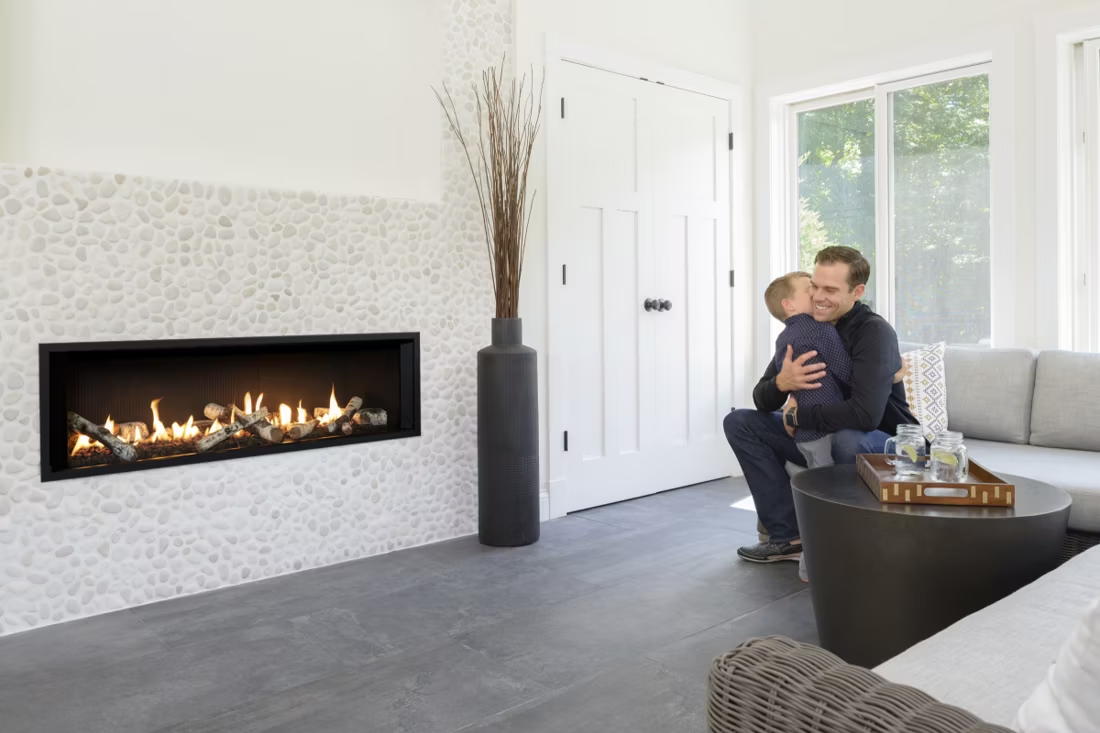
Four fuels. One honest answer for Sangamon County.
Three steps. No salesperson until you're ready.
Tell us about your project
Your zip code, your situation, and the fuel you're leaning toward—or let the answers point you to one.
See what's actually available
The brands dealers within 100 miles genuinely carry—real options, never a catalog mirage.
Get your dealer & Project Guide
A trusted local dealer, plus the free Project Guide & Parts List that names every component of the job.
Frequently Asked Questions
Which fuel works best in Sangamon County?
For most Sangamon County homes, gas is the practical answer. Ameren Illinois natural gas lines reach nearly every neighborhood in and around Springfield, Chatham, and Rochester, which makes gas fireplaces, inserts, and stoves the easiest and lowest-maintenance option—instant heat, no wood to haul, no ash to clean. Electric fireplaces work well as supplemental heat in bedrooms, additions, or apartments where a gas line isn't practical, and City Water, Light & Power's electric service covers Springfield reliably. Wood fireplaces are genuinely uncommon in this county—the local oak, hickory, and walnut are prized for smoking meat more than heating a house—though a small number of rural properties outside Springfield still run a wood stove as backup heat during outages. Pellet stoves are rarer still; despite regional pellet production from companies like Indeck Energy Services, residential pellet demand here is minimal.
Do I need a permit to install a fireplace in Sangamon County?
Yes, in most cases. Within Springfield, gas fireplace, insert, and stove installations require a permit through the city's building and zoning office, plus a licensed gas-fitter for the actual gas line connection. Outside the city limits, permits run through Sangamon County's building codes department. Electric fireplaces that involve new wiring or a dedicated circuit—built-ins and larger wall-mount units—typically need an electrical permit; simple plug-in units usually don't. Since wood and pellet installations are rare here, permitting for those appliances is handled case by case, and a local retailer who occasionally installs wood stoves can walk you through what's required for your specific property.
Are there air quality restrictions on wood burning in Sangamon County?
No—Sangamon County doesn't have the winter inversion or non-attainment issues that trigger burn advisories in some Western states, and there are no formal wood-burning curtailment periods here. That said, the near-absence of local air quality concerns isn't why gas has become the dominant fuel; it's mainly the reach of Ameren Illinois's gas infrastructure and the convenience it offers. If you're one of the few homeowners installing a wood stove on a rural Sangamon County property, you'll still need to meet current EPA emissions standards for new units, but you won't be dealing with seasonal burn restrictions the way homeowners in the Pacific Northwest or parts of California do.
Can one local retailer handle both gas and electric fireplaces?
Most Sangamon County hearth retailers are set up to handle both. Because gas and electric make up the bulk of local demand, dealers serving Springfield, Chatham, and Rochester typically stock working displays of both fuel types side by side, which makes it easy to compare a gas insert against an electric wall-mount in the same showroom visit. Fewer retailers carry wood or pellet units at all, and the ones that do usually treat it as a small, secondary category rather than a core business—worth asking about directly if that's what you're after.
How does service work in rural areas of Sangamon County?
Technicians serving Sangamon County are mostly based in Springfield and travel out to Pawnee, Auburn, New Berlin, Divernon, and other outlying towns for gas fireplace inspections and electric installs. Homes right on the edge of Ameren Illinois's gas main coverage sometimes run on propane instead, which changes the service call slightly—propane fireplace techs check tank connections and regulator settings that a natural gas tech wouldn't. Rural service calls occasionally carry a modest travel fee, and scheduling ahead of the heating season (September–October) is easier than waiting for a mid-winter breakdown.
What's the typical cost range for fireplace installation across fuel types in Sangamon County?
Gas fireplace, insert, or stove: roughly $4,000–$9,500 installed, depending on whether an existing gas line is already in place or new line work is needed. Electric fireplace: $200–$3,000 for the unit itself, plus $300–$1,000 in labor for anything beyond a simple plug-in—wall-mounts, inserts, and built-ins with dedicated wiring. Wood stove or insert: installations are infrequent enough in Sangamon County that pricing varies widely, often $4,500–$9,000 when they do happen, largely driven by chimney and venting work. Pellet stove installs are rare enough locally that most homeowners considering one should expect a longer search for a dealer and get a direct quote rather than relying on a typical range.
Can a fireplace actually lower my heating bill?
Yes—by creating a comfort zone. A furnace heats every square foot of the house just to warm the one room you're in; a gas fireplace on low burns roughly a sixth of the gas a typical furnace does. Set the furnace around 55–60 degrees as a baseline, then heat the rooms your family actually uses. Families who heat this way commonly save $20–$60 a month.
Does a fireplace add value to my home?
On average, a fireplace adds back to the home about the same amount you spent installing it. Add the monthly savings from heating the rooms you actually use instead of the whole house—often hundreds of dollars a year—and the value case is strong before you even count what a fire does for how your family uses the room.
What is an in-home preview and do I need one?
It's a visit where a hearth professional measures your space, confirms the model you picked actually works in your home, and walks the specs—framing, gas line, venting, finish work—before anything is ordered. Some details you just can't know until you see the house. Never make a down payment without one; it's the single most-skipped step that burns buyers.
How much should I budget for a fireplace?
For an average home—covering the fireplace, the vent pipe, and basic installation—a budget between $3,900 and $5,500 gives you a lot of options across wood, gas, and pellet. By the time you add finish work, gas line, and electrical, the average complete installation lands between $5,000 and $12,000 all-in. In a remodel or new build, a good rule is to put about 2.5% of the total project cost toward the fireplace.
Stove and Fireplace Dealers in Sangamon County
Listings include WhyFire partner dealers, dealers we have verified as authorized for the brands we recommend, and established local businesses that carry hearth products. Every listing shows which one it is. The ones marked Preferred run on WhyFire's software, so they can show you real pricing and book your appointment right here. No manufacturer pays for placement. How we verify dealers →
Marx Fireplaces & Lighting
Quality Lighting
Find your fireplace in Sangamon County.
Tell us about your Springfield-area home and we'll match you with a trusted local dealer and send a free Project Guide & Parts List—the exact parts, including the vent kit, for your specific project.
Find Your Fireplace →