
Instant heat for Champaign County's long, gray winters.
With average lows near 18°F and a winter heating load among the heaviest in the region, Champaign County winters stretch from the first frost past tax season. Gas fireplaces and inserts give homes across Champaign, Urbana, Rantoul, Mahomet, and the surrounding prairie towns instant, reliable heat—matched with a trusted local dealer who can size the unit and pull the permit.
Every Project Starts From One of These Five Situations
Flat, open country calls for heat you can flip on and trust.
Champaign County sits in USDA climate zone 5A, on open central Illinois prairie with almost no elevation change and few windbreaks beyond scattered timber along the Sangamon and Salt Fork rivers. That openness means winter wind moves fast and cold settles in hard—winter lows average 18°F, and the county's winter heating load most years falls in the same range as Madison, Wisconsin. Homes here, from the brick two-stories of Urbana's historic districts to the newer subdivisions ringing Champaign and Savoy, lean on efficient, controllable heat sources to get through a season that runs from late October into April.
Unlike counties with national forest land nearby, Champaign County is almost entirely private farmland—there's no public timber to cut a permit for, and the oak, hickory, walnut, and maple that do grow here are mostly confined to fence-row windbreaks and river-bottom timber lots, not accessible woodlots. That's part of why wood-burning stoves never became a primary heat source locally, and why regional pellet producers like Indeck Energy Services, Lignetics, and Somerset Pellet Fuel sell mostly to industrial and commercial boilers rather than residential stoves in this market. Natural gas, by contrast, reaches most of the county's incorporated towns through Ameren Illinois, and propane fills in for the farmsteads and unincorporated townships outside that service area—which is why gas fireplaces and inserts are the standard choice for supplemental and zone heat across Champaign County.
Three steps. No salesperson until you're ready.
Tell us about your project
Your zip code, your situation, and the fuel you're leaning toward—or let the answers point you to one.
See what's actually available
The brands dealers within 100 miles genuinely carry—real options, never a catalog mirage.
Get your dealer & Project Guide
A trusted local dealer, plus the free Project Guide & Parts List that names every component of the job.
Frequently Asked Questions
How much does a gas fireplace installation cost in Champaign County?
Most gas fireplace and insert installations in Champaign County run between roughly $3,500 and $10,000, with the range driven by the unit itself, whether a gas line already reaches the room, and how much venting work is required. A direct-vent insert dropped into an existing masonry fireplace with gas already run to the chimney sits at the lower end. New construction or a fireplace added to a room that never had gas service—where a line has to be extended and venting framed in from scratch—lands at the higher end. Rural properties outside Ameren Illinois's natural gas footprint may also need a propane tank set, which adds to the project cost. A local dealer will walk your home before quoting a firm number.
Can I convert my existing wood fireplace to gas in Champaign County?
Yes, and it's a common project in the older housing stock around Urbana's historic districts and the century farmhouses scattered through townships like Tolono, Sadorus, and St. Joseph. Because usable firewood is hard to come by in a county that's almost entirely row-crop farmland—there's no national forest or public timber to cut, and most of the oak and hickory that exists is on private land—many of these older masonry fireplaces sit unused for months at a time. A gas insert reuses the existing chimney with a stainless liner and gives the fireplace real, on-demand heat output without anyone needing to source cordwood.
Do I need natural gas, or can I use propane in Champaign County?
Either works, and which one you have usually comes down to where you live. Ameren Illinois provides natural gas service through most of Champaign, Urbana, Savoy, Rantoul, and Mahomet, so homes in those towns typically just need a line run from the existing meter. Outside the incorporated towns—on farmsteads and in the unincorporated townships that make up most of the county's land area—propane from a local supplier and tank is the standard setup. Nearly every gas fireplace and insert on the market can be configured for either fuel; your installer sets the orifice and regulator to match.
Will my gas fireplace work during a power outage?
Most will, if it's spec'd correctly. Units with intermittent pilot ignition (IPI) include a battery backup that keeps the pilot and igniter working when the power drops—which matters in Champaign County, where winter ice storms sweeping across the open prairie can knock out power to rural lines for a day or more at a time. Valor fireplaces take a different approach: the pilot's thermocouple generates its own electricity, so there's no battery to remember to replace. Ask your local dealer which ignition system is on the model you're considering.
What's the difference between a gas fireplace, a gas insert, and a gas stove?
A gas fireplace is a fully framed-in, built-in unit—the usual choice for new construction or a remodel in the newer subdivisions around Champaign and Savoy. A gas insert slides into an existing masonry firebox, which fits the older brick homes common in Urbana and the county's small towns. A gas stove is a freestanding, cast-iron-look unit that vents like a fireplace but doesn't need a masonry surround at all, which makes it a good fit for a converted garage, basement, or a farmhouse room that never had a hearth. Most Champaign County homeowners with an existing fireplace go with an insert; everyone else usually ends up choosing between a built-in fireplace and a freestanding stove based on the room.
Do I need a permit to install a gas fireplace in Champaign County?
Yes. If you're inside Champaign, Urbana, Rantoul, Mahomet, Savoy, or one of the county's other incorporated towns, the permit goes through that municipality's building department. In unincorporated Champaign County, it runs through the county's own Building & Zoning office. Either way, the gas line portion of the work has to be done by a licensed gas-fitter, and most established hearth dealers coordinate the building permit, the gas line, and the final inspection as one package so you're not chasing three different offices.
What's the difference between vented and vent-free gas fireplaces, and does it matter in Champaign County?
Vented (direct-vent or B-vent) fireplaces pull combustion air from outside and exhaust the byproducts back outside through sealed venting. Vent-free units burn without any outside venting at all, releasing water vapor and small amounts of combustion byproducts into the room. Champaign County doesn't carry the wintertime air-quality advisories that some western counties deal with—there's no inversion or non-attainment designation here—so vent-free units are legal and not unusually restricted. That said, most local dealers still steer homeowners toward direct-vent models for day-to-day living spaces, since they don't require room-size minimums or oxygen-depletion sensors and give you more flexibility on where the unit goes.
How often should my gas fireplace be serviced?
Plan on an annual inspection, ideally in early fall before the county's first hard cold snap. A technician checks the burner, pilot assembly, venting, and any gas connections, and cleans the glass and interior—usually $150 to $250 for the visit. It's a quick appointment compared to wood chimney sweeping, but skipping it is how small pilot or ignition issues turn into a fireplace that won't light on the coldest night of the year.
Gas vs. wood—which is right for my Champaign County home?
For most homes here, gas is the practical answer. Champaign County is almost entirely private farmland with no national forest or public timber to pull a cutting permit from, so sourcing a season's worth of firewood locally is genuinely harder than it is in wooded parts of the Midwest—the oak, hickory, walnut, and maple that grow here are mostly in fence-row windbreaks and river-bottom timber, not accessible woodlots. Wood stoves aren't unheard of on rural properties with their own timber stands, but they're the exception rather than the norm. Gas fireplaces and inserts, backed by Ameren Illinois's natural gas network in town and propane in the townships, are the standard choice for both supplemental heat and everyday ambiance across the county.
Is my gas fireplace wasting gas?
If it was installed more than 15 years ago, probably. Older gas fireplaces keep a standing pilot light burning all the time, and that little flame can cost a couple hundred dollars a year. Newer models use pilot-on-demand ignition—the pilot lights only when you use the fireplace and goes out when you turn it off.
Are new gas fireplaces really better than old ones?
Two ways, and they're both big. Looks: modern gas fireplaces are realistic enough that it's hard to believe they aren't burning wood. Cost: old units burn a standing pilot year-round (roughly $200 a year), while new ones use pilot-on-demand ignition and modern burners. Add remote controls and thermostat operation, and the day-to-day experience isn't close.
Can a fireplace actually lower my heating bill?
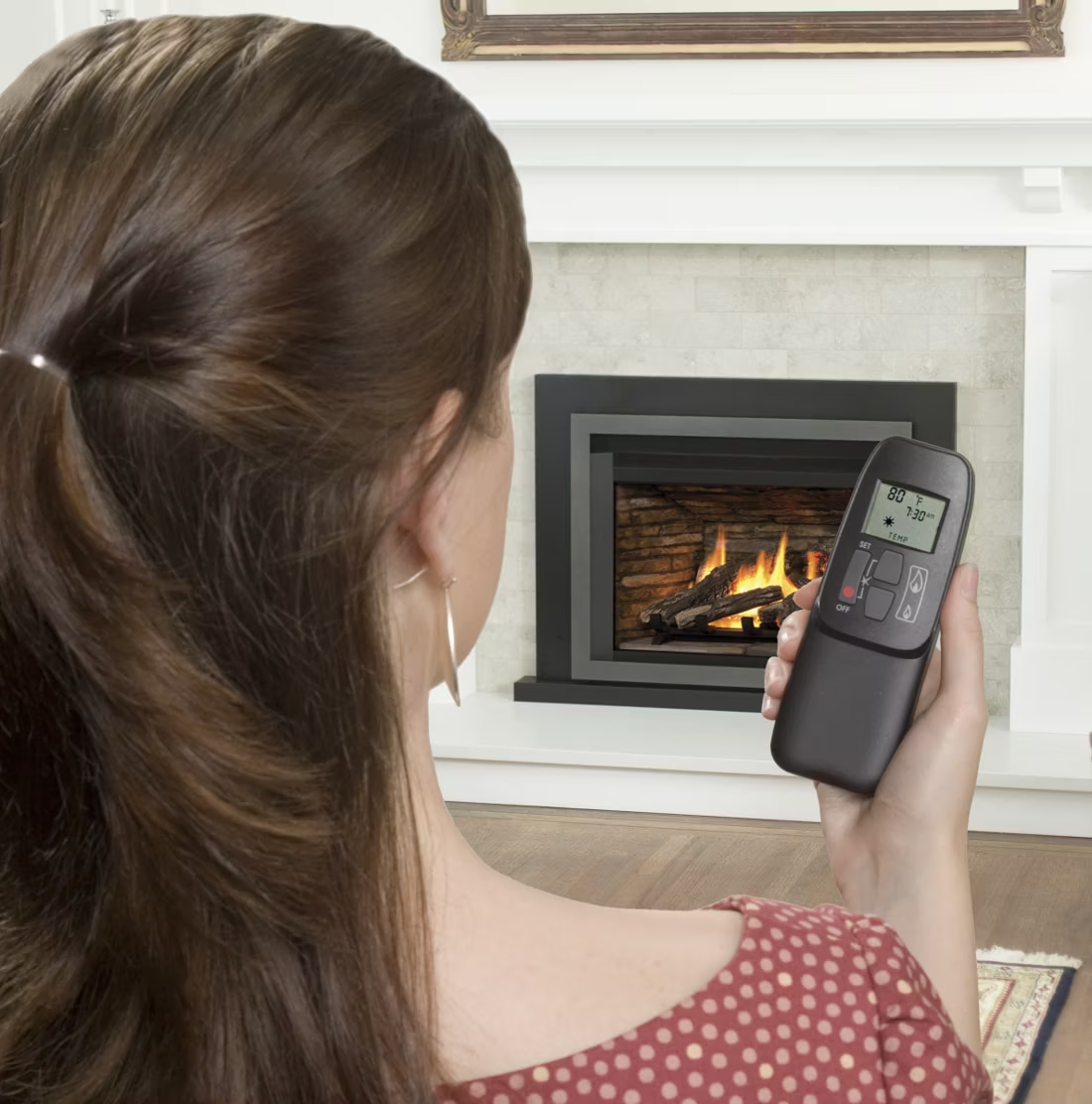
Yes—by creating a comfort zone. A furnace heats every square foot of the house just to warm the one room you're in; a gas fireplace on low burns roughly a sixth of the gas a typical furnace does. Set the furnace around 55–60 degrees as a baseline, then heat the rooms your family actually uses. Families who heat this way commonly save $20–$60 a month.
What is an in-home preview and do I need one?
It's a visit where a hearth professional measures your space, confirms the model you picked actually works in your home, and walks the specs—framing, gas line, venting, finish work—before anything is ordered. Some details you just can't know until you see the house. Never make a down payment without one; it's the single most-skipped step that burns buyers.
Stove and Fireplace Dealers in Champaign County
Listings include WhyFire partner dealers, dealers we have verified as authorized for the brands we recommend, and established local businesses that carry hearth products. Every listing shows which one it is. The ones marked Preferred run on WhyFire's software, so they can show you real pricing and book your appointment right here. No manufacturer pays for placement. How we verify dealers →
Clayton Sales Company
The Depot
Quality Propane
Find your gas fireplace in Champaign County.
Tell us about your home and we'll put together a free Project Guide & Parts List—the exact parts, vent kit, and a trusted local Champaign County dealer recommended for your project.
Find Your Fireplace →