
Find the right pellet stove for Cass County winters.
Thermostat-controlled, hopper-fed heat for the farms and river towns of Cass County—from Virginia and Beardstown to Ashland and Chandlerville. Get matched with a trusted local dealer who knows what actually works here.
Every Project Starts From One of These Five Situations
Consistent, low-maintenance heat for a working county.
Cass County sits along the Illinois River in west-central Illinois, a mostly agricultural county of just under 9,500 people spread across Virginia, Beardstown, Ashland, Chandlerville, and Arenzville. Winters here average a low around 17°F with 5,791 annual heating degree days—solidly cold, though nowhere near the brutal stretch you'd see in Fargo, ND. That's still enough cold-weather demand that a lot of local households run supplemental heat through the coldest months, and pellet appliances have become a popular answer because they don't ask much of the homeowner beyond filling a hopper.
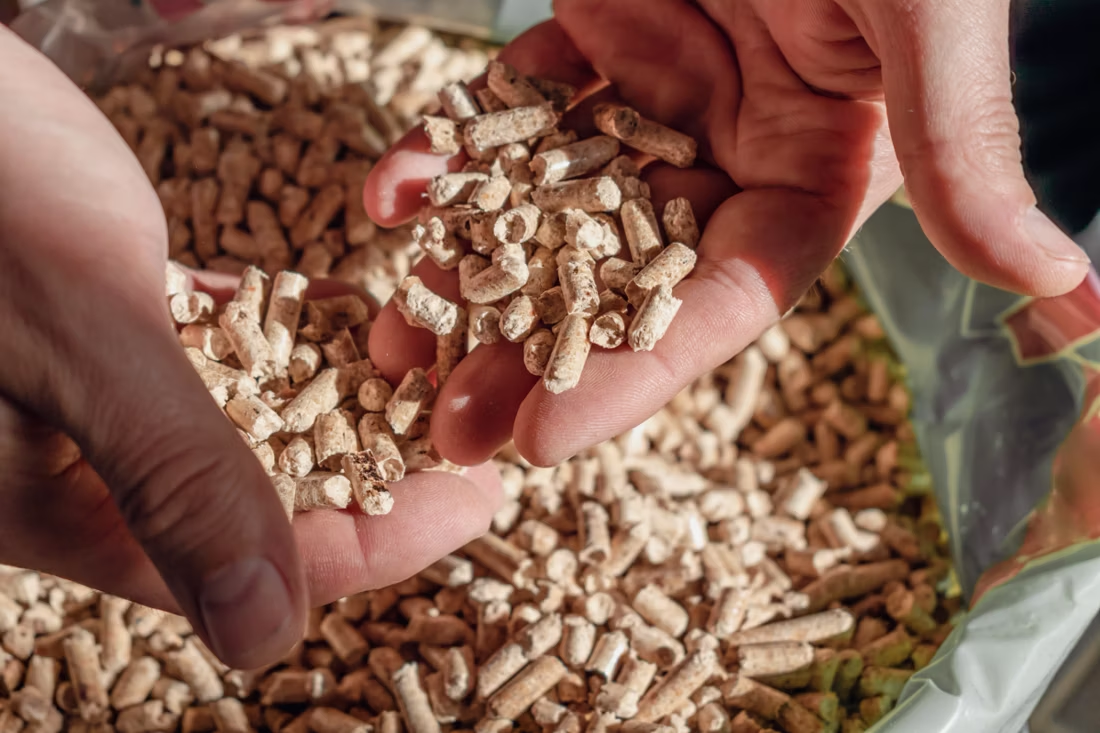
With no air quality non-attainment issues or wintertime burn restrictions in Cass County, there's nothing stopping a pellet stove from running as much as a household wants during a cold snap—unlike some downstate Illinois counties near urban air basins. The regional supply chain also helps: Indeck Energy Services, Lignetics, and Somerset Pellet Fuel all distribute into central Illinois, and a fair amount of pellet stock is made from hardwood sawmill byproduct—oak, hickory, walnut, and maple are the woods that fill farm woodlots and river-bottom timber stands around Cass County, so the pellets burned locally often trace back to the same species standing in the county's own tree lines.
Three steps. No salesperson until you're ready.
Tell us about your project
Your zip code, your situation, and the fuel you're leaning toward—or let the answers point you to one.
See what's actually available
The brands dealers within 100 miles genuinely carry—real options, never a catalog mirage.
Get your dealer & Project Guide
A trusted local dealer, plus the free Project Guide & Parts List that names every component of the job.
Frequently Asked Questions
How much does a pellet stove installation cost in Cass County?
Across central Illinois, a typical pellet stove or insert installation runs roughly $3,000 to $6,500, depending on the unit, whether venting needs to be run through an exterior wall or existing chimney, and whether electrical work is needed for the hopper motor and blower. A freestanding pellet stove going into a room with no existing chimney is usually on the lower end since venting is simpler than a wood stove's Class A pipe. A pellet insert going into an existing masonry fireplace in an older Beardstown or Virginia home can run higher once a liner and venting adapter are factored in. A local dealer will give you a firm number after seeing your space.
What size pellet stove do I need for my Cass County home?
Sizing depends on square footage, ceiling height, and how drafty the house is—older farmhouses around Ashland and Chandlerville often lose more heat than newer construction and need to size up accordingly. As a general guide, small pellet stoves handle up to about 1,000 square feet, mid-size units cover 1,000 to 1,800 square feet, and larger units can heat 2,000+ square feet of open floor plan. Cass County's 5,791 heating degree days mean most homes want a stove rated for genuine winter performance rather than a decorative-only unit—a local dealer will walk your space and size it correctly rather than guessing from a big-box chart.
Do I need a permit to install a pellet stove in Cass County?
Most pellet stove and insert installations require a building permit through your local jurisdiction—Cass County's building department for unincorporated areas, or the relevant city office if you're inside Virginia, Beardstown, Ashland, or another incorporated town. Permit requirements typically cover the vent termination location, clearances to combustibles, and hearth pad specifications if one is required. A trusted local dealer handles this paperwork as part of the installation in most cases, so you're not chasing down permits yourself.
Pellet stove vs. wood stove—which is right for my home?
Pellet stoves run on compressed hardwood pellets, load from a hopper instead of splitting and stacking cordwood, and hold a steady thermostat-set temperature rather than the rise-and-fall heat curve of a wood fire. That convenience comes with one real tradeoff for Cass County: pellet stoves need electricity to run the auger and blower, so they won't function during a power outage unless you have a battery backup or generator—something worth thinking through given how exposed rural power lines can be during ice storms. Wood stoves burn without electricity and pair naturally with the oak, hickory, and walnut that grow throughout the county's woodlots. If daily convenience matters more than backup heat, pellet wins; if storm-outage resilience matters most, wood is the safer bet.
Where can I buy pellet fuel near Cass County?
Regional pellet brands including Indeck Energy Services, Lignetics, and Somerset Pellet Fuel distribute into central Illinois and are commonly stocked by farm supply and hearth retailers serving the Beardstown and Virginia area. Hardwood pellets typically run in the $220 to $300 per ton range depending on brand, bag versus bulk purchase, and time of year—buying a season's supply in late summer before demand picks up is usually the better price. A 40-pound bag typically lasts a day or two of moderate use, so most households running a pellet stove as a primary heat source keep one to two tons on hand for the winter.
Will my pellet stove work during a power outage?
Not without a backup power source. Pellet stoves rely on an electric auger to feed fuel and a blower to circulate heat, so a standard unit shuts down the moment power drops—a real consideration in rural Cass County, where outages during winter ice events can stretch longer than in town. Some homeowners pair a pellet stove with a small battery backup or a portable generator sized to run the auger and blower motors, which keeps the stove operational through an outage. If backup heat during outages is your top priority, a wood stove burning local oak or hickory is the more reliable choice on that specific point.
How much maintenance does a pellet stove need?
Pellet stoves need more frequent light maintenance than a wood stove needs deep cleaning. Plan on emptying the ash pan every few days during regular use, cleaning the burn pot weekly to keep the flame quality consistent, and a full internal cleaning of the hopper, auger, and exhaust venting once a season—usually done by a certified technician before burning season starts each fall. Because pellet fuel burns cleaner than cordwood, there's far less creosote risk than with a wood stove, but the mechanical components (auger motor, igniter, blower) are what typically need service over the stove's life.
Pellet stove vs. gas fireplace—which fits my home better?
Both offer more hands-off operation than wood, but they solve different problems. A gas fireplace or insert gives instant on-off heat at the flip of a switch and, with the right ignition system, can run during a power outage. A pellet stove gives you a real flame with genuine radiant heat and lower fuel cost per BTU than propane in most of rural Illinois, but it depends on electricity to operate and needs the hopper refilled regularly. For a primary living space where convenience matters most, gas often wins. For homeowners who want fire ambiance with lower operating cost and don't mind refilling a hopper, pellet is usually the better value.
What's the difference between a pellet stove and a pellet insert?
A pellet stove is a freestanding unit that sits on its own hearth pad and vents through a wall or existing chimney—it can go almost anywhere in the house with the right clearances. A pellet insert is built to slide into an existing masonry fireplace opening, using a vent kit routed up through the existing chimney to convert an old wood-burning fireplace into an efficient, thermostat-controlled heat source. For Cass County's older homes in Virginia and Beardstown with an existing masonry fireplace already in place, an insert is often the simpler retrofit since it uses the chimney you already have.
Why is my open fireplace making my house colder?
Open fireplaces suck—literally. As the fire burns, it consumes air your furnace already paid to heat and pulls it out through the chimney, so the house is actually colder after the fire goes out than before you lit it. An insert fixes this: it seals the chimney, puts fixed glass across the front, and turns that hole in your house into a real heat source.
How often does a pellet stove need cleaning?
A clean pellet stove is a happy pellet stove. Plan on cleaning the burn pot about once a week when you're burning regularly—ash and clinkers gum up the air holes just like a pellet barbecue. Most pellet stove problems trace back to skipped cleaning that nobody explained up front. Some designs make it easy with a trapdoor burn pot: pull a lever and the gunk drops into the ash pan.
Does a fireplace add value to my home?
On average, a fireplace adds back to the home about the same amount you spent installing it. Add the monthly savings from heating the rooms you actually use instead of the whole house—often hundreds of dollars a year—and the value case is strong before you even count what a fire does for how your family uses the room.
Can a fireplace actually lower my heating bill?
Yes—by creating a comfort zone. A furnace heats every square foot of the house just to warm the one room you're in; a gas fireplace on low burns roughly a sixth of the gas a typical furnace does. Set the furnace around 55–60 degrees as a baseline, then heat the rooms your family actually uses. Families who heat this way commonly save $20–$60 a month.
Pellet Brands Stocked Around Cass County
Manufacturers will point you to the nearest stocking dealer.
Get your Cass County pellet stove Project Guide & Parts List.
Tell us about your home and we'll match you with a trusted local dealer and send you a free Project Guide & Parts List—the exact parts, vent kit, and recommended installer for your pellet project in Cass County.
Find Your Fireplace →