
Zone heat for Cass County's farmhouses and river towns.
No chimney, no gas line, no venting—just a fireplace that plugs in or hardwires into an existing circuit. Find the right unit for your home, from a Beardstown apartment to a rural place outside Virginia, and connect with a trusted local dealer.
Every Project Starts From One of These Five Situations
The easiest heat upgrade in Cass County.
Cass County sits along the Illinois River in west-central Illinois, home to about 9,500 people spread across Beardstown, the county seat of Virginia, and smaller communities like Chandlerville, Ashland, and Arenzville. Winters here average lows around 17°F with a long, cold heating season that runs nearly the whole year through—enough cold that a supplemental heat source in the living room or a drafty back bedroom makes a real difference between November and March, without needing to be a household's only source of heat.
Plenty of Cass County homes still burn wood—oak, hickory, walnut, and maple are all common locally—but not every room, apartment, or rental has a chimney to work with. That's where electric fireplaces fill the gap: a plug-in unit adds real heat and ambiance to a bonus room or a rented apartment above a storefront on Beardstown's downtown square with zero venting work, while a hardwired built-in linear unit can go into a new addition or a manufactured home without touching the furnace ductwork. Ameren Illinois serves electric accounts across the county, and either option installs in a fraction of the time a wood or gas project takes.
Three steps. No salesperson until you're ready.
Tell us about your project
Your zip code, your situation, and the fuel you're leaning toward—or let the answers point you to one.
See what's actually available
The brands dealers within 100 miles genuinely carry—real options, never a catalog mirage.
Get your dealer & Project Guide
A trusted local dealer, plus the free Project Guide & Parts List that names every component of the job.
Frequently Asked Questions
How much does an electric fireplace installation cost in Cass County?
A plug-in electric fireplace or insert—the kind that runs off a standard 120-volt household outlet—typically costs $150 to $600 for the unit itself, with no installation labor beyond hanging or setting it in place. A built-in linear electric fireplace that gets hardwired into its own dedicated circuit runs higher, usually $800 to $2,500 once you factor in the unit, a licensed electrician to run a new 15- or 20-amp circuit, and any wall framing or trim work. Older farmhouses in the rural parts of the county sometimes need panel capacity checked before adding a dedicated circuit, which can add a small amount to the electrician's bill.
What's the difference between a plug-in and a hardwired electric fireplace?
A plug-in unit runs on standard household voltage through any regular outlet—no electrician needed, and you can move it if you change rooms or relocate. A hardwired unit is wired directly into a dedicated circuit, usually because it's a larger built-in model or the manufacturer requires a dedicated line to run the heater element safely. For a rental in Beardstown or a spare room you're not sure about long-term, plug-in is the simpler route. For a permanent installation in a living room or new addition, hardwiring gives a cleaner look with no visible cord and lets you size the unit larger.
How much heat will an electric fireplace actually put out?
Most electric fireplaces top out around 5,000–5,200 BTU from a standard 1,500-watt heater element, which is enough to comfortably warm a single room of 400 to 1,000 square feet depending on insulation and ceiling height. That makes them a strong supplemental heat source—good for a den, a converted porch, or a bedroom that runs cold—but not a replacement for a furnace on a night when Cass County temperatures drop into the teens. Think of it as zone heat: it lets you turn the thermostat down elsewhere in the house while keeping the room you're actually using comfortable.
Do I need a permit to install an electric fireplace in Cass County?
A plug-in unit that uses an existing outlet doesn't require a permit—there's no wiring change, so there's nothing to inspect. A hardwired built-in unit that needs a new dedicated circuit does typically require an electrical permit, since you're adding a circuit to the panel. Most licensed electricians working in Cass County pull that permit as part of the job rather than leaving it to the homeowner. If you're unsure which category your project falls into, ask the installer before work starts—it's a quick answer and avoids surprises at resale.
Electric vs. wood vs. gas—which fits my Cass County home?
Wood remains the traditional choice across the county, and with oak, hickory, walnut, and maple all available locally, it's the least expensive fuel per BTU if you're set up to process and store cordwood. Gas offers instant heat but generally means running or already having a propane line, since municipal natural gas isn't universal outside town centers. Electric is the right call when you don't have a chimney, don't want to deal with a propane tank, or you're heating a rental, apartment, or manufactured home where venting isn't practical. A lot of Cass County households end up with more than one: wood or propane for real cold-weather heat, and an electric unit for ambiance or a quick-heat room that doesn't justify a full venting project.
What's the best electric fireplace for a cold-climate Illinois winter?
Look for a unit with a true 1,500-watt heater and a thermostat with a wide range rather than just a high/low switch—that gives you actual control when you're using it as real supplemental heat rather than pure ambiance. Brands like Dimplex, Napoleon, and Touchstone make linear built-ins and inserts with realistic flame effects and heaters rated for continuous winter use, not just occasional evening burns. For a drafty older farmhouse outside Virginia or Chandlerville, size toward the larger end of a room's square footage range, since older construction loses heat faster than a newer build in Beardstown.
How much does it cost to run an electric fireplace in Cass County?
A 1,500-watt heater running on high draws about 1.5 kilowatt-hours per hour. At typical Ameren Illinois residential electric rates, that works out to roughly 20 to 30 cents an hour of active heating, or a few dollars for an evening's use. Running the flame effect alone without the heater costs only a fraction of a cent per hour, since the LED lighting draws very little power—a detail worth knowing if you want the look of a fire in summer or on a mild fall evening without running the heater at all.
Where do electric fireplaces make the most sense in Cass County?
They're a common fit for apartments above Beardstown's downtown storefronts and other rentals where landlords don't want a chimney or gas line added. They also show up often in manufactured and mobile homes throughout rural Cass County, where venting a wood or gas appliance through the roof isn't always straightforward. And they're a popular add for a finished basement, a screened porch converted to a year-round room, or a weekend place along the Illinois River near Chandlerville or Arenzville where full-time heat isn't needed but a quick source of warmth and ambiance is.
How much maintenance does an electric fireplace need?
Very little compared to wood or gas. There's no chimney to sweep, no gas line to inspect, and no combustion byproducts to vent. Most upkeep is just occasional dusting of the heater vents and, on older units, an LED bulb replacement every several years. Manufacturers typically rate the heater element and flame mechanism for years of regular seasonal use, and most local dealers can source parts or a replacement unit if something eventually needs service.
Can I put a TV above my fireplace?
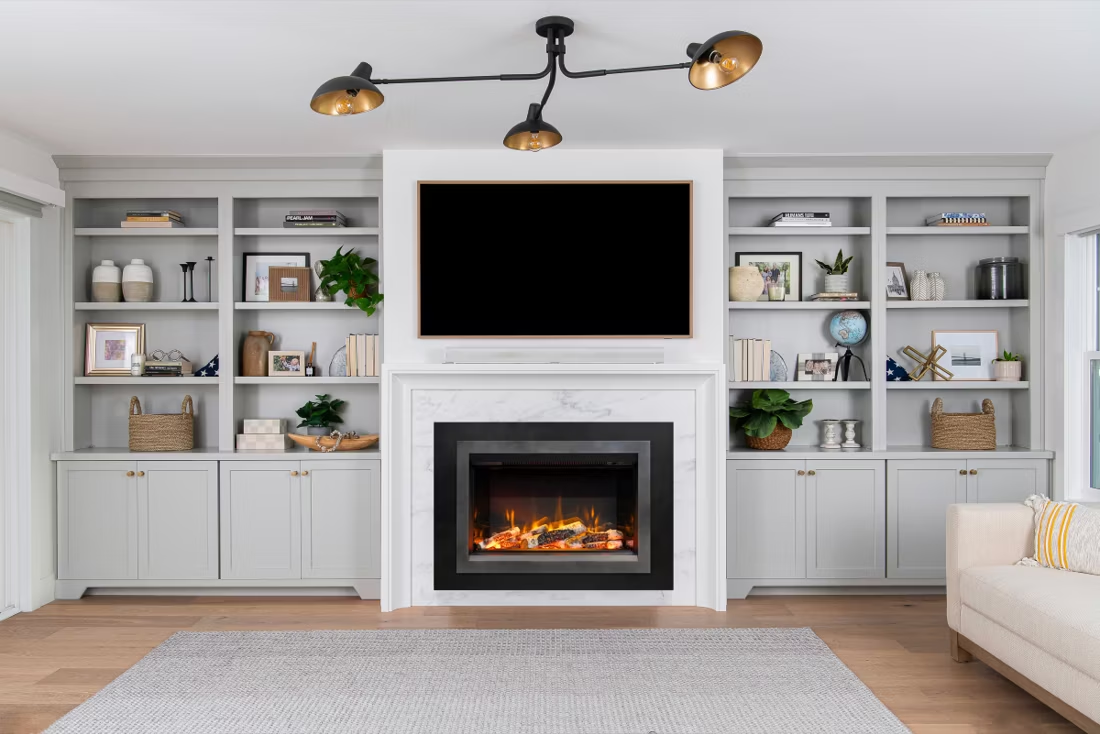
Yes—with an asterisk. Fireplaces are hot and TVs don't like heat. Either put a mantel between them to deflect rising warmth, or choose a fireplace with heat-management technology that creates a cool zone on the wall above—the wall stays around 125 degrees, barely warm, while the room still gets full heat. If you like clean lines and don't want a mantel, heat management is the answer.
How much does an electric fireplace cost to run?
With the heater on, a typical unit draws about 1,500 watts—at average electric rates that's roughly 20 cents an hour. Run the flame effect alone and it costs pennies; the flames are LED-driven and use about as much power as a light bulb. There's no pilot light, no fuel delivery, and essentially no maintenance.
Does a fireplace add value to my home?
On average, a fireplace adds back to the home about the same amount you spent installing it. Add the monthly savings from heating the rooms you actually use instead of the whole house—often hundreds of dollars a year—and the value case is strong before you even count what a fire does for how your family uses the room.
Can a fireplace actually lower my heating bill?
Yes—by creating a comfort zone. A furnace heats every square foot of the house just to warm the one room you're in; a gas fireplace on low burns roughly a sixth of the gas a typical furnace does. Set the furnace around 55–60 degrees as a baseline, then heat the rooms your family actually uses. Families who heat this way commonly save $20–$60 a month.
Find your electric fireplace in Cass County.
Tell us a bit about your home—plug-in or hardwired, apartment or farmhouse—and we'll put together a free Project Guide & Parts List and match you with a trusted local dealer serving Cass County.
Find Your Fireplace →