
Keep Your Family Warm and Safe—No Matter What
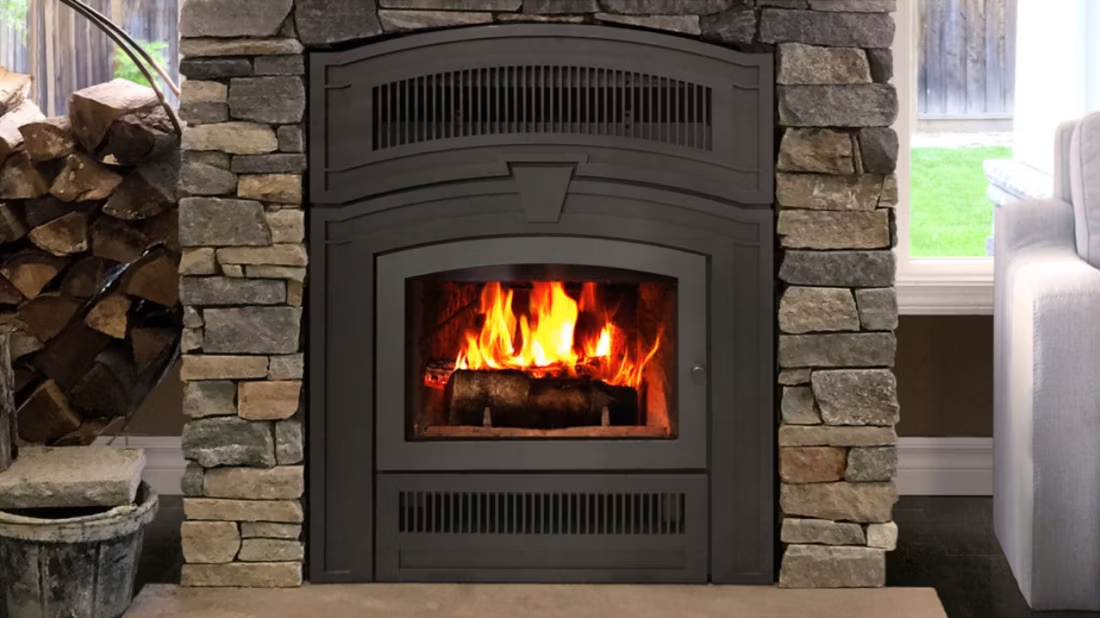
Winters here average 16°F with a long, demanding heating season, but most Carol Stream homes run on furnace heat and Commonwealth Edison power. A wood stove or insert is still a real option for backup heat or ambiance—we'll connect you with a local dealer who installs them correctly.
Every Project Starts From One of These Five Situations
Legal, workable, but rarely the default in this DuPage County suburb.
Carol Stream sits at 743 feet on flat DuPage County land, built out mostly in the postwar tract-housing boom of the 1960s and 70s. There's no national forest or public timberland anywhere nearby—the nearest cutting permits are hours north in Wisconsin—so the self-sufficient wood-heat culture you find in mountain or forest towns simply never took root here. Nearly every home in Carol Stream heats with a gas furnace and runs on Commonwealth Edison electric service, and that's the baseline most homeowners plan around.
That said, wood stoves and inserts aren't banned or unusual to see—they're just a minority choice, typically installed by homeowners who want backup heat during a Commonwealth Edison outage, a finished basement or three-season room with real ambiance, or a masonry fireplace from an older Carol Stream home converted into something that actually throws heat. Regional firewood suppliers and tree services keep oak, hickory, walnut, and maple in steady supply even without nearby public land, so fuel isn't the obstacle—it's more a matter of finding a dealer who still installs wood appliances regularly and knows the Village of Carol Stream's permitting process.
Three steps. No salesperson until you're ready.
Tell us about your project
Your zip code, your situation, and the fuel you're leaning toward—or let the answers point you to one.
See what's actually available
The brands dealers within 100 miles genuinely carry—real options, never a catalog mirage.
Get your dealer & Project Guide
A trusted local dealer, plus the free Project Guide & Parts List that names every component of the job.
Frequently Asked Questions
Is a wood stove or fireplace even a good fit for a home in Carol Stream?
It can be, but go in with clear eyes: most homes here already have a working gas furnace, so a wood stove is almost always a supplemental or backup heat source rather than a primary one. Where it makes the most sense is a finished basement, a sunroom or three-season addition, or a household that wants a heat source that doesn't depend on Commonwealth Edison staying on during a winter storm. If you're hoping to heat your whole house on wood alone, that's a harder sell in a subdivision built around central gas heat—talk to a local dealer about realistic expectations for your specific floor plan before committing.
How much does a wood stove installation cost in Carol Stream?
Because wood installs are less common here than gas or electric work, pricing varies more from dealer to dealer than in wood-heavy regions of the country. As a general planning range, expect somewhere around $3,500 to $8,500 for a stove or insert plus proper Class A chimney venting, with the low end applying to homes that already have a usable masonry chimney chase and the high end applying to homes needing new through-roof venting built from scratch. A local dealer will need to see your home to give a firm number—venting path is the biggest cost variable.
Where do I even get firewood in Carol Stream if there's no national forest nearby?
There's no public cutting land in DuPage County, so self-cut firewood permits aren't part of the picture here the way they are out west. Instead, firewood comes from regional suppliers and local tree removal services working the same oak, hickory, walnut, and maple that grow throughout northern Illinois. Seasoned cordwood typically runs in the $220 to $320 per cord range delivered, with hardwoods like oak and hickory commanding the higher end for their longer, hotter burn. Ask any wood stove dealer you work with—most keep a short list of firewood suppliers they trust.
Do I need a permit to install a wood stove in Carol Stream?
Yes. New wood-burning appliance installations go through the Village of Carol Stream Building Division, and the unit itself needs to meet current EPA 2020 NSPS emissions standards regardless of how rarely wood stoves get installed locally. A dealer who regularly does this work will pull the permit and schedule the inspection as part of the job—this is exactly the kind of step where using a general handyman instead of a certified hearth installer causes problems, since venting and clearance mistakes are the leading cause of chimney fires.
Can I install a wood insert into an existing fireplace in an older Carol Stream home?
If your home was built with a masonry fireplace—more common in Carol Stream's older sections dating to the 1960s and 70s than in newer construction—a wood insert is often the most cost-effective route. It uses the chimney you already have, typically with a stainless steel liner, and turns a drafty, inefficient open fireplace into something that actually heats a room. Homes without an existing masonry chimney are usually better served by a freestanding stove with new Class A pipe, since building a chimney chase from scratch adds real cost.
Wood vs. gas—which makes more sense for a Carol Stream home?
Given that natural gas already serves nearly every home in Carol Stream, gas fireplaces and inserts are the more common upgrade—instant heat, no wood handling, and no chimney maintenance. Wood still has a real advantage gas can't match: it works with zero electricity and zero gas service, which matters if you want heat that survives a Commonwealth Edison outage during an ice storm. If backup resilience matters more to you than convenience, wood is worth the extra install complexity. If daily convenience matters more, gas is the more typical local choice.
Is wood heat useful during a Commonwealth Edison power outage?
Yes, and this is genuinely one of the better reasons to consider a wood stove in a suburb like Carol Stream. Most furnaces—even gas ones—need electricity to run the blower and controls, so a Commonwealth Edison outage during a cold snap can leave a home without heat even with gas service intact. A wood stove with no electronic components keeps working regardless of grid status, which is why some homeowners here install one specifically as an emergency backup rather than daily-use heat.
What wood species should I plan on burning, and how do they compare?
Oak, hickory, walnut, and maple are the standard firewood species available through regional suppliers serving DuPage County. Oak and hickory burn hottest and longest per cord, making them the best value if you're burning regularly for supplemental heat. Maple burns a bit faster and cooler, which suits occasional or ambiance-focused use. Walnut is workable but less commonly stocked in volume. Whatever species you buy, make sure it's been seasoned at least six to twelve months—unseasoned wood burns inefficiently and builds creosote faster, which matters even for occasional-use stoves.
Wood vs. electric fireplace—which fits a Carol Stream home better?
Electric fireplaces are simple in Carol Stream: no venting, no permit hassle, and they run on the same Commonwealth Edison service every home already has, at a residential rate around 13.4 cents per kWh. They're the easier install by far, but they offer ambiance and modest supplemental warmth rather than serious heat output, and they're useless during a power outage—the opposite of wood's key advantage. If real heat output and outage resilience matter, wood wins despite the bigger install. If you mainly want a low-hassle focal point with minimal installation cost, electric is the simpler path.
What's the difference between an insert and a zero-clearance fireplace?
An insert is a fireplace that slides into a pre-existing wood-burning fireplace—if you don't have one, there's nothing to insert it into. A zero-clearance fireplace is built into a framed wall, which makes it the answer for remodels and new construction. Simple test: existing masonry fireplace means insert; blank or framed wall means zero-clearance.
Why is my open fireplace making my house colder?
Open fireplaces suck—literally. As the fire burns, it consumes air your furnace already paid to heat and pulls it out through the chimney, so the house is actually colder after the fire goes out than before you lit it. An insert fixes this: it seals the chimney, puts fixed glass across the front, and turns that hole in your house into a real heat source.
What is an in-home preview and do I need one?
It's a visit where a hearth professional measures your space, confirms the model you picked actually works in your home, and walks the specs—framing, gas line, venting, finish work—before anything is ordered. Some details you just can't know until you see the house. Never make a down payment without one; it's the single most-skipped step that burns buyers.
How much should I budget for a fireplace?
For an average home—covering the fireplace, the vent pipe, and basic installation—a budget between $3,900 and $5,500 gives you a lot of options across wood, gas, and pellet. By the time you add finish work, gas line, and electrical, the average complete installation lands between $5,000 and $12,000 all-in. In a remodel or new build, a good rule is to put about 2.5% of the total project cost toward the fireplace.
Nearby Dealers
Hearth shops serving Carol Stream and the surrounding area. Every listing shows whether it is a WhyFire partner, a dealer we have verified as authorized for the brands we recommend, or a local business carrying hearth products. No manufacturer pays for placement. How we verify dealers →
Ember Glow
A Cozy Fireplace
A Fireplace Store And More
General Masonry Supply
Jhb Group, Inc.
Smokin' Deal Bbq
Fireplaces Plus
Fireplace And Patio
Urban Rooftops
Find your wood fireplace in Carol Stream.
Wood installs are less common here, which is exactly why matching with the right dealer matters. Tell us about your home and we'll put together a free Project Guide & Parts List—the parts, the vent kit, and a local dealer who still does this work well.
Find Your Fireplace →