
Automated warmth for Bureau County's long, cold winters.
With 6,401 heating degree days and winter lows averaging 14°F, Bureau County homes need heat that keeps up without daily tending. Find the right pellet stove or insert, and connect with a trusted local dealer.
Every Project Starts From One of These Five Situations
Thermostat-controlled heat for farm country winters.
Bureau County sits in north-central Illinois along the Illinois River valley, home to about 25,281 residents spread across Princeton, Spring Valley, Tiskilwa, Walnut, and the surrounding farmland. Winters here run long—the county averages 6,401 heating degree days a year, comparable to what a homeowner in Madison, Wisconsin deals with, and winter lows average 14°F. For a lot of Bureau County households, especially those managing farm schedules or older rural homes, a pellet stove offers something wood can't: load the hopper, set the thermostat, and walk away for a day or more.
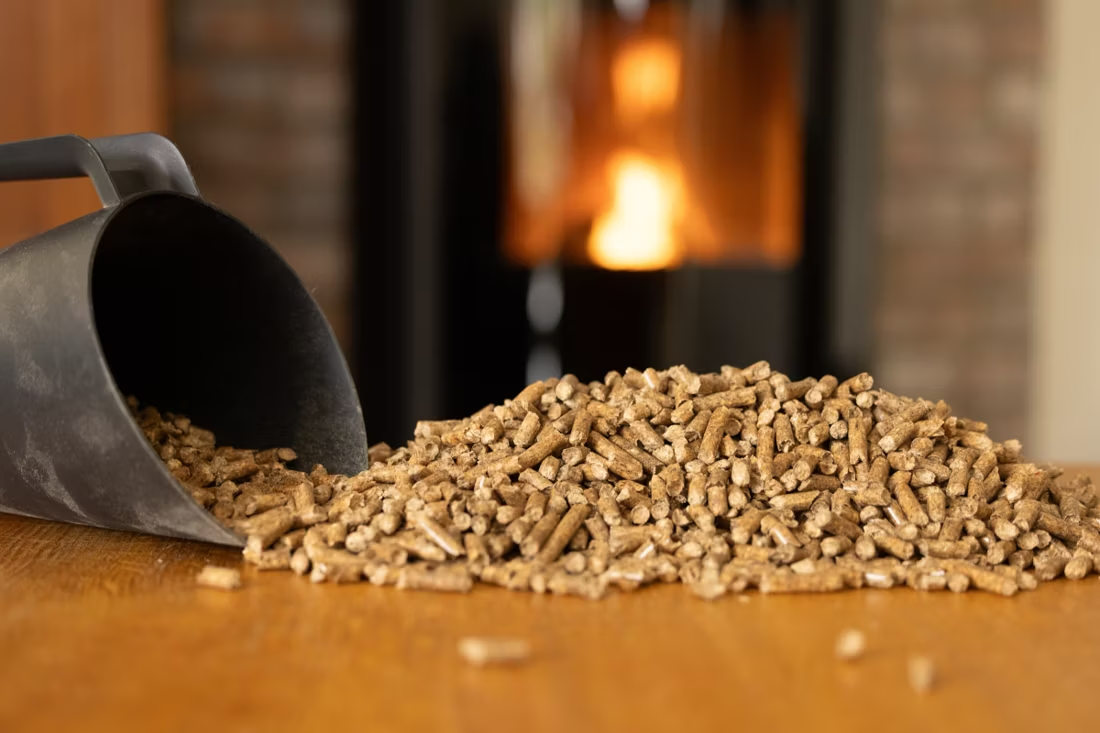
Bureau County's hardwood cover—oak, hickory, walnut, and maple stands along the river bottoms—has long supported firewood cutting, but it's also part of why regional pellet supply is solid here. Brands like Indeck Energy Services, Lignetics, and Somerset Pellet Fuel are commonly stocked by dealers serving this part of Illinois, giving homeowners a real choice without relying on a single supplier. And unlike counties out west dealing with winter inversion or wildfire-smoke non-attainment status, Bureau County has no air quality restrictions on wood or pellet burning—so there's no curtailment schedule to plan around here, though pellet stoves burn clean enough that this rarely matters either way.
Three steps. No salesperson until you're ready.
Tell us about your project
Your zip code, your situation, and the fuel you're leaning toward—or let the answers point you to one.
See what's actually available
The brands dealers within 100 miles genuinely carry—real options, never a catalog mirage.
Get your dealer & Project Guide
A trusted local dealer, plus the free Project Guide & Parts List that names every component of the job.
Frequently Asked Questions
How much does a pellet stove installation cost in Bureau County?
Pellet stove installations typically run in the $3,000 to $6,000 range for a freestanding unit vented through an exterior wall, with pellet inserts into an existing masonry fireplace often landing a bit higher once a liner and hopper clearance work are factored in. The final number depends on the model, whether you need new electrical for the auger and blower circuit, and how much venting work your home requires. Because Bureau County doesn't have any published local cost data for this fuel, a local dealer walking your home is really the only way to get a firm number—but the ranges above are a reasonable starting point for planning.
Where can I buy wood pellets in Bureau County?
Regional pellet brands commonly carried by dealers serving this area include Indeck Energy Services, Lignetics, and Somerset Pellet Fuel—all reasonable options for a Bureau County home, and having more than one supplier in the mix helps if a particular brand sells out during a hard winter stretch. Per-ton pricing shifts season to season and dealer to dealer, so it's worth asking your installer which brands they stock and whether they offer pre-season pallet pricing, which is typically the cheapest way to buy in bulk before demand picks up in November and December.
What size pellet stove do I need for my Bureau County home?
Sizing depends on square footage, ceiling height, insulation, and whether the stove is your primary heat or a supplemental source. Given Bureau County's 6,401 heating degree days and winter lows that average 14°F, older farmhouses with less insulation typically need to size up compared to a newer, tightly built home of the same square footage. As a rough guide, small units (under 1,000 sq ft) suit a single room or cabin, mid-size units (1,000–2,000 sq ft) cover most main living areas, and larger units (2,000+ sq ft) can carry a well-insulated whole home. A local dealer can size your specific space during an in-home visit—that's the step that actually matters more than any general chart.
Pellet stove vs. wood stove—which makes more sense in Bureau County?
Wood stoves burn cordwood—and with oak, hickory, walnut, and maple all common locally, firewood is easy to source and burns hot and long. Wood also works with no electricity, which matters if you lose power during an ice storm. Pellet stoves trade that off for convenience: load the hopper, set the thermostat, and the auger and blower do the rest, with far less mess and no need to season wood for a year first. For a Bureau County household without the time or storage space for cordwood, pellet is often the easier fit. For a rural property that wants heat that works even when the grid doesn't, wood still has an edge.
Will my pellet stove work during a power outage?
No—this is worth being direct about. Pellet stoves rely on electricity to run the auger that feeds pellets into the burn pot and the blower that circulates heat, so a power outage shuts the unit down even with a full hopper. Some homeowners pair a pellet stove with a small battery backup or generator specifically to keep it running through an outage, which is a reasonable option in a county like Bureau where winter storms occasionally knock out rural power lines for a day or more. If backup heat during an outage is your top priority, a wood stove is the more reliable choice; if convenience during normal operation matters more, pellet remains the better daily-use fuel.
Do I need a permit to install a pellet stove in Bureau County?
Most pellet stove installations require a building permit, whether that's issued through your town's building department if you're inside Princeton, Spring Valley, Tiskilwa, or another incorporated municipality, or through the county for a property in unincorporated Bureau County. The permit typically covers venting placement, clearance to combustibles, and the electrical circuit for the auger and blower. Most local dealers handle this paperwork as part of the installation, so it's worth confirming that up front rather than assuming it's included.
How often do I need to refill a pellet stove's hopper?
Most residential pellet stoves have a hopper that holds 40 to 130 pounds of pellets, which typically translates to 24 to 60 hours of continuous burn time depending on the model and how hard the stove is running. On a cold Bureau County night with the thermostat set for steady heat, expect to refill daily during the coldest stretches of a 6,401-HDD winter; on milder days, a single load can stretch closer to two days. Larger-hopper models are worth the extra cost for anyone who wants to skip a daily refill during peak cold.
Are there any air quality restrictions on pellet stoves in Bureau County?
No—Bureau County has no air quality non-attainment status, no winter inversion advisories, and no burn curtailment periods, unlike some western counties where wood-burning devices get restricted on high-pollution days. Pellet stoves already burn cleaner and more consistently than open wood fires because the fuel is uniform and the burn is thermostatically controlled, so even in counties with restrictions, pellet units are usually exempt. In Bureau County, that distinction mostly doesn't come up—there's simply no curtailment schedule to plan around.
Pellet stove vs. gas fireplace—which is right for my Bureau County home?
Gas fireplaces offer instant on-off operation and, with the right ignition system, can keep running through a power outage. Pellet stoves need electricity to operate but generally produce more usable heat per dollar of fuel and give you a live flame with real fuel handling—hopper loading, ash removal every few days—that some homeowners prefer over a sealed gas unit. For a Bureau County household focused on heating cost efficiency across a full 6,401-HDD winter, pellet is often the stronger choice. For a household that wants zero-maintenance, flip-a-switch heat, gas usually wins. A local dealer who carries both can walk through the tradeoffs for your specific home.
Can a pellet stove heat a whole house?
It genuinely can. I burned a pellet stove as my only heat source for years after a furnace died, and it kept the entire house warm. Pellets feed automatically from a hopper, so you get wood-heat economics with thermostat-style control. Two honest caveats: it needs weekly cleaning during the season, and most models need electricity to run—ask about battery backup if outages are a concern.
What do I measure to size a fireplace insert?
Four numbers tell you what fits: the front width, the front height, the back width, and the overall depth of your existing fireplace opening. Grab a tape measure, jot those down, and snap a photo of the wall—those two things do more to move your project forward than anything else you can do today.
Can I install a fireplace myself?
If you're putting a fire in your house on purpose, it's best to work with an expert. Unless you're genuinely experienced in framing, gas line, vent pipe, and the national code on clearances to combustibles, have a professional do it—and ideally the same company that sells you the fireplace, so warranty, service, and liability all live under one roof.
Does a fireplace add value to my home?
On average, a fireplace adds back to the home about the same amount you spent installing it. Add the monthly savings from heating the rooms you actually use instead of the whole house—often hundreds of dollars a year—and the value case is strong before you even count what a fire does for how your family uses the room.
Pellet Brands Stocked Around Bureau County
Manufacturers will point you to the nearest stocking dealer.
Find your pellet stove in Bureau County.
Tell us a bit about your home and we'll match you with a trusted local dealer and send over a free Project Guide & Parts List—a plan for your pellet stove project in Bureau County with the exact parts, including venting, and a recommended installer.
Find Your Fireplace →