
Add real ambiance to your Bureau County home—no chimney required.
From Princeton to Spring Valley, Tiskilwa to Walnut, electric fireplaces give Bureau County homes clean, instant zone heat and a real flame look without venting, gas lines, or a masonry chimney. Find the right unit and connect with a trusted local dealer.
Every Project Starts From One of These Five Situations
Instant heat, zero venting, and a fireplace that fits almost any room.
Bureau County sits in climate zone 5A with a cold, continental Illinois winter and lows averaging 14°F—not far off from what Madison, Wisconsin sees most years. That kind of cold means most Bureau County homes lean on a furnace as primary heat, with wood stoves and inserts (this county has no shortage of oak, hickory, walnut, and maple for burning) filling in as backup in the more rural townships. Electric fireplaces occupy a different, useful niche: they don't replace a furnace, but they add real, on-demand warmth and ambiance to specific rooms—a farmhouse addition outside Ladd, a finished basement in Spring Valley, a sunroom in Princeton—without touching your gas line or venting system.
That's a real advantage in a county where a good number of homes, especially older farmhouses outside the incorporated towns, either lack natural gas service entirely or would need a costly line extension to get it. An electric fireplace runs off a standard outlet (smaller units) or a dedicated circuit (larger built-ins), works the same day it's installed, and produces zero combustion byproducts—which matters if anyone in the house has smoke sensitivity or you simply want supplemental heat without another appliance to maintain. It won't out-produce a wood stove on a single-digit January night, but for zone heating a specific room, or adding a fireplace look to a space that was never built with a chimney, it's usually the simplest option in Bureau County's housing stock.
Three steps. No salesperson until you're ready.
Tell us about your project
Your zip code, your situation, and the fuel you're leaning toward—or let the answers point you to one.
See what's actually available
The brands dealers within 100 miles genuinely carry—real options, never a catalog mirage.
Get your dealer & Project Guide
A trusted local dealer, plus the free Project Guide & Parts List that names every component of the job.
Frequently Asked Questions
How much does an electric fireplace installation cost in Bureau County?
It depends heavily on the unit type. A plug-in electric fireplace insert or freestanding unit needs no installation cost beyond delivery and placement—it runs off a standard 120V outlet like any other appliance. A built-in wall unit or a larger high-output model (many draw close to 1,500 watts at full heat) often needs a dedicated 20-amp circuit, which means an electrician and, in most cases, a permit through your local building department for the wiring work. Mantel packages that combine a surround with a built-in unit add carpentry labor on top of that. For a straightforward plug-in unit you're looking at the cost of the fireplace itself; for a hardwired built-in with a new circuit, budget for several hundred dollars of electrical work in addition to the unit.
Can an electric fireplace actually heat a room in a Bureau County winter?
For a single room, yes—with realistic expectations. Most electric fireplaces top out around 1,500 watts, which translates to roughly 5,000 BTU, enough to comfortably heat a well-insulated room in the 300-400 square foot range. Given that Bureau County sees a cold winter with lows averaging 14°F, an electric unit is not going to carry a whole farmhouse or even a large open floor plan through a cold snap on its own. Think of it as zone heat: a way to warm the room you're actually sitting in—a den, a converted porch, a basement family room—while your furnace handles the rest of the house. Homeowners hoping to replace a furnace entirely with electric heat in this climate are usually better served by a ducted heat pump system, not a fireplace unit.
Do I need a permit or an electrician for a built-in electric fireplace?
For a plug-in unit, no—it's treated like any other appliance you plug into a wall outlet. For a built-in model wired to a dedicated circuit, most jurisdictions in Bureau County require an electrical permit, and the work itself should be done by a licensed electrician rather than a handyman, particularly if the unit draws close to the 15-amp limit of a standard household circuit. Local hearth retailers who sell built-in electric fireplaces typically coordinate with an electrician as part of the installation, which keeps the wiring, the permit, and the finish carpentry under one project rather than three separate calls.
What's the difference between an electric fireplace, insert, and electric stove?
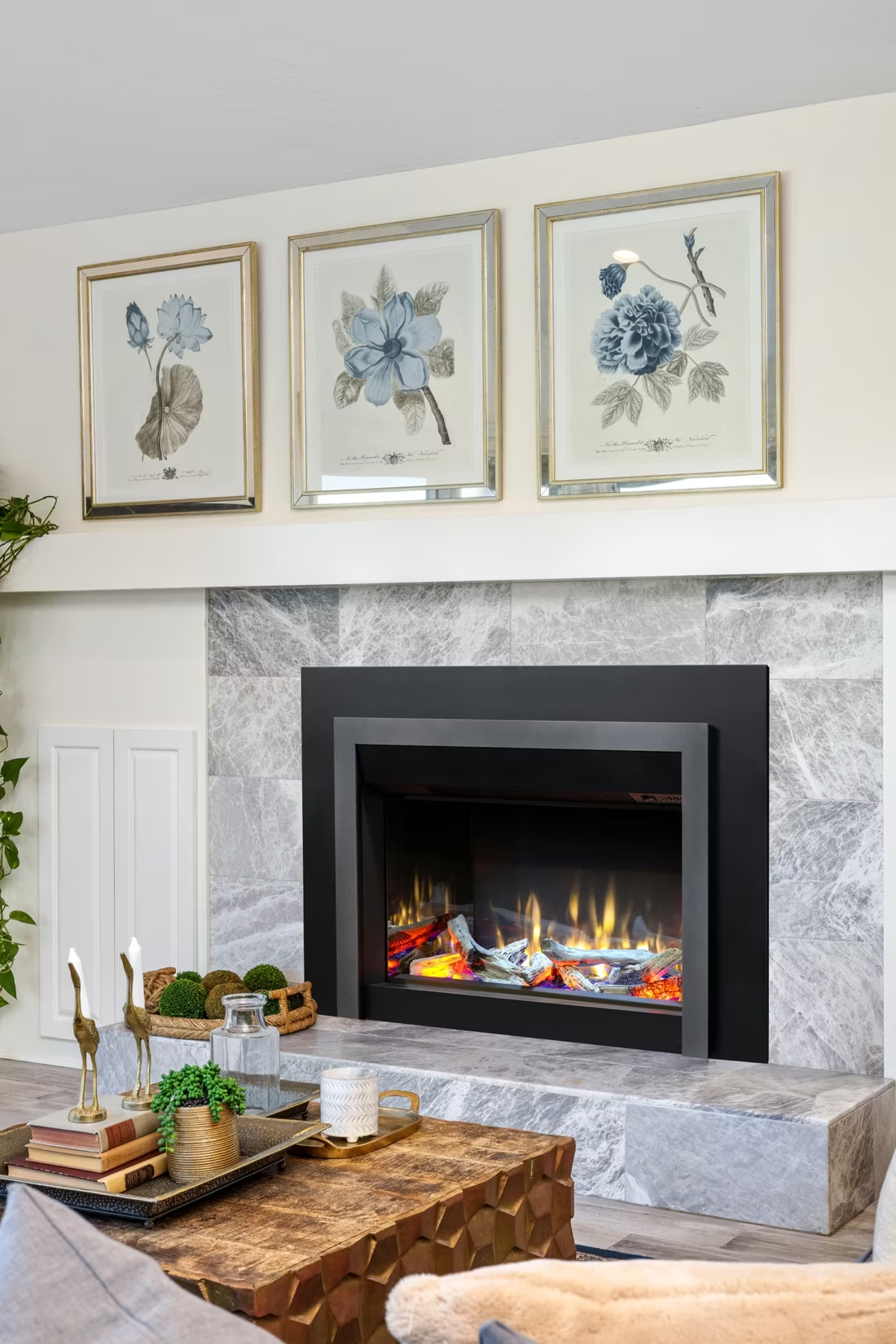
An electric fireplace is usually a built-in or wall-mounted unit designed to look like a traditional fireplace, often set into a mantel surround. An electric insert is sized to slide into an existing masonry fireplace opening—a common upgrade for Bureau County homes with an old wood-burning fireplace that's rarely used, since it converts that opening into working supplemental heat without any chimney work. An electric stove is a freestanding cabinet-style unit that mimics a wood stove's look and can sit almost anywhere near an outlet. For a farmhouse with an existing masonry fireplace that's more decorative than functional, an insert is usually the easiest upgrade; for a room with no fireplace at all, a wall unit or freestanding stove makes more sense.
Is electric a good option for rural Bureau County homes without natural gas service?
It's often the simplest one. A lot of Bureau County's rural housing stock—farms and older homes outside Princeton, Spring Valley, Mendota, and the smaller townships—either runs on propane or fuel oil for primary heat, or would face a real cost to extend a gas line for a fireplace. An electric fireplace sidesteps that entirely: no tank, no delivery schedule, no line extension, just a circuit. It's a common choice for additions, garages converted to living space, and outbuildings that were never plumbed for gas in the first place.
What's the best electric fireplace for zone heating in a cold Illinois climate?
Look for units with a full-power heater rating (around 1,500 watts) rather than lower-output decorative-only models, plus a built-in thermostat so it cycles instead of running at full blast constantly. Brands like Dimplex and Napoleon make electric inserts and built-ins with realistic flame technology and enough heat output to genuinely warm a Bureau County room during a January cold spell, not just look good. If the goal is heating a specific space that your furnace ductwork doesn't reach well—a finished basement, a converted attic room, a sunroom addition—a higher-wattage unit with good thermostatic control will do more real work than a purely decorative model.
What does it cost to run an electric fireplace day to day?
A 1,500-watt unit running at full heat costs roughly 15-25 cents an hour depending on your electric rate, whether you're served by ComEd in the more populated parts of the county or a rural electric cooperative further out in the townships. Most owners don't run one at full output constantly—the thermostat cycles it, and many people use the flame effect alone (a few watts) for ambiance without the heater running at all. Compared to a wood stove or propane heater, there's no fuel to buy or haul, which is part of the appeal for a supplemental unit that only needs to warm one room.
Electric fireplace vs. wood stove—which makes more sense for my Bureau County home?
Wood offers more raw heat, works during a power outage, and taps into a real local resource—oak, hickory, walnut, and maple are all common firewood species here, and plenty of Bureau County properties have access to a woodlot or a neighbor who does. It's the better choice as genuine backup or primary supplemental heat on the coldest nights. Electric offers none of that heat ceiling, but it also asks nothing of you: no chimney, no ash, no wood to split and stack, no annual sweep. For a rental property, a room where a chimney isn't feasible, or a homeowner who wants fireplace ambiance without the maintenance, electric wins. Many Bureau County households end up with both—wood or a wood insert for real backup heat, electric in a room where running a flue was never practical.
Electric fireplace vs. pellet stove—which is right for me?
Pellet stoves burn compressed wood pellets—regional brands like Indeck Energy Services, Lignetics, and Somerset Pellet Fuel are common in this part of Illinois—and put out real heat, often enough for a whole zone of the house, but they need venting, a hopper to load, and electricity to run the auger and blower. Electric fireplaces need none of that: no venting, no fuel to buy, no hopper to fill, just an outlet. If you want meaningful heat output and don't mind loading pellets and running a vent pipe, pellet is the stronger heater. If you want simplicity, easy install, and a room that just needs ambiance and modest supplemental warmth, electric is the lower-hassle choice.
Can I put a TV above my fireplace?
Yes—with an asterisk. Fireplaces are hot and TVs don't like heat. Either put a mantel between them to deflect rising warmth, or choose a fireplace with heat-management technology that creates a cool zone on the wall above—the wall stays around 125 degrees, barely warm, while the room still gets full heat. If you like clean lines and don't want a mantel, heat management is the answer.
What fireplace styles should I know before shopping?
Four cover most of the market: screen-front traditional (mesh front, open feel, fits craftsman homes), traditional door set (the classic look you grew up with), modern linear (wide, low, the statement piece for entertaining), and clean face contemporary (no trim—your tile or stone runs right to the fire's edge). Walk in knowing those four terms and you're ahead of most buyers.
Can I install a fireplace myself?
If you're putting a fire in your house on purpose, it's best to work with an expert. Unless you're genuinely experienced in framing, gas line, vent pipe, and the national code on clearances to combustibles, have a professional do it—and ideally the same company that sells you the fireplace, so warranty, service, and liability all live under one roof.
Does a fireplace add value to my home?
On average, a fireplace adds back to the home about the same amount you spent installing it. Add the monthly savings from heating the rooms you actually use instead of the whole house—often hundreds of dollars a year—and the value case is strong before you even count what a fire does for how your family uses the room.
Find your electric fireplace in Bureau County.
Tell us a bit about your home and we'll match you with the right electric fireplace, insert, or built-in unit—plus a free Project Guide & Parts List with the exact parts and a trusted local Bureau County dealer to install it.
Find Your Fireplace →