
Keep Your Family Warm and Safe—No Matter What
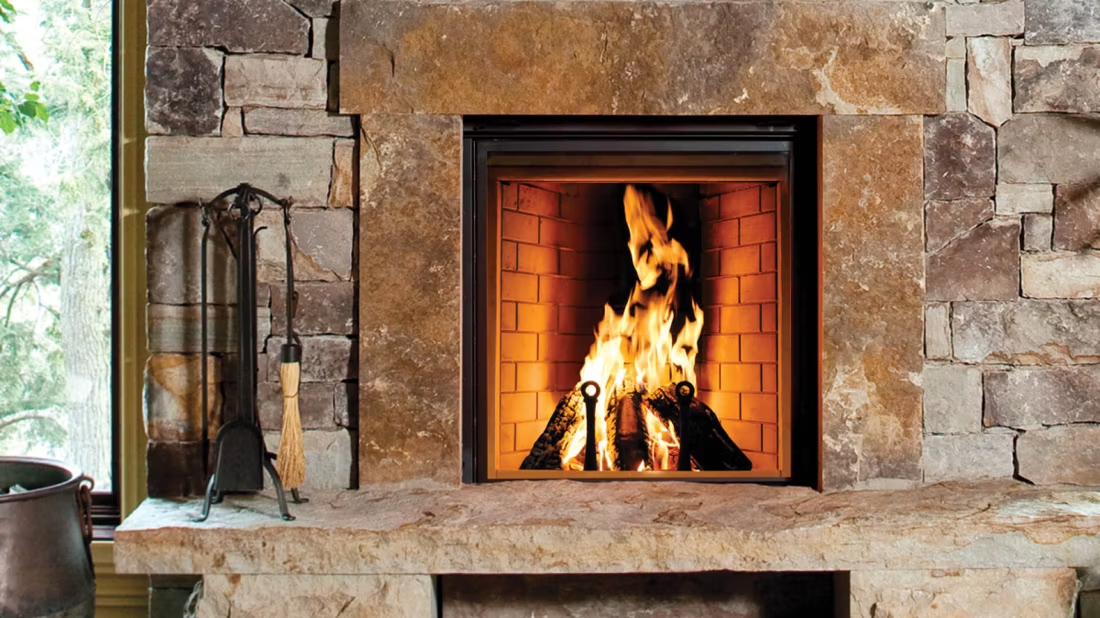
Wood-burning isn't the default choice in Bolingbrook's subdivisions, but for homeowners on larger lots or with an existing masonry fireplace, it's still a real option. We'll connect you with a local dealer who can tell you honestly whether it fits your house.
Every Project Starts From One of These Five Situations
Wood is uncommon here, but not unheard of.
Bolingbrook sits in Will County, about 30 miles southwest of Chicago, with winters cold enough to matter—average lows around 16°F and a winter heating season on par with Madison, Wisconsin. But this is a densely developed suburb of nearly 74,000 people, built mostly from the 1970s onward, with tract-home subdivisions, HOA covenants, and vinyl-and-brick construction that rarely came with masonry chimneys designed for solid fuel. That's a big part of why wood-burning appliances are the exception rather than the rule here—most homes were built to run on a forced-air gas furnace from day one.
That said, the region grows excellent hardwood—oak, hickory, walnut, and maple are all common in Will County, and any of them burn hot and clean compared to the softwoods used in many western states. Homeowners with an older home that already has a fireplace, a larger lot on the edge of town, or a strong preference for wood heat as a backup during ComEd outages can absolutely still install a stove or insert. It's just a smaller, more deliberate decision here than it would be in a rural or mountain community, which is exactly why talking to a local installer who knows Bolingbrook's building stock matters more than browsing online.
Three steps. No salesperson until you're ready.
Tell us about your project
Your zip code, your situation, and the fuel you're leaning toward—or let the answers point you to one.
See what's actually available
The brands dealers within 100 miles genuinely carry—real options, never a catalog mirage.
Get your dealer & Project Guide
A trusted local dealer, plus the free Project Guide & Parts List that names every component of the job.
Frequently Asked Questions
Is wood heat even practical in Bolingbrook?
It's less common than in rural Illinois or colder mountain regions, but it's not impractical. Bolingbrook's winters are genuinely cold—comparable to Madison, Wisconsin, in overall winter heating load—so a well-installed wood stove will absolutely produce useful heat. The bigger question is usually the house itself: many Bolingbrook subdivisions were built without masonry chimneys, since natural gas furnaces have been standard here since the 1970s. If your home has an existing chimney or you're open to a new Class A chimney system, wood is workable. If not, a gas or electric option is usually the more straightforward path, and a local dealer can tell you which applies to your specific house in about ten minutes.
What does a wood stove installation cost in Bolingbrook?
Because wood installations are less frequent here than gas conversions, pricing is less standardized than in wood-heavy regions, but homeowners typically see quotes in the $4,000 to $9,000 range depending on whether an existing chimney can be used or new Class A pipe needs to be run through the roof. Homes without any existing masonry structure tend to land on the higher end once framing and roof penetration work are added. Because fewer local contractors specialize in solid-fuel installs, it's worth getting at least two in-home quotes rather than assuming a single number applies to your house.
Are there restrictions on wood stoves in my subdivision?
Many Bolingbrook neighborhoods are governed by HOA covenants that regulate exterior changes, including new chimneys, flue caps, and firewood storage visible from the street—so it's worth checking your HOA's architectural guidelines before you shop. Beyond HOA rules, any new wood-burning appliance installed in the Village of Bolingbrook needs a building permit, and the unit itself needs to meet current EPA 2020 NSPS emissions standards. Unlike wood-heavy western towns, Bolingbrook doesn't have winter air quality curtailment days or non-attainment restrictions—there's no local burn-ban season to plan around here.
Where do I get firewood in the Bolingbrook area?
Since Bolingbrook isn't near national forest land, there's no self-cut permit system the way there is in mountain states—firewood here comes from local tree services, farm-based firewood dealers, and landscaping companies that sell seasoned oak, hickory, maple, and walnut by the cord or half-cord. These are the same hardwoods that make up much of the Will County tree canopy, and they burn hotter and longer than the pine and fir common out west. Expect to pay more per cord than in rural areas, since delivery distances and suburban demand push prices up—get a couple of local quotes rather than assuming a set rate.
Should I get a wood stove or just stick with gas?
For most Bolingbrook homes, gas is the more natural fit—it's what the housing stock was built around, installation is usually simpler, and there's no chimney or hardwood sourcing to manage. Wood makes the most sense if you specifically want a heat source that works during a ComEd power outage, you already have a masonry fireplace you'd like to upgrade to a wood insert, or you just prefer the experience of a real fire and have a place to store cordwood. If none of those apply strongly to you, it's worth having a local dealer walk you through a gas option too before committing to wood.
Can I convert my existing fireplace into a wood-burning insert?
If your Bolingbrook home has an older masonry fireplace—more common in homes built before the 1980s or in custom-built houses on larger Will County lots—a wood insert is often the most cost-effective way to add real wood heat. The insert uses your existing chimney (usually with a stainless liner) rather than requiring new venting from scratch, which keeps costs closer to the lower end of the typical $4,000-$9,000 range. It's worth having a local installer confirm your existing chimney and flue are in good condition before you buy, since older masonry sometimes needs relining work regardless of insert choice.
What size wood stove do I need?
Sizing depends on square footage, insulation, and whether you're looking for full-time heat or just backup and ambiance. Given Bolingbrook's winters, which run about as cold and long as Madison, Wisconsin's, a stove that's undersized will struggle on the coldest nights, while an oversized unit in a smaller room will run hot and inefficient. Because so few Bolingbrook homes are purpose-built around wood heat, an in-home visit from a local dealer matters more here than a generic square-footage chart—they'll account for your specific layout, insulation age, and whether the stove is meant to be primary or supplemental heat.
How often does a wood stove need chimney service in Bolingbrook?
The Chimney Safety Institute of America recommends an annual inspection for any wood-burning appliance, and that holds true here regardless of how often the stove gets used. Because wood stoves are less common in Bolingbrook than in wood-heavy regions, there are fewer dedicated chimney sweep companies locally compared to, say, a town in northern Wisconsin—so it's worth booking your annual sweep in late summer before demand picks up in the fall burning season, rather than waiting until October.
Wood vs. gas—which makes more sense for my Bolingbrook home?
Gas is the dominant, default choice in Bolingbrook, and for good reason: most homes were built around a gas furnace, installation is generally simpler since there's no chimney or wood storage to plan for, and it delivers instant, consistent heat. Wood offers something gas can't—heat that works with the power out, the ambiance of a real fire, and lower ongoing fuel cost if you have a source of hardwood already. For most homeowners here, wood is a deliberate secondary choice rather than a primary heating decision, which is exactly why it's worth talking through your specific goals with a local dealer before choosing either direction.
Why is my open fireplace making my house colder?
Open fireplaces suck—literally. As the fire burns, it consumes air your furnace already paid to heat and pulls it out through the chimney, so the house is actually colder after the fire goes out than before you lit it. An insert fixes this: it seals the chimney, puts fixed glass across the front, and turns that hole in your house into a real heat source.
Why won't my new wood stove get going like my old one?
New wood stoves are 70%+ efficient, so far less heat goes up the flue—which also means less draft to get a fire established. The rule: build a genuinely hot fire for about 45 minutes before you choke it down. Skip that and you get smoke in the room, creosote in the chimney, and a fire that never takes off. Most performance complaints trace straight back to this.
What is an in-home preview and do I need one?
It's a visit where a hearth professional measures your space, confirms the model you picked actually works in your home, and walks the specs—framing, gas line, venting, finish work—before anything is ordered. Some details you just can't know until you see the house. Never make a down payment without one; it's the single most-skipped step that burns buyers.
How much should I budget for a fireplace?
For an average home—covering the fireplace, the vent pipe, and basic installation—a budget between $3,900 and $5,500 gives you a lot of options across wood, gas, and pellet. By the time you add finish work, gas line, and electrical, the average complete installation lands between $5,000 and $12,000 all-in. In a remodel or new build, a good rule is to put about 2.5% of the total project cost toward the fireplace.
Nearby Dealers
Hearth shops serving Bolingbrook and the surrounding area. Every listing shows whether it is a WhyFire partner, a dealer we have verified as authorized for the brands we recommend, or a local business carrying hearth products. No manufacturer pays for placement. How we verify dealers →
A Fireplace Store And More
A Cozy Fireplace
A Cozy Fireplace
Ember Glow
Find your wood stove in Bolingbrook.
Tell us about your home and we'll be honest about whether wood heat is the right fit—then match you with a local dealer and a free Project Guide & Parts List for your specific installation.
Find Your Fireplace →