
Keep Your Family Warm and Safe—No Matter What
Wood heat isn't the default here—Bloomingdale runs on natural gas furnaces and Commonwealth Edison electric service—but a small, dedicated group of homeowners still choose it for backup heat, ambiance, or a converted masonry fireplace. We'll match you with a trusted local dealer who can do it right.
Every Project Starts From One of These Five Situations
Wood is the exception, not the rule.
Bloomingdale sits in DuPage County, part of Chicago's dense western suburbs, at just under 800 feet of elevation. Winters here are genuinely cold—Climate Zone 5A, average winter lows near 14°F, and a heavy winter heating load, putting Bloomingdale in the same heating-load range as Madison, Wisconsin. Despite that cold, the overwhelming majority of homes here heat with natural gas furnaces and Commonwealth Edison electric service, not wood. DuPage County is fully built out—there's no adjacent national forest, no cutting permit office, and none of the rural woodlot tradition you'd find in more rural parts of the Midwest.
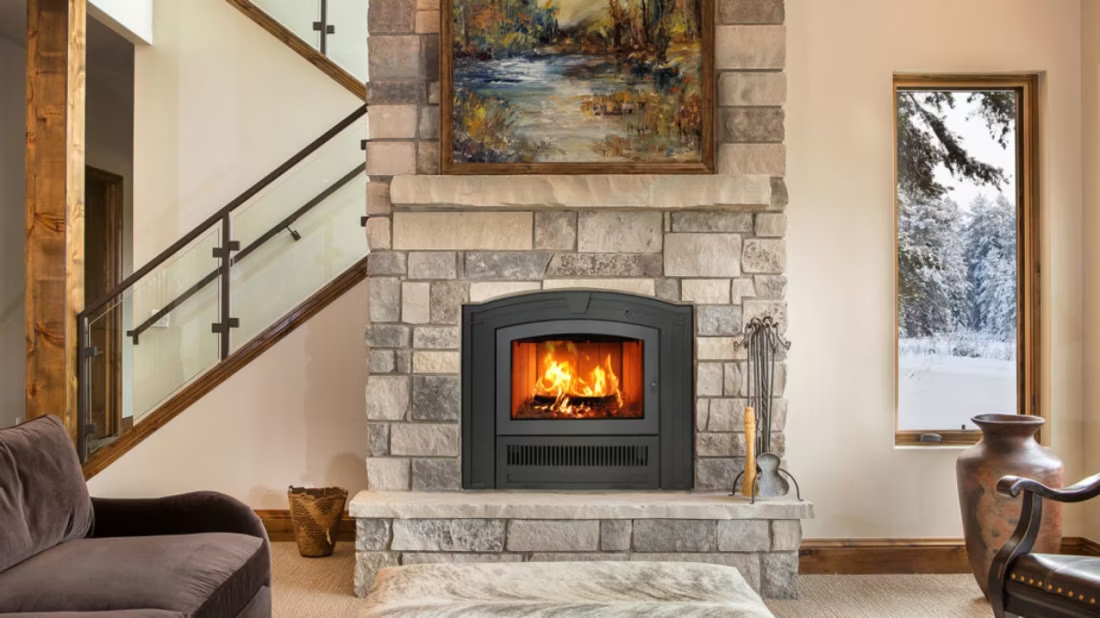
That doesn't mean wood heat is absent—it means it plays a different role. Homeowners in Bloomingdale's older subdivisions, some built in the 1960s and 70s with existing masonry fireplaces, sometimes install a wood insert for supplemental heat and backup warmth during a ComEd outage. A smaller number add a freestanding stove for ambiance in a family room or finished basement. Firewood here comes from local tree services and firewood suppliers rather than self-cut Forest Service permits—oak, hickory, walnut, and maple are the species you'll most commonly find for sale, typically sourced from trees removed from DuPage County forest preserves and residential lots.
Three steps. No salesperson until you're ready.
Tell us about your project
Your zip code, your situation, and the fuel you're leaning toward—or let the answers point you to one.
See what's actually available
The brands dealers within 100 miles genuinely carry—real options, never a catalog mirage.
Get your dealer & Project Guide
A trusted local dealer, plus the free Project Guide & Parts List that names every component of the job.
Frequently Asked Questions
Is a wood-burning fireplace or stove even a common choice in Bloomingdale?
Not really—and we'd rather tell you that upfront. Bloomingdale is a built-out DuPage County suburb where natural gas furnaces and Commonwealth Edison electric service handle the vast majority of home heating. Wood stoves and inserts show up in a minority of homes, usually as a secondary heat source or an upgrade to an existing masonry fireplace, rather than as primary heat. If that's what you're after—supplemental warmth, ambiance, or backup heat that doesn't depend on the grid—it's still a legitimate project, just not the neighborhood default.
How much does a wood stove or insert installation cost in Bloomingdale?
Installations in this part of the Chicago suburbs typically run $4,000 to $8,500, depending on whether you're converting an existing masonry fireplace to a wood insert (lower end, since the chimney is already there) or installing a freestanding stove that needs new Class A chimney pipe run through a roof or wall (higher end). Homes without an existing chimney—common in Bloomingdale's newer subdivisions—usually land at the top of that range once venting, a hearth pad, and framing work are included.
Do I need a permit to install a wood stove in Bloomingdale?
Yes. The Village of Bloomingdale Building Department requires a building permit for any new wood-burning appliance installation, and the unit itself needs to meet current EPA 2020 NSPS emissions standards. If your property falls outside village limits, DuPage County's building department handles permitting instead. Most local hearth dealers pull the permit as part of the installation, so it's rarely something you have to manage yourself.
Where do I buy firewood in Bloomingdale since there's no national forest nearby?
DuPage County has no public land cutting permits—the nearest U.S. Forest Service land, Shawnee National Forest, is roughly 300 miles south, well past practical driving distance for a load of firewood. Instead, firewood here comes from local tree services, landscapers, and dedicated firewood suppliers, often sourced from trees removed from DuPage County forest preserves and residential lots. Oak, hickory, walnut, and maple are the species you'll see most often, typically running $220 to $300 per cord, seasoned and delivered.
Should I install a wood insert or a freestanding wood stove?
It depends on what's already in your house. Bloomingdale subdivisions built in the 1960s through 80s often have an existing masonry fireplace—for those homes, a wood insert is usually the better fit, since it uses the chimney you already have and dramatically improves the heat output of an open hearth that's currently losing more heat up the flue than it produces. Newer homes without an existing fireplace need a freestanding stove with a new Class A chimney system run through the roof, which adds cost but opens up more placement options—a family room, a finished basement, or an attached garage workshop.
Will a wood stove keep my house warm if the power goes out?
Yes, and that's one of the strongest reasons Bloomingdale homeowners still install one. Because the furnace blower and thermostat in most homes here depend on Commonwealth Edison electric service, a winter ice storm that knocks out power also knocks out your primary heat. A wood stove or insert burns and radiates heat with zero electrical dependency, which matters when average winter lows sit around 14°F and outages can stretch into a second or third day.
Are there air quality restrictions on wood burning in Bloomingdale?
No—DuPage County doesn't carry the non-attainment or winter inversion designations that trigger seasonal burn curtailment in some parts of the country. There's no local ordinance restricting when you can run a certified wood stove. That said, an EPA 2020 NSPS-certified unit is still required for new installations, and it's worth being a considerate neighbor about smoke on still, cold nights even where there's no formal restriction.
What size wood stove or insert do I need for a typical Bloomingdale home?
Most homes in Bloomingdale's subdivisions run 1,800 to 2,800 square feet, and for supplemental heat in that range, a medium-sized stove or insert rated for roughly 1,500 to 2,200 square feet covers a main living area comfortably without oversizing. If you're aiming to heat most of the house—say, for extended power outages—you'd want to size closer to the top of that range, but a local dealer should walk your specific floor plan and insulation level before finalizing a recommendation.
Why do most Bloomingdale homes heat with gas, but some still add wood?
Natural gas is simply the infrastructure here—most Bloomingdale homes are already plumbed for it, furnaces are efficient, and there's no wood to source or ash to manage. Wood earns its place for the things gas can't offer: heat that keeps running when Commonwealth Edison power drops, the ambiance of a real fire in a converted masonry fireplace, and lower ongoing fuel cost for homeowners willing to buy or process cordwood. It's a supplement to the gas furnace in most cases here, not a replacement—and that's a perfectly reasonable way to plan the project.
Why is a fireplace insert so efficient?
An insert does two things: it seals the chimney completely, so you stop losing air you already paid to heat, and it radiates warmth into the room through the firebox and glass. Most add a heat-exchange fan that pulls cool room air underneath, wraps it around the hot firebox, and pushes it back out warm. Your home is more efficient before you've even lit the first fire.
Why is my open fireplace making my house colder?
Open fireplaces suck—literally. As the fire burns, it consumes air your furnace already paid to heat and pulls it out through the chimney, so the house is actually colder after the fire goes out than before you lit it. An insert fixes this: it seals the chimney, puts fixed glass across the front, and turns that hole in your house into a real heat source.
Can a fireplace actually lower my heating bill?
Yes—by creating a comfort zone. A furnace heats every square foot of the house just to warm the one room you're in; a gas fireplace on low burns roughly a sixth of the gas a typical furnace does. Set the furnace around 55–60 degrees as a baseline, then heat the rooms your family actually uses. Families who heat this way commonly save $20–$60 a month.
How much should I budget for a fireplace?
For an average home—covering the fireplace, the vent pipe, and basic installation—a budget between $3,900 and $5,500 gives you a lot of options across wood, gas, and pellet. By the time you add finish work, gas line, and electrical, the average complete installation lands between $5,000 and $12,000 all-in. In a remodel or new build, a good rule is to put about 2.5% of the total project cost toward the fireplace.
Nearby Dealers
Hearth shops serving Bloomingdale and the surrounding area. Every listing shows whether it is a WhyFire partner, a dealer we have verified as authorized for the brands we recommend, or a local business carrying hearth products. No manufacturer pays for placement. How we verify dealers →
Ember Glow
A Cozy Fireplace
A Fireplace Store And More
General Masonry Supply
Smokin' Deal Bbq
Jhb Group, Inc.
Fireplaces Plus
Urban Rooftops
Fireplace And Patio
Find your wood-burning stove in Bloomingdale.
Tell us about your home and we'll match you with a trusted local Bloomingdale-area dealer, plus a free Project Guide & Parts List—the exact parts, including the vent kit, for your wood stove or insert project.
Find Your Fireplace →