
Steady Heat for Long Central Illinois Winters.
From quick-start gas inserts to full fireplace builds, find the right fit for your Auburn home—then connect with a trusted local dealer who can size, vent, and install it correctly.
Every Project Starts From One of These Five Situations
Consistent warmth for Sangamon County's long heating season.
Auburn is a small Sangamon County town of about 4,500 people, sitting just southwest of Springfield at roughly 612 feet in elevation. The climate here falls in zone 5A, with winter lows averaging around 21°F and a winter heating season that runs a solid five months or so—nowhere near as brutal as Fargo, ND or International Falls, MN, but still enough cold, gray stretches from late October through March to make a dependable heat source matter. Central Illinois winters are less about record lows and more about duration: months of overcast, damp cold that wears down an aging furnace and makes a zone-heat option in the main living space worth having.
Natural gas service reaches much of in-town Auburn, while homes on the surrounding farmland—like a lot of rural Sangamon County—often rely on propane tanks and delivery instead. Either fuel works fine for a modern direct-vent gas fireplace or insert. Electric service here comes from Ameren Illinois and, in some outlying areas, Rural Electric Convention Coop, at a residential rate around 11.76 cents per kWh—worth knowing if you're weighing a gas fireplace against an electric one for supplemental heat. A gas fireplace gives Auburn homeowners instant, thermostat-controlled warmth without stacking wood or filling a pellet hopper, and it keeps running through the kind of ice storms that occasionally knock out power across central Illinois—provided you choose a unit with the right ignition system.
Three steps. No salesperson until you're ready.
Tell us about your project
Your zip code, your situation, and the fuel you're leaning toward—or let the answers point you to one.
See what's actually available
The brands dealers within 100 miles genuinely carry—real options, never a catalog mirage.
Get your dealer & Project Guide
A trusted local dealer, plus the free Project Guide & Parts List that names every component of the job.
Frequently Asked Questions
How much does a gas fireplace installation cost in Auburn?
Most gas fireplace and insert installations in the Auburn area run in the $3,500 to $9,000 range, with the low end covering a direct-vent insert into an existing masonry fireplace that's already near a gas line, and the high end covering a new built-in unit that needs framing, longer gas line runs, or propane tank setup for homes outside the natural gas service area. Homes relying on propane typically add a few hundred dollars for the initial tank installation if one isn't already on the property. A local dealer will give you a firm number after walking your specific chimney or wall situation.
Can I convert my existing wood-burning fireplace to gas?
Yes, and it's a common project in older Auburn homes built in the early-to-mid 1900s that still have a working masonry chimney. A gas insert slides into the existing firebox and uses a stainless liner run up the original chimney, so you keep the look of the fireplace while gaining instant on-off heat and losing the hauling and ash cleanup that comes with burning oak or hickory. Expect $4,000 to $8,500 for a typical conversion, depending on whether the home is on natural gas or needs a propane setup.
Should I plan for natural gas or propane in Auburn?
It depends on where the property sits. In-town Auburn addresses are generally within reach of natural gas mains, which keeps ongoing fuel costs lower and skips the tank altogether. Properties out on the surrounding farmland—which describes a good share of Sangamon County—are usually propane territory, supplied by tank delivery from a regional propane company. Nearly every gas fireplace on the market can be set up for either fuel; your installer just configures the correct orifice and regulator for the gas type you have.
Will my gas fireplace still work if the power goes out?
It depends on the ignition system, which matters here—central Illinois gets its share of ice storms that can knock out power for a day or more. Units with intermittent pilot ignition (IPI) run on a battery backup that kicks in automatically, so the fireplace lights and runs normally even with the grid down, as long as the batteries are fresh. Valor fireplaces go a step further: the pilot's thermocouple generates its own electricity, so there's no battery to remember at all. If backup heat during an outage is a priority for your Auburn home, ask your dealer specifically about the ignition type before you buy.
What's the difference between a gas fireplace, insert, and stove?
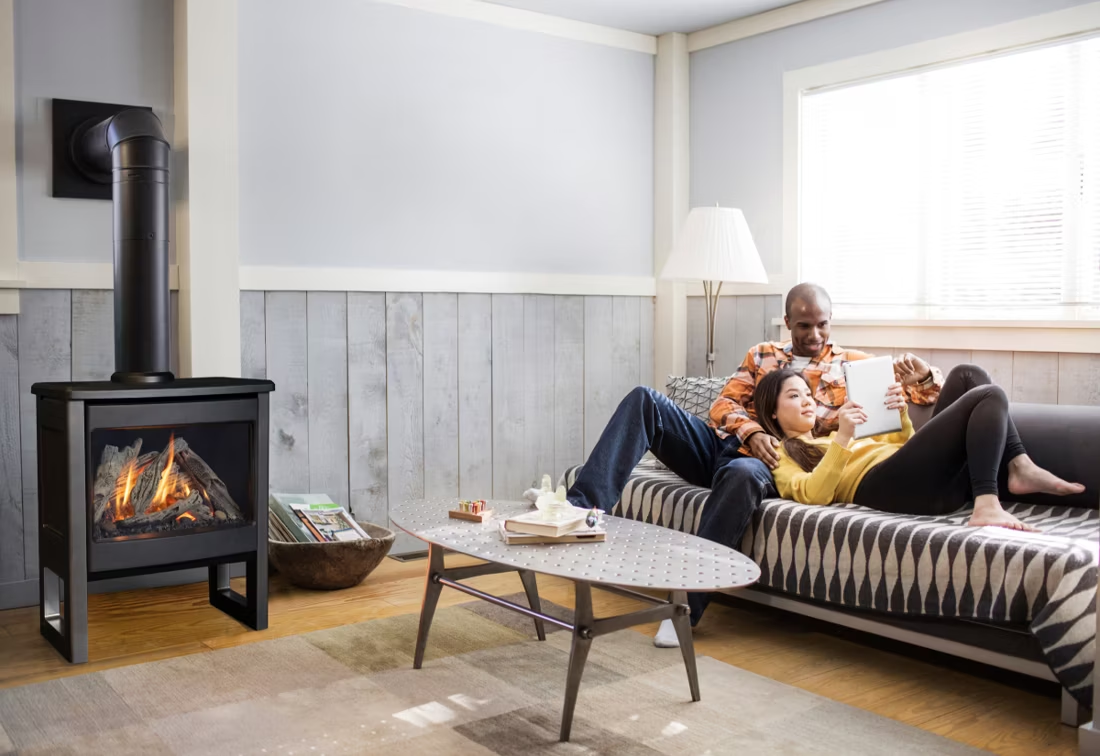
A gas fireplace is a built-in unit framed into a wall—the right choice for new construction or a remodel without an existing hearth. A gas insert slides into an existing masonry fireplace opening and vents through the original chimney, which is the more common upgrade for Auburn's older housing stock. A gas stove is a freestanding cast-iron or steel unit that sits out in the room like a traditional wood stove but runs on gas—a good fit if you want supplemental heat in a room that never had a fireplace to begin with.
Do I need a permit to install a gas fireplace in Auburn?
Most gas fireplace installations require both a building permit and a gas line permit, typically pulled through the City of Auburn or, for county properties, the Sangamon County Planning & Zoning office. The gas line connection itself needs a licensed gas-fitter regardless of jurisdiction. A reputable local hearth dealer will handle the permit paperwork and coordinate the gas work as part of the install, so you're not left managing separate trades and inspections yourself.
Vented vs. vent-free gas fireplaces—which should I choose?
Vented (direct-vent) units draw combustion air from outside and exhaust it back outside through sealed venting—they run cleaner, put out real heat, and are the standard recommendation for full-time use. Vent-free units burn gas directly into the room without external venting; Illinois allows them, but they come with room-size minimums and an oxygen depletion sensor, and they add a bit of humidity and combustion byproduct to indoor air. For an Auburn home used regularly through a five-month heating season, direct-vent is almost always the better fit—vent-free tends to make more sense for occasional-use spaces like a three-season room.
How often does a gas fireplace need servicing?
Plan on an annual inspection, ideally before the heating season ramps up in October. A technician checks the burner, pilot assembly, venting, and gas connections, and cleans the glass and interior—a simpler job than a wood chimney sweep, but skipping it is how pilot and ignition problems go unnoticed until the coldest week of the year. Expect to pay somewhere around $150 to $250 for a standard annual service call in the Auburn area.
Gas vs. electric fireplace—which makes more sense for my Auburn home?
Wood-burning setups are uncommon in newer Auburn homes, so the real choice for most homeowners here is between gas and electric. Gas delivers genuine radiant heat, can offset furnace use during a cold snap, and—with the right ignition system—keeps working through a power outage. Electric fireplaces plug into a standard outlet, need no venting or gas line at all, and cost far less to install, but at Ameren Illinois's residential rate of about 11.76 cents per kWh, they function more as supplemental ambiance than a serious heat source for a whole room. If you want a fireplace that can actually carry some of the heating load during a Sangamon County winter, gas is the stronger option.
Why is a fireplace insert so efficient?
An insert does two things: it seals the chimney completely, so you stop losing air you already paid to heat, and it radiates warmth into the room through the firebox and glass. Most add a heat-exchange fan that pulls cool room air underneath, wraps it around the hot firebox, and pushes it back out warm. Your home is more efficient before you've even lit the first fire.
Is my gas fireplace wasting gas?
If it was installed more than 15 years ago, probably. Older gas fireplaces keep a standing pilot light burning all the time, and that little flame can cost a couple hundred dollars a year. Newer models use pilot-on-demand ignition—the pilot lights only when you use the fireplace and goes out when you turn it off.
How much should I budget for a fireplace?
For an average home—covering the fireplace, the vent pipe, and basic installation—a budget between $3,900 and $5,500 gives you a lot of options across wood, gas, and pellet. By the time you add finish work, gas line, and electrical, the average complete installation lands between $5,000 and $12,000 all-in. In a remodel or new build, a good rule is to put about 2.5% of the total project cost toward the fireplace.
Does a fireplace add value to my home?
On average, a fireplace adds back to the home about the same amount you spent installing it. Add the monthly savings from heating the rooms you actually use instead of the whole house—often hundreds of dollars a year—and the value case is strong before you even count what a fire does for how your family uses the room.
Nearby Dealers
Hearth shops serving Auburn and the surrounding area. Every listing shows whether it is a WhyFire partner, a dealer we have verified as authorized for the brands we recommend, or a local business carrying hearth products. No manufacturer pays for placement. How we verify dealers →
Quality Lighting
Marx Fireplaces & Lighting
Find your gas fireplace in Auburn.
Tell us about your home and heating goals, and we'll match you with a trusted local dealer and send over a free Project Guide & Parts List—the exact parts, vent kit, and recommended installer for your Auburn gas fireplace project.
Find Your Fireplace →