
Instant Heat, Any Room, No Chimney Required.
Zone heat for Auburn's cold central Illinois winters—no gas line, no venting, no chimney. Find the right electric fireplace and connect with a trusted local dealer.
Every Project Starts From One of These Five Situations
Heat where you need it, without touching the furnace.
Auburn sits in Sangamon County on the central Illinois plains, a few miles south of Springfield, where winters run long and cold, with lows settling around 21°F for weeks at a stretch—cold enough to matter, but well short of the brutal stretches places like Fargo, ND or Duluth, MN see each winter. Most Auburn homes lean on a furnace or heat pump for whole-house heat, but electric fireplaces have become the go-to for adding warmth to one specific room—a finished basement, a sunroom addition, a bedroom on the far end of the ductwork—without opening a wall for a gas line or building a chimney.
Electric service in town runs through Ameren Illinois, with Rural Electric Convention Coop covering the farmland just outside city limits—a common split for small Sangamon County towns. Ameren's residential rate here, $0.1176 per kWh, sits below the national average, which makes running an electric insert or wall unit for a few hours each evening a modest add to the power bill rather than a real budget item. For older Auburn farmhouses without an existing masonry fireplace, or newer builds where gas was never stubbed to the room you actually spend time in, electric is often the simplest fix—plug it in, or wire in a dedicated circuit, and it's done.
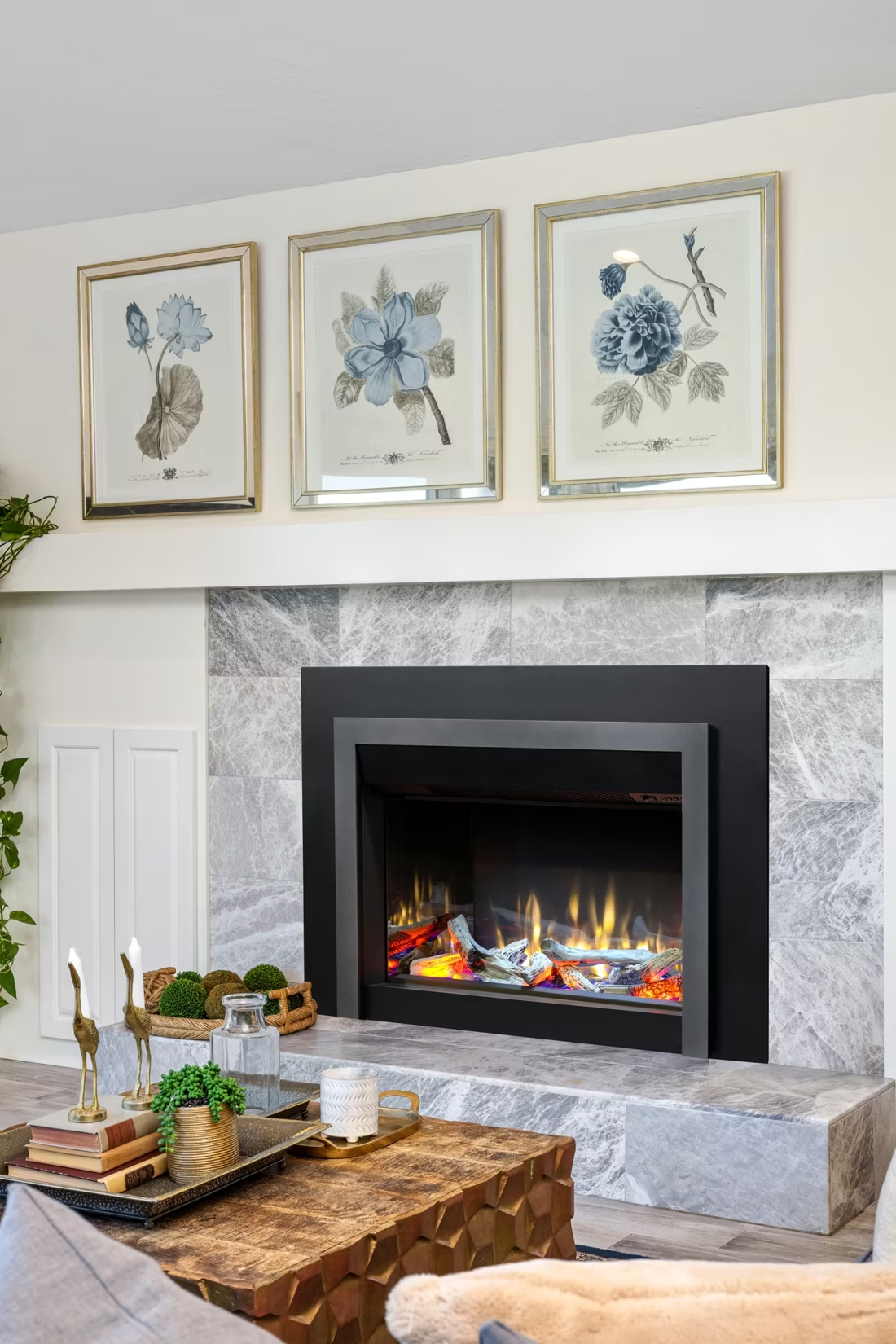
Three steps. No salesperson until you're ready.
Tell us about your project
Your zip code, your situation, and the fuel you're leaning toward—or let the answers point you to one.
See what's actually available
The brands dealers within 100 miles genuinely carry—real options, never a catalog mirage.
Get your dealer & Project Guide
A trusted local dealer, plus the free Project Guide & Parts List that names every component of the job.
Frequently Asked Questions
How much does an electric fireplace installation cost in Auburn?
A plug-in electric insert that drops into an existing fireplace opening, or a freestanding electric stove, typically runs $300 to $1,200 installed in Auburn, since there's no venting or gas line to route—most of that cost is the unit itself. A built-in wall unit or full mantel package, which usually calls for a dedicated 20-amp circuit and some carpentry for the surround, runs closer to $1,500 to $3,500 depending on size and finish. Either way, electric is the least expensive fireplace category to install here—no masonry, no chimney, and often no permit at all.
Do I need a permit to install an electric fireplace in Auburn?
In most cases, no. A plug-in electric insert or freestanding unit that runs off a standard outlet doesn't require a permit. If you're having a licensed electrician run a new dedicated circuit for a built-in wall unit, that electrical work typically does require a permit through the City of Auburn, though inspection is usually quick since there's no gas line or venting involved. Ask your installer to confirm before work starts—it's a short conversation for a straightforward job.
How much does it cost to run an electric fireplace in Auburn?
Less than most people expect. A typical 1,500-watt electric insert or stove costs roughly 17 to 18 cents per hour to run on the heat setting, based on Ameren Illinois's residential rate of $0.1176 per kWh—one of the more affordable rates in the state. Running one for four hours a night through a cold snap adds up to under $25 a month. That's part of why electric works so well as supplemental heat in Auburn: it's cheap enough to run in the one room you're actually sitting in without pushing the whole-house furnace harder.
Will an electric fireplace actually heat a room, or is it just for looks?
Most electric inserts and stoves include a built-in fan heater rated between 4,600 and 5,200 BTUs—enough to comfortably heat a 400- to 600-square-foot room, which covers most bedrooms, living rooms, and finished basements in Auburn's older homes. On milder days, or if you just want the look of a fire, you can run the flame effect with the heater switched off. It won't replace your furnace during a January cold snap with lows near 21°F, but it will noticeably warm the room you're actually in without running the whole-house system harder.
What's the difference between an electric insert, a built-in wall unit, and a freestanding electric stove?
An electric insert drops into an existing fireplace opening—a straightforward option for Auburn homes with an old masonry fireplace that's no longer used for wood. A built-in wall unit is framed into a wall like a flat-screen TV, popular in newer construction or remodels where there's no existing fireplace. A freestanding electric stove sits on the floor like a traditional wood stove and can go almost anywhere near an outlet—no fireplace opening required. For most Auburn homes without an existing chimney, the freestanding stove or a built-in wall unit tends to be the easiest retrofit.
Electric vs. gas fireplace—which is right for my Auburn home?
Gas fireplaces are common in Auburn where natural gas service already reaches the home—they put out more real heat, sometimes 20,000+ BTUs on a vented unit, and can work during a power outage if set up with a standing pilot. But they require a gas line and, for vented units, venting through a wall or roof, which adds real cost if the room doesn't already have gas nearby. Electric skips all of that: no gas line, no venting, and it works anywhere there's an outlet, but it can't outheat a furnace and it goes dark in a power outage. For supplemental heat in a bedroom, basement, or addition—especially where running gas would mean tearing into a wall—electric is usually the more practical and less expensive choice in Auburn.
Is electric heat reliable for Auburn's rural electric co-op customers?
Generally yes, though it's worth noting that outside Auburn's city limits, power comes through Rural Electric Convention Coop rather than Ameren Illinois, and rural co-op service can see longer restoration times after a bad ice storm or summer derecho compared to in-town service. For farmhouses and rural properties served by the coop, an electric fireplace is a fine supplemental heater day to day, but it shouldn't be the only backup heat plan if a storm knocks out power for an extended stretch—a propane or wood-burning option elsewhere in the house is worth having for that scenario.
Can an electric fireplace go in a room with no existing fireplace or chimney?
Yes—that's actually where electric fireplaces do their best work. Since there's no combustion, no chimney, and no exterior venting required, a freestanding electric stove or a built-in wall unit can go into a converted garage, a finished basement, a sunroom, or any interior room with access to a standard or dedicated circuit. This is one of the most common reasons Auburn homeowners choose electric over gas—it goes where the other fuel physically can't without major construction.
How do I find a good electric fireplace installer near Auburn?
For a plug-in unit, most homeowners handle the install themselves—it's mostly a matter of placement and an outlet. For a built-in wall unit or anything requiring new electrical circuits, you'll want a licensed electrician, ideally one who's worked with hearth dealers before so the framing and clearances match the unit's specs. Since Auburn is a small town, most homeowners end up working with a dealer based in the Springfield area who can size the right unit for the room and coordinate any electrical work needed.
Does an electric fireplace need a vent or chimney?
No—that's its superpower. An electric fireplace needs a wall and an outlet, period. No vent pipe, no gas line, no clearances to design around, which is why it works in bedrooms, offices, apartments, and walls where venting a gas or wood unit would be impractical or impossible. Installation is typically the simplest and least expensive of any fireplace type.
Can I put a TV above my fireplace?
Yes—with an asterisk. Fireplaces are hot and TVs don't like heat. Either put a mantel between them to deflect rising warmth, or choose a fireplace with heat-management technology that creates a cool zone on the wall above—the wall stays around 125 degrees, barely warm, while the room still gets full heat. If you like clean lines and don't want a mantel, heat management is the answer.
Can I install a fireplace myself?
If you're putting a fire in your house on purpose, it's best to work with an expert. Unless you're genuinely experienced in framing, gas line, vent pipe, and the national code on clearances to combustibles, have a professional do it—and ideally the same company that sells you the fireplace, so warranty, service, and liability all live under one roof.
Should the dealer who sells my fireplace also install it?
Ideally, yes. A fireplace project involves vent pipe, gas line, electrical, and often tile or stone. Hire three or four separate trades and you own the liability and the game of telephone between them. One company selling and installing means one accountable party, start to finish—ask about factory training, on-time completion records, and what happens if an inspection fails.
Nearby Dealers
Hearth shops serving Auburn and the surrounding area. Every listing shows whether it is a WhyFire partner, a dealer we have verified as authorized for the brands we recommend, or a local business carrying hearth products. No manufacturer pays for placement. How we verify dealers →
Quality Lighting
Marx Fireplaces & Lighting
Electric Service in Auburn
An electric fireplace's heater draws about 1,500 watts—pennies per hour at local rates.
Ameren Illinois Company
Rural Electric Conven Coop
Find your electric fireplace in Auburn.
Tell us about your room and we'll match you with the right electric insert, stove, or built-in unit—plus a free Project Guide & Parts List naming the exact parts and your recommended local dealer.
Find Your Fireplace →