
Steady heat for Washington County's long winters, without the wood pile.
From Weiser to Midvale and Cambridge, Washington County sees a long, cold heating season with winter lows that average 22°F but drop well past that on the coldest nights. A pellet stove delivers thermostat-controlled, cordwood-free heat that fits this stretch of the Snake River valley. Tell us about your home and we'll connect you with a local dealer who actually installs here.
Every Project Starts From One of These Five Situations
A cleaner-burning option for Idaho's high desert wildfire country.
Washington County is small—about 6,300 people spread across Weiser, Midvale, Cambridge, and the ranch and farm country between the Snake River and the Seven Devils foothills. Wood heat has deep roots here, with lodgepole pine, ponderosa pine, Douglas fir, and larch cut locally under permits from the Boise National Forest, Wallowa-Whitman National Forest, and BLM Vale District (cutting seasons run roughly April through October, at $5 to $20 per cord). Pellet stoves have picked up ground alongside that tradition, especially with older homeowners and second-home owners who want reliable, low-maintenance heat without splitting and stacking cordwood every fall.
Summer and fall wildfire smoke is the county's biggest air quality concern, and it shapes how people burn. When smoke advisories or burn restrictions come down, pellet stoves are typically still permitted to run because they burn far cleaner than open wood fires—a real advantage in a county where haze from regional fires is common some years. Regional pellet supply comes primarily from Pacific Northwest mills—Bear Mountain, Lignetics, and Pacific Pellet are the brands most commonly stocked by dealers serving this part of Idaho—and pellets are typically trucked in rather than produced locally, so buying ahead of peak season matters more here than in bigger markets.
Three steps. No salesperson until you're ready.
Tell us about your project
Your zip code, your situation, and the fuel you're leaning toward—or let the answers point you to one.
See what's actually available
The brands dealers within 100 miles genuinely carry—real options, never a catalog mirage.
Get your dealer & Project Guide
A trusted local dealer, plus the free Project Guide & Parts List that names every component of the job.
Frequently Asked Questions
How much does a pellet stove installation cost in Washington County?
Most pellet stove installations in a rural county like this run $3,500 to $6,500, depending on the unit, whether it's a freestanding stove or an insert going into an existing fireplace, and whether a dedicated electrical outlet needs to be added—pellet stoves require power to run the auger, igniter, and combustion blower, which is different from a wood stove. A building permit through the Washington County Building Department is required for new installations, and most dealers handle that paperwork as part of the job. Because there are only a handful of hearth dealers serving this end of Idaho, expect installers to factor in some travel time from Weiser or from nearby Payette County.
What size pellet stove do I need for a home in Washington County?
Sizing depends on square footage, insulation, and ceiling height, but with a long, cold heating season and winter lows regularly dipping into the teens, most local homes need a mid-to-large unit rather than the smallest hopper size on the shelf. Older farmhouses around Midvale and Cambridge, which tend to be drafty and larger than newer builds, often do better with a stove rated for 1,500 to 2,200 square feet even if the finished living space is smaller, simply to keep up on the coldest nights. A local dealer can size your specific home during an in-home visit—this is one area where guessing from a box label leads to an undersized stove that runs constantly without catching up.
Where can I find a certified pellet stove installer near me?
Look for installers with NFI (National Fireplace Institute) certification, which covers proper venting, clearance, and electrical setup for pellet appliances. Washington County's population is small enough that dealer options are limited locally—many homeowners in Weiser, Midvale, and Cambridge end up working with a certified dealer based somewhere in the wider Treasure Valley or western Idaho region who services this area. Confirm before you buy that the dealer who sells the stove also handles the install and pulls the county permit—that keeps warranty coverage and code compliance in one place instead of splitting the job between a retailer and a separate installer.
What's the difference between a pellet stove and a pellet insert?
A pellet stove is a freestanding unit that sits on a hearth pad and vents through an exterior wall or existing chimney—it can go almost anywhere in the home with the right clearances and a nearby power outlet. A pellet insert is built to slide into an existing masonry or wood fireplace, converting that opening into an efficient, thermostat-controlled heat source while reusing the existing chimney chase for venting. For Washington County homes with an older wood fireplace already in place—common in the farmhouses around Cambridge and Midvale—an insert is often the simpler retrofit. Homes without an existing fireplace usually go with a freestanding stove instead.
Do I need a permit to install a pellet stove in Washington County?
Yes—new pellet stove and insert installations require a building permit through the Washington County Building Department, and the unit needs to meet current EPA emissions certification. If the installation adds a new dedicated circuit for the stove's electrical components, an electrical permit is typically required as well. Most local dealers fold this into the installation quote and pull the permits on your behalf, so you're not chasing paperwork on your own. Unlike open wood burning, pellet stoves are generally exempt from wildfire-smoke-related curtailment periods, which is one reason they're worth considering if smoke advisories are a recurring issue on your property.
What's the best pellet stove for Washington County's climate?
With winter lows that regularly drop into the teens and single digits during cold snaps, look for a pellet stove with a large hopper capacity—40 to 60 pounds—so it can run overnight without a refill, and a heat output rated for at least the square footage of your main living area, sized up if your home is older and less insulated. Because pellet stoves depend on electricity, a battery backup or a small inverter/generator setup is worth discussing with your dealer given how exposed rural power lines are to winter storm outages in this part of Idaho. Bear Mountain and Lignetics pellets are both widely carried by dealers serving this region and burn cleanly in most modern hopper-fed stoves.
How often does a pellet stove need to be cleaned and serviced?
Pellet stoves need more frequent attention than people expect, even though they're cleaner-burning than wood. The ash pot should be emptied every few days during regular use, the burn pot scraped weekly to keep the fire feeding properly, and the exhaust vent and hopper checked for buildup monthly. A full professional service—cleaning the auger, checking the igniter and blower, and inspecting the venting—is recommended once a year, typically before the fall smoke season starts, since demand for hearth service tends to spike once wildfire smoke rolls through and homeowners switch on their stoves for the first time.
Where can I buy pellets in Washington County?
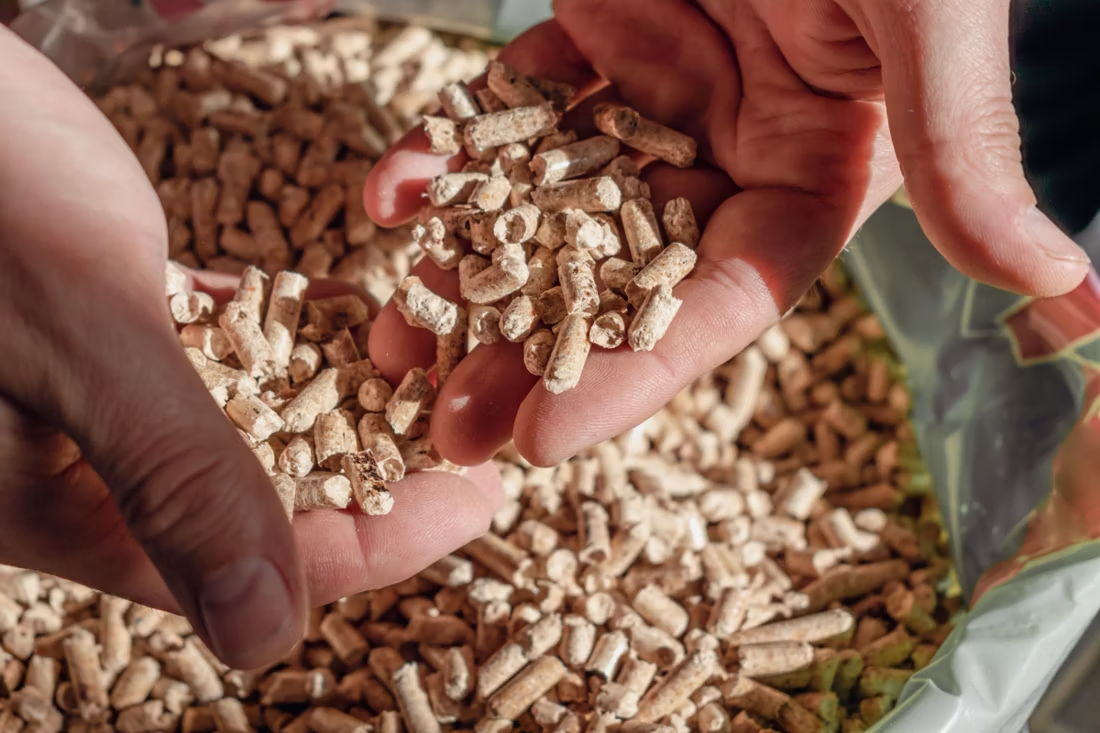
Because there's no pellet mill in Washington County itself, most pellets sold here are trucked in from Pacific Northwest producers—Bear Mountain, Lignetics, and Pacific Pellet are the brands most commonly stocked by dealers and farm supply stores serving Weiser and the surrounding area. Buying a season's supply in late summer or early fall, before wildfire smoke drives up regional demand, is the standard local strategy—pellet availability can get tight in October and November if you wait. Your dealer can usually point you toward the closest reliable supplier and give you a sense of current per-ton pricing, which shifts year to year with mill output and shipping costs.
Pellet stove vs. wood stove—which is right for my home?
Wood stoves run without electricity, which matters in a rural county where winter storms can knock out power for stretches, and self-cut firewood is genuinely cheap here—Forest Service and BLM cutting permits through the Boise National Forest, Wallowa-Whitman National Forest, and BLM Vale District run as little as $5 to $20 per cord. Pellet stoves need power to run the auger and blower, but they load easier, burn cleaner during wildfire smoke season, and don't require splitting or stacking cordwood every fall. For Washington County homeowners with reliable backup power or a generator, pellet is often the more convenient daily-use choice. For remote properties without backup power, a wood stove—or a paired setup with both—is worth serious consideration.
How often does a pellet stove need cleaning?
A clean pellet stove is a happy pellet stove. Plan on cleaning the burn pot about once a week when you're burning regularly—ash and clinkers gum up the air holes just like a pellet barbecue. Most pellet stove problems trace back to skipped cleaning that nobody explained up front. Some designs make it easy with a trapdoor burn pot: pull a lever and the gunk drops into the ash pan.
Why is my open fireplace making my house colder?
Open fireplaces suck—literally. As the fire burns, it consumes air your furnace already paid to heat and pulls it out through the chimney, so the house is actually colder after the fire goes out than before you lit it. An insert fixes this: it seals the chimney, puts fixed glass across the front, and turns that hole in your house into a real heat source.
How much should I budget for a fireplace?
For an average home—covering the fireplace, the vent pipe, and basic installation—a budget between $3,900 and $5,500 gives you a lot of options across wood, gas, and pellet. By the time you add finish work, gas line, and electrical, the average complete installation lands between $5,000 and $12,000 all-in. In a remodel or new build, a good rule is to put about 2.5% of the total project cost toward the fireplace.
Can a fireplace actually lower my heating bill?
Yes—by creating a comfort zone. A furnace heats every square foot of the house just to warm the one room you're in; a gas fireplace on low burns roughly a sixth of the gas a typical furnace does. Set the furnace around 55–60 degrees as a baseline, then heat the rooms your family actually uses. Families who heat this way commonly save $20–$60 a month.
Pellet Brands Stocked Around Washington County
Manufacturers will point you to the nearest stocking dealer.
Find your pellet stove in Washington County.
Tell us about your home in Weiser, Midvale, Cambridge, or anywhere else in Washington County, and we'll put together a free Project Guide & Parts List—the right pellet stove or insert, the vent kit it needs, and a trusted local dealer who can install it.
Find Your Fireplace →